Amid the destruction of Gaza’s schools and universities, Niveen Al-Gharabli has built a makeshift book stall from books salvaged from rubble and damaged homes.
She restores and sells them at low price, or gives them away to students and those who cannot afford them.
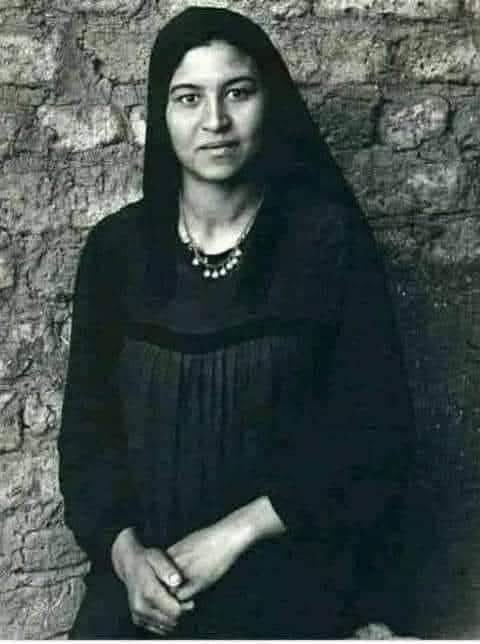
In 1879, in a modest village in Kafr El-Sheikh, Egypt, a peasant woman named Mubarka Khafaji married Ibrahim Atta, a farmer who survived on daily wages.
Life was already difficult. Then, while Mubarka was still in the final months of pregnancy, financial pressure led her husband to divorce her.
She returned to her mother and brother and moved to Alexandria, Egypt, where she gave birth to her son, Ali Ibrahim Atta.
She had every reason to surrender to hardship.
Instead, she made a decision: her son would receive the education and future she herself had never been given.
Mubarka could barely make ends meet. She worked on the streets of Alexandria selling cheese to provide for Ali. She could have sent him to work as a child, but she chose sacrifice over surrender.
She enrolled him at Ras El-Tin Primary School.
After he completed his primary education, his father came to take him away, intending for him to stop studying and begin working.
But his mother refused to let poverty decide her son’s destiny.
In a remarkable act of determination, Mubarka secretly moved Ali from the roof of their home to the neighboring roof and escaped with him to Cairo, Egypt.
There, she enrolled him at the Khedivial School in Darb El-Gamamiz and found work with a family so she could continue paying for his education.
Ali studied relentlessly.
His mother’s sacrifices eventually opened a door neither of them could have imagined.
In 1897, he entered medical school.
In 1901, he graduated as a doctor.
Years later, Sultan Hussein Kamel, the ruler of Egypt, became seriously ill. Doctors struggled to determine what was wrong with him.
Then Dr. Othman Ghaleb recommended Dr. Ali Ibrahim.
Ali successfully performed the difficult operation.
His reputation changed overnight.
He was appointed chief surgical consultant and personal physician to the Sultan and was given the title Bey.
In 1922, King Fuad I elevated him to the title Pasha.
Then came another historic achievement.
In 1929, Dr. Ali Pasha Ibrahim became the first Egyptian dean of the Faculty of Medicine at Fouad I University, now Cairo University. He later became president of the university.
In 1940, he was appointed Egypt’s Minister of Health.
That same year, he founded the Egyptian Medical Syndicate and became its first president. He also served in the Egyptian Parliament.
But behind all those titles doctor, Bey, Pasha, dean, university president and minister stood a woman whose name history could easily have forgotten.
Mubarka Khafaji.
An uneducated rural woman.
A divorced mother.
A poor street vendor.
Yet she refused to let poverty become her son’s inheritance.
She could not give him wealth.
So she gave him opportunity.
She could not give him a privileged upbringing.
So she gave him education.
And ultimately, she helped raise a man who would leave a lasting mark on Egyptian medicine and public life.
The lesson is bigger than one family:
Sometimes the person changing history is not the one standing on the stage. It is the mother who sacrificed everything so her child could reach it.
Respect to every mother who becomes a child’s first teacher, strongest supporter, and school of life. ❤️
The English professor Shaykh Dr. Abdal Hakim Murad (T.J. Winter) raises an excellent point here: Rumi was not the New Age universalist that the modern West tries to make him out to be. He was a Hanafi jurist, a Maturidi theologian, and a Sufi master who had mastered the Islamic sciences — yet he delved deep into the core of the Quran and Sunnah, where Divine Love is central.
#rumi
#sufism
#tasawwuf
Wow. Pope Leo XIV just called out the “culture of power,” rejected war and violence as viable solutions, declared the “just war” theory outdated, and confronted those who profit from endless wars and militarization. Timely, prophetic, and desperately needed.
https://t.co/XtLayLyclb
The outrage shouldn’t be about a destroyed statue of Jesus—abhorrent as that is.
The real outrage is the targeting of civilians, the assault on human dignity, the devastation in Gaza and Lebanon. War is evil. We need Accountability.
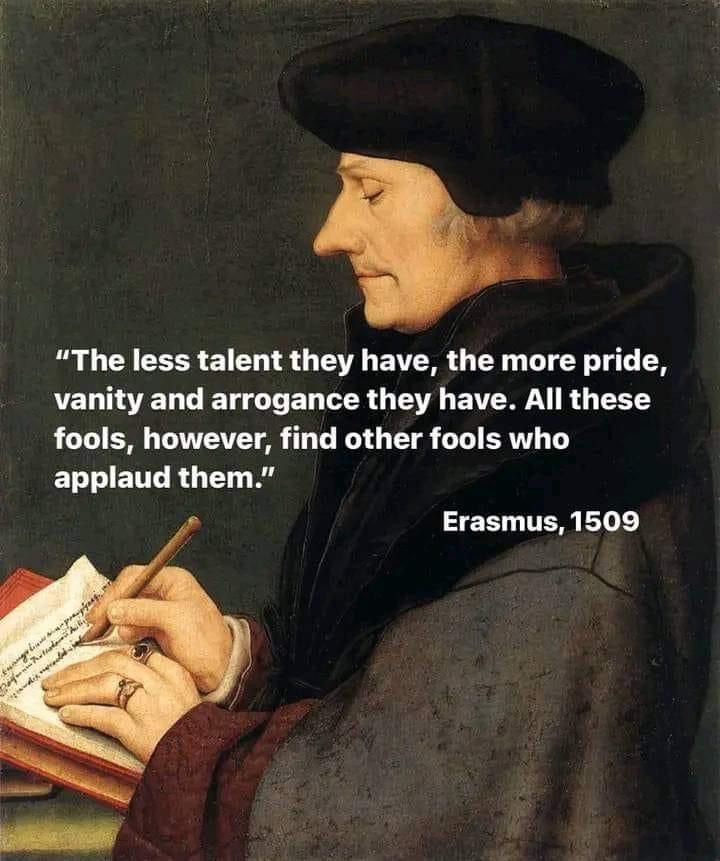
Our world is not divided by race, color, gender, or religion. Our world is divided into wise people and fools. And fools divide themselves by race, color, gender, or religion.
I am not merely a Catholic by affiliation, I nearly walked the path to the priesthood. Scripture, to me, has never been casual reading; it has been studied with the care of a sculptor refining form; patiently, attentively, reverently.
And so I say this with both conviction and humility:
Prayer is not performance. It is not spectacle. It is a sacred act, an intimate communion between the human spirit and the divine. A means not only to speak, but to interface with the heavens, the hosts of heaven themselves.
When we pray, we approach with humility. With thanksgiving. With love. Just as one brings offerings into the house of the Lord, not in arrogance, but in surrender.
Which is why moments of public prayer demand even greater care.
When figures such as Paula White stand before the world in prayer, the expectation is clear: to seek wisdom, not validation. To ask that leaders like Donald Trump be guided toward justice, compassion, peace, and discernment. To intercede for the poor, the vulnerable, and the preservation of life. That is what true supplication looks like.
But to elevate any political figure especially during the sacred solemnity of Holy Week to a comparison with the sinless Son of God is not devotion.
It is error.
And more than that, it borders on blasphemy.
Likewise, when Franklin Graham invokes the Book of Esther as justification for the destruction of a modern nation such as Iran, it reflects not divine insight, but a troubling misapplication of scripture. Context matters. Theology demands responsibility. Sacred texts are not instruments for political ends.
Faith was never meant to be weaponized.
It was meant to guide, to correct, to humble.
And if we are to invoke God in matters of leadership and war, then let it be done with trembling reverence, not confident distortion.
Because the danger is not in believing too deeply but in believing wrongly.
I am ashamed, this is our Holy Week for Gods sake.
God have mercy.
Sikhs in the USA have found themselves the victims of hate crimes and discrimination because they were thought to be Muslim by bigots.
Even then, many of them refused to say "I'm NOT a Muslim.": "It's just not an option for us to throw another community under the bus."
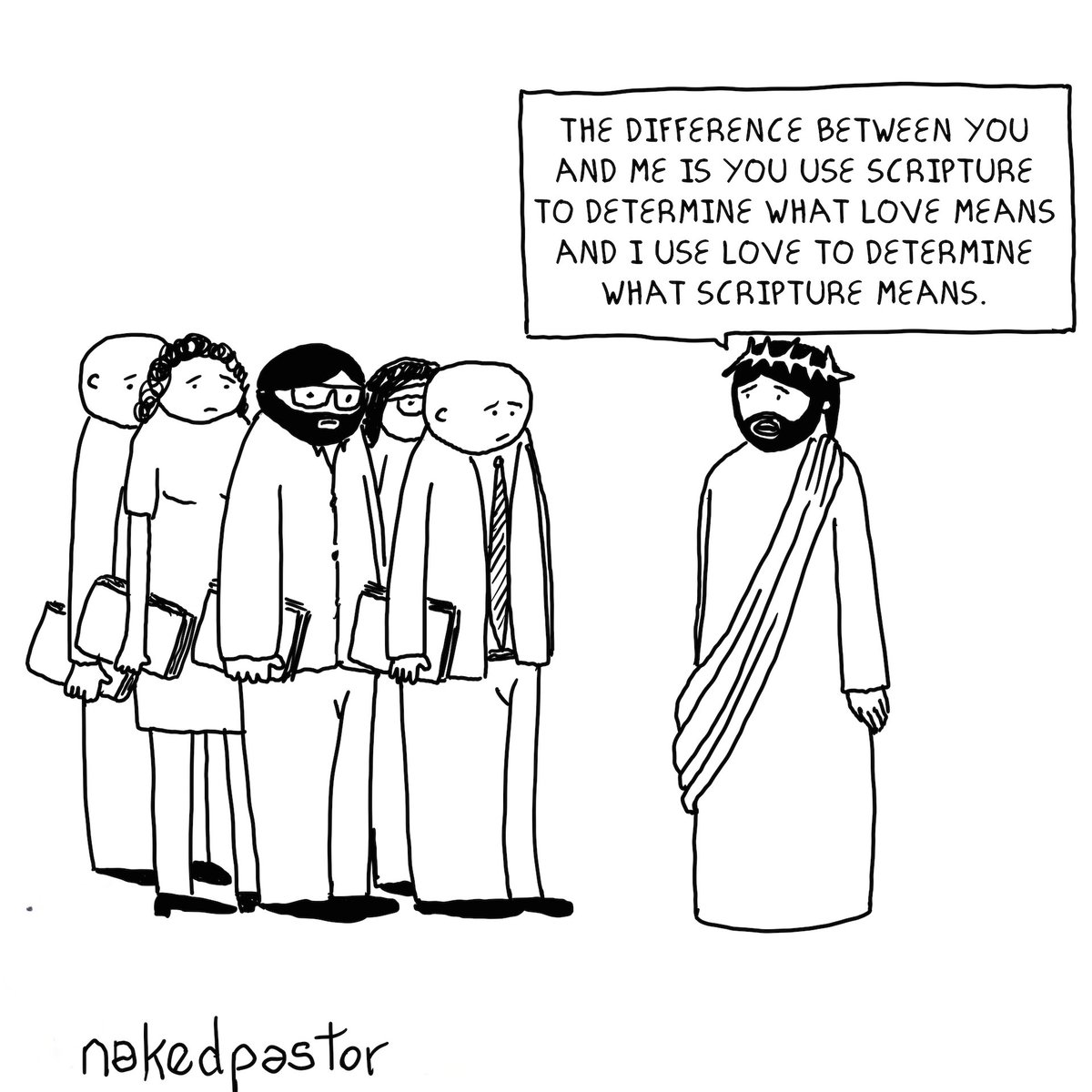
Many of my theologian friends think this is one of my best cartoons. I suppose it's because it illustrates that we interpret scripture through our own fears and fantasies so that they confirm our preconceptions and magically mirror what we already believe. Confirmation bias.
NEW: Days after Pete Hegseth said the U.S. war in Iran is protected by God, Pope Leo XIV denounced those who “involve the name of God in choices of death.”
“God cannot be enlisted in darkness.” https://t.co/CqSXTxCTBS
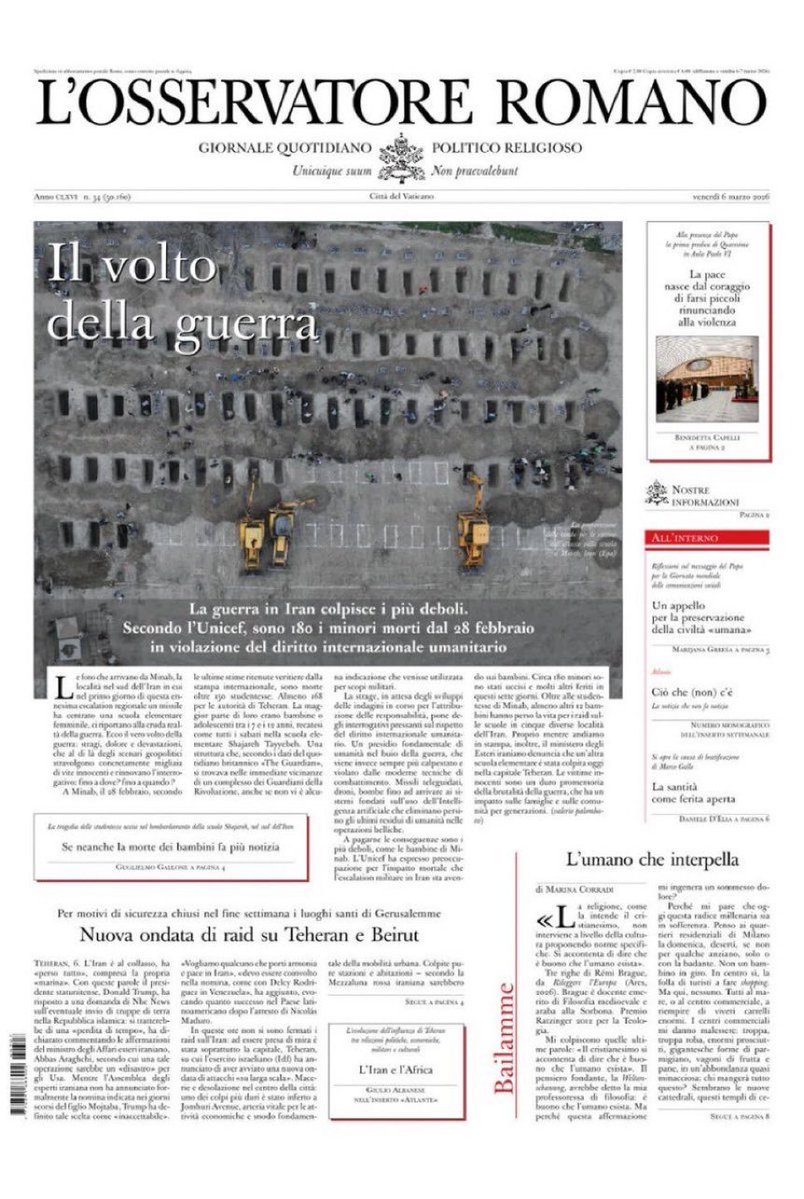
Pope Leo XIV’s Vatican newspaper is the only publication in the Western world to run the photograph of 150 Iranian girls' graves — killed in President Trump's military strikes — on its front page.