In 1943, the Gestapo finally caught Raymond Aubrac — one of France's most wanted Resistance leaders. He was sentenced to death. His execution was days away.
His wife Lucie was six months pregnant.
Most people would have hidden. Would have grieved quietly and prayed for a miracle. Lucie Aubrac did something else entirely. She obtained forged identity papers, constructed a cover story, and walked straight into the office of Klaus Barbie — the man history would remember as the Butcher of Lyon — and convinced him to grant her a visit with the condemned man.
She wasn't there to say goodbye.
She was memorizing guard positions. Counting minutes. Mapping the route the prison truck would take.
On October 21, 1943, that truck rolled through the streets of Lyon carrying Raymond and other prisoners toward what should have been the end. Lucie had spent weeks quietly assembling a team of Resistance fighters, planning an ambush with the precision of a military operation. When the truck reached the ambush point, the team struck — fast, coordinated, and without hesitation.
In the chaos of gunfire and confusion, Raymond Aubrac was pulled free.
Lucie — visibly, unmistakably pregnant — had organized every detail of his liberation.
They went into hiding. Weeks later, Lucie gave birth to their daughter in a safe house while German forces searched for them across France. When liberation finally came, the Aubracs didn't merely survive — they rebuilt.
Raymond became a celebrated engineer and entered public life. Lucie became a historian, pouring decades into ensuring that the women of the French Resistance — so often unnamed, so easily forgotten — were written permanently into the record. They raised three children. They traveled the world. They argued and laughed and grew old together.
When journalists asked Lucie, years later, what had compelled her to risk everything that October day, she didn't hesitate.
"He was my husband. What else would I do?"
Lucie Aubrac passed away in 2007 at the age of 94. Raymond — who had once needed a commando team to be freed from a German prison — lived on until 2012, reaching 97 years old. In his final years, he continued speaking publicly about the Resistance, about memory, about the obligation to tell the truth.
They had been married for 64 years.
Not a love story built on grand gestures or perfect circumstances. A love story built in occupied France, in safe houses and forged documents and a prison truck ambush on a Lyon street — forged in fire, and never broken.
True love doesn't wait for rescue. Sometimes, it does the rescuing
Profundas Verdades que son Ley de Vida: viajar no es coleccionar sellos en el pasaporte, es encontrar lugares que te hacen sentir pequeño.
¿Sabías que en Castellón existe una muralla que parece sacada de Juego de Tronos y casi nadie la conoce?
Hablo de Culla. Este tesoro gótico tiene solo unos 200 vecinos, pero su fortaleza en la cima te deja sin palabras.
Es el plan perfecto si buscas desconectar de verdad y sentir la historia en cada piedra. 🏰
¿Prefieres los destinos turísticos típicos o estas joyas ocultas que mantienen su esencia? Te leo abajo.
A 7-year-old boy slept under a bridge in London. No shoes. No food. No one who knew his name. A young stranger stopped and asked him a simple question — and what the child said next changed history forever.
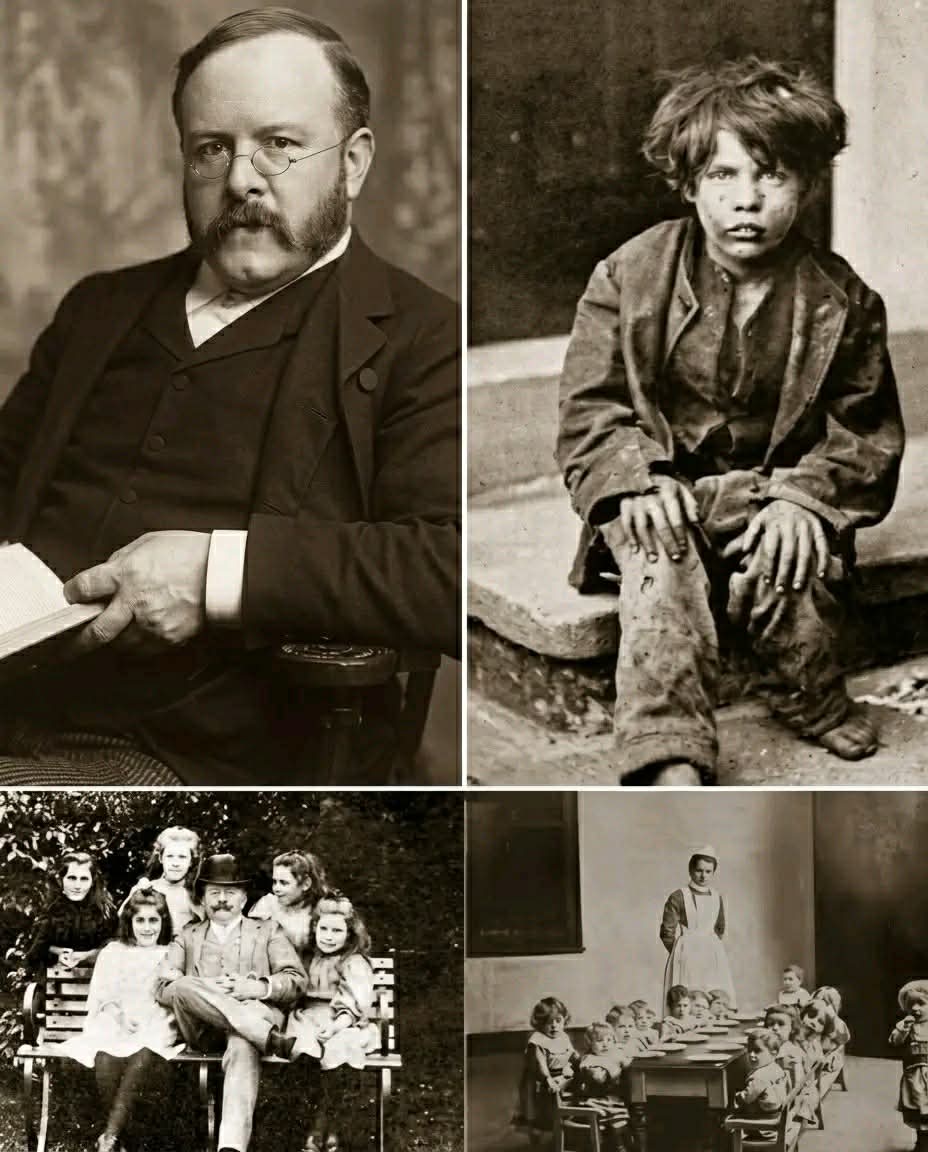
His name was Jim. The year was 1866. London was choking under black factory smoke, and the East End was a maze of sewers, starvation, and invisible children. Jim was one of them — filthy clothes, matted hair, eyes that held pain no child should ever know.
Thomas Barnardo was just a 21-year-old medical student, quietly preparing to travel to China as a missionary. Then he met Jim crouched in a doorway, shivering.
"Are there more like you?" Thomas asked.
"Heaps of 'em, sir," Jim whispered. "More than I can count. We sleep where the dogs won't go."
A few days later, Jim was dead. He died alone in the cold, another child the city had simply forgotten to notice.
Thomas Barnardo never boarded that ship to China.
Instead, in 1870, he opened a small home for abandoned boys in East London. Above the door, he hung a sign that read:
"No destitute child will ever be refused admission."
One night, the home was full and he turned a boy away. Two days later, that same child was found dead from hunger and cold. Thomas wept. He made a vow he never broke: the door would always open.
When critics told him he was crazy and would run out of money, he kept building. More homes. Foster families. Vocational training. He gave street children — children people called "rats" — a trade, a name, and a future.
He didn't ask for papers. He didn't ask for backgrounds. He simply opened the door.
By the time Thomas Barnardo died in 1905, he had rescued more than 60,000 children from the streets of Britain.
Today, Barnardo's is still one of the UK's largest children's charities — still keeping a dead boy's whispered words alive, 160 years later.
Everything began with one man who stopped walking, looked down, and truly saw a child that the rest of the world had decided wasn't worth seeing.
Tag someone who still believes one person can change everything. 💙