Had a super fun, technical conversation with @BrunoCucco , a postdoc at UT Austin who works on developing novel optoelectronics through simulations of quantum physics.
We spoke about Solar Energy, Quantum Material Physics, LED technology, and much more
https://t.co/TRRo5pXJIN
We have a tenure track assistant professorship in computational chemistry and artificial intelligence @TCD_Chemistry@tcddublin open now! #compchem
https://t.co/Fwg6C3TOx8
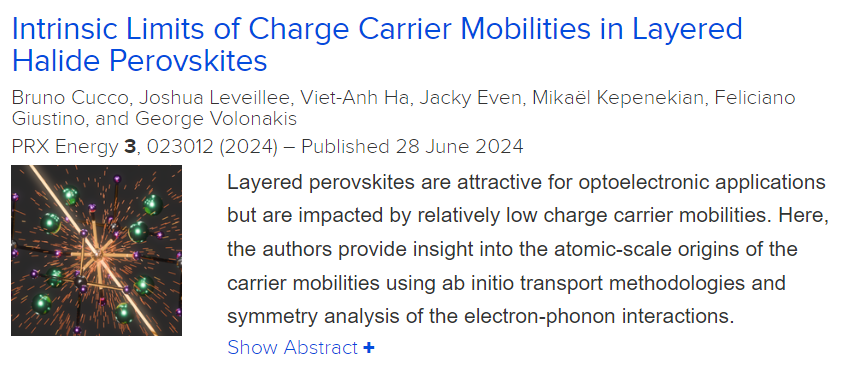
I'm happy to share that our most recent article is now out and published in PRX Energy! In this work, we demonstrated an intrinsic limitation of the carrier transport in layered perovskites. Thank you to all the other authors who made this work possible!
https://t.co/3yeoV4hUNQ
A study from @UTAustin reveals that the extended carrier lifetimes in halide perovskites stem from unconventional electron-phonon interactions, leading to the formation of topological polarons.
In @Physorg_com: https://t.co/tvGcDkI9aV
In PNAS: https://t.co/rCfBDXIyqd
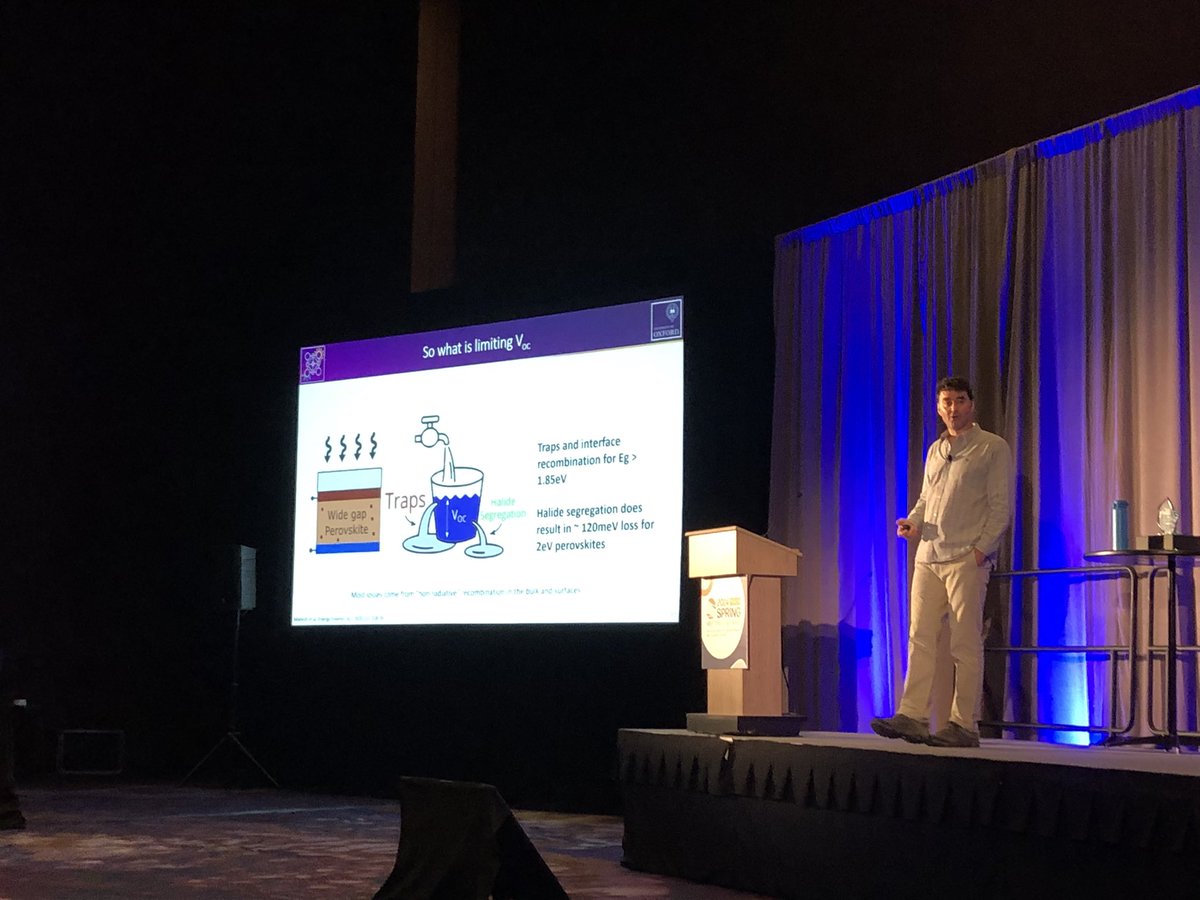
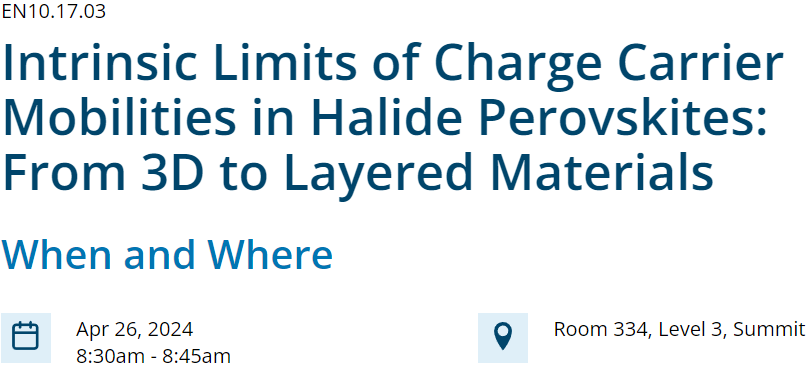
Are you joining the MRS Spring Meeting in Seattle? Are you interested in the transport properties of perovskites?
If you answered yes to both questions come chat on the April 26! In this work we discuss an intrinsic limitation of the charge transport in layered perovskites.
In other news, I've recently moved to UQ and am looking for one more PhD student to work with me in Brisbane! If you're not scared of heat, sunshine and friendly faces, here's the link with all details. Pls share!
https://t.co/Lkdjb82TBd
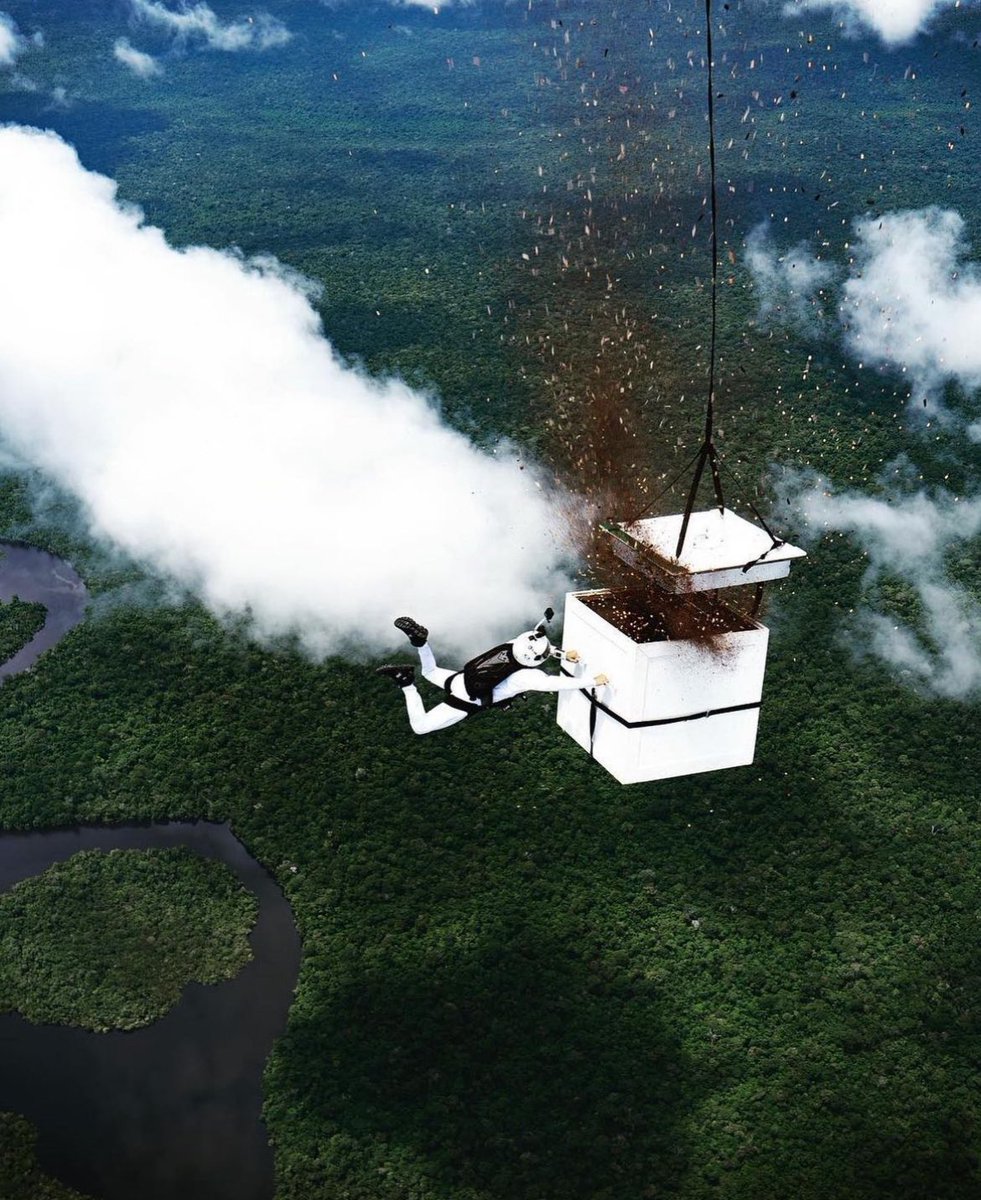
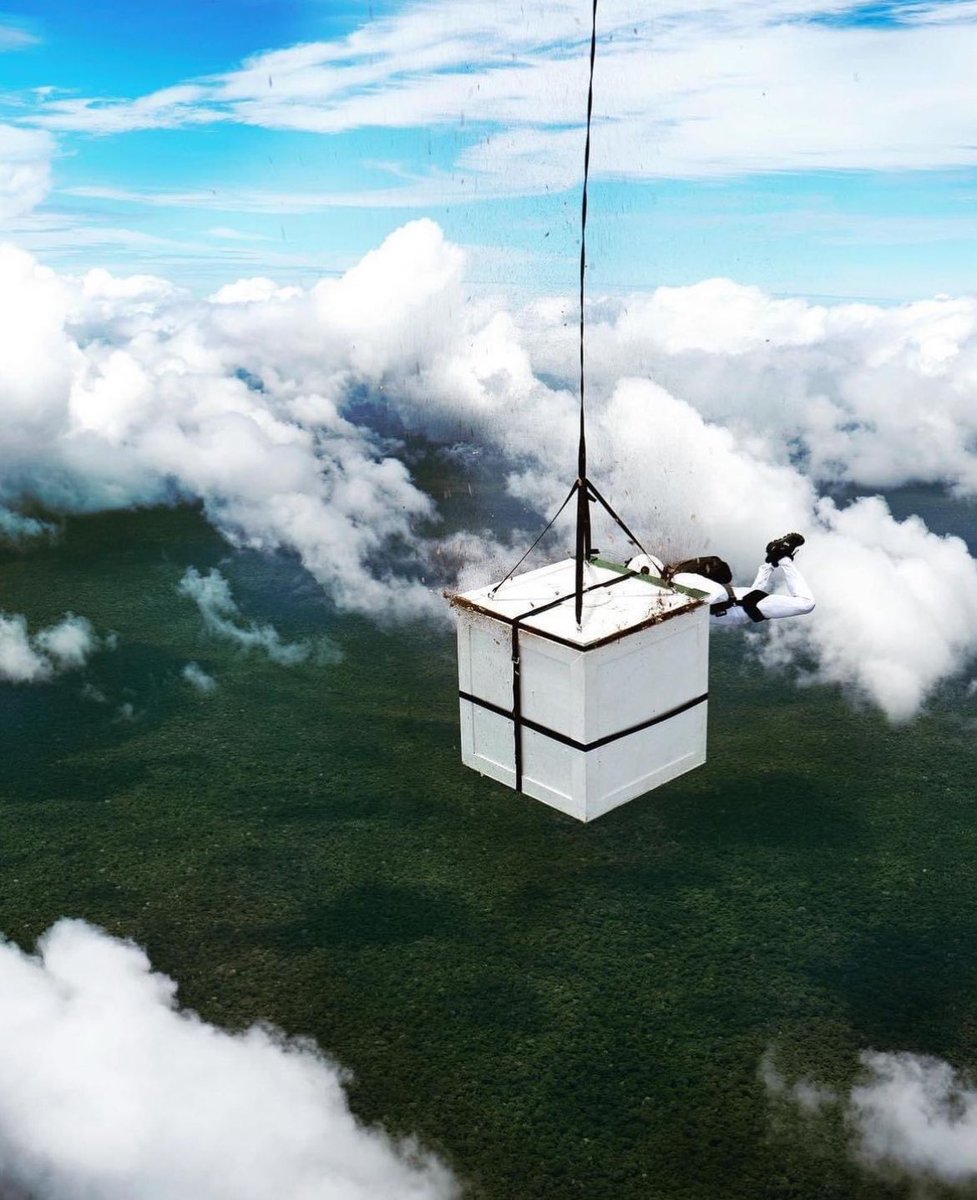
The Brazilian skydiver Luigi Cani executed one of the most important jumps of his life in the Amazon.
On this occasion, the holder of the world record for the smallest parachute jump in the world, took more than 100 million seeds - from 27 species of trees native to the local biome - to a remote deforested area in the heart of the Amazon region.
When Luigi got within 6,500 feet of the deforested area, he plunged at 300 km/h, reached the seed box in free fall and released the seeds at the correct height to ensure precise and even distribution.
The seeds collected for the project have a germination rate of over 95% and do not require human intervention to germinate, so in a few years we will see the fruits of this unprecedented action.