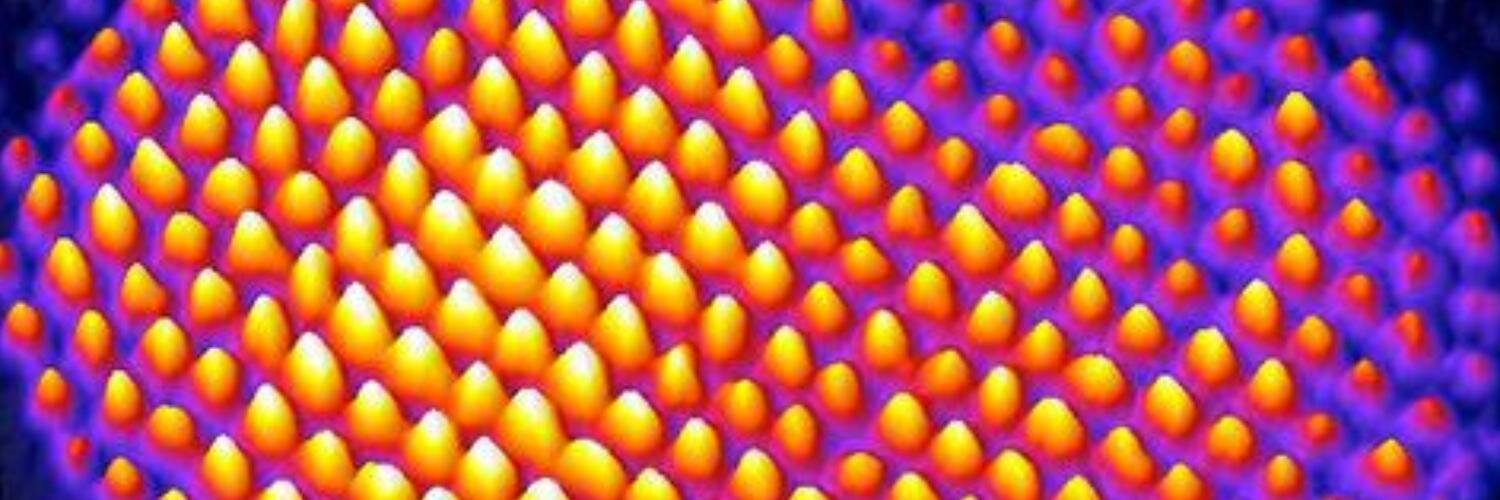
@Jblab@Nature Comparisons among calcium and iron isotopes pointed away from simple mass or neutron excess. The pattern instead tracked shell structure, where particles in the same outer shell coupled much more strongly.
Inside some nuclei, adding neutrons barely changed proton-neutron pairing, but adding protons in the right shell sharply increased it. @Jblab@nature https://t.co/HE8cFdsZUO
@Nature The acceleration happened in short-lived plasma structures upstream of a collisionless shock. The foreshock’s size appears to scale with the whole shock system and may cap how much energy particles can gain.
Near Jupiter, electrons were caught gaining relativistic speeds inside a vast foreshock ahead of the planet’s bow shock. @nresearchnews @nature https://t.co/bKGVZh42Vn
@ScienceMagazine The structure pairs a single-walled molybdenum disulfide tube with an insulating boron nitride tube. Typical methods struggle below 10 nanometers and often produce irregular or multiwalled forms.
A semiconducting nanotube just 1 nanometer wide held its shape inside a protective shell, pushing far below the usual size limit for controlled nanotube growth. @sciencemagazine https://t.co/trsITVbvSp
A topical gel carrying an existing drug pushed burn wounds toward near-complete closure by day 21, while untreated wounds were still not fully shut. https://t.co/yHyX72t84t
Audio from 119 sites showed regenerating forests under the payment program were more acoustically similar to mature forests than to degraded pastures. The overlap changed by time of day, and dawn told a less complete story.
About 1 in 5 U.S. teens and young adults have asked an AI chatbot for mental health advice, and most who do never mention it to anyone. @JAMAPeds https://t.co/fpekLcZf6x
@uclnews@ScienceMagazine The object sits in a galaxy seen when the universe was about 3 billion years old. Its black hole is dormant, so the measurement came from stellar motions rather than bright infalling gas. A natural lens made those motions visible at all.
An almost invisible black hole more than 10 billion light-years away was weighed by tracing the motion of stars around it. @uclnews@sciencemagazine https://t.co/0smOV7sN0G
A blood test signal built from 14 proteins flagged future lung cancer risk up to five years before diagnosis. @thecrick@CellCellPress https://t.co/dLFGHaa6Uh
@NorthwesternU@AAS_Office@arxiv The feature sits within about one parsec of the black hole and aligns with bright X-rays in the same region. Nearby stars do produce winds, but the swept-out cavity appears to require more energy than they can supply.
A hollow cone of missing cold gas near Sagittarius A* may be the long-sought imprint of a black hole wind at the Milky Way’s center. @northwesternu@AAS_Office@arxiv https://t.co/XA9X6IPRFc
A standalone “leaf” turned sunlight, water, and CO2 into liquid methanol, pushing alcohol-producing artificial photosynthesis far past the previous efficiency mark. @yale@J_A_C_S https://t.co/UEVo3DmpVe
Across 18,000 autism family trios, one risk score held up strongly in European ancestry but weakened sharply in other populations. @johnshopkins@NatureGenet https://t.co/T9c2pFs8AC
@NatureComms In a five-year field experiment, warming of 2–4°C marked the shift: photosynthesis weakened while deeper thaw exposed much older carbon. The strongest surge did not come from recent plant matter alone.
A narrow warming band may flip Tibetan permafrost from leaking carbon to unlocking much older stores buried deep in frozen soil. @NatureComms https://t.co/xOf80jbf84
One accidental mouse swap pointed to something less obvious: mice watching a cage mate’s choice later shifted their own social decisions. @NatureNeuro https://t.co/BINXXOR1HJ