I am thrilled to finally be able to share some results of my PhD
Check out my new paper!
In Iberian landfills, competition for food between white storks is high. Skills for foraging in landfills are likely to develop with age and experience.
https://t.co/2YhxOj7FrS
6/6 #BOU2023#Sesh5
We reveal substantial age differences in access to food and high competition for resources at landfill sites.
Adults have access to the best feeding areas contrasting with juveniles, hence the use of junk food may be selected for or learned during maturation.
1/6 #BOU2023#Sesh5
Landfills attract high densities of junk food-addicted species, creating human-wildlife conflicts.
However, it is not clear if this high resource abundance is available to all #birds.
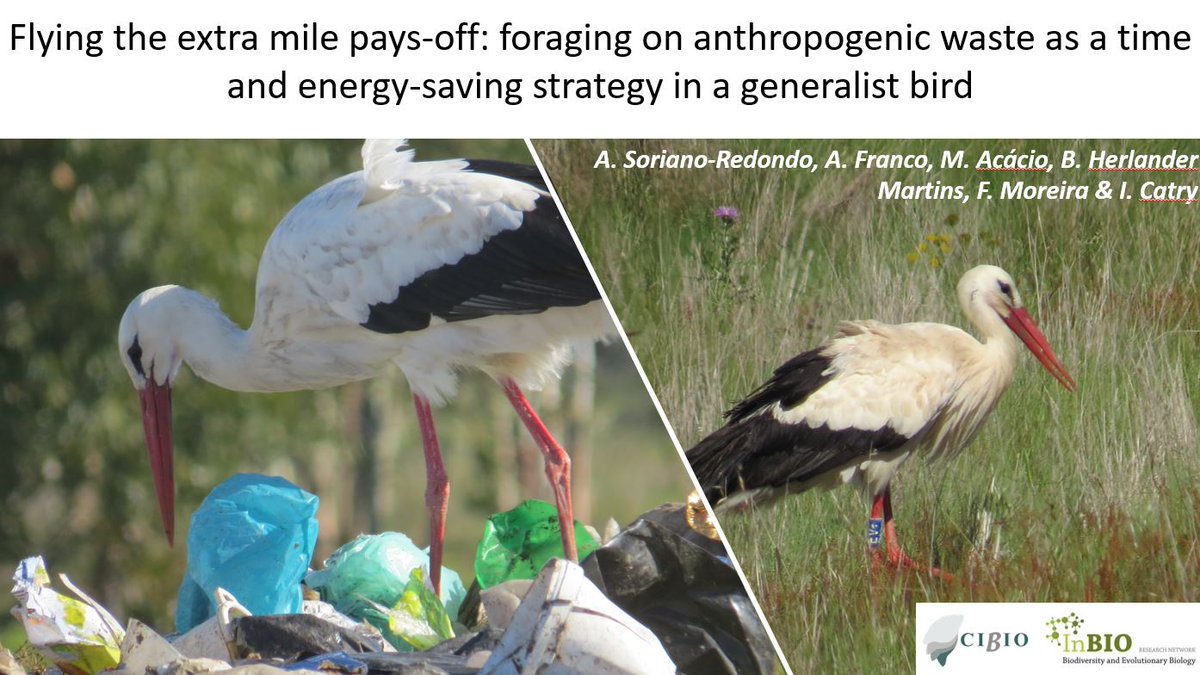
We analyse age/experience differences in #whitestork access to junk food.
5/6 #BOU2023#Sesh5
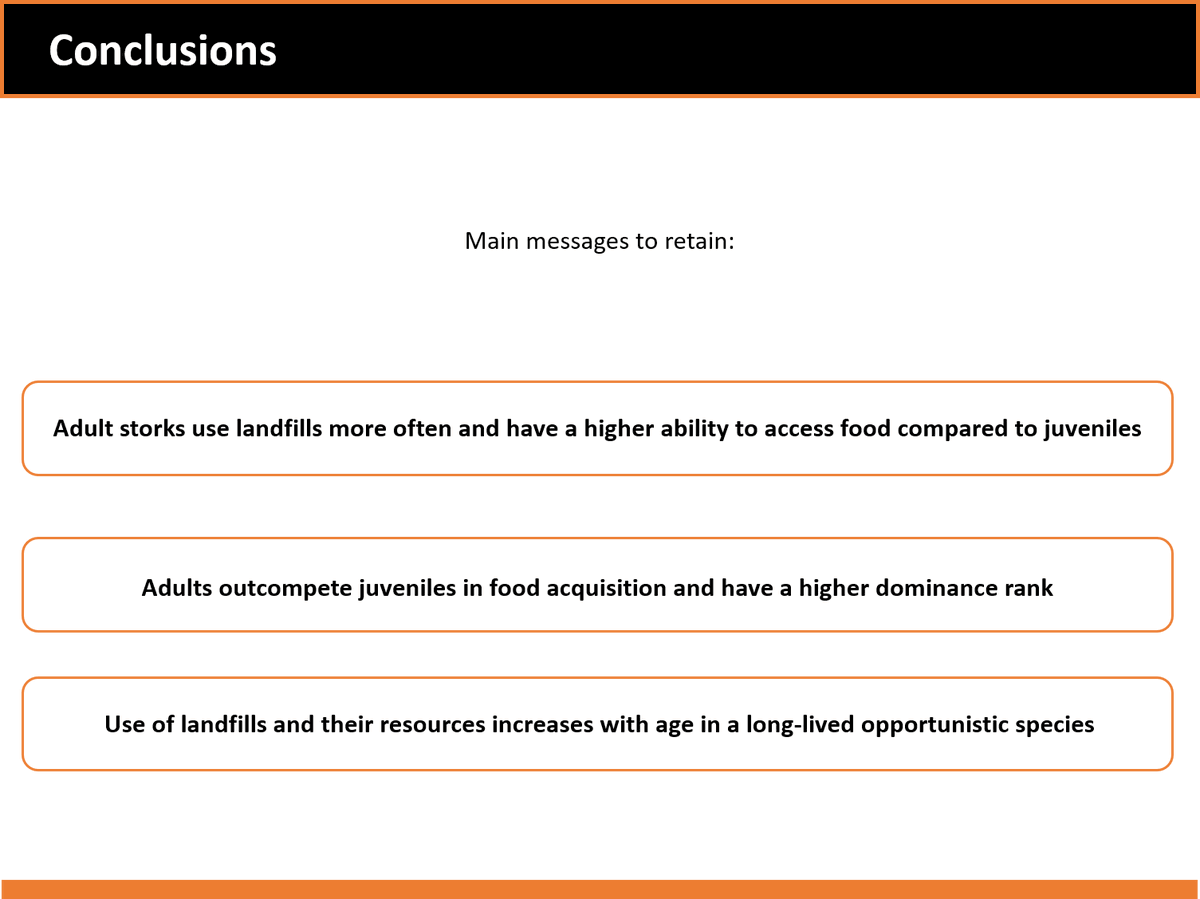
Adults spent more time foraging in core areas than juveniles and had a higher food intake.
Adults showed a higher dominance rank, outcompeting the juveniles over food resources.
@CIBIO_InBIO@ueaenv
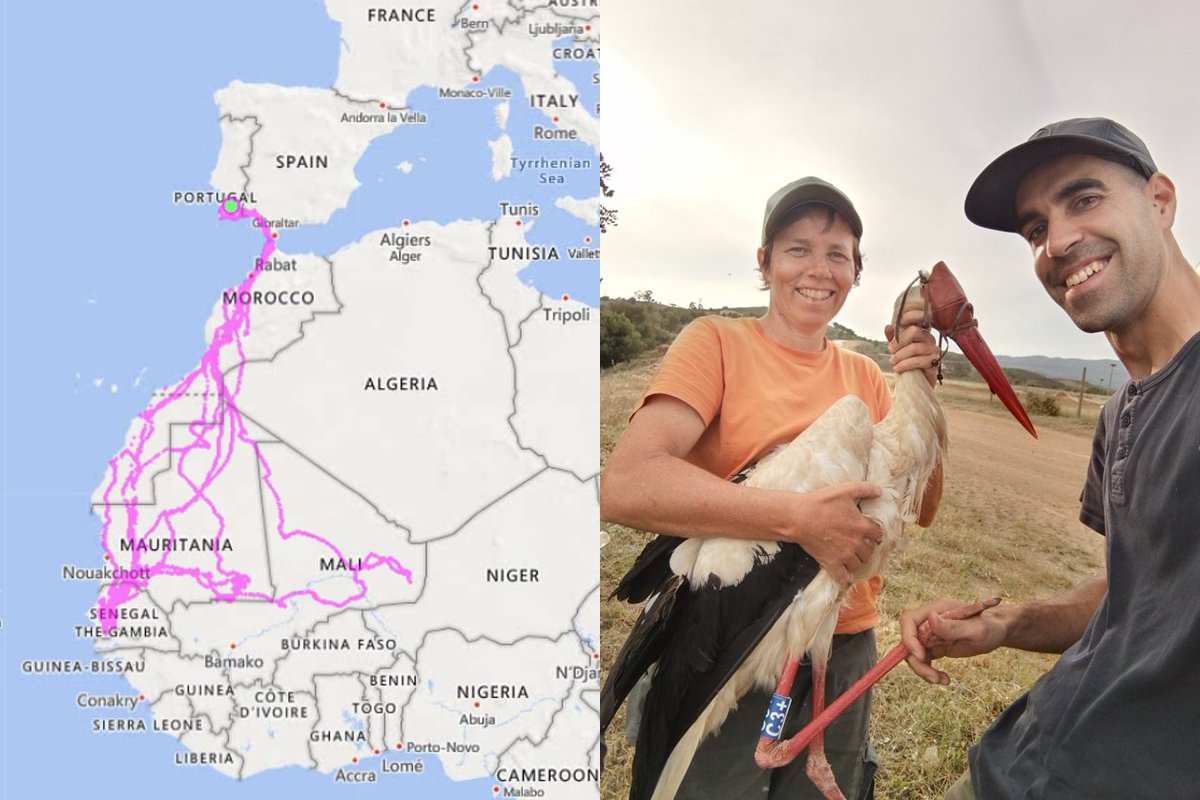
Brás is a long-distance migratory #whitestork tagged in the nest as a chick in 2018.
After 4 years, we managed to capture it again as a young breeding male and now we hope to be able to continue tracking it for a few more years and see if it will keep its migratory strategy.
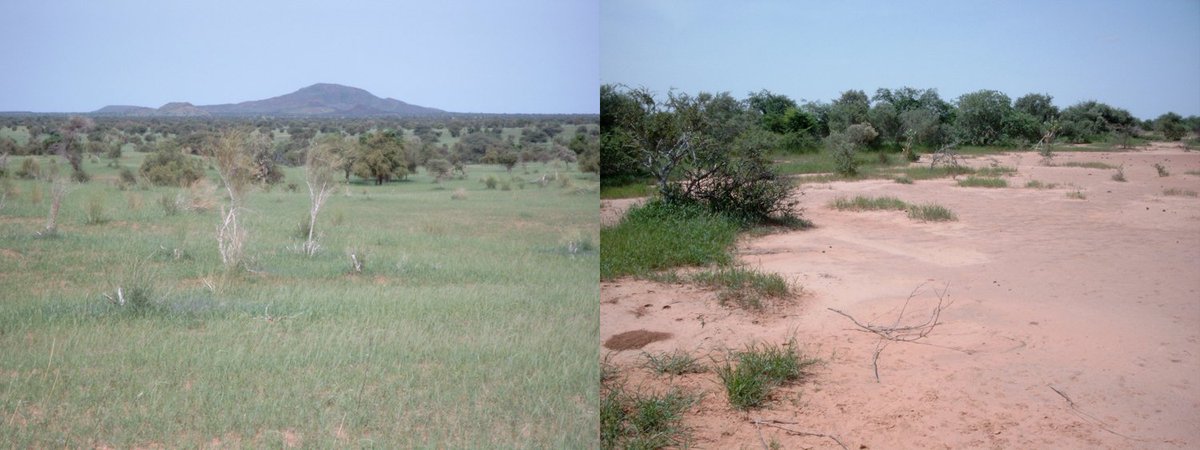
Have you ever wondered how #Whitestorks wintering sites look like?
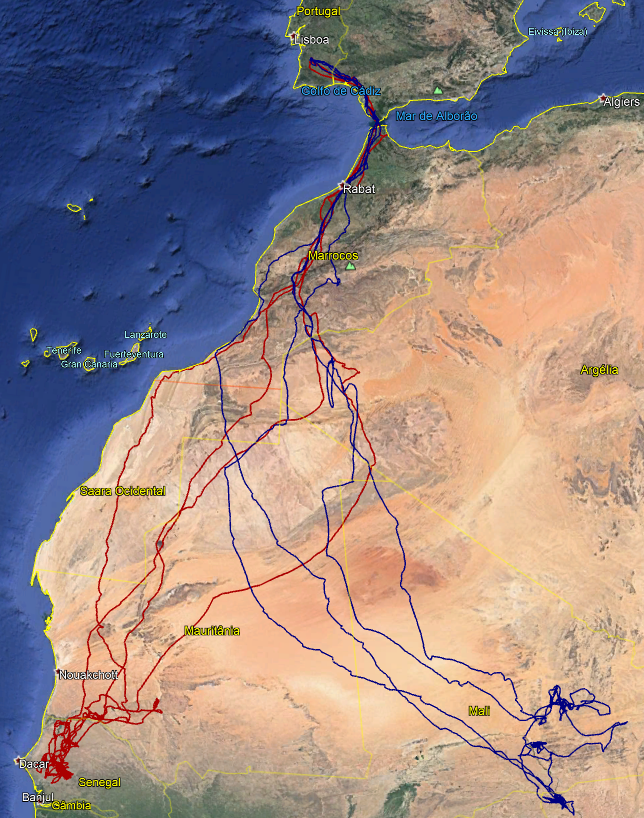
The wintering sites of our GPS-tagged migratory storks usually cover areas of agro-forestry-pastoral systems that can range from Senegal to Niger.
It is amazing to see how Ruína (female) and Casével (male), our resident pair of #Whitestorks, despite not spending the winters together, are very consistent in the pattern of their movements and always seem to return to the nest less than a week apart! #ornithology
Our last migratory #WhiteStork adults are back and it's incredible to see how consistent they are! Mimosa (blue) and Alvalade (red) migrate to the same areas in Africa year after year, and have now returned to their nests with only 2-5 days difference from 2020! #ornithology
Our actions can affect #wildlife so quickly!
During this #pandemic, we can see disposable masks everywhere, but especially at the landfills, the increased number of these masks show how fast our waste provides large food sources but also increases wildlife exposure to new risks.
Are you attending the @PortugalEcology conference tomorrow and/or the @BritishEcolSoc Festival of Ecology next week? If so, don’t forget to see the talks from our team, presenting our newest results on our resident and migratory #WhiteStorks! @CIBIO_InBIO@ueaenv
A Tapada da Ajuda é um espaço único de #Biodiversidade da cidade de #Lisboa. Em Maio de 2021 realiza-se o 1º #BioBlitzTapada, que conta com investigadores para catalogar e identificar o maior número possível de espécies.
🍄🌿🦋🦎🕷️🐍🦉🐝🐟🐌🦊🌼🐞
Fique atento às novidades!
#WhiteStork winter census in Portugal confirms the substantial increase in resident individuals and suggest a solid change in the #migratory behaviour towards full residency! Long-term monitoring is really important to assess population trends and changes in species behaviour!
❗️RESULTS of the IX Portuguese white-stork winter census❗️
Between 5-9 Oct 2020 we counted 19,000 (!!) #WhiteStorks in Portugal. In the last 25 years, the proportion of resident individuals increased substantially! Is this the end of #WhiteStork migration as we know it?
Did you know that human food waste is providing new predictable food sources in large quantities for #wildlife species worldwide! These resources are playing an important role in #Whitestork life-history traits. Find out more on @BirdsMove. #cE3cSciMed