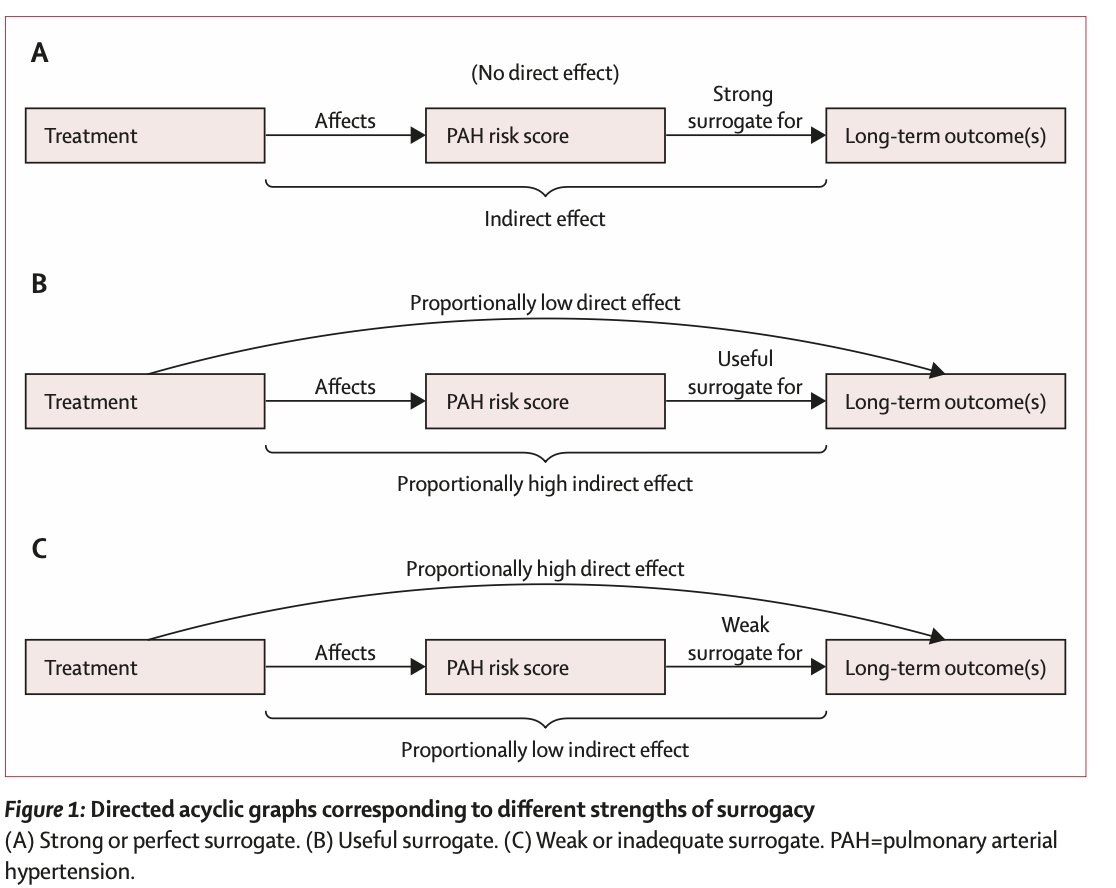
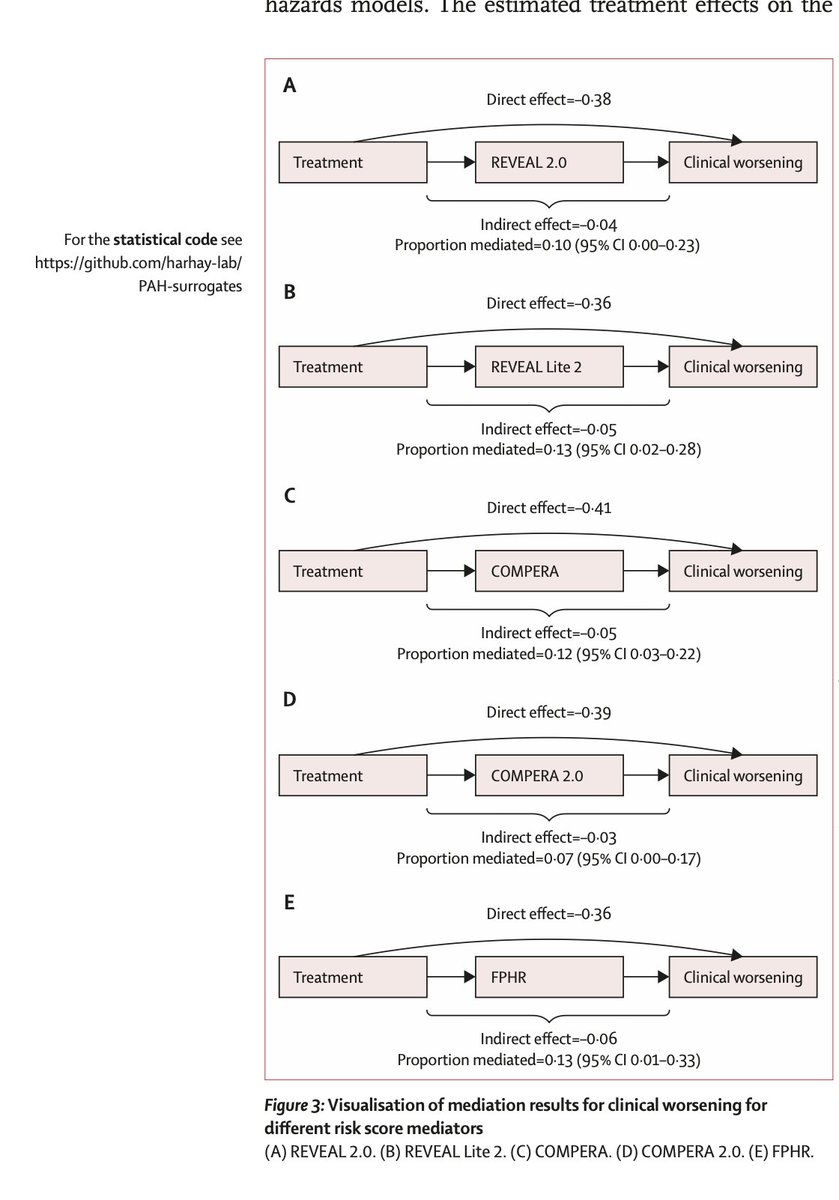
In a beautiful bookend to his time w/ us at @PennCausal, @BryanBlette is presenting our new @LancetRespirMed article on surrogate outcomes in pulmonary hypertension at @ATS_PC today!
Most proud that we got these figures into a Lancet journal!!
@FanLi90
https://t.co/Y6J1vb3niR
@RobinBlythe5 @Michael_Harhay@andersgranholm @msh_manu @AndersPerner @FanLi90@INCEPTdk Thanks! "Causal BART" is essentially a fancy way of saying we did g-computation, but used BART to model the outcome process as flexibly as possible. Some great work pioneered by Jennifer Hill and others on this framework. We also used trial data with a randomized treatment
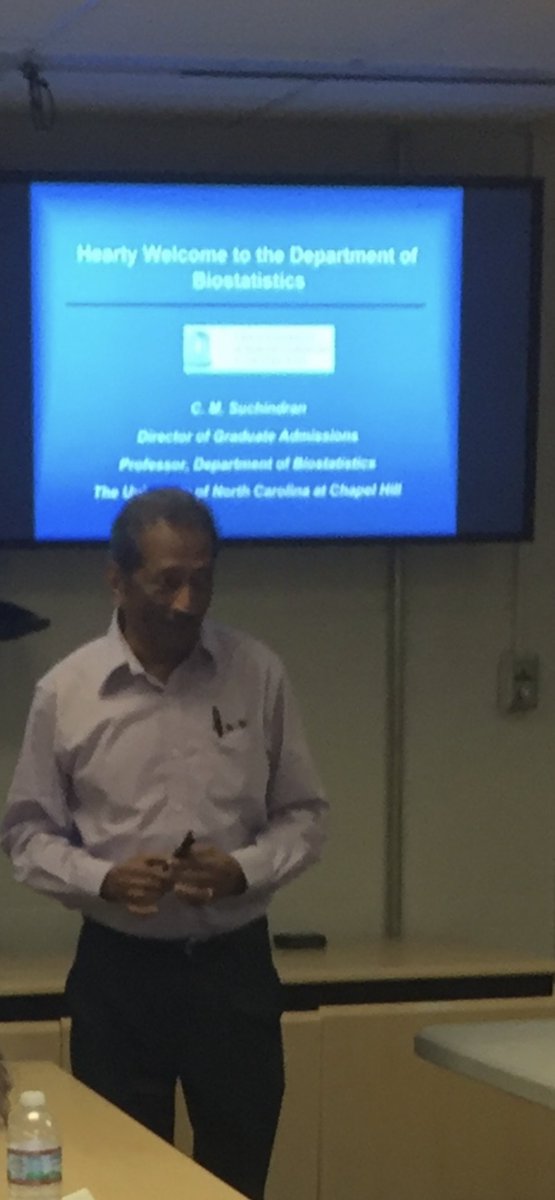
Suchi was the first person most incoming UNC biostat students would meet after enrolling. A kind soul who really cared about students and made sure they were set up for success in the beginning of the grad program
My condolences to his family
Excited to be joining the faculty at @vandy_biostat later this year!
Many thanks to my mentors at UNC and Penn over the last several years for helping me grow as a scientist. Looking forward to continuing my research at Vanderbilt and starting new collaborations!
Best of December 2022: The University will raise the minimum Ph.D. stipend to $38,000, beginning in the coming 2023-24 academic year, the largest one-time increase in Penn’s history.
https://t.co/jX5hNlbNrL
@LucyStats Oh interesting. You should expand this into a simulation paper on "How much (non-structural) positivity violation is too much" if not already done. I think maybe only has been done for the corresponding problem in the discrete setting
@LucyStats But if you increase number of simulations rather than n, it still might look to have decent performance under certain mild positivity violations? But not sure tbh
@LucyStats No I was surprised too the first time. I guess it's logical, but it's not really talked about
There's also a nuance between positivity as written (which holds here because normal distributions have infinite support) and positivity in finite data (which wouldn't hold for any n)
@LucyStats Running simulations made me realize how much stronger the positivity assumption is for the continuous exposure setting than it is for binary exposures!
Observational Studies is excited to announce our new special issue "Rebels with a Cause: Monologues from Heckman, Pearl, Robins, and Rubin": https://t.co/W1uipH5VKr
These fascinating monologues are followed by insightful perspectives by Didelez, Mealli, and Tchetgen Tchetgen
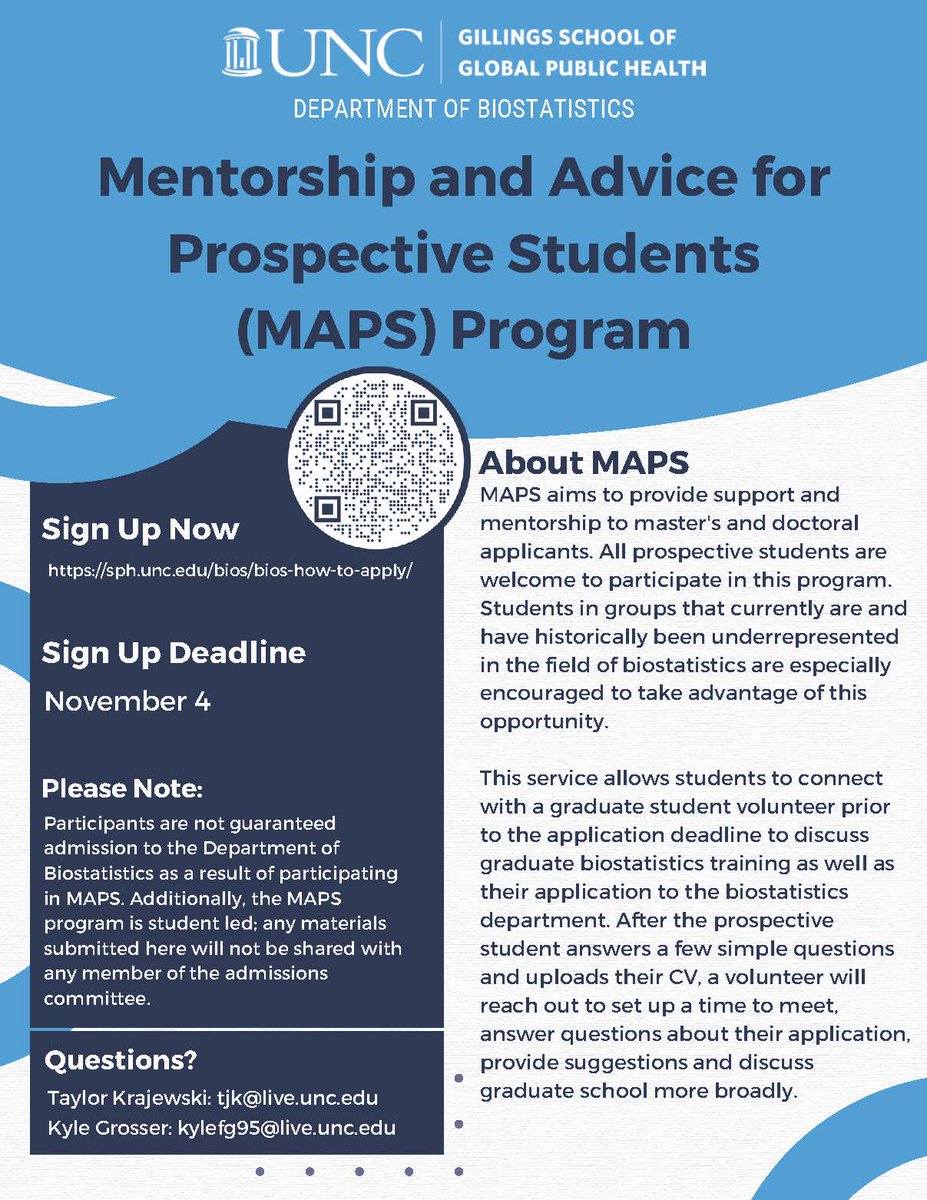
Is Carolina on your mind? @UNCpublichealth#Gillings#UNCbios MAPS -Mentorship & Advice for Prospective Students Program support mentorship to master's and doctoral applicants. https://t.co/FBXhTFerCC
@UNCpublichealth Just to clarify, is the global mortality rate expected to increase by 60% because of hot nights, or is the rate of mortality-attributed-to-hot-nights expected to increase by 60%?
Looking forward to first JSM in person since 2019. I'll be presenting "Addressing Confounding and Continuous Exposure Measurement Error Using Conditional Score Functions" today at 2:20PM in Room CC-201