I agree. Could we please get a function on X to "drive" or "pilot" our individual algorithm?
I know I get only one side of many arguments because rarely I stumble into a post with many comments all supporting an idea which doesn't make sense to me.
I want to be able to zoom out on the topics my algorithm is pointing me to, and be able to look at adjacent ideas. Maybe the controls would allow for tuning for less or more agreement with what I usually look at, or I'd be able to see a map of how an AI bundles the topics I usually receive on my timeline, and I would be able on the map to navigate to other topics.
The funny thing about craniosacral therapy is the skills work with animals, too.
I find my clients experience significant shifts in their body when I accurately listen to the small sensations in and around their tissue. It's eerie, but when I experience the image in my mind of the client's tissue suddenly becoming more detailed, the clients body then immediately adjusts. As if it was waiting to be understood before it let go of the pain or tightness.
When I work with animals, my understanding of cat, horse, and dog anatomy is minimal, so I'm left focusing on sensations which describe things you wouldn't find in an anatomy textbook, like long tide or reaction heat.
But the experience is still the same. When my mind lands on an accurate image of the client's (cat's?) tissue's experience, shifts happen.
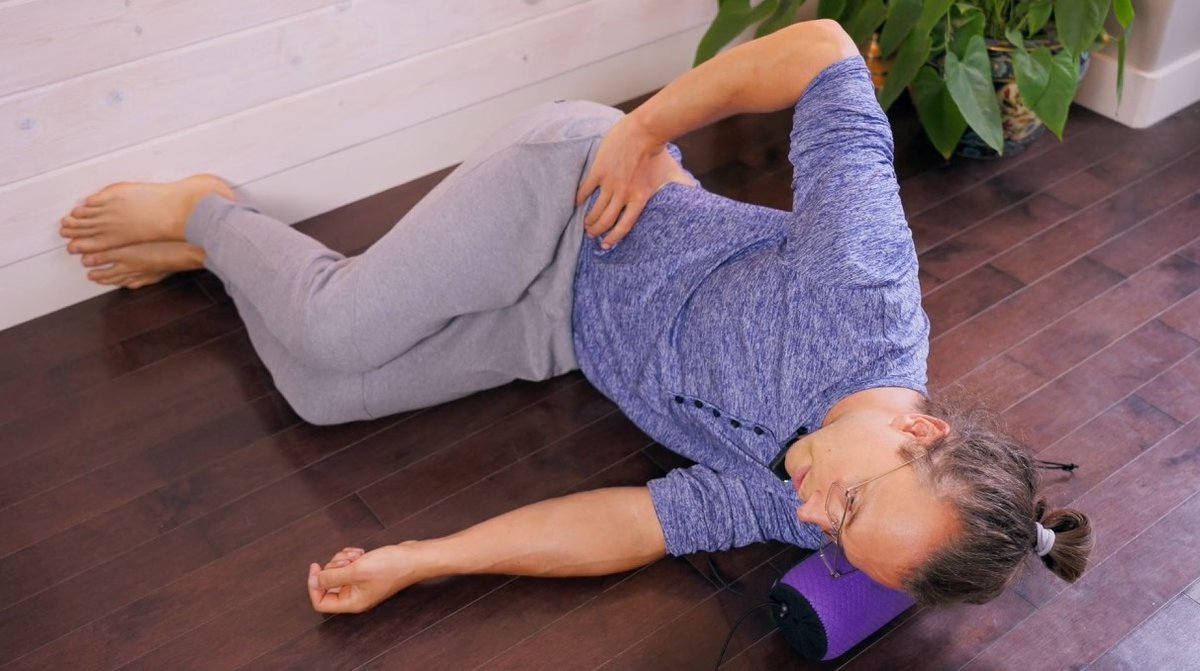
If you're signing up for my $50/session deal for the grand opening of my 14 St location, for better or worse Princess Jellybean won't be there. This photo is from a shoot in my home.
I can bring some cat hair if you would like.
Stretching is not the opposite of strengthening (contracting).
Relaxing is the opposite of contracting. Stretching is just one method of relaxing a muscle.
The truth about tight muscles and joints is they have some nearby tissues which need to be relaxed and some which need to be strengthened.
Pro-Tip: relax first, then find what needs to be strengthened.
Sometimes relaxation and strengthening can be done with a single activity.
A short (10min) daily warmup is the greatest investment to reduce pain and increase flexibility.
Fancy technology is not a free pass for the need to fully inhabit the human body. Use it or lose it.
Persistence is the only way to overcome pains with complicated causes. A thoroughly lived personal routine will eventually create freedom from pain.
4/4
Trying to sort out back pain and other more nebulous pains is challenging because the individual needs to find a dozen processes which help, and do them all in one session to get permanent cessation of the problem and know the processes were each helpful.
1/4
Specifically, remember every activity that seemed to work from that physio who didn't fully resolve the problem. Add those to every maneuver learned on X, etc.
Do them all when there is an issue, and then search for someone who can add more knowledge to the pile.
3/4
If you have back pain / hip pain / shoulder pain you need to include non-moving positional drills in your rehab routine. To remember how to do their job, some muscles require no activation of larger or more dominant musculature. Resting positions like these are necessary.
Do you have a minute and a half?
If you're experiencing joint or back pain, the best activities which will eliminate the pain and balance your body will take the least amount of time to perform. ~20 seconds each. They need to be specific to your alignment to be this good.
It certainly does, thanks for taking the time to elaborate - in what I experienced as a poetic style, too.
It seems like you're saying animes can make obvious character development which is often muddled by other art forms.
What you shared resonates with an idea I have, that anime is wonderful because they get to bend reality to make clear the meaning of the art. In a moment of anime, characters can become exact avatars of a single urge or personality flavour we have mixed within our human selves. The characters magnify it so anyone looking to experience that part of themselves cannot miss it.
Is that part of it for you?
That starting point for most people is the very beginning - lying on their back, and pulling one heel along the ground toward their hip. I know only one person who teaches regressions this accessible and they aren't active on social media. Who else has picked up on this?
We've got ab and core exercises on lockdown - we know all we need for every person to have a wickedly strong core.
But trainers and gurus still progress exercises too fast, and don't know which exercises to start with.