Explore Sri Lanka July 2026
This edition of Explore Sri Lanka features articles on: Udayshanth Fernando and the Story of Living Design; Sofia Colombo City Hotel; St Paul's Church, Kandy; Maradana Railway Station; Indu Dharmasena and more.
Visit: https://t.co/HSyYUM99p9
Cover: Escape above the city with endless ocean views at Sofia Colombo.
Udayshanth Fernando and the Story of Living Design
For over four decades, Udayshanth Fernando has transformed the way Sri Lankans experience design. The publication of Living Design by Rizzoli New York marks a defining moment by placing his journey and Sri Lankan design on the international stage, establishing the impact of his lifelong vision.
Words: Jennifer Paldano Goonewardane.
Building on this foundation, through Paradise Road, The Gallery Café, Tintagel Colombo, and many design ventures, Udayshanth Fernando has built a creative universe that is recognizable yet defies a single style. His aesthetic shapes Sri Lanka’s contemporary visual identity, influencing hospitality, retail, art collecting, and interior design.
This creative journey has been extensively documented. Touted as the first monograph of his work, the book was Saskia’s idea, not Fernando’s. “On my 70th birthday, my daughter gave me a folder and promised to document my life’s work. This is the result after six years,” he says.
The result is a lavishly produced monograph that chronicles an entire philosophy of living—one that has always placed design at the center of everyday life.
The book features essays by Sean Anderson, architect, scholar and curator; Sonal Singh, head of Christie’s India and a specialist in modern and contemporary Indian art; and Bandana Tewari, cultural journalist and former Editor-at-Large of Vogue India. The photographs are by Sebastian Posingis and Dominic Sansoni. As Fernando notes, they know him and his work well enough to offer an honest and insightful perspective on his creative journey.
Further reflecting his design philosophy, Fernando’s world centers on an extraordinary private art collection with over a thousand original works housed in his home. The residence was built around the collection, featuring a central gallery space of nearly 4,000 square feet.
What visitors encountered at the Galle Road gallery during the launch exhibition represented only a fraction of what exists behind those walls, maybe just five percent, remarks Fernando.
The displayed works were chosen to complement Living Design, letting visitors see the book’s featured pieces in person. For Fernando, the collection is about more than ownership; he plans to turn his home into a public gallery, reflecting his belief that art should be shared and accessible.
Fernando describes himself as a “clever art collector,” but the phrase understates the instinct that has guided him for decades.
Before many artists found acclaim, Fernando identified talent, acquired works, and gave up-and-coming creators exhibitions at Paradise Road Galleries and The Gallery Cafe. He finds fulfillment in discovering and supporting artists, making Paradise Road Galleries a top platform for contemporary art in Sri Lanka. For nearly thirty years, his spaces have held exhibitions regardless of commercial outcome, with each receiving the same attention and care. For Fernando, it’s about creating opportunities and nurturing an artistic community, not profit.
His early support for artists shaped both his gallery’s reputation and his success.
This generosity made him one of the nation’s top collectors. By spotting talent before the market, he built a collection of lasting cultural and financial value.
Of course, his art-collecting spree began more than four decades ago, when Sri Lanka had some of the greatest painters in its history. Among his prized possessions is a rare masterpiece by the legendary Sri Lankan artist George Keyt, a painting of the Sangaraja Pirivena of the Malwatte Chapter, acquired decades ago for a fraction of what it would command today. Stories such as these are woven throughout his collection, stories of timing, intuition, and belief. If there is one word Fernando repeatedly returns to when describing his work, it is “eclectic.”
Continuing this thread, the Paradise Road aesthetic is celebrated for merging contrasts: old and new, East and West, antique and contemporary. Yet Fernando resists easy categorization. He draws inspiration from many cultures, eras, and disciplines. “I combine ancient objects, modern objects, modern furniture, furnishings, carpets, and antique carpets,” he explains. In his creative world, things both complement and contrast. Remarkably, Fernando did this without formal training. “I’m self-taught,” he says. The result is an individual sensibility that now resonates with audiences beyond Sri Lanka.
One recurring theme in Living Design is Fernando’s pride in his Sri Lankan identity. Although his work enjoys international recognition and appeal, he remains deeply rooted in the country that shaped him. “I’m proudly Sri Lankan,” he says.
He views the Rizzoli publication as a chance to showcase Sri Lankan creativity to a global audience, advancing the message that Sri Lankan design has a vibrant, unique voice that challenges outdated perceptions and deserves international recognition.
For decades, Sri Lankan design has been viewed mainly through a lens of tropical modernism and colonial influences. Fernando’s work offers an alternative. His interiors escape convention. “Minimalism is finished,” he says. “People need warmth.” That warmth is everywhere—from The Gallery Café’s weathered walls to the curated objects in his home. His spaces carry memory, patina, and personality.
Despite the spotlight on his career, Fernando credits discipline for his success. Intensely private, he often declines social events others consider essential.
This focus on discipline and privacy is born of necessity—time. His days are split among a wide range of roles: retailer, product designer, hotelier, restaurateur, collector, curator, and entrepreneur. He is deeply involved in every area of his businesses.
Such personal involvement also extends to his most enduring enterprises. The Gallery Café’s nearly thirty-year run is a result of his hands-on approach.
“I go there every day,” he says. The consistency patrons expect results from his constant attention and refusal to compromise standards. His unwavering commitment stems from experience. Beneath success lies resilience. Fernando lost both parents by nineteen, and by twenty-two, land reforms had stripped away much of his family’s wealth. He rebuilt from the ground up. Thus, he credits perseverance rather than privilege for his current position.
“I focused on my life to succeed, not to make money.” Wealth followed as a consequence of pursuing excellence rather than as the goal.
The title “Living Design” captures Fernando’s message: design enriches everyday life and should be integrated into it. He believes that surrounding oneself with art, objects, and beautiful spaces creates environments that nurture creativity, conversation, and experience. For Fernando, design is not a distant ideal but a way of life. As Living Design reaches shelves around the world, it carries more than a personal narrative: it shares the story of a Sri Lankan visionary who has elevated his country’s design legacy while staying rooted at home. For Udayshanth Fernando, this impact—shaping global perceptions—stands as his most meaningful achievement.
Sofia Colombo City Hotel: Where Business Meets Leisure in the Heart of the City
Rising along the vibrant stretch of Galle Road in Colombo, Sofia Colombo City Hotel embodies a contemporary urban elegance that is welcoming and refreshingly uncomplicated.
Words: Jennifer Paldano Goonewardane.
The first impression of Sofia Colombo City Hotel is one of unobtrusive sophistication. It is a place where convenience, comfort, and thoughtful service come together to create an experience tailored to the modern traveler.
Just a few years after opening its doors in January 2023, Sofia Colombo City Hotel has developed a reputation that extends well beyond its size. It offers something increasingly valuable in modern hospitality: authenticity.
Guests are welcomed not merely as customers but as individuals whose comfort and experience genuinely matter.
Complementing this demeanor is its distinctive identity within the city��s hospitality landscape, as Colombo continues to evolve as a regional business hub and tourism gateway.
Positioned in the heart of Kollupitiya, the hotel offers guests immediate access to some of Colombo’s most popular shopping destinations, the iconic Galle Face Green, the bustling commercial districts, and the colorful bazaars of Pettah. For visitors with limited time, few locations provide such easy access to the many facets of Colombo life.
The hotel represents the growing concept of “bleisure” travel—a seamless blend of business and leisure. This philosophy is reflected in every aspect of the property, from its efficient design and amenities to its guest experience. While many travelers arrive in Colombo for corporate engagements, Sofia ensures that they can also enjoy moments of relaxation and discovery during their stay.
At the helm of this vision is General Manager Sugath Illangakoon, who joined the property as its pre-opening General Manager and has played a key role in shaping its culture and identity. For Illangakoon, hospitality is a lifestyle – a philosophy influencing Sofia’s service culture, creating an environment where genuine warmth and attentiveness define the guest experience.
“Perfect Bleisure” is the hotel’s tagline, and it captures the essence of what Sofia aims to deliver.
The property is designed primarily for business travelers, yet it offers enough leisure facilities to ensure guests can unwind after a productive day. The result is a balanced hospitality experience that feels both efficient and personal.
Built on a compact city footprint, Sofia Colombo demonstrates how intelligent design can maximize comfort and functionality.
The hotel features 212 rooms spread across 11 floors, offering contemporary accommodation equipped with modern conveniences. The rooms are thoughtfully designed to meet the needs of today’s traveler, providing comfort without unnecessary excess.
One of the hotel’s most impressive features is its rooftop swimming pool. Set high above the city, it offers guests a rare opportunity to relax while enjoying panoramic views of Colombo’s skyline. The rooftop space has become one of the property’s defining attractions, complemented by a modern fitness center that caters to health-conscious travelers and sports teams alike.
The arrival experience at Sofia is unlike that of many traditional hotels. Guests are welcomed at a reception located on the tenth floor, an unconventional but memorable approach that immediately introduces visitors to the hotel’s contemporary character. The elevated reception area opens into inviting dining and lounge spaces that showcase sweeping city views.
Interior design plays an important role in shaping Sofia’s identity. The hotel’s visual language is inspired by the name “Sofia” itself, with signature shades of pink and royal blue incorporated throughout its branding and guest-facing elements. These colors create a distinctive aesthetic that is modern and memorable.
Throughout the hotel, guests encounter thoughtful design details that celebrate Sri Lankan culture. A particularly striking feature is the artistic tunnel leading towards the restaurant area. Adorned with reproductions of traditional temple art and accompanied by visual presentations showcasing Sri Lanka’s cultural and natural heritage, the space creates an immersive introduction to the island’s rich traditions. It is an unexpected touch that encourages guests to pause, explore, and connect with the destination beyond the hotel walls.
Service, however, remains Sofia’s greatest strength. Illangakoon firmly believes that exceptional hospitality is not determined by star classifications but by the quality of human interactions. This philosophy is evident in the way the hotel operates. Associates—as employees are known within the organization—are carefully trained to provide personalized service while maintaining a friendly and approachable demeanor. Even the hotel’s security personnel are viewed differently. Referred to as the Loss Prevention Team, they are trained to act as ambassadors for the property, often becoming the first point of contact for arriving guests. This attention to detail reflects Sofia’s commitment to creating positive impressions from the moment a visitor arrives.
Technology also plays a significant role in enhancing the guest experience. Digital platforms allow guests to explore hotel services even before arrival, while integrated service systems enable rapid responses to requests. Yet Sofia has been careful to ensure that technology supports rather than replaces personal interaction. The result is a hospitality experience that feels efficient without becoming impersonal.
Dining is another area where the hotel has developed its own distinctive approach. Rather than competing directly with larger luxury properties, Sofia focuses on innovation and accessibility through a creative fusion cuisine concept. The culinary team combines international influences with local flavors to create dishes that are both familiar and surprising. The goal is not simply to serve meals but to create memorable dining experiences that reflect the spirit of contemporary Colombo.
Guests and local patrons can enjoy a range of dining options, including executive lunch buffets designed for Colombo’s corporate community, elegant high tea offerings, and relaxed dinner experiences.
The hotel is preparing to launch Skyscape, a rooftop bar concept that promises to become one of the city’s most exciting social venues, capitalizing on the property’s elevated setting and expansive rooftop space. Beyond comfort and convenience, Sofia Colombo City Hotel has earned recognition for its commitment to sustainability. The building was designed with environmental responsibility in mind, incorporating features that support energy efficiency, water conservation, and sustainable operations. These efforts have resulted in internationally recognized certifications, including LEED certification and the prestigious Global Sustainable Tourism Council (GSTC) certification.
For Illangakoon and his team, sustainability is not a marketing slogan but an integral part of daily operations. From reducing resource consumption and supporting local suppliers to educating staf f and engaging guests in environmentally responsible practices, the hotel has embraced sustainability as a long-term commitment. This dedication has resonated with travelers. Positive reviews consistently highlight the property’s cleanliness, attentive service, convenient location, and welcoming atmosphere.
In a city where new hotels continue to emerge, Sofia has successfully established itself as a respected competitor, earning strong rankings across major travel platforms.
In many ways, Sofia reflects the spirit of Colombo itself—dynamic, evolving, and full of possibility. Combining simple luxury with thoughtful service, contemporary design with cultural touches, and business efficiency with leisure comforts, it has become a compelling destination for travelers seeking to experience the best of Sri Lanka’s capital city.
For those arriving in Colombo, whether for business, leisure, or a little of both, Sofia Colombo City Hotel offers an invitation to discover the city from a perspective that is stylish, convenient, and distinctly memorable.
Sofia Colombo
295 and 295 A Galle Road, Colombo 03
+94 112 225 225, +94 743 681 710
[email protected]
https://t.co/ggxBDEz7S9
St. Paul’s Church, Kandy: A Living Monument in the Heart of Kandy
There is history written into every corner of St. Paul’s Church in Kandy, where Neo-Gothic grandeur meets Victorian refinement to create the impression of a timeless castle, its watchtower-like clock faithfully keeping time above weathered amber walls softened by age and memory.
Words: Jennifer Paldano Goonewardane.
Photography: Sujith Heenatigala and Dinesh Fernando.
One evening in the 1990s, stepping into St. Paul’s Church in Kandy, our eyes were drawn to a magnificent stained-glass window that unfolded the story of Christ’s life in a radiant tapestry of color—depicting the Nativity, the Crucifixion, the angel at the tomb, and the Ascension, with a sense of majesty and transcendence.
This exquisite masterpiece, gifted in memory of tea planter Lawrence St. George Carey of Le Vallon Estate, Pupuressa, by his widow, has illuminated the church since 1874. When we returned in 2026, the stained-glass masterpiece carried a story far more poignant than the one we remembered.
For over a century, it had been the crowning glory of St. Paul’s Church, an enduring symbol of its identity, until January 25, 1998, when a nearby explosion—on the eve of Sri Lanka’s fiftieth year of independence—shattered it into 33,000 fragments. Yet today, above the high altar, its radiant beauty betrays no trace of that devastation. In a remarkable act of resurrection, a passerby gathered the shattered pieces into a gunny bag and, from those countless fragments, began the painstaking task of restoring the window, allowing this treasured work of sacred art to rise again from the ashes.
Though six fragments were lost and later replaced with painted clear glass, unlike the original naturally colored pieces, traditionally joined with lead, the window’s splendor and craftsmanship remain undiminished. Time has faded the color of these replacements, yet they stand as quiet witnesses to the determination of those who painstakingly restored the shattered masterpiece—made possible by the foresight of a stranger who gathered its fragments in 1998. Had those pieces been swept away as rubble, this story may have ended differently.
Instead, they remind us that beauty can emerge from brokenness, and that history is shaped not only by grand events, but also by small acts of care that preserve it for generations to come. For all its beauty and resilience, St. Paul’s Church is also a story shaped by history.
Standing in the shadow of the Temple of the Tooth by deliberate choice, its origins can be traced to the visit of Bishop Reginald Heber of Calcutta in 1825. Disturbed by a confirmation service held in the Royal Audience Hall rather than a dedicated church, Heber voiced his dissatisfaction to Governor Edward Barnes. His concerns echoed those of the Buddhist clergy and Kandyan aristocracy, who were equally uneasy about the use of one of their sacred spaces. Seizing the moment, the Legislative Council passed the Church Ordinance, allocating 1,500 Sterling Pounds for the construction of a church in Kandy. From this decision, St. Paul’s Church was born, consecrated by Bishop James Chapman of Colombo on January 25, 1853. However, the church often cites 1843 as the year of its establishment.
According to Rev. Rasika, this is because a congregation was already worshipping at the site by that time, suggesting that a suitable place of worship had been established to accommodate the growing community. Built in the form of a cross, St. Paul’s Church stretches 120 feet in length and 80 feet in width, its vast interior remarkably free of pillars beneath an elegant arch-braced roof. Constructed in a herringbone style, it showcases the warmth of teak in its beams, ceiling, pews, and carvings, while satinwood graces parts of the High Altar.
The sanctuary is distinguished by an exquisitely carved Burma teak chancel screen, installed in 1919, adorned with graceful arches and a grapevine motif. Beneath it lie striking floor tiles in shades of ochre, terracotta, green, and black, while throughout the church, indigenous motifs such as liyaval, which is a flowing floral and vine decoration and lotus designs are woven into the carvings and stained glass, creating a subtle exchange between local artistry and sacred tradition.
Since its establishment in the nineteenth century, St. Paul’s has remained under the stewardship of the Anglican Church and today serves a congregation of around 500 worshippers under the guidance of Rev. Rasika Abeysinghe. As one of Kandy’s oldest Anglican churches, it was built on land provided through a Crown grant. It holds great archaeological and historical significance, contributing to its status within the World Heritage precinct and placing it under the care of the Central Cultural Fund. Yet much of its rich and layered history remains little known. Among those captivated by its story is parishioner Stephen Edwin, whose deep fascination with the church has inspired years of exploring its treasures and advocating for its preservation. As you continue along the aisle towards the altar, another remarkable chapter of St. Paul’s history lies beneath your feet. The middle and side aisles are still covered with nearly 175-year-old cowhide flooring—an unusual feature that may be unique in Sri Lanka. Soft and silent underfoot, it absorbs footsteps’ sound, preserving an atmosphere of reverence and stillness.
According to Stephen, its exceptional durability is a testament to the quality of its original tanning, requiring little more than occasional waxing to endure through generations. That same sense of craftsmanship and purpose extends throughout the church. Three side chapels—the Lady Chapel, the Children’s Chapel, and the Chapel of the Good Shepherd—offer intimate spaces for prayer, separated by exquisitely carved wooden screens adorned with indigenous liyawela motifs. The Children’s Chapel is enriched by a series of paintings by Rev. David Ince, depicting key moments in the life of Christ, while a baptismal font carved from a single block of granite stands at the rear of the church. Marble and brass memorial tablets line the walls, preserving the memory of those who served in Ceylon, and above the west entrance, a pipe organ continues to fill the sanctuary with music each Sunday, sustaining a tradition that has long faded from many churches across the island. Above the choir loft, the church attic conceals a largely untapped archive of history. Old trunks hold more than a century of records and artifacts, including a Sunday School book once used by a Sri Lankan bishop in his childhood. Filled with documents, timber pieces, and ceramic objects, the attic remains a treasure trove awaiting the time and attention needed to uncover the stories it preserves. Beyond its visible beauty, St. Paul’s conceals marvels that few worshippers ever see. Above the dark timber ceiling rises a vast hidden space beneath the hammerbeam roof, where immense Indonesian teak trunks—joined with timber pegs rather than metal nails—have supported the structure for over a century without succumbing to insect attack. Stephen, who ventured into this cavernous roof space as a boy, recalls a forest of colossal beams disappearing into the gabled roof’s heights, a feat of craftsmanship hidden from view.
At the opposite end of the church, the imposing clock tower continues to mark the hours through its original manually wound mechanism. Housed within a room-sized assembly of gears and alloys, the century-old machine remains one of the church’s most remarkable treasures. Though its chimes fell silent decades ago after the loss of a single gear wheel, Stephen hopes one day to restore its voice and return its melody to the city. Preserving such a monument demands extraordinary dedication. The church’s distinctive amber herringbone bricks, made from a carefully balanced blend of local and imported clays, require painstaking conservation to maintain their original character. Even minor repairs involve extensive research, specialist expertise, and materials that are often no longer available locally.
As a protected heritage monument under the care of the Central Cultural Fund, every intervention must honor the methods and materials of its builders, ensuring that its history endures for future generations. Yet, perhaps the most enduring story of St. Paul’s is not found in its timber, glass, or stone, but in its setting.
Standing beside the sacred Temple of the Tooth for more than a century and a half, the church has flourished through mutual respect and peaceful coexistence. Stephen reflects with gratitude that Christians have long been able to worship freely in one of Buddhism’s most revered precincts, a privilege made possible by the goodwill and tolerance of the surrounding community. In that shared spirit of faith, respect, and understanding lies the true legacy of St. Paul’s Church in Kandy.
St Paul’s Church
10, Deva Veediya, Kandy
+94 812 204050
A Century on the Tracks: The Enduring Legacy of Maradana
The recent restoration of Maradana Railway Station demonstrates how a treasured landmark can be carefully preserved while retaining its history, character, and ongoing role in the city’s life.
Words: Jennifer Paldano Goonewardane.
Photography: Sujith Heenatigala and Dinesh Fernando.
Maradana Railway Station is defined by its imposing clock tower, rising above the main entrance like a silent guardian of the countless journeys that have begun and ended here over the decades. The three-faced clock, visible from different approaches to the station, remains one of its most recognizable features, a reminder of an era when railway time governed the rhythm of daily life.
The building’s façade unmistakably reflects British colonial architecture. In the warmth of the day, the structure conveyed strength and permanence in an ever-evolving Colombo. The lighter decorative elements around the windows, cornices, and pilasters added elegance. The ground floor is marked by a series of graceful arches that lend the structure a welcoming openness. The ornate iron gates’ initials reveal the era of the Ceylon Railways, when railway stations were conceived not simply as functional buildings, but as thoughtfully designed works of architecture.
The upper level, with its arched windows, balconies, and balustrades, adds refinement and visual balance. The longer one looks, the more details emerge—ornate moldings beneath the windows, decorative cornices, and roofline balustrades that speak to the craftsmanship of another age. Despite serving thousands of commuters every day, the station retains an air of dignity and grandeur, standing not merely as a transport hub but as a living piece of Colombo’s architectural and railway heritage. Inside, the ticket counters, carefully designated by platform and destination, are housed within elegant timber enclosures, preserving an atmosphere of old-world elegance.
Maradana Railway Station’s ten platforms are accessed via two pedestrian bridges: the bridge on the left serves the first six platforms, while the bridge on the right provides access to the remaining four. One of the station’s distinctive features is that the platforms are situated at a lower level than the main concourse, requiring passengers to descend a considerable number of steps to reach them. This unique layout adds to the station’s character and reflects the engineering considerations of an earlier era of railway design. On the way to the platforms, one can pause to observe the station from above, as trains arrive and depart in a constant rhythm.
From its humble beginnings as a simple wooden structure in 1889 to its current form from 1908, Maradana Railway Station has evolved into one of Colombo’s principal rail hubs. Its growth mirrors the development of Sri Lanka’s railway network under British rule, an era that left an enduring architectural legacy across the island. The station’s permanent structures bear the unmistakable influence of British design, carefully preserved over the decades as an important part of the nation’s heritage. In April this year, Maradana Railway Station entered a new chapter with the completion of a six-month restoration project under the Dream Destination program of the Clean Sri Lanka initiative. The project marked the first phase of the station’s renovation.
The initiative forms part of the Dream Destination program led by the Minister of Transport, Highways, and Urban Development, and Leader of the House Bimal Rathnayake, which seeks to modernize 100 railway stations across the country.
Driven by the support of private businesses, community organizations, and the public, the program seeks to breathe new life into railway stations across the country. Contributing to this initiative, Akbar Brothers funded and carried out the restoration of the Maradana Railway Station at a cost of 35 million rupees. For Tyeab Akbarally, Chairman of Akbar Brothers, the restoration was significant. As one of Sri Lanka’s leading tea brands, Akbar Brothers recognized the historical bond between tea and the railway network. From the earliest days of the tea industry, the railways served as its lifeline, transporting tea from the plantations. Far more than a cosmetic upgrade, the project required the careful conservation of a building that has stood for well over a century.
The restoration was carried out under the guidance of a specialist architect engaged by Akbar Brothers, with the involvement of the Department of Archeology. Christine Walbeoff of SWPlus Architects dedicated her time without a cost, delivering an excellent example in corporate social responsibility.
The challenge was clear: how do you renovate a heritage building that has remained in constant use for more than a century, a place where thousands of people pass through each day, crossing its bridges and platforms on journeys to work, home, and countless destinations beyond? To ensure the uninterrupted continuation of daily railway operations, much of the restoration work was carried out during the evenings and late into the night. Throughout the project, passengers patiently endured temporar y inconveniences caused by scaffolding and construction materials, understanding that these disruptions were a small price to pay for preserving one of the country’s most historic railway landmarks. The renovation project encompassed the restoration and refurbishment of the station’s front façade, the lobby area housing the ticket counters, new light fittings, the sanitary facilities, new sign boards for the entire station, the landscaping of the forecourt, and CCTV monitoring.
The once-dilapidated ceiling has been carefully restored, with new panels introduced where necessary to revive its former grandeur. According to S M Thushara Lakshman, Operations Manager at Akbar Brothers, what began as a modest restoration effort evolved into a far more ambitious undertaking, with Akbar Brothers going beyond the original scope. As part of the expanded scope of work, over 2,000 square feet of the terrace’s concrete roof was waterproofed to eliminate long-standing water leaks. While the station’s historic façade and interior have been meticulously preserved, a notable addition is the series of custom-designed lampshades along the front colonnade.
Created by a designer engaged by Akbar Brothers, they blend seamlessly with the building’s architectural character, reinforcing its enduring heritage appeal.
According to H. P. K. Pushpakumara, Station Superintendent, one of the most significant aspects of the project was the upgrading of the washroom facilities on Platforms Five and Six. He notes that it is the responsibility of railway authorities to provide commuters with clean, adequate sanitary facilities, particularly when they pay for their journeys. For some time, the station’s washrooms had been in urgent need of repair and modernization. The result is a marked improvement in the commuter experience.
The ladies’ waiting room, which was renovated earlier under an Asian Development Bank funding, is now airy, spacious, and designed to international standards, featuring facilities for showering and changing, infant-feeding areas, lockers, and modern washrooms. The space is continuously maintained under the supervision of dedicated staff. The ladies’ and gents’ toilets have likewise been renovated and are regularly cleaned and monitored.
While Pushpakumara is pleased that these improvements enhance passengers’ comfort and well-being, he is equally mindful of the need to preserve them. He emphasizes that the public has a shared responsibility to use these facilities with care and consideration, recognizing that they are intended for the benefit of all. Damaging public property, he points out, not only imposes a financial burden on the State but also deprives fellow citizens of services and amenities that belong to the wider community. The restoration marks only one phase of the station’s ongoing improvement.
Pushpakumara envisions it as a continuous effort, with recent additions including nearly 100 donated benches to provide greater comfort for waiting passengers. Further enhancements are also on the horizon, with roof extensions planned for Platforms Three and Four, supported by Ananda College, St. Joseph’s College, and Zahira College, whose students rely on the railway for their daily commute. Implemented under the Clean Sri Lanka initiative, the project will be carried out by service personnel, with the Railway Department providing some of the required materials.
The Maradana Railway Station remains one of Sri Lanka’s most important rail hubs, serving as the starting point for many trains bound for the coastal regions. More than just a passenger station, it spans a vast area stretching towards Baseline Road and Fort, housing the Railway Department’s repair and control centers, while also serving as a depot for trains that operate to and from Fort each day. As the birthplace of Ceylon Railways, Maradana holds a special place in the nation’s railway history. The first ceremonial sod-cutting for the railway took place here, and according to Station Superintendent Pushpakumara, the first train journey also began from Maradana.
From its humble beginnings, the station was gradually expanded, becoming the island’s principal rail hub in 1906 following the closure of the Colombo Terminus Station. Its present building was completed in 1908, nearly a decade before the establishment of the Fort Railway Station in 1917, underscoring Maradana’s significance in the early development of Sri Lanka’s railway network. Sri Lanka’s railway network may not yet match the speed and technological sophistication of many modern rail systems around the world, but it possesses something equally distinctive—heritage. Across the island, historic railway stations dating back to the colonial era stand as enduring reminders of a rich rail legacy that has connected communities, industries, and landscapes for more than a century.
While the railway continues to evolve and modernize, its greatest charm lies in these beautifully preserved stations and the stories they carry. Maradana Railway Station is a proud example of this heritage, embodying the history and enduring character that make Sri Lanka’s railways unique. As its restoration shows, preserving such landmarks is not only a matter of renewal but of safeguarding the legacy they continue to represent.
How calm the mind and body are in the rainy season
Rainy season typically begins in July, known as Esala in the Buddhist calendar. As Esala is meaningful for Buddhists globally, Vesak, Poson, and Esala form a significant spiritual triplet. Vesak commemorates the Birth, Enlightenment, and Passing of Lord Buddha. Poson is celebrated by Sri Lankans to mark the arrival of the Arahat Mahinda Thero, while Esala marks the ‘Rainy Season Retreat’ known as Vassāna. This tradition dates back to ancient times, to the period of the Buddha in India. Nowadays, when the rain starts, it continues for many months in India as well as Sri Lanka.
In ancient India, various religious sects observed an annual rainy retreat to prevent the death of ground insects and other creatures, as well as to avoid crushing foliage underfoot. For example, extremist ascetic ‘Nigantha’ practiced the rainy retreat, staying indoors for three months. The following passage from the Sutra depicts it well. “When the rainy season has come, and it is raining, many lives spring up, and many seeds just spring up. Knowing this, one should not wander from village to village, but remain in one place during the rainy season.” The people criticized the Buddhist monks for not practicing Vas like the ascetics and the wandering mendicants of the time.
One such criticism of the Bhikkhus is recorded in a book on ‘Kathina merit’ (Kathina Ānisansa). “Look at the Bhikkhus who, disregarding whether it is summer, winter, or rainy season, continue with their travels, walking in the grass, and thus destroying them while killing the insects. Ascetics outside the Bhikkhu sect stay inside their hermitages during the rainy season. Even the free birds of the air spend the rainy season protected inside nests.” Though it is an extremist’s idea, Lord Buddha has to take care of it and ask His disciples to observe the rain retreat. Anyhow, it is a vital period, because, in the rainy season, common people get an excellent opportunity to practice religious services. As stated in the ‘Ariyapariyesana Sutra,’ all common people cannot start the ‘Dharma way’ from the same point or with hither knowledge. They have to start it according to their knowledge capacity. So, some people can start it by offering Pūjās to Lord Buddha and chanting stanzas with light meditation. That means, though Buddhism is a ‘way of searching for wisdom for a wise person,’ it can be followed by an unlearned person as well.
Although we discussed the topic of ‘Rainy Season Retreat,’ there are three other foremost things to be fulfilled by Buddhists. These are the birth in the mother’s womb, the renunciation of the Kingdom, and the preaching of the First Sermon to the Five Ascetics who were searching for the truth of the soul. This is not a sudden incident that occurred on an Esala Full Moon Pōya Day, but rather a time when the Buddha was searching for individuals who would have the intellect to comprehend this Dharma He had realized with much difficulty. It has been explained in the ‘Ariyapariyesana
Sūtra’ as follows: “This Dharma that I have realized with difficulty is deep, difficult to understand, subtle, contrary to common belief. Those delighted in passion, and obscured in darkness, will not understand,” – Ariyapariyesana Sūtra.
Thoroughly scrutinizing society, the Buddha found the answer to it. The Buddha compared the different social levels to a lotus pond filled with vibrant flowers. It is depicted in the Sūtra as: “It is like a pond filled with red, white, and blue lotuses, blooming and thriving in the water. Some flowers have emerged from the mud and have passed the water level as well.” By surveying the world, the Lord Buddha realized that it contains people with different levels of understanding: people with keen faculties and those with weak faculties, people with good and bad attributes, and those who were easy to teach and those who were not. Following this realization, the Lord Buddha decided to teach Dharma and thought, “To whom should I teach Dhamma first, who will quickly understand this Dhamma?” Then the Lord Buddha agreed to teach Dhamma to the wise and intelligent old friends Ālāra Kālāma and Uddhaka Rāmaputta, but sadly, both had died several days ago.
Again, Lord Buddha sought out five ascetic friends who were searching for the truth with Him and went to the Deer Park in Isipathana to teach the profound understanding. After reaching Isipathana, an ancient secret place in India, Lord Buddha preached the first sermon, the Dhamma Chakka Pavattana Sūtra, to the five ascetics, named Kondañña, Vappa, Bhaddhiya, Mahānāma, and Assaji. In this first sermon, ascetic Kondañña realized the Dhamma and achieved his first realization (Sōtapatti). After a few sermons, all the ascetics realized the Truth about life, the ‘Four Noble Truths.’
As Lord Buddha delivered the first sermon at Isipathana, the rainy season also began. Despite the discomfort of heavy rain, He continued to teach Dharma to those eager to learn. This marked the first rainy-season retreat of The Buddha, according to Buddhist history. However, a few years later, as the number of monks began to increase, He declared that all adult monks should willingly observe the rainy retreat (Vas) during the rainy season. This rainy-season practice coincided with the monsoon in North India. As a result, monks stopped traveling to teach the Dharma and instead chose to meditate in solitude while giving Dharma sermons to people. Therefore, this rainy season is a very important period for Buddhists to practice spiritual development.
According to the old customs, monks declare only one precept, reciting the sentence three times as ‘I observe Vas in this temple, I observe Vas here, in these three months.’ Though it is generally called an observation, it is actually a determination. So, what does observance of Vas mean? Its main rule is to avoid leaving the temple premises during the three-month rainy season. If they must go out, there is also a rule for that, called ‘Sattāha karani’. That is, the monk observing the Vas must return before midnight on the seventh day if he leaves the temple during this season. If he cannot return within seven days, he loses the right to continue the Vas period, even if it is not his fault.
This rainy season is also a meditation object for a meditator, which is the essence of practical Buddhism. Meditation is not limited to seclusion or religious individuals; it allows everyone to find calmness and serenity in the mind and to gain some relief from mental problems by using it as a form of mental therapy. Western scholars who have practiced meditation for many years have introduced it to Westerners as a mental therapy, using scanning methods like CT, MRI, and EEG while someone is meditating. We can see that meditation is very beneficial for individuals to lead fulfilling lives, rather than adhering to numerous beliefs.
Ven Diyapattugama Revatha Thero
(B.A., M.A., M.Phil.)
Expert Psychological Counselor and
Meditation Instructor
Siriwardhanarama Buddha Dhamma College
Mano¯daya Meditation Center
Siriwardhanaramaya, Temple Lane, Kollupitiya
[email protected]
https://t.co/8Rc7d08Unp
The Life and Theater of Indu Dharmasena
After decades on stage, Dharmasena describes himself simply: entertainer. Though a playwright, actor, director, and producer, he chose this title. It accurately reflects a career focused on bringing joy and reflecting Sri Lankan society’s peculiarities and humanity. Yet behind the laughter is a life shaped by privilege, loss, resilience, and love for theater.
Born into a prominent family with deep roots in Sri Lanka’s plantation and transport sectors, Dharmasena enjoyed a childhood of comfort and opportunity. His family owned the High Level Bus Company, a major private operator of its era, and held significant estate wealth. His grandfather funded and donated land and resources to build the Homagama Hospital, leaving a legacy of public service that continues to benefit the community.
Dharmasena also faced an early loss. At eighteen, his father died at forty-three. His nine-year-old brother and eleven-year-old sister depended on their mother, now responsible for the family.
Indu credits his mother for shaping his character. After her husband’s death, she managed her husband’s estate and family life with determination and grace. Dharmasena still admires her, her influence lasting decades later.
“My mother always told me never to lie,” he recalls. It is a principle he still attempts to follow.
His family experienced Sri Lanka’s nationalization policies firsthand, losing transportation and estate holdings before regaining some land with adulthood. Dharmasena saw the impact of political change on personal fortunes.
Reflecting on these changes, he sees them as part of life’s unpredictability. Through it all, material possessions came and went, but other things remained. One of those constants was creativity.
Dharmasena’s theater journey began unexpectedly. At school, he appeared in concerts and productions as an extra before gradually receiving larger roles. He credits one teacher in particular, Yolanda Abeyweera, whom he affectionately describes as his guru, for introducing him to the fundamentals of stage performance and teaching him how to speak on stage.
If Abeyweera nurtured the performer, two other teachers, Kusum Dias and Indra Ganegoda, encouraged the writer. Recognizing his talent for storytelling, they persuaded the teenage Dharmasena to write original plays.
His first play, written at fourteen or fifteen, adapted a folk tale shared by a family driver for a school Christmas event. This modest start began a creative journey lasting over fifty years. Those early scripts were written entirely in Sinhala. It was only later that Dharmasena began experimenting with the linguistic style that would eventually become one of his trademarks: Singlish.
At a time when linguistic purists frowned upon mixing English and Sinhala, Dharmasena observed something simple. Sri Lankans already spoke that way. He noticed Sri Lankans naturally switched between English and Sinhala. For Dharmasena, portraying real speech patterns was honest, not rebellious.
The criticism came quickly. Some accused him of “murdering the Queen’s English.” Yet Dharmasena persisted because he believed theater must reflect real life rather than artificial conventions.
Time ultimately vindicated him. Today, Singlish has become commonplace in advertising, television, social media, and everyday communication. What was once controversial is now widely accepted.
Throughout the 1980s and beyond, Dharmasena wrote, produced, and staged 65 plays, as well as over 100 short sketches for various events and functions.
Comedy became his preferred medium. He rejects the notion that comedy is somehow less serious than tragedy. On the contrary, he argues that making people laugh is often the more difficult task. “It is much harder to make a person laugh than to make a person cry,” he says. The timing must be perfect. The performance must feel natural. The humor must resonate. A slight misstep can destroy a joke.
Yet for Dharmasena, comedy has never been merely about laughter. Beneath every joke lies an observation about society, human behavior, prejudice, ambition, language, class, or relationships.
Audiences may notice the deeper messages or simply enjoy the entertainment. Dharmasena appreciates both. After all, life itself can be heavy enough. “If it makes you laugh, just laugh and be happy,” he says.
His celebrated Tomiya series exemplifies this philosophy. While some viewers interpreted the plays as satirical attacks on people who struggled with English, Dharmasena insists that was never the intention. Instead, he sought to expose social divisions and demonstrate how language often becomes a barrier that limits opportunity. The comedy emerged not from mocking individuals but from revealing shared human weaknesses and insecurities across social classes.
Acting can be emotionally demanding, but Dharmasena creates rehearsals that actors enjoy. He encourages focus and fun, believing energy on stage resonates with audiences who come to be entertained. While theater shaped his public identity, it wasn’t his main income. After earning a degree in Mathematics and Economics from the City of London University, he considered careers in academia and economics but ultimately chose a different path.
Dharmasena worked in advertising, television, and media with top agencies, but his family’s assets and plantations provided him with financial stability. This allowed him to follow theater without depending on it for income.
This financial independence also shaped his approach to the arts. Theater, he believes, should never be solely about money.
Indeed, he readily admits that theater in Sri Lanka remains financially challenging. Rising production costs, shrinking audiences, and economic uncertainty have made it increasingly difficult to stage productions profitably. Yet he continues because the rewards are measured differently.
For him, success is seeing audiences enjoy themselves. It is hearing laughter fill an auditorium. It is watching performers grow. Perhaps his greatest contribution is training hundreds of young performers through school productions and theater programs at institutions including St. Bridget’s Convent, St. Peter’s College, and Visakha Vidyalaya.
Generations of actors have trained under him, learning technical skills, discipline, confidence, and appreciation for theater.
He remains deeply committed to nurturing young talent and often works with schools for little or no financial reward. Theater, he believes, should remain accessible to anyone with enthusiasm and potential. Away from the stage, Dharmasena is a passionate wildlife enthusiast and traveler. He has photographed tigers, jaguars, and more, traveling through India, Kenya, South Africa, Brazil, and beyond.
Photography itself evolved from another lifelong passion: painting. As a child, he frequently won art prizes at school. Later, he studied painting formally and continued producing artwork as an adult. Eventually, photography became a more immediate way of capturing the scenes that once inspired his paintings, but the artistic impulse remained unchanged.
His home reflects this creative sensibility. He speaks proudly of contributing to its design, blending architectural influences in ways that mirror the fusion of styles found in his theatre work.
Books were another important part of his upbringing. His mother maintained an extensive library, fostering a household culture of reading. Agatha Christie, Jeffrey Archer, Georgette Heyer, and countless other writers influenced his imagination, with some eventually inspiring theatrical adaptations and original works.
Today, declining eyesight has made reading more difficult, prompting a shift toward television. British comedies, crime dramas, and investigative series continue to captivate him. Yet the storyteller’s curiosity remains intact.
Dharmasena describes himself as retired, managing what remains of his plantation interests while continuing to engage with theater whenever opportunities arise.
He has mellowed, he admits. The quick temper of youth has largely disappeared, much to the amusement of long-time cast members who occasionally claim they miss the fiery director he once was. Age, he says, chuckling, changes perspective.
Looking back across a life that has traversed privilege and loss, plantations and playhouses, mathematics and comedy, Indu Dharmasena remains refreshingly unpretentious about his accomplishments. He has never sought grand labels or lofty artistic status.
Instead, he has spent decades doing something both simple and profound: helping people forget their troubles for a few hours and reminding them, through laughter, of their shared humanity. Today, he lives a contented life with his wife, Sanwada, who, apart from their shared love for their dog, also indulges in other interests such as painting, and together they demonstrate a perfect fit on stage and in real life. One cannot help but appreciate their conviviality and carefreeness; perhaps that is why they are relatable to actors of every age, from their generation to the next, as they continue to pursue their passion for theater in their own inimitable way.
In a world that often takes itself far too seriously, that may be one of the most meaningful legacies an artist can leave behind.
Charith Wijesundara Featured as the 7th Artist
Spotlight by City of Dreams Sri Lanka and John Keells Foundation
City of Dreams Sri Lanka, in partnership with John Keells Foundation, presents the seventh edition of its Artist Spotlight series, ‘Urban Pop – Colombo Reconstructed’, a new exhibition by Sri Lankan multidisciplinary artist Charith Wijesundara, curated by Kasun Jayamanne.
Drawing from both his self-taught artistic practice and professional background in architecture, Charith’s work reflects a deeply personal interpretation of Sri Lankan identity. His compositions are informed by the textures and contradictions of the city, where old and new structures coexist, fragments of popular culture overlap with tradition, and everyday urban experiences become embedded with memory and meaning.
“Colombo especially continues to inspire me because it constantly feels unfinished and evolving. New developments sit beside older structures, street culture overlaps with commercial imagery, and different generations experience the same spaces in completely different ways,” says Charith Wijesundara. “Rather than documenting the city directly, I’m more interested in capturing its atmosphere, energy, and the feeling of living within it.”
Through layered imagery, familiar symbols, fragmented urban references, and moments of humor and irony, ‘Urban Pop – Colombo Reconstructed’ examines how culture is continuously reshaped within contemporary city life. The works draw from recognizable Sri Lankan visual language while reinterpreting it through a contemporary lens, creating moments that feel both nostalgic and immediate.
“I’m naturally drawn to familiar Sri Lankan symbols, myths, and everyday visual culture because they already exist within people’s memories and experiences,” he explains. “By reworking them through a more contemporary visual language, I’m exploring the relationship between tradition and the present moment.”
For curator Kasun Jayamanne, the exhibition arrives at a particularly significant time for Colombo as the city continues to evolve both physically and culturally.
“Charith’s work holds a compelling tension between architectural order and intuitive disruption. His compositions feel layered, fragmented, and alive, reflecting the complexity of Colombo itself,” says Kasun Jayamanne. “Rather than depicting the city directly, he reconstructs it through multiplicity and overlap, allowing audiences to experience Colombo through emotion, memory, and contradiction.”
Presented within the dynamic setting of City of Dreams Sri Lanka, the exhibition forms part of a broader vision to position Colombo as an emerging destination for contemporary art and cultural dialogue.
“Through Artist Spotlight, we aim to create meaningful platforms for Sri Lankan artists while positioning City of Dreams Sri Lanka as a destination where art, culture, and contemporary experiences come together,” said Kamal Munasinghe. “As Colombo continues to evolve, we believe supporting local creative voices is essential in shaping the city’s cultural identity and creating deeper connections between people, place, and experience.”
“Through the Artist Spotlight at Cinnamon Life, John Keells Foundation advances its dual commitment to empowering Sri Lanka’s creative talent, while leveraging artistic expression to foster a healthy, progressive Sri Lanka,” said Carmeline Jayasuriya, Head of CSR, John Keells Group. By catalyzing livelihoods in the creative sector and strengthening ecosystems for cultural expression, the program uplifts local artists while promoting dialogue, breaking social barriers, and enhancing Colombo’s identity as a destination city.”
The exhibition explores the layered realities of contemporary Colombo through works shaped by architecture, street culture, memory, and the evolving rhythms of urban life.
The novel concept of the Artist Spotlight has infused freshness within Colombo’s hospitality industry, attracting art connoisseurs, collectors, and art lovers to the iconic City of Dreams Sri Lanka, deepening the connections between Colombo and its culturally diverse inhabitants and visitors.
Till September 4, 2026
Level 23, City of Dreams, Colombo
In the Shadow of Sigiriya
A journey out of Colombo is always full of unexpected moments, and a weekend in Sigiriya was no exception.
Words and Photography: Sashenka Goonewardane.
Sigiriya is a destination defined by history, wildlife, and scenic hikes. It offers a unique blend of adventure and natural beauty, from serene lakes and the majestic Sigiriya Rock Fortress to captivating cave paintings and breathtaking sunset views from Pidurangala Rock.
Yet nothing compares to the view of the twin rock formations from a distance. Standing at the reception of our weekend retreat at Aliya Resort and Spa, we looked out over the Lake, which lay in quiet stillness, its surface marked only by gentle ripples like a long sapphire ribbon. In the background rose a scene that set the tone for a memorable escape—the historic Pidurangala Rock to the left and the iconic Sigiriya Rock Fortress to the right. The view was truly magnificent, opening the curtain on a weekend of exploration through Sri Lanka’s rich history and Buddhist heritage. While most visitors set their sights on scaling the Sigiriya Rock, we chose Pidurangala—an equally rewarding adventure. Our mission was simple: reach the summit in time to catch the sunset.
The climb itself was part of the experience. The excitement lies in discovering that the route to the top is neither uniform nor effortless. What begins as a straightforward ascent along stone steps soon transforms into a scramble over large rocks and boulders, requiring climbers to steady themselves with both hands and feet at times. Every twist in the path presents a new challenge, making the journey as memorable as the destination.
No one is truly alone on the trail. Friendly dogs and curious monkeys—seemingly unfazed by the rugged terrain— accompanied us along the way. For creatures for whom this ascent must be second nature, they appeared to watch our labored progress with a mixture of amusement and indifference.
For history and archaeology enthusiasts, the climb offers more than physical adventure. The ancient reclining Buddha statue and the meditation “kuti” along the route lend a sense of serenity and spirituality, reminding visitors of the site’s rich religious heritage.
When we finally reached the summit, the panoramic view was breathtaking, with the surrounding landscape unfolding endlessly in every direction as the setting sun bathed the horizon in shades of gold, amber, and crimson. Across the landscape, the Sigiriya Rock Fortress stood in all its grandeur, commanding attention with its rugged majesty. It was a powerful reminder that this was not merely an imposing rock but a remarkable fortress that once protected royalty and stood at the heart of an extraordinary chapter in Sri Lanka’s history.
The resort itself offers a range of engaging activities, from pottery-making workshops and visits to its paper recycling center to cycling and various outdoor sports. After days filled with exploration and adventure, we found the perfect way to unwind at the resort’s expansive swimming pool. There could hardly be a better way to end an exhilarating day than with a refreshing dip, surrounded by the tranquility and natural beauty of the landscape.
From Record-Breaking Hiker to Sri Lanka Adventure Ambassador: Catherine Cruse Returns
At an age when most people begin to slow down, Catherine Cruse chose to take on one of Asia’s newest and most exciting hiking adventures – and made history in the process.
In January 2025, adventurer Catherine Cruse successfully completed all 22 stages of Sri Lanka’s internationally acclaimed Pekoe Trail in just seven days, trekking from Hantana to Kandapola across more than 300 kilometers of breathtaking hill country landscapes.
What made the achievement even more remarkable was the purpose behind it. Catherine undertook the challenge to raise funds for her brother, who had been affected by the devastating wildfires in the United States earlier that year.
Battling exhaustion, unpredictable weather, steep ascents, and long days on the trail, she pushed through rolling tea estates, misty mountain passes, cloud forests, and remote villages throughout Sri Lanka’s central highlands.
Throughout the journey, Catherine frequently shared moments from the trail on social media, highlighting the warmth of local communities, the beauty of Sri Lanka’s tea country, and the unique experience of hiking through regions untouched by mass tourism. Her story quickly became an inspiration for adventure travelers as the Pekoe Trail’s global popularity grew.
But Catherine’s Sri Lankan adventure is far from finished.
She returned once again – this time leading a group of ten international travelers on another immersive Sri Lankan journey, curated by Connaissance De Ceylan.
Cathy was accompanied by David Cruse, owner of Spicy Wicket, a well-known Sri Lankan restaurant in Australia and a passionate advocate for Sri Lankan cricket and tourism.
Over the years, David has brought numerous cricket and special-interest groups to Sri Lanka, consistently promoting the island as a unique travel and sporting destination.
The group traveled across Sri Lanka, combining adventure, nature, culture, and authentic local experiences. Their itinerary included hiking selected sections of the Pekoe Trail, including Stage 1 from Hantana to Galaha and Stage 8 from Norwood to Bogawantalawa – two of the trail’s most scenic sections through Sri Lanka’s tea country.
Beyond the trails, the group also explored iconic Sri Lankan experiences, including Sigiriya, Kandy, Ella, the famous Nine Arch Bridge, Little Adam’s Peak, and the untouched wilderness of Gal Oya National Park, with the Gal Oya Boat Safari and Monkey Mountain Trek.
Catherine’s return reflects Sri Lanka’s growing reputation as one of Asia’s leading adventure and experiential travel destinations. On a compact island, travelers can experience hiking, wildlife, culture, wellness, scenic train journeys, mountains, beaches, and authentic local interactions unlike anywhere else in the region.
In many ways, Catherine Cruse has become an unofficial ambassador for Sri Lanka tourism, proving that Sri Lanka is not only a destination for relaxation but also for transformative adventure.
And perhaps her story proves one thing above all else: Adventure has no age limit – especially in Sri Lanka.
Refurbishment of Navalar Villa, Nallur Jaffna
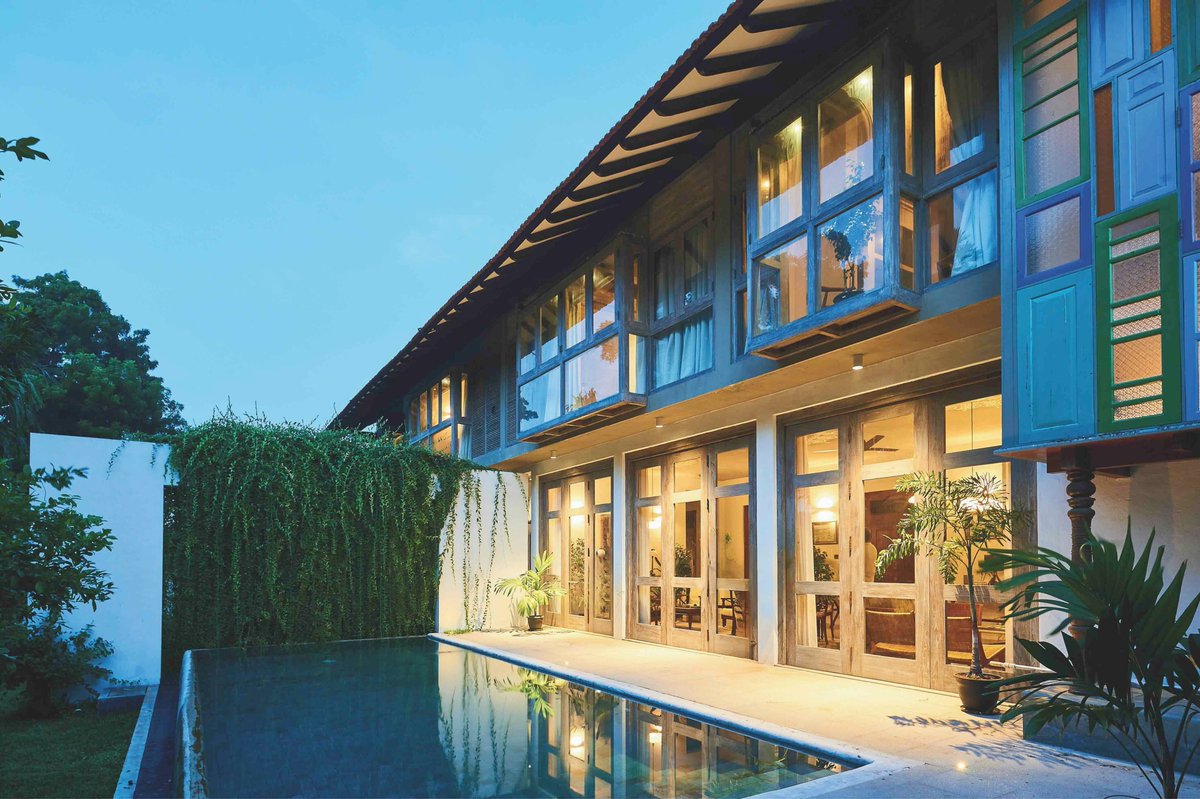
Designed by architects Chinthaka Wickramage and Shanthini Balasubramanium, Navalar Villa in Nallur draws inspiration from the vernacular architecture of the Jaffna Peninsula’s towns and villages, while celebrating the region’s rich cultural heritage.A dilapidated old manor house on the Jaffna peninsula, with warped roof beams, warped door windows, and many structural defects, was presented to the architects for refurbishment by clients who were returning to Sri Lanka after escaping to overseas due to the 25-year-old North East civil war in Sri Lanka.
The architects decided to replace all warped roof beams and door windows during the refurbishment, introducing cantilevered bay windows on the swimming pool side, a novel idea to create an interesting three-dimensional composition on the swimming pool side elevation, to be overlooked from the upper floor over the ground-floor veranda areas. Public areas of the villa are located centrally, while bedrooms are oriented to provide the best possible views of the swimming pool and rear garden.
This house asks how one lives an outdoor life. How does one work with the light, the wind, the environment, and foot traffic in a specific space? How do you frame the surrounding environment within the architecture? The outside environment is something you can almost feel, with the air passing through and it so immediate.
The house is unified by a double-pitched roof, supported by basic concrete and steel supports, and is composed of brick masonry walls and wooden, glazed wall planes, rendered seamless with painted plaster on the exterior. Glass-timber door windows become operable facades for controlling the interior climate, tuning with the long tropical monsoon and framing views of the rear garden.
The extended roof eave is carefully cantilevered to provide protection from the sun, wind, and rain.
In contrast upper floor is more private and intimate. Bedrooms provide spaces to sleep, rest, read and reflect. The upper floor is positioned in mutual tension with the guarantee of simultaneous intimacy and isolation so essential to the domestic interior.
The combination of materials and landscapes, along with the ‘thin’ section, facilitates cross-ventilation and allows the house to maintain its own cool microclimate in otherwise extreme hot and humid surroundings of the Jaffna Peninsula. Special architectural features of the villa include dark timber-columned verandas, white brick masonry walls, raised ‘thinnai plinths’ as built-in seats, and steeply sloping clay-tiled roofs. The garden is landscaped with lush green vegetation, using native trees and foliage. Decorative floral panels, held by a steel skeleton framework, were introduced to the car porch entry gable to celebrate the ‘sense of entry’ to the residence. Colorful recycled antique door and window panels, salvaged from old Jaffna houses, were introduced to the staircase cantilevered landing, overlooking the swimming pool side, as a feature wall. Raised podium ‘thinnai’ at the entrance veranda and under the staircase landing give a certain Jaffna vernacular flavor to the otherwise contemporary-styled Jaffna residence in Nallur, the Hindu religious cultural hub of the Jaffna peninsula.
The interior is tastefully furnished with easy chairs in the verandas and four-poster beds in the bedrooms. Alternatively, patterned triangular gable end panels were installed on the two gable ends of the long elevation, giving a contemporary modern aesthetic to the otherwise traditionally inclined residence, in line with the vernacular architectural idioms of the Jaffna peninsula. Special lighting design incorporating timber columns fixed ‘up and down lighting’ was introduced to supplement for the lack of originally available lighting fixtures of the residence. Existing cut cement floor which was in very bad state, was tiled over with pressed-cement tiles, maintaining the original residence interior ambiance. Calicut clay-tiled roofs, white-painted walls, dark timber columns, cement-handled ceiling soffits, and gray-washed doors and windows give a certain contemporary aesthetic to the otherwise traditional residence.
TONI&GUY Sri Lanka: World-class hairdressing excellence arrives on the island
Since its founding in Clapham, London, in 1963 by brothers Toni and Guy Mascolo, TONI&GUY has become one of the world’s most influential names in professional hairdressing. What began as a single salon has evolved into an iconic British SuperBrand, recognized globally for its fashion-led creativity, technical innovation, and commitment to education. For more than 60 years, TONI&GUY has continuously shaped the hairdressing industry, pioneering concepts such as the unisex salon and setting trends. Today, the brand operates a vast international network of salons, supported by award-winning professionals and globally acclaimed artistic teams. Through its internationally renowned academies, thousands of hairdressers are trained every year, ensuring they stay at the forefront of evolving techniques, trends, and industry standards. This dedication to learning has played a vital role in building the brand’s global reputation for excellence.
TONI&GUY now brings this legacy to Sri Lanka through its official franchise partner, TONI&GUY Sri Lanka. The brand is committed to redefining the premium salon experience by combining world-class standards with local expertise while creating lasting value for clients, employees, and the wider community. The salon offers a full range of professional services, including precision haircuts, bespoke styling, creative and corrective coloring, balayage, advanced hair and scalp treatments, bridal styling, men’s grooming, barbering, hair smoothing, and luxury hair care rituals. Supported by premium products and advanced technology, TONI&GUY Sri Lanka delivers safe, consistent, and high-performance results, bringing global hair fashion, innovation, and education to the island.
HUTCH ENTERPRISE Unlocks World-Class Global Solutions to Level Up Sri Lankan Businesses
HUTCH Sri Lanka is leveraging its international pedigree to bring the best of enterprise solutions to help Sri Lankan businesses leapfrog into a new era. As the country pushes forward with its digital ambitions, the company, backed by its parent, the global Fortune 500 giant – CK Hutchison Holdings, sees this as the right time to unlock the global digital expertise it thrives on. The CK Hutchison Group, a world leader in telecommunications operating in 11 countries, is a trailblazer that has spearheaded digital advancements in telecoms across Europe and a catalyst in emerging markets, helping drive digital ambitions.
As Sri Lanka shifts gears towards digital transformation, HUTCH Sri Lanka has aligned its enterprise offerings through its dedicated business arm, which is positioned to cater to the evolving needs of corporates, SMEs, startups, government, and institutional entities.
In a business environment shaped by cost pressures, emerging customer expectations, and the need for operational resilience, there is a demand for fast, scalable, practical, and cost-effective digital services. HUTCH Enterprise, empowered by international best practices and expertise, brings together connectivity and digital services into a single integrated ecosystem, positioning HUTCH as both a connectivity and technology solutions enabler.
The HUTCH Enterprise ecosystem includes a comprehensive suite of services spanning connectivity options, globally acclaimed digital software and applications, and bespoke solutions tailored to specific business requirements. Connectivity solutions such as mobile-for-business, IoT connections, Internet Leased Lines, omni-channel engagement solutions, digital presence services such as domain registration and web development, workplace digitization applications and services, cloud computing, cybersecurity, and API services, all offered in a single stop.
Hamdhy Hassen, Chief Marketing Officer of HUTCH Sri Lanka, said, “Digital transformation and business empowerment are no longer optional; it is essential for business competitiveness and national economic resilience. Through HUTCH Enterprise, we are simplifying the journey by bringing together connectivity and digital solutions in ways that are accessible, practical, and relevant to Sri Lankan businesses. HUTCH is enabling an enterprise servicing ecosystem where any business can efficiently participate in the local or global economy towards Sri Lanka’s ambition of USD 15 billion in the digital economy by 2030. Backed by our global stalwart parent CK Hutchison Holdings, we are well-positioned to deliver world-class solutions to enterprises here locally.”
HUTCH advances ESG commitment through Rajawaka Rainforest restoration
HUTCH Sri Lanka continues its commitment to environmental sustainability by implementing its rainforest restoration initiative at the Rajawaka Forest Reserve in Balangoda. Conducted in partnership with Rainforest Protectors Sri Lanka, the program ran for the third consecutive year. During this phase, approximately 500 native plants were introduced across half an acre of degraded forest land within the Rajawaka Forest Reserve. The selection of indigenous species is intended to support the regeneration of natural forest structure, enhance habitat quality, and protect local biodiversity. Employee participation remained a key highlight of the program, reflecting HUTCH’s approach to embedding sustainability as a habit within its organizational culture.
This initiative aligns with Sri Lanka’s broader national sustainability journey, as the country is not yet carbon neutral but has committed to achieving carbon neutrality by 2050. Within this context, CK Hutchison Holdings, the Global Fortune 500 conglomerate, through its subsidiary HUTCH Sri Lanka, plays a significant role in accelerating sustainable development in the country by cascading socio-economic benefits to communities and businesses. Complementing these efforts, Hutch’s ESG landscape is steadily evolving through initiatives such as renewable energy use, circular-economy retail shops, e-SIM drive, reforestation programs, environmental sanitation projects, and more, all of which collectively inspire the country’s transition toward a sustainable future.
Hamdhy Hassen, Chief Marketing Officer at HUTCH Sri Lanka, said, “Our partnership with Rainforest Protectors Sri Lanka reflects HUTCH’s sustained commitment to environmental stewardship and climate resilience, anchored in our group, CK Hutchison Holdings, ESG agenda. We believe the actions we take today are critical to preserving Sri Lanka’s ecosystems and ensuring a healthy, vibrant livelihood for the people of Sri Lanka.”
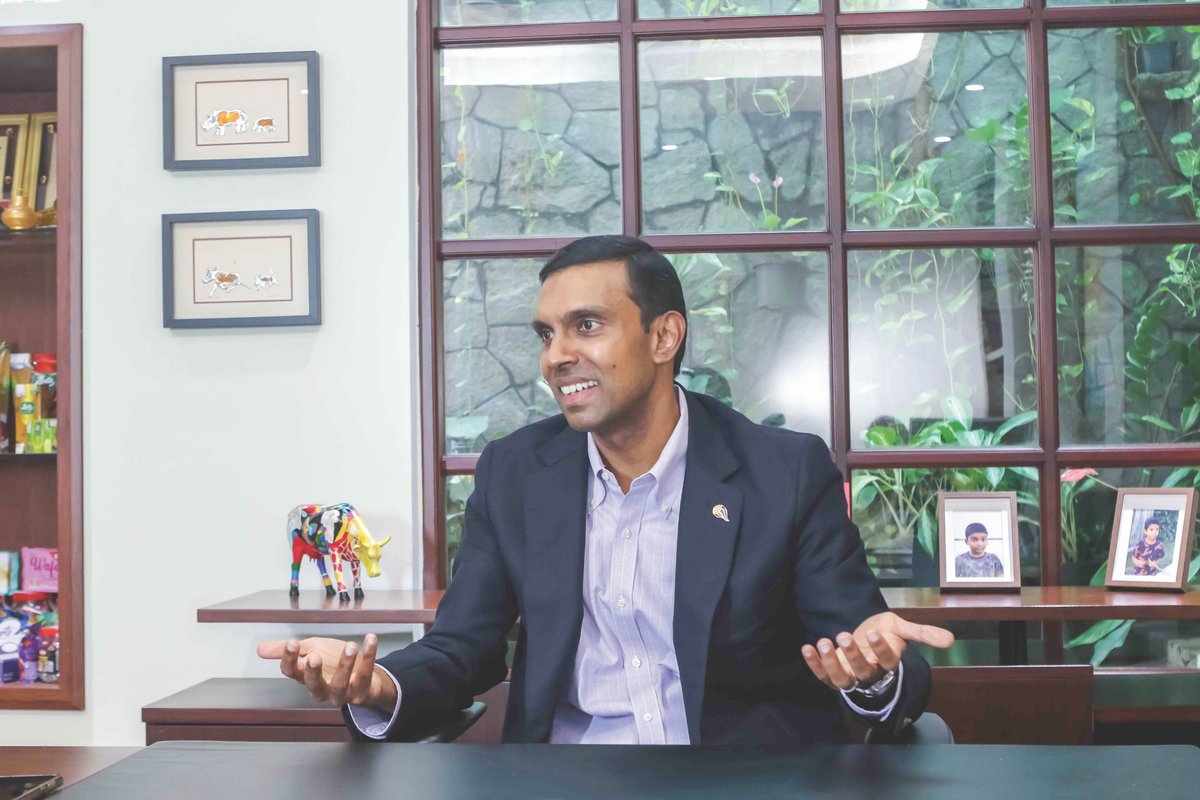
Leadership Beyond Ownership: Sumal Perera on Building Lasting Value
Access Engineering evolved from a locally rooted enterprise into a diversified, publicly listed conglomerate with expanding global partnerships.
Speaking with Business Today, Chairman Sumal Perera focused on strategy, leadership, and values, outlining how disciplined financial management, operational efficiency, and diversification have enabled the Group to remain resilient through industry cycles while sustaining growth and profitability.
He spoke on the philosophy that has shaped Access Engineering’s journey — from its early days of entrepreneurial risk-taking to its current standing as a multi-sector player in engineering, logistics, energy, and healthcare. Equally central to the conversation is his people-centric leadership approach, which emphasizes shared success, employee empowerment, and strong internal culture as key drivers of performance. Perera’s leadership philosophy is grounded in trust, humility, and long-term thinking — where business success is measured not only in financial outcomes, but in people, partnerships, and lasting impact.
Words: Jennifer Paldano Goonewardane.
Photography: Sujith Heenatigala and Dinesh Fernando.
With Access Engineering demonstrating notable resilience despite a prolonged downturn in the construction sector, what were the most critical strategic decisions that enabled the Group to sustain both growth and profitability during this period?
For us, three decisions were critical: maintaining balance sheet discipline, diversifying revenue streams beyond core construction, and sharpening our focus on execution efficiency. At the same time, we expanded into complementary sectors to reduce exposure to industry cycles and volatility, while tightening project selection and cost controls. This combination allowed us to protect margins while continuing to grow.
As the Group recorded strong profitability in FY 2024/25, how much of this performance would you attribute to operational efficiency versus diversification into newer sectors?
It is a combination of both, but if I were to prioritize, operational efficiency has been the foundation. Over the past few years, we have institutionalized stronger project management systems, procurement discipline, and cost optimization practices. Diversification has complemented this by providing new revenue streams and reducing reliance on any single sector. In essence, efficiency protected profitability, while diversification supported growth.
Looking at the first nine months of FY 2025/26, what trends are you seeing in terms of revenue mix and margin stability? Are these trends sustainable?
We are seeing a gradual shift toward a more balanced revenue mix, with non-construction segments contributing an increasing share of revenue. Margins have remained relatively stable, driven by prudent project selection and enhanced cost control practices. While some volatility is inevitable given macro conditions, we believe these trends are sustainable, provided we maintain our focus on execution and continue building resilience across sectors.
With your expansion into sectors like Renewable Energy and Radiopharmaceuticals signaling a shift toward future-oriented industries, what prompted these strategic moves, and how significant are they expected to become within the Group portfolio?
Our move into Renewable Energy and Radiopharmaceuticals is driven by a long-term view of where value will be created. These sectors offer structural growth, higher value addition, and alignment with global trends. Over time, we expect them to become meaningful contributors, not necessarily replacing our core, but strengthening and future-proofing the portfolio.
Radiopharmaceuticals, in particular, are a highly specialized field. What synergies or long-term value do you see this segment bringing to a traditionally engineering-focused group?
We see significant long-term potential in the radiopharmaceuticals sector, particularly in early cancer diagnosis and advanced medical imaging. We are proud to be among the first in Sri Lanka to produce FDG-18 locally, which is a critical component used in PET imaging for cancer detection.
Although Access Engineering is traditionally known as an engineering-focused group, there are strong synergies in technical capability, infrastructure development, and the management of highly specialized projects. Establishing a cyclotron facility is an extremely sophisticated undertaking. The vault construction itself is highly engineered, while the cyclotron technology — supplied by GE HealthCare — requires advanced technical expertise and operational precision. Our entry into this field was also driven by a strong strategic partnership and a long-term vision for healthcare.
My son, whose primary passion is the healthcare sector, played a key role in forging relationships with international healthcare leaders, including GE HealthCare, one of the world’s foremost companies advancing radiopharmaceutical technology. Through those collaborations, we recognized the urgent need for local production.
Previously, FDG had to be imported from India, but due to the nature of the radioactive material and the time required for transportation, nearly 80 percent of its efficacy would be lost before reaching patients in Sri Lanka. Producing it locally, therefore, became both a medical necessity and a strategic opportunity.
The project was established through a public-private partnership, with the Ministry of Health and the Atomic Energy Authority also participating, as these are highly regulated nuclear medicine products. Today, we are in commercial production of FDG, with a capacity that is more than sufficient for Sri Lanka’s current needs. More importantly, this venture goes beyond commercial value. FDG is essential for PET scans and early cancer detection, and early detection can significantly improve treatment outcomes.
Cancer is increasingly becoming one of the leading terminal illnesses in the country, and we believe this investment helps address a critical gap in Sri Lanka’s healthcare system. So while the venture makes strong business sense and opens a highly specialized growth avenue for the group, it also reflects our broader philosophy of investing in sectors that can create meaningful long-term impact for the country.
With projects such as the Colombo West International Terminal and Kohuwala Flyover highlighting your role in national development, how do you evaluate the balance between commercial returns and strategic national importance when selecting projects?
Every project we undertake must meet a baseline commercial threshold. However, we also recognize our role in national development. In such cases, we consider the broader strategic value, long-term relationships, capability building, and contributions to the country’s growth. The balance lies in ensuring that even strategically important projects are executed efficiently and sustainably.
As you have emphasized disciplined execution as a cornerstone of performance, what internal systems enable consistency across such a wide portfolio?
Consistency comes from systems and is not dependent on individuals alone. Our investments in ERP platforms such as SAP, supported by digital monitoring tools, strong internal controls, and clear accountability, ensure consistency across a diverse portfolio.
Given the challenges in the construction sector, how have you managed cost pressures, supply chain disruptions, and contractor ecosystems over the past year?
The past year required a proactive and disciplined approach. We strengthened supplier relationships, centralized sourcing through our Central Procurement Division, and improved inventory planning to manage disruptions. In most of our projects, we incorporate price fluctuation mechanisms to mitigate and recover from abnormal cost escalations.
Are there plans to pursue strategic partnerships, joint ventures, or acquisitions to accelerate growth in emerging sectors?
Yes, we continuously explore strategic partnerships, joint ventures, acquisitions, and new growth opportunities. It is not a new direction for us — it has always been part of our ethos and a key reason behind our success. Growth and diversification are central to our long-term strategy, and I constantly encourage people within the organization to bring forward ideas, take ownership of them, and pursue them with conviction.
I strongly believe that if a company remains in the same business for too long without evolving, it risks stagnation. Every business eventually reaches a point where it can outgrow its original model, which is why diversification is essential for sustained growth. At the same time, expansion alone is not enough. Our profitability comes from disciplined management, operational efficiency, and strong execution. You cannot sacrifice one for the other. Existing businesses must be run exceptionally well, even as you diversify into new sectors. Sustainable growth comes from balancing both.
When people speak about sustainability, they often associate it only with environmental concerns. But sustainability must first apply to the business itself. Have you built the systems, culture, and people needed to ensure long-term continuity? That includes training employees, motivating them, creating clear communication channels, and maintaining strong appraisal processes that allow feedback to flow both ways. Employees understand management’s direction, while leadership gains insight into what people on the ground are thinking and aspiring toward.
In fact, one of the best examples of this culture is Access Engineering itself. During an appraisal discussion, our current Managing Director, Rohana Fernando, suggested that we establish a separate engineering company. That idea eventually became Access Engineering, which today is the largest company within our group. It was established only around 2004 or 2005, yet it has grown into the company most closely associated with our identity and expansion. Its success is not only about profitability, but also about positioning ourselves in sectors critical to national development and investment, while embracing transparency by becoming a publicly listed company. That combination of diversification, disciplined management, and openness is what has driven our growth over the years.
With increasing global emphasis on ESG standards, how is Access Engineering embedding sustainability into its operations and long-term strategy?
Sustainability is an integral part of our long-term strategy. In engineering projects and construction material production, we focus on environmentally responsible practices and improving resource efficiency, while in sectors such as renewable energy, sustainability is embedded in the business model itself. At the same time, we place equal emphasis on how we engage with employees, communities, and stakeholders, as well as on maintaining strong governance through transparency, accountability, and ethical decision-making. Together, these elements support sustainable and responsible long-term value creation.
As Sri Lanka transitions into a more stable phase, where do you see the biggest opportunities for Access Engineering over the next three to five years?
Our biggest opportunities over the next three to five years lie primarily in the logistics and ports sector. We have already made significant investments in this space and today operate one of the largest warehousing facilities in the country.
One of our most strategic investments has been our long-term partnership with Michelin, supported by a 15-year agreement and infrastructure located close to the airport.
We are also heavily involved in dollar-based rental and logistics operations, which positions us strongly for future growth. I believe the ports sector is the heartbeat of Sri Lanka’s economy, given our strategic geographic location. Logistics and ports naturally go hand in hand, and that is why we are deeply engaged with both the Port of Colombo and the Port of Hambantota.
I also believe the development of the Port of Trincomalee presents a major opportunity for the country, particularly through collaboration with India. India today is vastly different from what it was two decades ago. It has emerged as one of the world’s largest economies, and when you consider the combined economic influence of India, China, and the broader Asian region, this part of the world represents nearly 60 percent of the global population. Naturally, much of the world’s future growth will come from Asia.
Sri Lanka is uniquely positioned within that growth story, provided we make the right strategic decisions and build strong regional partnerships.
We have developed excellent relationships with leading Chinese and Indian companies over many years. Groups such as the Tata Group and the Adani Group are among our partners, and these relationships have become an important part of our long-term growth strategy.
Many of these strategic partnerships are not reflected on a balance sheet or are not always visible to the public, but they play a critical role in helping us grow, evolve, and access new opportunities. At the same time, none of this can be achieved by a single individual. While I may be the founder and leader, Access Engineering’s growth has always been a collective effort. Strong teams, trusted partnerships, and capable leadership across the organization are what have enabled us to reach where we are today and continue positioning ourselves for the future.
If you were to identify one structural change needed in Sri Lanka’s business environment to unlock faster growth, what would it be?
One structural change Sri Lanka needs to unlock faster growth is a stronger recognition and acceptance of entrepreneurship. Too often, entrepreneurs are viewed with suspicion, as though success must have come through political connections or unfair advantage rather than hard work, risk-taking, and long-term vision.
There is a tendency to question how a person or business has grown, with the immediate assumption being that there must have been some political deal behind it. That mindset needs to change if we are serious about encouraging enterprise and investment.
For my part, I have always believed in operating transparently. That is one of the reasons we chose to go public — so that our business remains open to scrutiny, with accounts published quarterly and governed through independent oversight.
I also moved from our traditional auditors to KPMG because, if you are expanding and building for the long term, you need the highest standards of governance and credibility, not just firms that sign off on accounts.
Creating an environment where entrepreneurs are respected while also held to strong standards of transparency and accountability is essential to the country’s economic progress.
What are your concerns about Sri Lanka’s current tax structure, particularly in relation to talent retention, entrepreneurship, and long-term economic growth?
At the moment, one of the biggest challenges we face is what I believe to be an extremely counterproductive tax structure. Salaried professionals are taxed at rates as high as 36 percent, while companies are also taxed heavily. The result is an inevitable brain drain. For a developing country like Sri Lanka, this is deeply concerning because our greatest asset is our human capital.
We should be encouraging skilled professionals, entrepreneurs, and innovators to remain in the country and contribute to economic growth, not creating conditions that push them away. Without strong economic growth, we cannot move forward as a nation. Developing entrepreneurship and supporting private sector expansion must become a national priority. I hope policymakers, including institutions such as the IMF, recognize that a sustainable economic recovery cannot occur without empowering businesses and retaining talent.
Around the world, even countries that once followed highly controlled economic models have embraced open-market principles because they understand that growth and innovation are driven by enterprise. China is a prime example.
Over time, they recognized that while no economic system is perfect, open economic policies create the strongest foundation for growth and development. Today, most major economies, including China and Russia, operate within varying forms of open economic systems.
In Sri Lanka’s case, heavily taxing skilled professionals and intellectual capital is counterproductive. If we continue down that path, we risk losing the very people needed to build the economy. As a company, we have therefore taken a conscious decision to invest more in our employees and ease some of that burden where possible, including through incentives and enhanced compensation structures. We believe supporting and retaining talent is essential not only for our business sustainability, but also for the country’s long-term progress.
How important have honesty, transparency, and long-term trust been in building Access Engineering’s partnerships and sustaining the group’s growth over the years?
What many people do not fully appreciate is the immense value of relationships in business — both internally and externally. Long-term success is built on trust, credibility, and consistency.
For example, we have maintained relationships with companies such as Isuzu and Itochu Corporation for nearly 30 to 40 years. Those relationships have endured because there has always been mutual trust. I have never cheated them, and they have never cheated me. That foundation of integrity is priceless. The same applies to our partnerships with major international players such as China Harbor Engineering Company, China Merchants Group, and the Colombo Port City project. The cranes visible at the port are supplied by ZPMC, with whom we have formed a joint venture not only in Sri Lanka, but also across parts of Asia, including Pakistan, to maintain those operations. These are relationships that cannot be measured purely in financial terms. They are a major reason why Access has grown the way it has. Without strong partners, we are nothing.
Another example is our relationship with GE HealthCare, which my son helped bring into the group. GE HealthCare is a global leader in radiopharmaceuticals and accounts for a significant share of FDG production worldwide. Partnerships like these create strategic advantages that differentiate you from other players in the market. In business, you must constantly identify where you have a competitive advantage and use it responsibly — not only to grow your company, but also to create value for the country, your employees, and society at large.
At the same time, I believe humility and perspective are equally important. Entrepreneurs must understand that wealth and success are not infinite pursuits. If greed takes over, people begin to believe they must own everything, and that is where many businesses lose their way. Some entrepreneurs make the mistake of trying to control too much instead of building sustainably and sharing success with others.
If you conduct business ethically, people will stay with you. If you share success and genuinely care for people, loyalty naturally follows. The best measure of that is employee retention, particularly within senior management. When leadership upholds the right values and standards, the rest of the organization follows. The success of Access has come down to one thing: people. Our people, our partners, and the trust we have built with them over decades.
What philosophy guides your approach to debt, reinvestment, and long-term sustainability?
There are certain financial principles we consider sacrosanct. One of them is maintaining very low levels of debt. In a country like Sri Lanka, interest rates can change dramatically in a short period. You may borrow at seven percent today, but within two years that rate could rise to twenty-five or even thirty percent. If that happens, sustaining the business becomes extremely difficult. Because of that reality, we are always very conscious not only of growth but also of how that growth is financed.
We have deliberately maintained a low-geared structure and adopted a disciplined approach to capital management. A key part of that philosophy stems from how we live and operate. We lead relatively simple lives, which allows us — not only myself, but also the other shareholders — to reinvest a significant portion of profits back into the business to support future growth. We strongly believe that if the company grows, all stakeholders will grow with it. If the company does not progress, individual growth cannot be sustained either. That mindset has become part of Access’s culture.
As the founder, I have consistently shared this philosophy with our main shareholders, directors, and senior management team. They understand the long-term vision and have supported us in carrying it forward with discipline and commitment.
Access Engineering has often been described as resilient—but what is one vulnerability or blind spot that keeps you cautious as a leader?
One vulnerability that keeps me cautious is that we are still largely Sri Lanka-centric as a business. While we have expanded into markets such as Kenya, Djibouti, and parts of Africa, and built partnerships across the world, our international footprint still accounts for less than ten percent of the business.
For long-term resilience and stability, I believe Access Engineering must evolve into a truly global company over the next few generations. It is not a question of lacking faith in the Sri Lankan economy, but rather a matter of sound business strategy. Diversifying beyond a single market is essential for sustainable growth and reduced economic dependence. That is the direction we have already begun pursuing through our overseas ventures, and it is a journey the next generation will need to take forward.
How important has people management and employee well-being been to Access Engineering’s success, and how do you translate that philosophy into practice within the organization?
I have always believed that without people, there is no business. That is a core principle I strongly hold. What differentiates us from many other organizations is our commitment to our employees — and importantly, we do not just speak about it, we live it.
We are proud, in a very humble way, to say that we have created more millionaires within our organization than perhaps any other company in the country. Many of our employees have been with us for over 30 years, which is remarkable given that the company is 37 years old. Retaining people for that long is not possible unless you are continuously engaged, proactive, and genuinely committed to their well-being.
Our real strength is our people. Financial statements and balance sheets do not fully capture this, but we have built an extraordinary team. I have complete faith in the Sri Lankan workforce — their capacity for hard work, loyalty, and dedication is exceptional when they are treated fairly and with respect. To me, compensation is not just about salary alone. It is about sharing and caring.
For instance, we recently completed an apartment project where I was personally delighted that we were able to grant a project director a bonus of 100 million rupees. The Board and I agreed that if he had delivered the project even four or five billion rupees under budget, he deserved to be rewarded substantially. The company had performed well, and this was our way of expressing gratitude for that achievement. That is the culture we try to foster — a culture of sharing success.
It is also one of the key reasons I have been comfortable planning a transition of leadership to the next generation. The foundation of Access has always been simple: when our people succeed, the company succeeds. Their progress naturally drives the organization forward. At the same time, I am very clear that this philosophy must be grounded in financial discipline.
A company cannot function without profitability. You cannot sustain salaries or growth without a strong and well-run business. Looking back, I am deeply satisfied with what we have built — from nothing to what Access is today. And I am confident that, even in my absence, the organization will continue for generations to come because it has enough talent, structure, and opportunity embedded within it. For me, Access has always been, and will always remain, a family. And above all, we believe in not just talking about values, but living them every day.
Read more: https://t.co/mefBrNFIOj
From Local Roots to Global Ambitions: The Transformation Story of Sunshine Holdings
From a family-founded pharmacy in Gampola to a diversified, publicly listed conglomerate with leadership positions across healthcare, consumer goods, and agribusiness, Sunshine Holdings has built a remarkable growth story.
Shyam Sathasivam, Group CEO of Sunshine Holdings and second-generation family representative, discusses the strategic priorities shaping Sunshine’s next phase of growth — including expansion into export markets, deeper investment in pharmaceutical manufacturing, and the growing role of technology, digital transformation, and consumer insight-led decision-making across the Group. He also elaborates on how the organization is balancing commercial performance with affordability, accessibility, and broader societal responsibility.
Words: Jennifer Paldano Goonewardane.
Photography: Sujith Heenatigala and Dinesh Fernando.
Sunshine Holdings delivered strong growth in FY 2024/25. As you reflect on the first nine months of FY 2025/26, how has that momentum evolved across your three core sectors?
Growth has fundamentally been about identifying and capitalizing on opportunities. We operate across healthcare, consumer products, and agribusiness, and our focus has been on driving meaningful expansion in each. In healthcare, we have continued to scale our pharmaceutical manufacturing operations significantly. We are now the largest supplier of respiratory products to the Government of Sri Lanka, and we continue to invest further in this space.
We have also seen growing demand in premium healthcare and wellness products. Healthguard continues to expand steadily, and particularly within the Colombo District, there is a clear and increasing willingness among consumers to invest in wellness-oriented products and services. Within the consumer sector, our focus has been on strengthening the domestic branded market for tea and confectionery, as well as growing our export business.
We recently acquired a cinnamon company, which aligns closely with our broader strategy of promoting naturally grown Sri Lankan products — including spices and tea — under the “Ceylon” brand in international markets. This remains a key growth driver. Agribusiness, however, has presented certain challenges. Palm oil continues to be a subject of ongoing dialogue with the Government. That said, we are seeing encouraging momentum and remain hopeful that evolving policy will create a more supportive operating environment.
Despite some impact from adverse weather conditions, we have remained resilient throughout FY 2025/26. Our businesses operate in fundamentally resilient sectors, and the strength of our teams, combined with strong execution capabilities, has enabled us to continue delivering solid results.
To what extent has profitability been driven by operational efficiencies versus top-line expansion and portfolio optimisation?
Our focus has centered on two key areas. The first is the consumer and customer space — understanding emerging opportunities, identifying evolving preferences, and aligning our offerings accordingly, whether in healthcare or consumer products. Our emphasis has consistently been on delivering products and solutions that genuinely resonate with what customers need. The second is our people. At its core, every business depends on execution, and execution rests in the hands of its people.
Today, access to capital is no longer the defining constraint for many leading companies. For at least the top ten percent of companies in Sri Lanka, I would say capital is no longer what differentiates success. What truly sets organizations apart is execution capability. Over the past decade and more, we have remained deeply focused on investing in our people, and that has been a major driver of our growth. It has translated into greater operational efficiency, stronger execution, and more effective resource utilization — particularly through the adoption of digital technologies.
We also believe the impact of AI is only beginning to emerge. What we are experiencing today represents the conclusion of the first phase, as we move into what could be described as the next stage of digital and AI-driven transformation.
With healthcare contributing over 60 percent of Group revenue in 2024/25, how did this segment perform in FY 2025/26, and how do you plan to sustain high growth in a segment that is already dominant within your portfolio?
Our healthcare business continues to be driven by a diversified, portfolio-based approach across five distinct segments. Pharmaceuticals remain a core focus, where we ensure access to high-quality medicines through partnerships with global companies such as Novo Nordisk, Abbott Laboratories, Siemens Healthineers, and GE HealthCare, while also sourcing affordable generics from regional markets including India, Pakistan, and Bangladesh.
Medical devices continue to offer strong growth potential, particularly given that Sri Lanka remains significantly underpenetrated in advanced diagnostics, surgical products, and healthcare technology. Retail healthcare is another important growth avenue through Healthguard, which enables us to engage directly with consumers and develop a deeper understanding of evolving healthcare and wellness needs.
We have also invested heavily in our nationwide distribution and cold chain infrastructure, which is critical given our long-standing position as Sri Lanka’s largest insulin supplier. Our pharmaceutical manufacturing business has expanded significantly over the past three years, and we are now the country’s largest domestic manufacturer of respiratory products, including complex inhalation therapies. Our strategy is to continue expanding within the healthcare segments we already operate in, while leveraging the sector’s long-term growth potential. Although our current focus remains largely product-driven, we also see future opportunities in healthcare services as the sector continues to evolve.
With domestic pharmaceutical manufacturing being a key priority, what challenges — regulatory, infrastructure, or talent-related — must be addressed to accelerate this ambition?
We are highly optimistic about the long-term potential of domestic pharmaceutical manufacturing, but accelerating growth will require addressing several key challenges across regulatory, talent, infrastructure, and industry competitiveness.
From a regulatory standpoint, the industry needs greater consistency, transparency, and predictability. While maintaining high standards is non-negotiable, companies also need a stable regulatory environment to commit to long-term investments and move up the value chain with confidence. Greater digitization across the regulatory ecosystem would further improve efficiency and transparency. Talent development is another critical area, particularly as the industry moves toward more advanced manufacturing, R&D, and quality assurance capabilities.
Specialized expertise cannot develop organically at the pace required, which is why industry participation in building talent pipelines is essential. We are already working closely with institutions such as the University of Kelaniya and other academic partners to strengthen sector capabilities.
Government support for domestic procurement has provided an important boost to local manufacturers. However, long-term success will ultimately depend on competitiveness, innovation, and technology adoption. This is why we are exploring deeper manufacturing partnerships that can bring advanced technologies and expertise into Sri Lanka. Pricing remains an important consideration as well.
While affordability is crucial, the regulatory and pricing framework must also support accessibility, sustainability, and innovation to ensure the long-term viability of the industry. Encouragingly, industry bodies such as the Sri Lanka Chamber of Pharma Manufacturers continue to engage constructively with the National Medicines Regulatory Authority of Sri Lanka on many of these issues.
Globally, GLP-1 medicines have emerged as a transformative development in the treatment of obesity and related non-communicable diseases. While Sri Lanka has seen growing demand for these therapies, access remains limited. How is Sunshine Holdings engaging with regulators and global partners to improve access for Sri Lankan patients?
Obesity has become a major health concern both globally and in Sri Lanka, contributing significantly to non-communicable diseases. Even modest weight loss can greatly improve health outcomes and quality of life. We represent Novo Nordisk, the global leader in weight management therapies including Ozempic and Wegovy and have already submitted the necessary dossiers for regulatory approval in Sri Lanka.
While demand for GLP-1 therapies has surged worldwide, supply constraints have limited access, with manufacturers initially prioritizing larger developed markets. However, expanding manufacturing capacity and recent launches in India are expected to improve availability in regional markets such as Sri Lanka.
The National Medicines Regulatory Authority of Sri Lanka has been supportive of facilitating access to innovative therapies, provided the required clinical and regulatory documentation is in place. Going forward, regulatory efficiency and a balanced framework will be important to attract innovative products while ensuring affordability.
We also expect increased competition and the availability of generic alternatives to improve access over time. At the same time, these medicines must be introduced within a well-regulated clinical framework to ensure safe and appropriate use under medical supervision.
What role have brand strength and pricing strategies played in sustaining performance in your Consumer Goods segment, which has shown resilience despite inflationary pressures?
Sunshine is the market leader in Sri Lanka’s branded tea segment, with over 50 percent market share built over 25 years.
Our strategy has been to develop a strong, diversified brand portfolio that caters to different consumer needs across premium, mass-market, and value segments. We recognize that consumers seek very different experiences from their cup of tea. Zesta serves the premium segment, while Watawala Tea holds over 28 percent market share as the leading mass-market brand.
We also offer Ran Kahata in the value segment, ensuring consumers have options based on taste, affordability, and preference.
Our portfolio spans the full spectrum of consumer needs, allowing people to make choices based on affordability, pricing, taste preferences, and the overall tea experience they are looking for.
Our market leadership has ultimately been built on consistently delivering value and maintaining a sharp understanding of evolving consumer preferences. Success in tea branding requires a deep knowledge of the consumer and a clearly differentiated value proposition — and that has been central to our growth and resilience, even amid inflationary pressures and shifting market dynamics.
As you have highlighted wellness-oriented categories as a growth area, how are you repositioning your portfolio to align with changing consumer preferences?
Consumer behavior has evolved significantly in recent years, shaped by both the post-COVID environment and Sri Lanka’s economic crisis, which have heightened awareness around health, affordability, and value. At the same time, greater access to global media and information has made Sri Lankan consumers far more informed about international trends, lifestyle shifts, and product innovations.
To respond effectively, our approach begins with deep consumer research and an understanding of regional and cultural consumption habits. Consumer preferences continue to evolve rapidly, making ongoing engagement and insight generation essential.
As part of this shift, we see strong long-term potential in wellness-oriented categories and have been repositioning parts of our portfolio accordingly. We have already introduced wellness-focused tea products targeting areas such as energy enhancement and sleep support, while ensuring authenticity and credibility remain central to our positioning. Portfolio evolution also requires balancing changing economic conditions, generational shifts, and emerging lifestyle trends.
While tea continues to remain relevant among younger consumers, the challenge is to keep the category contemporary and appealing. We are also closely observing the growing influence of coffee culture within Sri Lanka’s hot beverage market, which reflects broader global consumption trends and will continue to shape our portfolio strategy going forward.
How is Sunshine Holdings leveraging data and digital platforms to deepen consumer relationships in an era when digital engagement is becoming increasingly important?
Before the COVID-19 pandemic, we made a deliberate decision to aggressively invest in digital transformation, recognizing that businesses that failed to build digital capabilities risked becoming obsolete.
One of the key early steps was transitioning fully to a cloud-based architecture, which proved highly valuable during the pandemic. Since then, our focus has been on building strong digital data capture systems and using data not simply for collection, but to drive faster and more effective decision-making. We have invested significantly in business intelligence tools, dashboards, CRM platforms, sales force automation, and frontline operational systems to strengthen both supply chain management and customer engagement.
A major priority has been digitally enabling our frontline workforce, particularly across healthcare and consumer sectors, where our teams interact daily with nearly 100,000 grocery outlets and thousands of healthcare touchpoints nationwide. These interactions generate valuable consumer insights while also improving engagement and responsiveness at the point of contact.
The transformation journey has involved experimentation — some initiatives have succeeded; others have required redesign. But many of our most valuable learnings have emerged through that process, and a significant portion of our recent growth and operational improvements can be attributed to these digital investments. We believe the next wave of disruption, driven by artificial intelligence, will be even more transformative. That is why we continue to approach digital transformation with urgency, adaptability, and a constant focus on staying ahead of evolving consumer and technological trends.
Given agribusiness’s volatility in input costs and regulatory constraints, which structural reforms would most benefit this sector in Sri Lanka?
Sunshine Holdings has made significant investments in palm oil and dairy farming, which we view as strategically important for Sri Lanka’s food security and for reducing import dependency. Sri Lanka currently produces less than ten percent of its edible oil requirement despite having favorable conditions for cultivation, highlighting the sector’s considerable untapped potential.
To strengthen agribusiness, Sri Lanka needs greater modernization through improved inputs, technology adoption, and productivity enhancement. While labor shortages remain a challenge, industries such as tea have demonstrated that innovation and efficiency improvements can help overcome these constraints.
We see similar opportunities in edible oil and dairy, where technology has already helped improve operational efficiency and reduce costs.
From a policy perspective, the sector would benefit from balanced and forward-looking regulatory frameworks, including labor and sector-specific reforms that encourage investment, productivity, and sustainability. Constructive collaboration between the Government, private sector, and labor stakeholders is essential to modernise agriculture and create long-term value. Ultimately, large-scale investment in agribusiness will depend on a shared commitment to building a more productive, sustainable, and competitive agricultural ecosystem.
Your vision to transform Agribusiness into a high-value, ESG-aligned export engine is ambitious. What are the key milestones you aim to achieve over the next three years?
About fifteen years ago, we made a strategic decision to pursue Roundtable on Sustainable Palm Oil (RSPO) certification for our plantation business, becoming the first company in South Asia to achieve this globally recognized sustainability standard. The process took nearly ten years, and we received initial certification in 2021. We have since been successfully recertified, reaffirming our commitment to internationall y benchmarked sustainability practices.
Over the next three years, one of our key priorities is to extend similar sustainability frameworks across the wider agribusiness portfolio. We believe long-term success in agriculture must be built on strong partnerships with communities, employees, regulators, and other stakeholders.
We view ESG not as a compliance exercise, but as an integral part of building a responsible and future-ready business. We have already invested in ESG-focused training and sustainability initiatives across the Group, with the goal of embedding ESG principles into our core business strategy and decision-making. Sustainability cannot be treated as an afterthought or a parallel initiative — it must become part of the business’s fundamental operating framework.
With traceability and sustainability gaining importance globally, how is Sunshine positioning itself to meet international standards and capture premium markets?
Our approach to traceability and sustainability is built around aligning with internationally recognized standards and targeting premium export markets.
We actively pursue certifications such as geographical indication (GI) status and adhere to globally accepted frameworks, including those from Control Union Certifications and JASTECA, to strengthen credibility and market access.
We have deliberately focused on high-value, differentiated segments rather than low-margin, high-volume categories. We believe long-term value creation lies in premium markets where quality, origin, purity, and authenticity are the key drivers of demand. This is especially relevant in markets such as Japan and Germany, where stringent requirements around sourcing,contamination control, and single-estate production are critical. To meet these expectations, we have invested significantly in processing infrastructure and end-to-end traceability systems.
Global buyers now require fully verifiable supply chains, and digital traceability has become essential for accessing leading retail shelves. We have accordingly strengthened supply chain visibility and compliance systems across our operations. Our acquisition in the cinnamon value chain through Joint Agri Products Ceylon was also driven by its strong capabilities in organic production and certification, reflecting growing global demand for verified organic products. Stricter testing and compliance requirements are, in our view, helping to raise overall industry standards — which we see positively. Our experience in highly regulated healthcare markets has reinforced a strong internal discipline around quality and compliance, which naturally carries through into our agribusiness operations.
With multiple growth priorities across sectors, how are you prioritizing capital allocation within the Group?
Our approach is guided by discipline, strategic fit, and return expectations. While capital availability remains strong, investor expectations for performance and returns have increased significantly, requiring us to be highly selective in where we deploy capital.
As a publicly listed company, we must consistently demonstrate our ability to create superior value for shareholders.
Not every attractive opportunity is necessarily the right fit for Sunshine Holdings. We evaluate investments based on whether we have the capabilities to generate differentiated value and whether the opportunity aligns with our long-term strategic direction. This is why, in pharmaceutical manufacturing, we have chosen to focus on higher-end, niche, and technologically complex segments, while in consumer products we have prioritized organic and premium value-added categories over low-margin volume businesses. Capital allocation decisions are also shaped by the quality of partnerships, operational complexity, and long-term growth potential. We remain equally focused on capital efficiency and strong ROI across the portfolio. Investments that do not meet return expectations or strategic relevance must be reassessed, with capital reallocated where it creates more value. That said, we also recognize that certain sectors — particularly manufacturing — require patience and long-term commitment, often over a five–ten-year horizon.
Our overall approach is therefore to balance long-term strategic investment with disciplined capital stewardship, ensuring every commitment is anchored in sustainable value creation and measurable returns.
You had mentioned thoughtful leadership transitions as a contributor to performance. How do you ensure continuity while bringing in fresh perspectives?
About ten to 15 years ago, Sunshine made a deliberate shift to become a “family-owned but not family-run” business, decentralising decision-making and extending leadership well beyond the family.
Today, I am the only actively involved family member, with professional CEOs leading each of our nine business sectors. This structure is supported by clear governance, defined decision rights, and strong succession planning.
My role has evolved toward capital allocation, leadership selection, and overseeing key transitions across businesses. We have already completed one full leadership cycle and are now strengthening the next layer of leadership for continued growth.
A key principle is balancing autonomy with accountability. Empowering professional leaders with genuine decision-making authority has helped us attract and retain strong talent, while governance frameworks ensure appropriate oversight and timely course correction. This remains an evolving journey, but our experience shows clearly that investing in strong, professional leadership has been one of the most significant drivers of our growth over the past decade.
Could you elaborate on the technology partnerships Sunshine Holdings has established with global players and how these collaborations support your long-term growth strategy?
Our technology partnerships with global companies have primarily been designed to address the domestic market opportunity in Sri Lanka. In our pharmaceutical manufacturing business, Lina, we initially adopted technology-transfer models from Indian generic manufacturers, which helped establish a strong production base and build core capabilities.
As we move into the next phase, our focus is shifting toward deeper collaboration with international partners in more complex manufacturing segments.
With the local market now more stabilised from a manufacturing standpoint, we are actively engaging global companies to expand our capabilities further. We also recognize that Sri Lanka has work to do in positioning itself as a more attractive destination for foreign direct investment, and we see it as part of our responsibility to contribute to that effort.
Our partnership with the International Finance Corporation reflects this intent, particularly through support for pharmaceutical manufacturing investments via capital mobilisation and strategic development.
We are currently engaging with several global partners and are optimistic about launching initiatives in more advanced and complex manufacturing areas in the near term.
Across healthcare, consumer, and agribusiness sectors, how critical is digital transformation to your long-term competitiveness?
Digital transformation is fundamental to the long-term sustainability and competitiveness of any business. In our view, it will be among the most critical enablers of future growth across all sectors.
Our ability to effectively engage with consumers is increasingly dependent on our digital capabilities, just as our ability to connect with and empower our employees is now closely linked to the strength of our digital systems. We therefore see digital transformation not as an optional initiative, but as a core requirement for remaining competitive and relevant over the long term.
Read more: https://t.co/nLP3oFnQyN
Pan Asia Bank records highest ever quarterly Deposits and Advances growth in Q1 2026
Pan Asia Banking Corporation delivered a strong financial performance in the first quarter of 2026. Despite external uncertainties, the Bank recorded a Profit Before Tax (PBT) of 1.65 billion rupees and a Profit After Tax (PAT) of 1.05 billion rupees, reflecting disciplined financial management, operational consistency, and prudent risk governance.
The Bank reported solid income growth during the quarter, supported by continued balance sheet expansion and improving business activity across its core banking segments. Interest income increased by 18 percent, while interest expenses rose by 23 percent, driven by strong growth in loans and advances across corporate, SME, and retail sectors, alongside increased deposit mobilization to support asset growth. Net Interest Income (NII) grew by 12 percent year-on-year, supported by higher lending volumes within a relatively stable interest rate environment.
Non-interest income also recorded significant momentum. Net fee and commission income rose by 55 percent, driven by growth in lending, trade finance, cards, and remittances, while net trading gains increased by over 40 percent due to higher income from unit trusts and FVPL government securities.
Total operating income grew by 14 percent year-on-year, despite a 62 percent decline in FVOCI derecognition gains due to market valuation movements. The Bank maintained strong asset quality, with credit loss expenses declining by 93 percent year-on-year, mainly due to net Stage 3 impairment reversals. Stage 1 and Stage 2 impairment charges stood at 125.94 million and 153.54 million rupees respectively, while a net Stage 3 reversal of 125.30 million rupees reflected improved recoveries and borrower performance. Pan Asia Bank maintained one of the lowest Stage 3 loan ratios in the industry at 1.57 percent, underpinned by robust underwriting standards and proactive portfolio monitoring. The Stage 3 Provision Coverage Ratio remained stable at 62.21 percent, reinforcing balance sheet resilience amid evolving economic conditions.
Net Operating Income, calculated after impairment charges, increased by 17 percent compared to Q1 2025, mainly due to the sharp reduction in credit loss expenses. The Bank continued to prioritize operational efficiency through disciplined cost management. Although the Cost-to-Income Ratio increased marginally due to a one-off reversal of bonus provisions in Q1 2025, underlying cost discipline remained intact while the Bank continued investments in branch expansion, technology upgrades, digitalization, and staff development.
Profitability indicators remained healthy, with the Bank recording a 13 percent year-on-year increase in PBT. The Net Interest Margin (NIM) was sustained at a strong level, supported by effective balance sheet management and stable funding dynamics. Total assets increased by nine percent to 334.61 billion rupees, while customer deposits recorded their strongest quarterly growth, rising by ten percent to 254.19 billion rupees. Growth in both term deposits and CASA balances reflected increasing customer confidence and strengthened funding stability.
Pan Asia Bank maintained strong capital and liquidity buffers, with all regulatory ratios remaining comfortably above minimum requirements. The Common Equity Tier 1 (CET1) and Tier 1 Capital Ratios stood at 14.86 percent, while the Total Capital Ratio was 16.43 percent. Liquidity indicators also remained robust, with the Rupee LCR at 192.98 percent, All Currency LCR at 151.72, and NSFR at 126.92 percent. Aravinda Perera, Chairman and Naleen Edirisinghe, Director/CEO highlighted the Bank’s resilient business model, strong customer confidence, disciplined execution, and commitment to sustainable growth. Looking ahead, Pan Asia Bank remains focused on maintaining high-quality growth, preserving asset quality, enhancing operational efficiency, and delivering long-term value amid evolving macroeconomic conditions.