Our work with Steve Capital is opening up a much bigger opportunity for OOBE.
@SteveCapitalOS is our flagship consumer product, but the infrastructure behind it is something we want to bring to businesses worldwide, including those outside Web3.
Think of businesses deploying AI agents that can make payments within predefined spending limits, handle recurring payments automatically, and use specific tools based on the permissions they are given.
We're developing our SDK, API and CLI to make these capabilities easy to integrate into existing business products and workflows.
The final goal is to make OOBE a technology businesses can build on, whether they're operating in Web3, fintech or traditional industries.
Open banking could give consumers more control over their financial lives.
Being able to securely share financial information
between services may create better choices and more competition.
However, convenience should never weaken consent or data protection.
Financial innovation is only progress when customers remain in control of their information.
Max Verstappen on whether he still considers himself the best driver on the grid, despite not having won the championship in the past two years
"That's what I always think. Otherwise, I'll quit!"
Was that also the case in 2015?
"You do have that thought, but I also knew in 2015 that I still had a lot to learn. I already had in my mind that I had the potential to be the best, yes."
Confidence in the Red Bull RB22
Verstappen now heads into a potential wet race with more confidence and is pleased with his season in Formula 1
"Yes, absolutely [regarding confidence]. I think I've simply had a good season. Of course, in Formula 1, you're also dependent on your car."
"Lately, we've really got things working reasonably well again. And that's when the victories follow."
[https://t.co/7nAhea934W]
So - one of my close friends has had the most heartbreaking experience of his lifetime with someone who he thought was his girlfriend.
Man got played like a PS4 in Covid y'all, he was talking to this girl for about 8 months, and he really thought that he's got her undivided attention, and secretly, he fell in love with her. He really thought that he has all of her heart, soul and spirit, but then - doomsday arrived for him.
It turns out, this girl had him in genjutsu of the HIGHEST order. She was talking to not one, not two, but THREE lads at the same damn time. And all those thought that they were the only ones who had her - JUST like multiple processes believe they have some control and access over the entire memory space, while in reality, it's all just virtual memory space that is mapped to physical memory that's managed by something called to MEMORY MANAGEMENT UNIT
Now that you are here, let's see how this plays out in the first place -
Whenever you execute a program, the OS creates a process with its own virtual address space. Instead of directly accessing physical RAM, the process operates using virtual addresses.
So, Process A can access virtual address 0x1000, and Process B can access that exact same address, yet both can refer to completely different physical locations.
How?
The MMU translates virtual addresses into physical addresses using information maintained in page tables. Memory is divided into fixed-size blocks called pages (virtual memory) and frames (physical memory).
For example, with 4 KiB pages:
Virtual address: 0x1234
Virtual page: 0x1
Page offset: 0x234
If virtual page 0x1 maps to physical frame 0x8, the resulting physical address is:
0x8000 + 0x234 = 0x8234
Simple enough, right?
But looking up page tables for every memory access would be expensive. Here, we et help from something called as the Translation Lookaside Buffer (TLB) - a small, fast hardware cache that stores recently used address translations.
A TLB hit means the translation is readily available. A TLB miss means the system needs to retrieve it through the applicable page-table-walking mechanism. And no, a TLB miss is NOT the same as a page fault.
A page fault occurs when a memory access requires OS intervention - perhaps to allocate a page, retrieve it from storage, establish a mapping, or reject an invalid access. But virtual memory does more than translate addresses.
It provides process isolation and memory protection. Page-table permissions control whether a process can read, write, or execute a particular memory region. This prevents one process from casually accessing or corrupting another process's private memory.
And here's another interesting bit: virtual memory doesn't mean every process gets its own dedicated chunk of physical RAM.
Processes can share physical pages containing read-only executable instructions, use memory-mapped files, or employ mechanisms such as copy-on-write to avoid unnecessary duplication.
So, bringing it all together:
->Virtual address spaces give each process its own view of memory.
->Page tables define how virtual pages map to physical frames.
->The MMU performs address translation and enforces access permissions.
->The TLB caches translations to speed things up.
Page faults allow the OS to handle memory accesses that need additional intervention. The beauty of virtual memory is that a process doesn't need to know where its data actually resides in physical RAM.
It simply works with its own virtual address space.
And that's abstraction in computer architecture for you. A relatively simple interface hiding an extraordinary amount of complexity underneath.
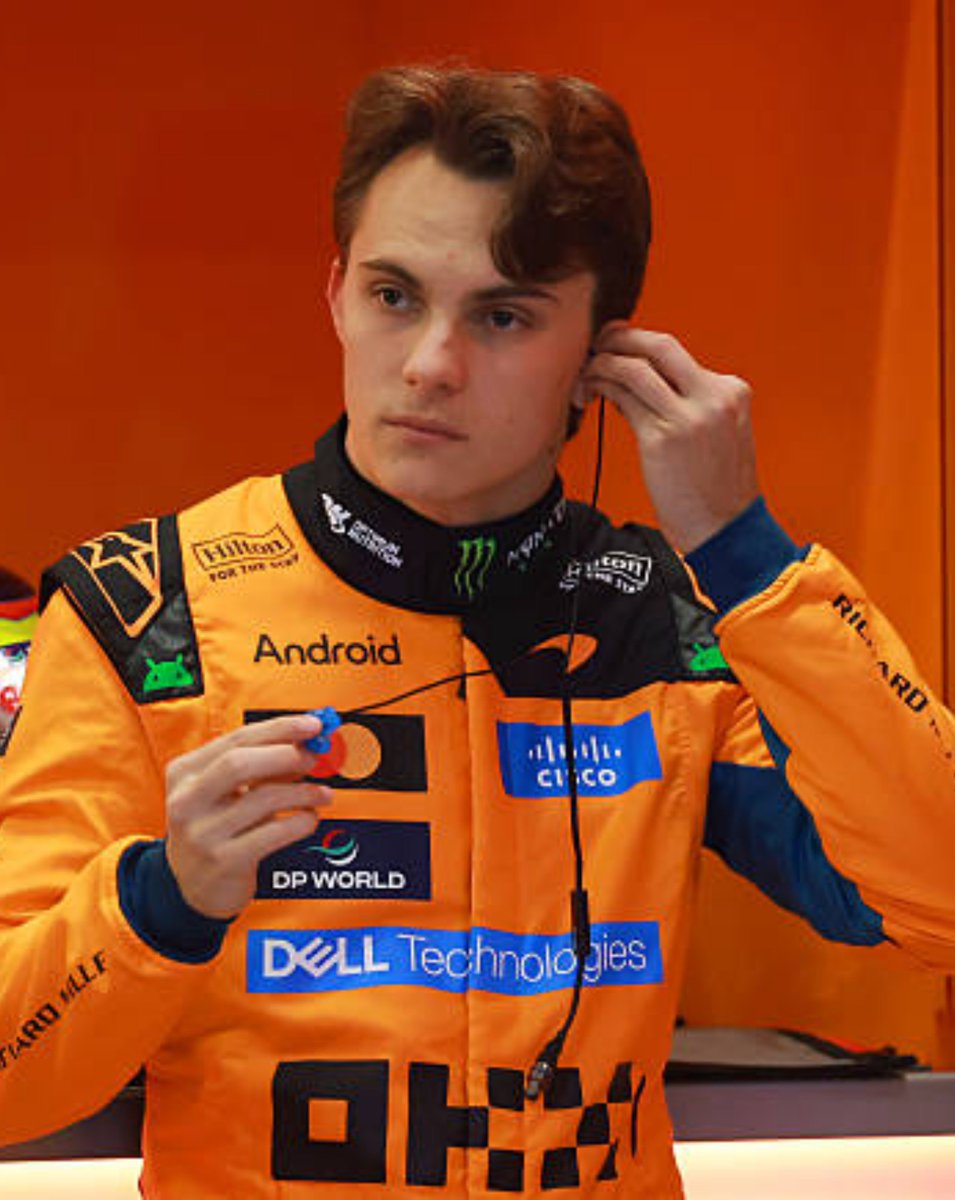
oscar's thoughts after fp2!
"everything feels good and the upgrades look positive. there's still work to do to catch the cars ahead, but overall it was a pretty successful first day. thanks to leo for his efforts in fp1 and the useful work he did for the team."
YAYYYY 😁
it’s 2027. on your first day at your new job, your manager parades you around the office introducing you as “our human engineer.” in your first meeting, you pitch an idea. five seconds later an agent says the same thing, and everyone loves it. in code review, an agent tells you you’re surprisingly technical for a human. a few months later the company hires a second human, and you’re asked to mentor them because “you two have so much in common.” at your perf review, your manager tells you your work is great. you’re not getting promoted this cycle, though. you need to be more agentic.
[261106] Summary of James's Weverse Live~~ 🦅💬
I really like this one because I LOVE movies a lot!!! So this is going to be a long one since he yaps A LOT. 😭😂 it's in order 🤓☝️
1. Firstttt, he said that since he just came back to Korea after a while, he's having a hard time adjusting to the time difference. Because of this, he's been kind of awake for a while since they arrived, and earlier today he woke up around 3–4 AM and really tried his best to go back to sleep, but he just couldn't, so he decided to give up and just ordered some food 😭😂
2. They've been really into fidget spinners lately, especially during song camp! He said that they play with them to relieve some stress during song camp, and apparently, Keonho is surprisingly talented when it comes to playing with fidget spinners. He also knows about clickers (keyboard fidget stress toys) but prefers fidget spinners since clickers can be a bit noisy.
3. He mentioned Kimi Antonelli winning the World Championship!! Also, Max and Lewis on the podium. 👏 He even mentioned that Kimi was the youngest ever to win it, which is so crazy, and congratulated him!! He even said that Kimi is onlh a year younger than him ( kimi is 2006) He then briefly talked about how the licenses F1 drivers have are different from ordinary driver's licenses.
4. Then he talked about his drivers license and he said not to expect him to get a driver's license anytime soon because he probably won't be getting one. 😂 The reason behind this is that he's self-aware and knows that he tends to get really sleepy easily, especially when sitting for so long doing nothing. So, he's made the decision not to get one because he thinks he would probably fall asleep while driving. He also said that he likes to go fast so that doesn't exactly help his case either. LMAO 😭
He then shared a story about how when he was younger like 10 yrs old(?) He would always go to the park with his grandfather and rent a bicycle to ride around the area super fast, like those in MotoGP. 💨💨 There was even a time when he had to apologize to the people at the park because he was riding his bicycle so fast. 😭He's also can be a bit of competitive and stubborn. For example, he said that if he were driving with his friends at the back and saw a yellow light, which means you should slow down and prepare to stop, there would be a voice at the back of his head telling him not to slow down. He'd be like, "Yellow light?? For me??? Are you challenging me??" And then he'd proceed to not follow the yellow light and go even FASTERRR KSKSKSS 😭😭😭 He then said, "What's wrong with not getting one anyway? Public transportation is good now." So he thinks it's okay not to get a driver's license (for now maybe) since he also remembers that Tablo sunbaenim doesn't have one either. 😭😂 You can still look cool without driving, after all.
BUTTT he said that he's really interested in go-karting and wants to try it~~ Like rally cars!! 🚘
5. He then talked about the shows he used to watch a lot when he was younger with his father. He mentioned Top Gear UK (he still binge-watches it nowadays, like when he's going to the gym and such), and he also mentioned watching Friends a lot when he was younger. A classic ✨️
6. He mentioned some movies that emotionally traumatized him as a kid too, like Bridge to Terabithia. 🥹 He watched it when he was young, and it really left a deep impression on him. He said he remembers feeling depressed for about 3–4 days after watching it. *Bridge to Terabithia follows two lonely fifth-grade outcasts who build a secret imaginary world to escape the hardships of their real lives. Prepare your tissues when you watch it. *🥹
Another movie that made him emotional is Monsters, Inc. 🥹🥹 He said that the final scene, where Sulley had to say goodbye to Boo, made him really sad when he was younger, to the point that he cried awee
#JAMES #제임스
ollie: you’re 5 of may.. 5/5/2005. will you be 5 next..? oh no gabi is 5
rafa: gabi is 5.. so next year i’ll be..
ollie: 55! oh no! it’s carlos *smiling big*
rafa: yeah! probably 50
if they only knew how funny this is as a carlos sainz fan who his lore with #5 😭
Atlas is now free when you use Stripe for banking. Open a Stripe Treasury account within 7 days of incorporating and we’ll deposit $500 to cover your Atlas fee.
Get started: https://t.co/piDOi43LQ3
Did everyone forget that it was just 5 minutes ago that we were still hunting on Stack Overflow for a solution to this one bug we couldn’t solve??
Why can’t we have a more rational view of what remains when you strip away the hype around large language models, agents, and tooling? With the right setup, even cheap or local models make a developer's life so much easier.
This week, I worked on the parser for the IntelliJ Wolfram Language plugin. When I started this project in 2012, there wasn't much information about the language, let alone a complete grammar. Most of the knowledge came from scattered documents and lots of discussions with other developers. I knew my implementation was good enough for the plugin, but it still had many quirks and gaps.
So I used Wolfram’s CodeParser, an awesome project mainly developed by Connor Gray and Suman Banerjee, as my Ground Truth. I wrote a small adapter for my plugin’s structure and a wrapper around CodeParser's CLI to connect it to my plugin's unit tests.
With that in place, I could use CodeParser's many test cases to compare results and identify differences. The agent could then work through the necessary fixes step by step. The Baseline made all the difference. The agent had something concrete to work against, and I could see when it went off track.
Now, there are 421 passing unit tests, each checking a specific case against the baseline Wolfram parser. I could have done this manually, but I estimate going through every reported difference and fixing it would have taken me weeks or months.
I used OpenCode as an agent inside the IDE through the Air plugin. The model was GPT-6.1 Sol, which is much cheaper than other frontier models like Astra. Reasoning was high for the planning and medium for the implementation and the rest. I made sure the agent knew how to navigate the attached SDK sources, had access to a research subagent to find information about the IntelliJ Platform, and knew how to interact with the IDE to run inspections, reformat, and use all the other MCP tools.
The whole thing used around 410 million tokens, of which 400 million were cache reads, and 6.5 million were cache writes (which means they were really cheap). That came to around $70 for my actual usage, which is OK given how much work has been done. For comparison, based on the same token breakdown, I estimate it would have cost roughly $550 with GPT-6 Astra. I’m sure that with smaller steps and maybe more guidance, this could have been done with a local Qwen model.
I think a lot of it comes down to knowing your tools. As a developer, you need to understand what you're asking the agent to do, how to give it the right tools, and, most importantly, how to check whether it actually did the right thing (yes, you can and should interrogate your agent about its own work; try it). Otherwise you're just hoping for the best.
Our SDKs are now open source!
We believe every company and every developer should have access to the best environments out there. So last week we made boxd free to self-host*
Now our Python and TypeScript SDKs follow, under MIT. Agents do better work when they can read the source of the tools they use. Point your agents to the repo, and they have the full context on how to work with boxd from code.
We will open source more of boxd along the way. 👇
https://t.co/sx80blpugT
*up to 16 vCPUs. See: https://t.co/2jErMVCzU5
🐎 Bernie Ecclestone believes Kimi Antonelli will eventually join Ferrari:
“Ferrari has no choice, they have to sign him. Kimi’s heart beats for Italy, and if he keeps winning, which I’m convinced he will, he’ll move to Ferrari out of love for his country.”
If anyone wants to dive deep into distributed systems or databases, then I firmly believe they should at least learn PostgreSQL internals [even for self-learning]. It's literally refreshing as well as super worthwhile, even for learning for fun and for ourselves. It has immense, immense engineering knowledge to explore and learn from.