On Starship’s 15th flight last week, the Super Heavy booster correctly performed a safe abort when returning for a catch and ended its mission with a splashdown in the water off the coast of Starbase. Following splashdown, SpaceX recovery teams were immediately onsite to safe the area while our Environmental Health and Safety team worked to ensure any debris that washes onshore was recovered → https://t.co/ALNcWBQinC
When we received reports of potential debris in Mexican territory, we immediately mobilized to send specialists to aid in identification and lead any cleanup work required, just as we did on Boca Chica Beach near Starbase. We continue to stay in contact with the Mexican government and are on standby to send support if authorities in Mexico tell us it is actually needed. Partners on the ground relayed that theyhave found very little debris in their sweeps of the beach, and the small amount they have found are not clearly from SpaceX operations.
The majority of the social media posts online claiming widespread debris and damage are either outright fabrications or intentionally misleading. As repeatedly stated, independent tests conducted on materials inside Starship and the Super Heavy booster, including toxicity analyses, confirm they pose no chemical, biological, or toxicological risks.
Starship is designed to be fully reusable, with future missions planning to return all hardware back to the launch site for catch and reuse. SpaceX is the only one, whether company or country, that has demonstrated this capability is now possible.
@elonmusk I sure wish there was a way to keep it alive. I've been saving for a Cybertruck, but just wasn't able to afford it yet. Got a model 3 in 2018 and have had a Y and a newer 2024 3 since then.
@ericzakariasson@poteto@bot Maybe already mentioned but having clearer visibility on usage and have bots understand the best ways to reduce unecessary token usage without degrading performance.
@BTCWitcher@ArthurMacwaters@elonmusk Here is Elon's recent post from Sep 30:
My guess for real GDP growth next year is >50% higher than 2026, so >3.3%
https://t.co/8SkPcP8KHz
Our clinical trial participants have now used their Neuralink implants for over 50,000 hours, building one of the largest datasets of intracortical neural activity ever.
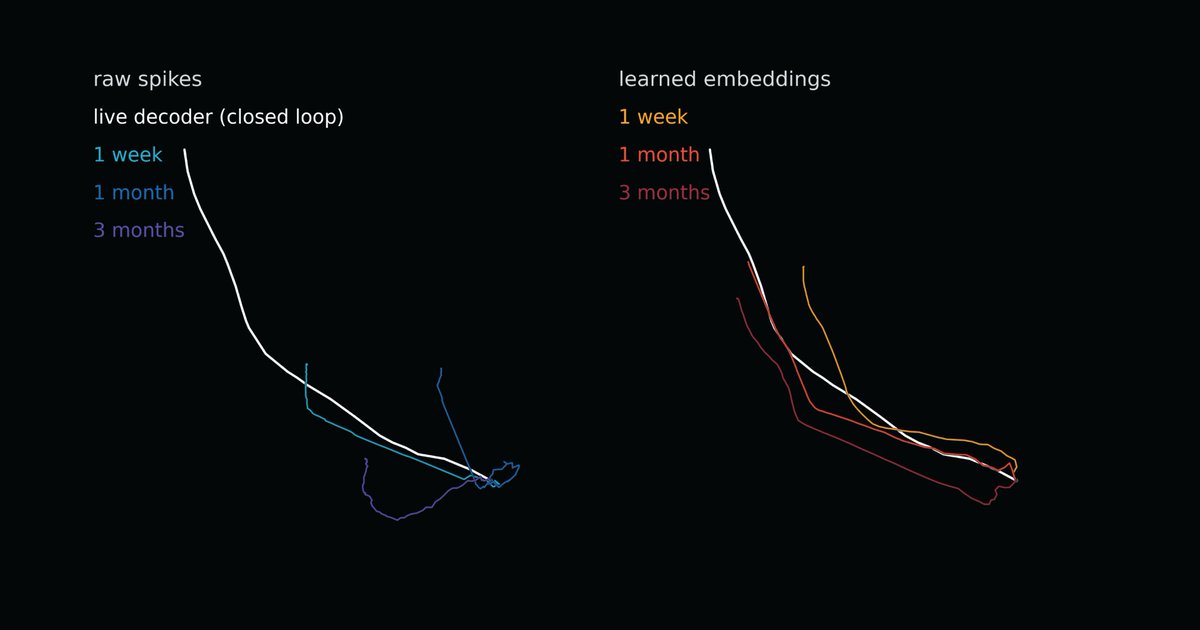
We used it to pretrain a foundation model for BCI: self-supervised neural encoders that turn noisy, drifting spikes into stable representations.
Some initial results:
• Decoders that keep working for weeks instead of days. For some users, calibration dropped from 10 min/day to 10 min/week
• Teleporting cursors that jump straight to the intended target
• A new cursor-control record of 11.32 bits per second (exceeding the performance of most able-bodied people)
We’re just getting started. Future directions include pooling data across participants, one-shot (or zero-shot) calibration, and an API for the motor cortex.
Read more:
https://t.co/sIQXFUI7pc