Reminder to myself
Employees will always perform tasks slower than you. Slower and with mistakes. Several times slower.
Before you freak out about it next time, think about this. How much time did you spend on the same task when you started the business? Firstly, you don't know; you think it was faster, but you didn't track the time.
Secondly, it was slower than now. Since then, you've performed this operation many times and decided to delegate it to employees. Speed comes with repetition.
Try replacing a leak and installing a drainage hose in a washing machine, and then ask a plumber to do it again. Measure the time. Enjoy.
In "Tools of Titans" book @tferriss published the letter from Christopher Sommer. It's so good.
Hi Tim,
Patience. Far too soon to expect strength improvements. Strength improvements [for a movement like this] take a minimum of 6 weeks. Any perceived improvements prior to that are simply the result of improved synaptic facilitation. In plain English, the central nervous system simply became more efficient at that particular movement with practice. This is, however, not to be confused with actual strength gains.
Dealing with the temporary frustration of not making progress is an integral part of the path towards excellence. In fact, it is essential and something that every single elite athlete has had to learn to deal with. If the pursuit of excellence was easy, everyone would do it. In fact, this impatience in dealing with frustration is the primary reason that most people fail to achieve their goals.
Unreasonable expectations timewise, resulting in unnecessary frustration, due to a perceived feeling of failure. Achieving the extraordinary is not a linear process.
The secret is to show up, do the work, and go home.
A blue collar work ethic married to indomitable will. It is literally that simple. Nothing interferes.
Nothing can sway you from your purpose. Once the decision is made, simply refuse to budge.
Refuse to compromise.
And accept that quality long-term results require quality long-term focus. No emotion. No drama.
No beating yourself up over small bumps in the road. Learn to enjoy and appreciate the process.
This is especially important because you are going to spend far more time on the actual journey than with those all too brief moments of triumph at the end.
Certainly celebrate the moments of triumph when they occur. More importantly, learn from defeats when they happen. In fact, if you are not encountering defeat on a fairly regular basis, you are not trying hard enough. And absolutely refuse to accept less than your best.
Throw out a timeline. It will take what it takes.
If the commitment is to a long-term goal and not to a series of smaller intermediate goals, then only one decision needs to be made and adhered to. Clear, simple, straightforward. Much easier to maintain than having to make small decision after small decision to stay the course when dealing with each step along the way. This provides far too many opportunities to inadvertently drift from your chosen goal. The single decision is one of the most powerful tools in the toolbox.
To live a full life, it's important to act quickly.
Especially as you get older, it's easy to let a year or two (or even five) go by without doing the big things you always wanted to do. You might get stuck in a routine—not necessarily one you enjoy, but one that feels familiar and happens every day.
Moving fast is often not given enough credit. This doesn't mean you have to be in a hurry all the time. Actually, you might need to cut out some busy things from your life to make room for the things you really want to do. But it does mean you shouldn't let days pass by while waiting for the perfect moment.
Stop thinking there's unlimited time. This, right now, is your only life.
Partnerships with Corporations
In corporations, there are individuals responsible for procuring services and products from startups. They often use phrases like "Prepayment is not possible for us," "The system must be installed on our servers," and "We do not work with cloud systems." Usually, they follow up with the phrase, "Well, you understand, we are a big company, and we hope for long-term partnerships."
It is beneficial to ask these people how they work with Google Analytics on their own servers. This question typically puts them in a slightly awkward position, providing an opportunity to ask about the relevance of the pain that your service is meant to address. If there is no pain - chances are, nothing will work out. If there is, making an exception for you and prepaying for a cloud service might be possible.
In my experience, it's not advisable to chase after such clients in any case, especially in the early stages of the company's life. They consume too much time and can easily switch to a new partner in the next tender.
Kill Overkill
Business is often seen as the art of acquisition. Acquiring talent, customers, revenue, profits, mindshare, marketshare. Building and growing requires consumption, addition, parlaying some of this into a lot of that.
But the smartest businesses — the ones that tend to stick around for the long haul — know that existence is also about avoidance.
Avoiding careening variable costs, avoiding getting involved with things that aren't core to your business, avoiding spending time on things that don't matter, avoiding bad investments, avoiding people who don't help you prosper, and even avoiding customers who aren't the right fit.
However, there's something even more fundamental to avoid. It would be easy to call it "complexity" but that's not quite it. Complexity can be necessary, and intricacy can be quite beautiful — just stare into a Moorish mosaic and you'll know it.
So complexity isn't the issue.
Overkill is the issue.
Avoiding overkill is the real cheat code. That's how you jump levels. It's how you make a lot more progress with a lot less effort.
Overkill is the dust that settles on the stuff that took a lot of energy to build or buy, but turned out not to be necessary. The over-engineered, over-designed, over-hired, over-litigated, the over-spent, over-promised, over-deliberated.
Overkill is the policy that was written but never enacted. The technology that was purchased that was never used. The seven steps that could be handled in two. The nine people in a meeting made for three. The business equivalent of the 12 bedroom house for a family of four. The cooks when you don't even have a kitchen.
Overkill is using five different products to run a single project. Overkill is an seven-stage interview process that exhausts everyone involved. Overkill is acting like a company 100x your size. Overkill is buying what they bought but that you don't need. Overkill is paying thousands for something worth hundreds. Overkill is hoping that losing more will turn into a win.
In our 24 years, there's nothing we've tried to avoid more at 37signals than overkill. In the things we do, in the way we work, in the things we buy, in the things we use. And, especially, in the products we make for our ourselves and our customers. Basecamp and HEY are built to do what they need to do, in the most straightforward, elegant, and enjoyable way, and nothing more. So you can avoid overkill too.
Every day is an opportunity to find just right. To toss that policy that's in the way. To slim down the stack. To sharpen things up. To eliminate the work that doesn't need to be done. To polish the scratched glass so you can see through again.
Amass what you need, but ignore even more. Kill overkill.
Product Switching
Persuading someone to switch to your product is fundamentally different from implementing a solution where there was a void.
Switching implies acknowledging a mistake in a previous choice. This is why newcomers to a company frequently initiate the implementation of new solutions—they are essentially rectifying the mistakes of their predecessors.
Asserting that our solution is superior and insisting on a purchase based on this claim is misleading. Better for whom? For the salesperson's bonus? It is far more effective to communicate information that individuals were not previously aware of. Their initial choice wasn't necessarily wrong; they were simply not adequately informed.
15 years ago, I helped design Google Maps.
I still use it everyday.
Last week, the team dramatically changed the map’s visual design.
I don’t love it.
It feels colder, less accurate and less human.
But more importantly, they missed a key opportunity to simplify and scale.
–––
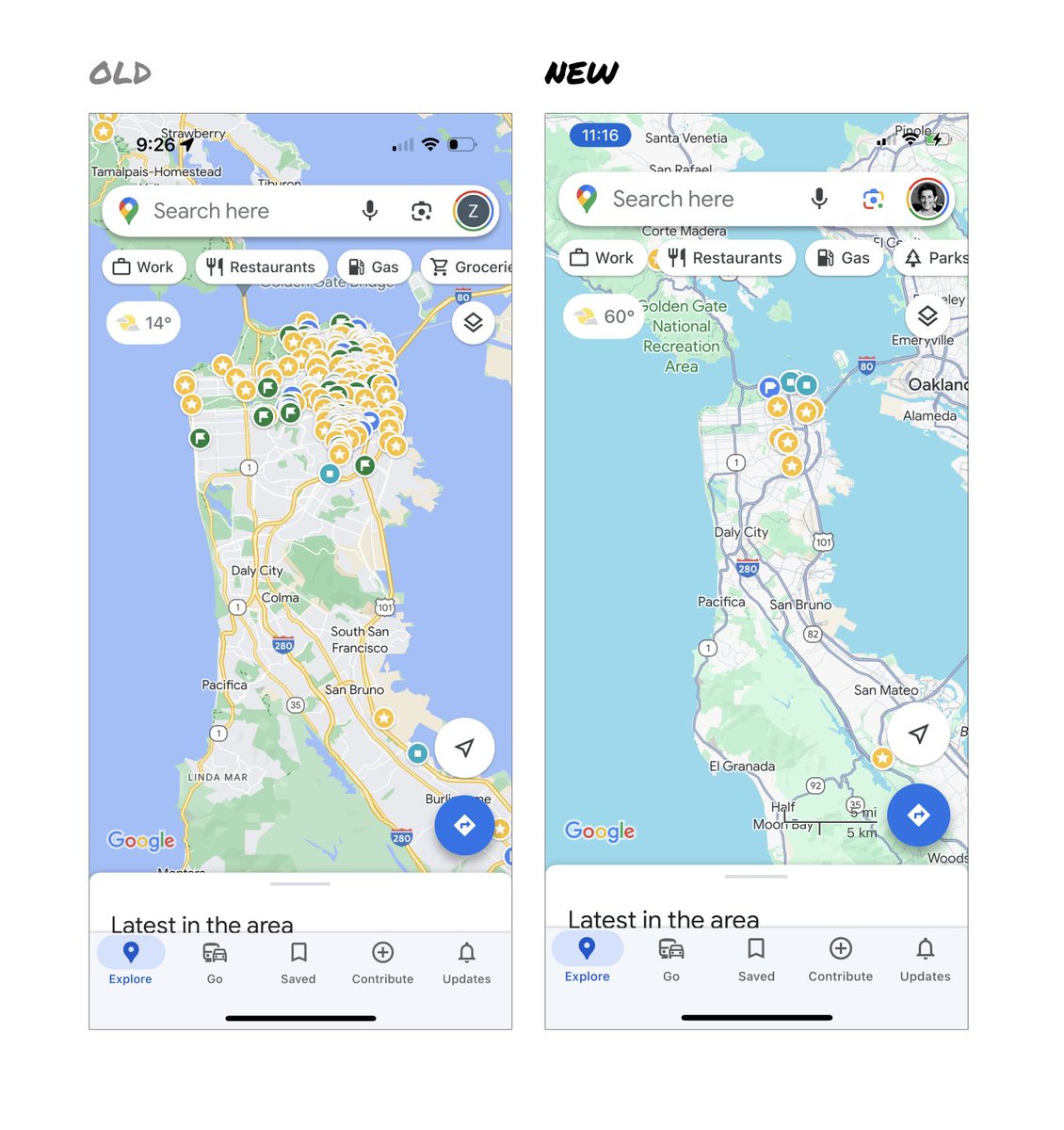
Google Maps has started to widely roll out updated map colors:
- All roads are now gray
- Water changed from blue to teal
- Parks and open spaces are now mint green
It seems the goal was to improve usability and make the maps more readable.
Admittedly, I do think major roads, traffic, and trails stand out more now.
But the colors of water and parks/open spaces blend together.
And to me, the palette feels colder and more computer generated.
But color choices aside…
If the goal was better usability, the team missed a big opportunity:
Google Maps should have cleaned up the crud overlaying the map.
–––
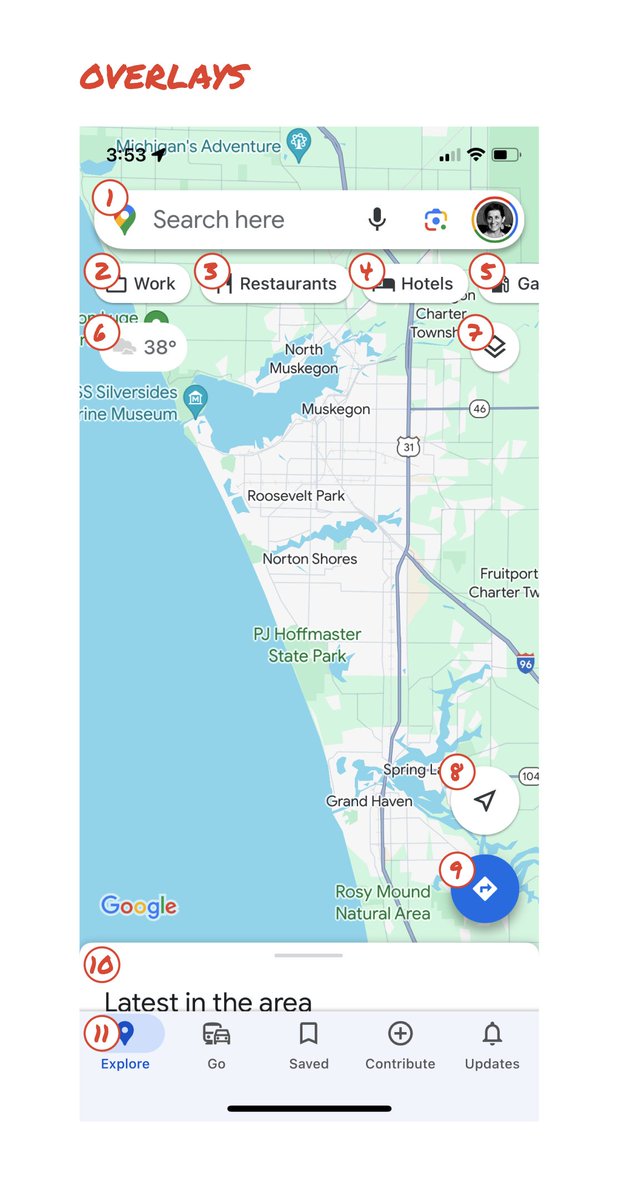
So much stuff has accumulated on top of the map.
Currently there are ~11 different elements obscuring it:
- Search box
- 8 pills overlayed in 4 rows
- A peeking card for “latest in the area”
- A bottom nav bar
(Personally, I would LOVE to see usage metrics for all these overlays.)
The map should be sacred real estate.
Only things that are highly useful to many people should obscure it.
There should be a very limited number of features that can cover the map view.
And there are multiple ways to add new features without overlaying them directly on the map.
–––
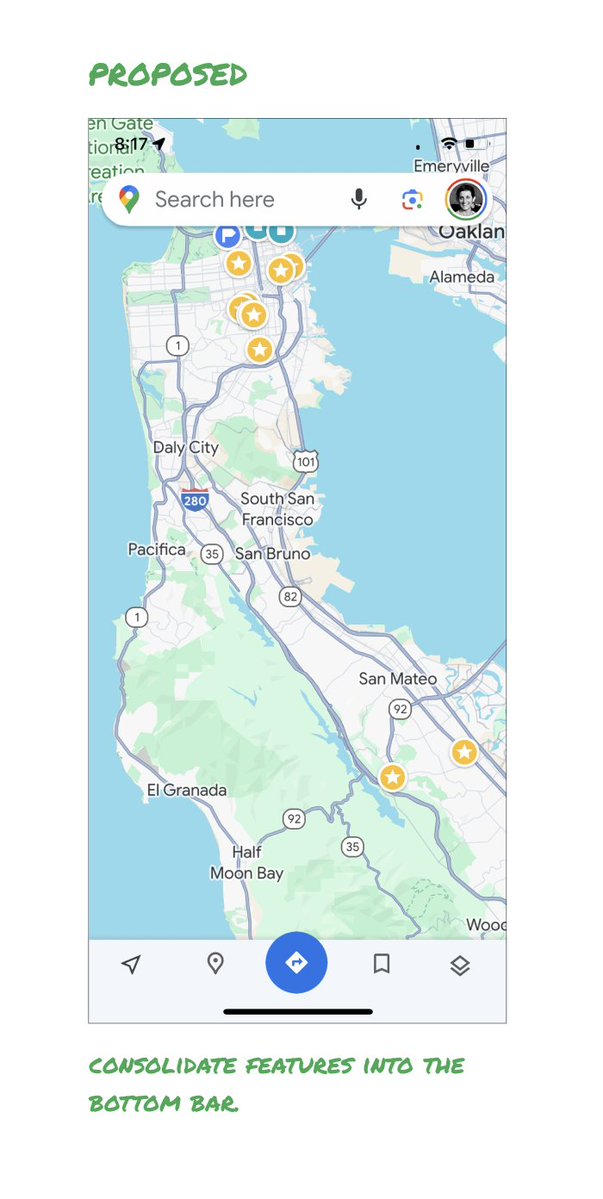
Here’s how it could look:
- Keep the search box
- Keep the bottom bar
- Remove everything else from the map
- Roll the most used features into the bottom bar
- Bury the less used features elsewhere in the app
I assume the search box and directions are top priority and should remain prominent.
My Location and map layers (satellite, traffic, etc.) could move to the bottom bar.
The explore overlays (restaurants, gas, etc.) could live in the bottom bar in “Explore” and open as cards.
The additional space in the bottom bar could be used for Saved, as a “More” option, or could be removed entirely.
There are many variations of how features could be arranged.
But the key points are:
- Dramatically simplify
- Strongly prioritize map visibility
- Bury legacy and low use features
–––
It’s normal for products to accumulate features over time.
But it’s also super important to stay vigilant and continually clean them up.
In many ways, it’s interesting to see history repeating itself.
In 2007, I was 1 of 2 designers on Google Maps.
At that time, Maps had already become a cluttered mess.
We were wedging new features into any space we could find in the UI.
The user experience was suffering and the product was growing increasingly complicated.
We had to rethink the app to be simple and scale for the future.
It seems like it’s time for Google Maps to do this again…
–––
For more on design + tips for early stage founders, follow me on X: @elizlaraki
A paradise for middlemen
It seems that all kinds of intermediaries are a thing of the past. For example, it is unclear why there are realtors: real estate has long been possible to buy from the owners and not pay a commission. Realtors try to survive: they write in big letters that the apartment is from the owner, when in fact it’s a lie. The trouble with most realtors is that they do not create any added value.
Between the categories of clients "I'll do everything myself" and "I'll just buy a new one no matter how much it costs", it’s a layer of those who would benefit from help in working through and structuring a huge amount of incomprehensible information.
That's why @airbnb is perceived so well and travel agencies that dump a bunch of tours and give the choice to the person themselves are perceived so badly.
You don't have to be a big and fully automated service to be useful and get paid for it.
JOMO
I remembered another interesting term, which was invented by the guys from @37signals - JOMO or the Joy of Missing Out, i.e. the pleasure of missing out on some information.
The term was coined in opposition to FOMO, i.e. the fear of missing out on some important information. The term is most often heard in VC circles about the risks of not investing in a company that will later become a unicorn.
Many people constantly read a bunch of news sources to stay informed and know what has happened. But the thing is, you can't really miss the important news anyway, and there's so much unimportant news, you can't keep track of it all anyway.
Long before I knew the term, I had the pleasure of not knowing what had happened somewhere.
Unpopular Opinion: Startups Need a De-accelerator
Investors want startups to participate in acceleration programs so that they will grow quickly and skyrocket their future valuation. So an investor will be able to sell the startup for much more money.
But this is a substitution of the goals of a startup and the personal goals of founders for an investor's goals. After an acceleration program, companies need a de-accelerator.
The process of hypothesis testing after an accelerator looks like gluttony. Imagine a buffet at a 5-star hotel for breakfast, buffet style. There are tons of dishes and you take them all a little bit at a time to test. If you eat a little bit of everything, it's not clear what you like and what you don't. Which dish tastes good and which doesn't?
Another effect is if you eat quickly, it's not clear that you're full. This leads to overeating and obesity.
A startup that tests hypotheses so quickly that it cannot process the results, or realize what needs to be changed, does not move quickly but overeats.
Such a startup needs a de-accelerator.
#startups #growthmindset
Knock-out competition
A little more about competition. Yesterday, at the invitation of my partners, I went to the events of a competing service. I was not welcome there, but I thought about this:
1. In most high-tech industries, competition is not between services. Lots of companies continue to use Excel for everything: sales, support, accounting, hiring, and so on. It makes no sense to be afraid of the competition.
2. In industries where 100% of the market is divided (e.g., shipping for online stores), it is also useless to be afraid of competitors: everyone knows each other and behaves like friends (in public at least). And the service is chosen by price and functionality. Who has the needed functionality and the price is lower — the client accepts the offer. You can raise or lower the price only by improving processes, competitors will not help or hinder in this.
3. In addition to functionality and price, the choice is made on the level of like or dislike. All mobile operators are the same, so customers choose smiling consultants and clear tariffs.
What conclusion should a startup founder make? Forget about competitors until you go IPO. Work on what you can manage: your own product, your own communications, our own processes.
About luck and effort
Lotteries exist because many guys want to win easy money. There are so many people who want it, that bookmakers build up a large enough prize pool, and at the same time reduce the probability of winning.
If we simply rely on luck to achieve a goal, we often forget about the efforts that can increase the likelihood of achieving the goal. Waiting for the lucky ticket to fall out is not only a useless waste of time, but it's also harmful. Instead of waiting, it is much more effective to act toward the goal. Instead of waiting for the customer to sign up on their own, call and talk about your services. Instead of relying on a job website search engine, call recruiters at companies from all the relevant job postings.
If you can influence the outcome, do the work. If you can't influence the outcome, ignore the probability of luck, it's a harmful waste of time.
#growthmarketing #sales
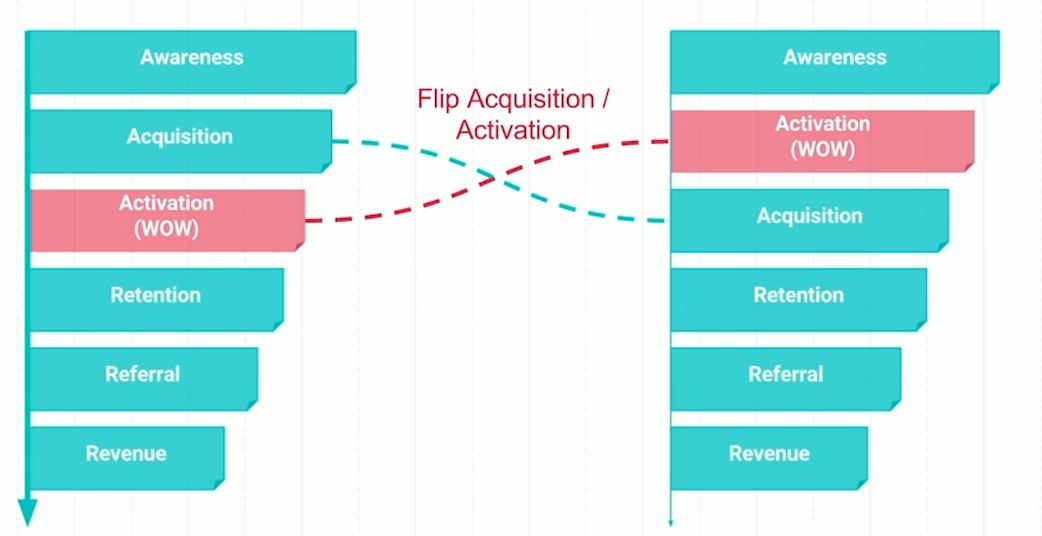
Flip the funnel
It's not cool to create barriers for a potential customer. The less stressed he is in the process of understanding the benefits of the product, the better it is for you.
Make it easy for the user to see the product in action before even entering their signup details.
This way, you're flipping the engagement funnel a bit and can funnel more potential customers into the cart of current customers. If it's possible to show the product in action before even registering, that's the ideal scenario. If you can't do that because of the nature of the product, you can populate the account with demo data so the user has an understanding of what the product will look like once they get started in it. Once they appreciate the value, it will be much easier to push them to sign up.
#b2bsales #growthhacking #SaaS
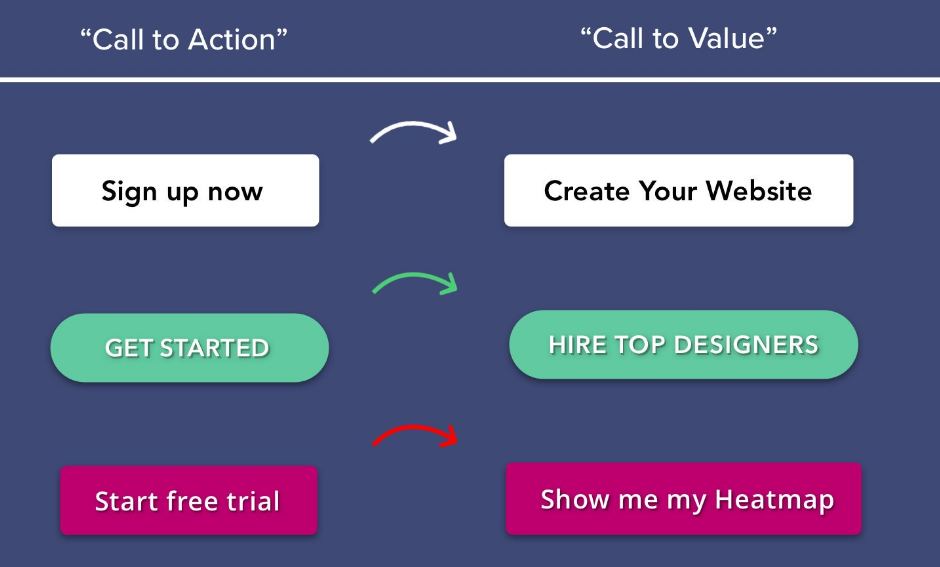
Call to Value, not Call to Action
As Joanna Wiebe of Copyhackers says, "A call to value works best for people before they decide to buy; it reinforces the value of the offer and works to get the prospect to see it."
A call to action works best for people when they've decided to buy; they already understand the value, so it's time to stop selling and just make it a point to remove barriers to purchase.