Thanks for reading.
If you enjoyed this post, follow @karlmehta for more content on AI safety.
Repost the first tweet to help more people see it:
Appreciate the support.
What do you do for a living today?
AI and intelligent robots will increasingly take over many tasks from humans. And they will do it better, faster and cheaper. Yes, yours too.
Many people will work much less or not at all in normal jobs. And earn less or even nothing. What will you live on then?
And how will our companies survive when their customers don't have the money to buy their products and services? This is the key question for your financial future!
We will take a look at three scenarios for the future of our life and the economy. If AI and robots work for us on a large scale, our future could be great. However, it could also turn out quite differently. We could also wake up in a horror scenario.
Because we have a huge and catastrophic flaw in our economic system that could lead to disaster in a world of AI and robotics. Correcting this mistake is the biggest challenge.
What the flaw is and how we can fix it, you'll learn in this video.
What the hell is an ampersand and why does it look like that?!
The first thing you need to know is that "&" used to be the 27th letter of the alphabet...
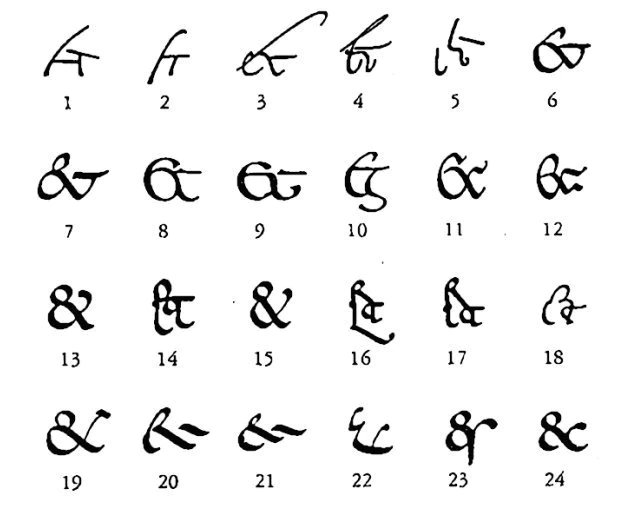
But there are three parts to this story. And the first begins over two thousand years ago in Ancient Rome with a single word: et. It's the Latin for "and". At some point Roman scribes started combining the two letters of et into a single symbol, which was the ancestor of our modern &.
The earliest example of the "et" symbol is actually from graffiti in Pompeii. In any case, it did not disappear with the fall of the Roman Empire.
Latin survived as the language of the Catholic Church and of scholarship in Medieval Europe. Scribes during the Dark Ages continued to use the & symbol. It evolved down the centuries, in places losing any semblance of the letters e and t whatsoever.
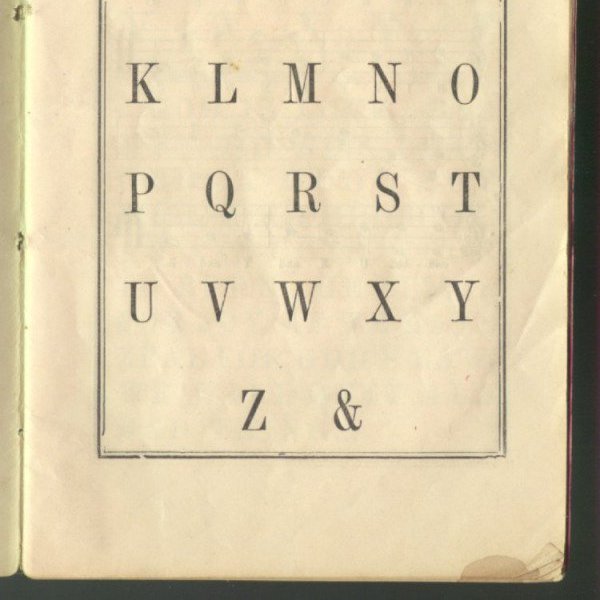
The second part of the story is that during the 18th and 19th centuries, as education and the teaching of literacy spread, & was added to the end of the alphabet as a sort of 27th letter.
On a related note, although "et cetera" is now usually just abbreviated as etc., for a long time it was instead abbreviated as "&c". The & was for et and the c for cetera.
The third and final part of the story is about how the alphabet was taught to children — and how it was read out loud.
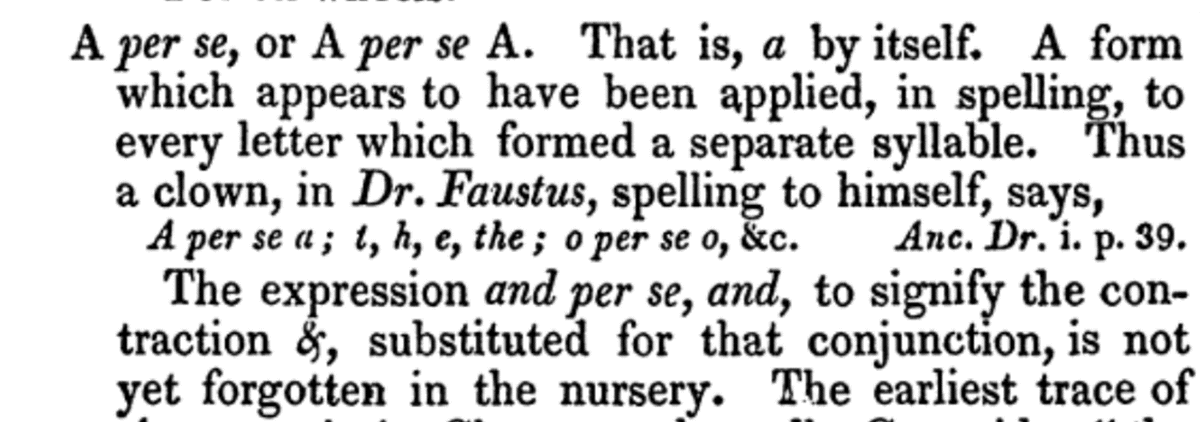
As this 1822 Glossary of Words and Phrases explains, it had been normal during the Renaissance, when speaking the alphabet, to add "per se" before any letter which could also be a word on its own — "per se" means "by itself" in Latin.
Take the letter A, which can also be a word of its own. When reading out the alphabet people would say "A, per se A, B, C, D, E, F, G, H, I, per se I..." and so on. O was also considered a word of its own.
Which means, when people got to the end of the alphabet, with & being the 27th letter, they would say: "S, T, U, V, W, X, Y, Z, and per se &."
When this old way of reading the alphabet was taught to children in the 18th century and they were reciting it aloud, they would garble "and per se " into what eventually became... ampersand.
A Dictionary of Slang and Colloquial English from 1905 relates some of the many other pronunciations school children apparently came up with:
"Ampersand. The sign &; ampersand. Variants: Ann Passy Ann; anpasty; andpassy; anparse; apersie; per-se; ampassy; am-passy-ana; ampene-and; ampus-and; ampsyand; ampazad; amsiam; ampus-end; apperse-and; empersiand; amperzed; and zumzy-zan."
Well, of all the many pronunciations that might have stuck, it was "ampersand" which came to be accepted and is now the official name for &... rather than zumzy-zan. So, from hurried Roman scribes to unruly school children, that's where "&" came from.
@Srpska_info Kaže neko ko veliča i u zvijezde kuje ratne zločince, genocid i etničko čišćenje. Ta njena izjava se može prevesti kao: “Zar se neko usuđuje nama nešto zabraniti.”
@KustroMarko@IvanSkorin@MarinSanna@Ured_PRH @RTLTelevizija We should put emotions aside. There is a protocol and it should be respected. Only big powers sometimes “dare” to play with this. Croatia (in the eyes of Milanovic) is a big power :)
@EPPGroup@PauloRangel_pt It is now clear that Mr. Rangel, in the last 30 years, did not learn much. The war in Bosnia, was for the territory, supported by the aggression from Serbia & Croatia aiming at the dissolution of Bosnia. They did not give up. Read what their academic elite wrote/write on this.
@Spahi87216443 @HrvatskaStranka Lista najčešćih prezimena u Hrvatskoj. https://t.co/f3E2awOTtS
“Bošnjak” je drugo najčešće prezime koje opisuje lokaciju/narodnost (poslije Horvat), a deseto sveukupno (kad se poredaju sva prezimena).
#bošnjak#hrvatska#bih#bosna
Imagine if the West's solution to the Ukraine crisis were to divide Ukraine into two entities, with 49% becoming a 'Russian Republic', and Jews and Roma barred from becoming president...
@goricadodik U nedostatku sposobnosti da (samo)reflektira, čovjek teži da sebi pripisuje samo “dobra djela” a “savjetnicima” oko sebe “losa djela”.
Ovo je bas “AlanFordovski”
#mustwatch The Good Future Explained. A new film by #futurist keynote speaker Gerd Leonhard, featuring many interesting examples, infographics, tweets, videos, and other media. @gleonhard#thegoodfuture 👉🏼https://t.co/KBw7G58Reu