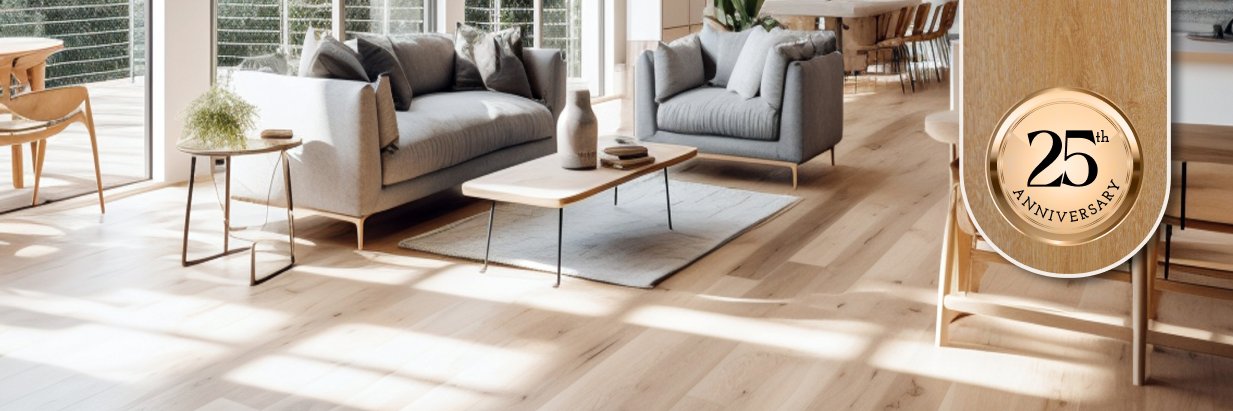
Grand Width has a 4 mm real-wood wear layer. Refinishing still depends on the floor’s condition and manufacturer guidance, so have a professional assess it. Order up to 5 free samples.
You are redesigning a room. What stays?
The vintage furniture, the bold wall color, the statement floor or the favorite artwork?
Tell us the detail you would build everything else around.
What does your flooring shortlist need to work with: cabinets, a favorite sofa or both? Put Sea to Sky hardwood and Fortis vinyl beside your finishes. Choose up to 5 free samples: https://t.co/js3vvsEkLU
The grain has a texture you can feel. Fortis uses embossed-in-register detailing to align its surface texture with the wood-look design. Add texture to your flooring shortlist. Order up to 5 free samples.
https://t.co/JFelKnNlxa
If you could reclaim one corner at home, what would you make room for?
A making corner, a quiet study, a place to stretch or a family project space?
Tell us which one—and who would use it.
A flooring name is not the whole specification. Kona is laminate; Fortis is vinyl. Different constructions, both with wood-look designs. Compare the material as well as the color. Order up to 5 free samples.
https://t.co/TNSiu8obvN
If you could give one family ritual a proper place at home, what would it be: board games, making things, or a long Sunday lunch? Tell us the one you would make room for.
Bold walls, grounded palette. Compare floor, paint and cabinet samples together before committing to a room.
Start your shortlist: https://t.co/HDCwysKU9g
October is the quiet sweet spot for a hardwood install. Summer humidity has dropped, the heating hasn't kicked in yet, and the boards acclimate to a room that's close to how it will live all winter.
Two puppies. One tough floor.
Beautiful chaos belongs at home. Meet Fortis waterproof vinyl flooring.
Who's the troublemaker in your house?
https://t.co/0m1KWK0ep2
Let hardwood sit 48 to 72 hours in the room it's going into. Not the garage, not the basement.
The boards need to settle at the humidity they'll live in. Skip it and you'll find the gaps in February.
Everyone picks hardwood by colour. Width is what actually changes the room.
Narrow planks read busy. 9.5 inch planks read calm, because there are fewer seams for your eye to stop on.
Order 10% more than your square footage. Cuts, mistakes, and one bad plank per box are normal. Running out mid-install is how you end up with two dye lots.
No showroom markup. No middleman warehouse. Mill-direct means the price you see is the mill's price plus honest logistics. That's the whole business model. Samples link in reply.
Before install day: acclimate your planks 48-72 hours in the room where they're going. Wood moves with humidity. Skipping this step is the #1 cause of gaps by Christmas.