Today we're launching Iris, the financial network telecom operators plug into to earn on what they already own.
Operators built the roads the digital economy runs on. Everyone else got rich building the city on top. From 2012 through 2025, traffic on operator networks grew more than 50% a year. Operator revenue grew about 1%. The companies on top took the difference.
Operators own what those companies pay dearly for: distribution, the billing relationship, daily engagement. And money already runs through all of it, in subscriber payments, top-ups, advertising and settlement.
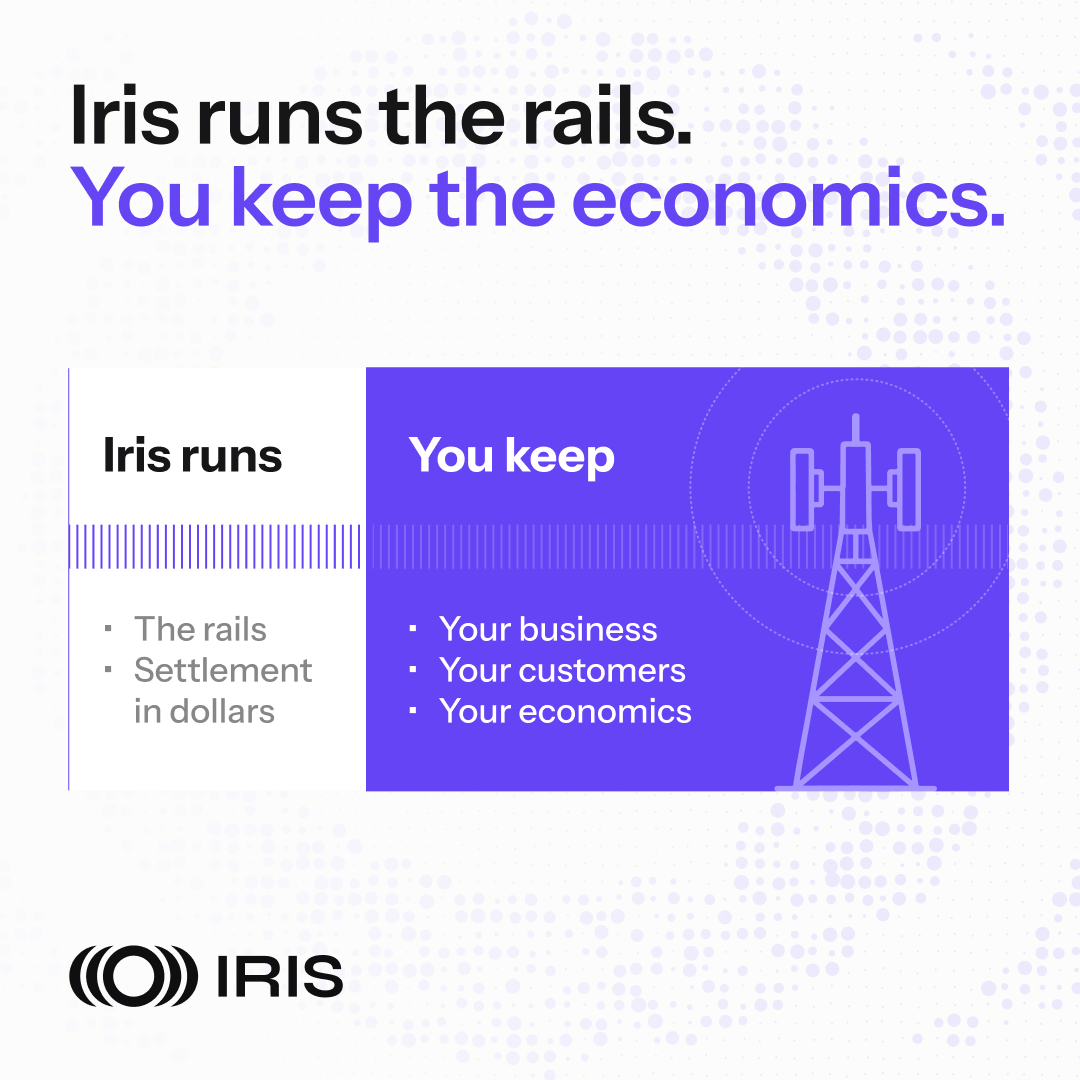
Iris sits underneath all of it. Same business, new revenue, settled in dollars. Iris runs the rails. The operator keeps the economics.
VIVA, a licensed carrier in Bolivia, is the first operator live on Iris. Real transactions, settled in USDi, operating reserves held in dollars.
Until now, operators built everything and kept almost none of the value. Now they build almost nothing and keep almost all of it.
Nearly one in five cross-border payment corridors still averaged retail costs above 3% in 2025, according to a report The Payments Association and Payall published this month. The global target, set by the Financial Stability Board, is 3% by the end of 2027.
For a family sending money home, that cost comes out of every transfer.
The sender already has a phone and an operator they pay to keep it connected. Next year, an operator on Iris will be able to let its subscribers send money home from its own app, settled in dollars.
Read more: https://t.co/OkM89IrIGk
Every prepaid customer who leaves takes their top-ups with them.
At VIVA in Bolivia, customers who use the VIVA app churn at 2.10%, against 5.60% for customers who don't. That is about 63% lower churn. App users also bring in 32% more revenue each and stay 21 months longer on average.
On Iris, a telecom operator can run a white-label superapp under its own brand, with loyalty and rewards, a wallet, ads and shop.
Businesses sending money abroad pay banks a total margin of around 2 to 3.5% of each transfer, according to a Bank of Canada study published in October. Most of that is the foreign exchange margin.
A telecom operator pays equipment vendors and partners across borders all year, so that margin is a standing cost on its books.
Coming next on Iris, Cross-Border B2B Payments lets an operator pay in local currency at both ends, settled in dollars in between.
Read more: https://t.co/PhytCCpNdH
What a telecom operator can switch on with Iris today: a superapp under its own brand, an ad exchange on ad space it already owns, a marketplace that pays it commission on every sale, and a Dollar Treasury that holds operating cash in dollars.
Coming next: Domestic Settlement and Cross-Border B2B Payments.
Start with one product. See the number, then decide.
Even SpaceX needs ground spectrum to get a phone signal indoors. Operators already hold those licenses and the customers who pay every month.
That's real leverage, whether you end up partnering with satellites or competing with them.
Rooting for Elon here. Starlink on your phone is great until you walk inside, and he knows it. Now he wants mini cell towers on your roof.
Catch is, those need spectrum. T-Mobile is buying 58 licenses he could've used.
Operators, you have what he needs. I'd pick up the phone.
https://t.co/MhAgYFMnqw
In markets where the phone comes first, the network behind it is the piece of infrastructure people use most every day. A telecom operator runs it.
Iris is the network telecom operators plug into to earn on what they already own. Same business, new revenue, settled in dollars.
Every month, someone has to work out who is owed what, then send the money.
On Iris, a telecom operator's money moves in USDi as it comes in, and revenue shared across products can split by rule.
Iris is the network telecom operators plug into to earn on what they already own. Same business, new revenue, settled in dollars.
(@JohnNahas84 at @avax Summit)
Many people in emerging markets have no bank account and no credit card. They do have a phone, and they pay a telecom operator to keep it connected.
Iris is the network telecom operators plug into to earn on what they already own. Same business, new revenue, settled in dollars.
(Udai Kanukolano, CRO of Rakuten Symphony, at @avax Summit)
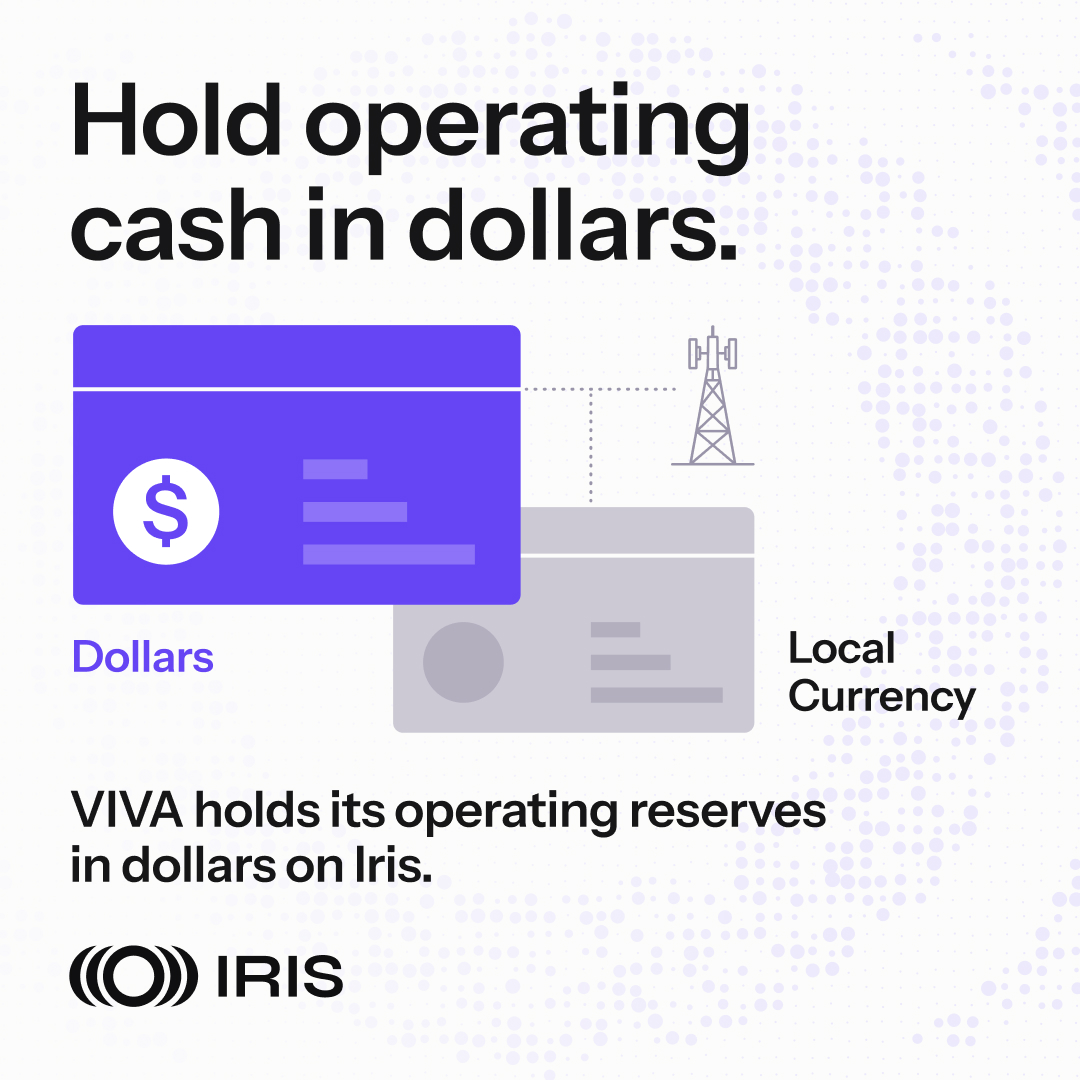
A telecom operator buys its network equipment from international vendors, usually priced in dollars. The revenue that pays for it arrives month by month in local currency and sits there until the bill comes due.
On Iris, an operator can hold its operating cash in dollars and keep using local currency at home. In Bolivia, VIVA already does.
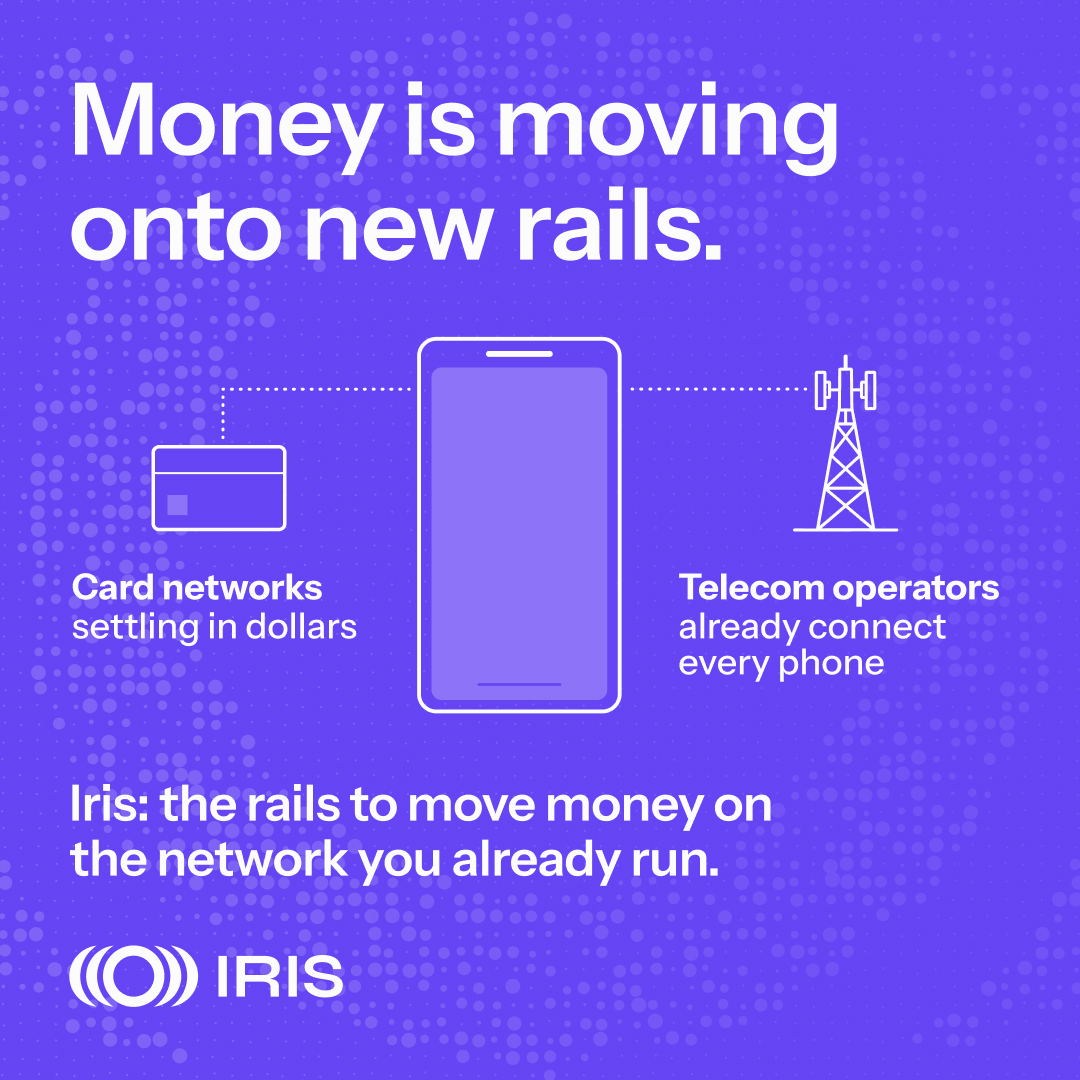
Visa partners can now settle what they owe Visa in a dollar stablecoin. Card networks and banks are building their own dollar rails.
Telecom operators already move data at scale for every phone on their networks. Iris gives them the rails to move money on those same networks, settled in dollars.
Iris is the financial network for telecom operators.
Read more: https://t.co/sB7zNy55Ad
Buying another operator adds revenue, and it adds that operator's network, costs and customers to run with it.
New revenue on infrastructure an operator already owns works differently. No new capex, no new spectrum, no new customer to acquire. A dollar of new revenue on infrastructure you already own behaves like margin, not growth.
Iris is the network telecom operators plug into to earn on what they already own. Same business, new revenue, settled in dollars.
Satellite companies are building on the ground. SpaceX has picked Qualcomm to supply radios for tens of thousands of US cell sites, starting in 2027. In Japan, Rakuten and AST SpaceMobile are building a satellite-to-phone network that Japanese telecom operators will run on the ground.
Either way, the asset in play is the customer relationship telecom operators already hold.
Iris is the network telecom operators plug into to earn on what they already own. Same business, new revenue, settled in dollars.
Read more: https://t.co/NL3ayTngVT
On Iris, a telecom operator keeps its own business, its own customers and its own economics. Iris handles the rails underneath.
Iris is the network telecom operators plug into to earn on what they already own. Same business, new revenue, settled in dollars.
A telecom operator's subscribers are real people, topping up and paying their bills. That is the activity Iris starts from.
VIVA, a licensed carrier in Bolivia, is the first operator live on the Iris network, settling transactions in USDi, holding operating reserves in dollars and attesting subscriber activity on the network.
Iris is the network telecom operators plug into to earn on what they already own. Same business, new revenue, settled in dollars.
(@JohnNahas84 at @avax Summit)
VIVA, a licensed carrier in Bolivia, chose to go first on Iris. Its CEO doesn't want VIVA to be the last.
The operators that come next start on a network already live with a licensed carrier, one product at a time.
Iris is the network telecom operators plug into to earn on what they already own. Same business, new revenue, settled in dollars.
(@ryanj_alvarez at @avax Summit)
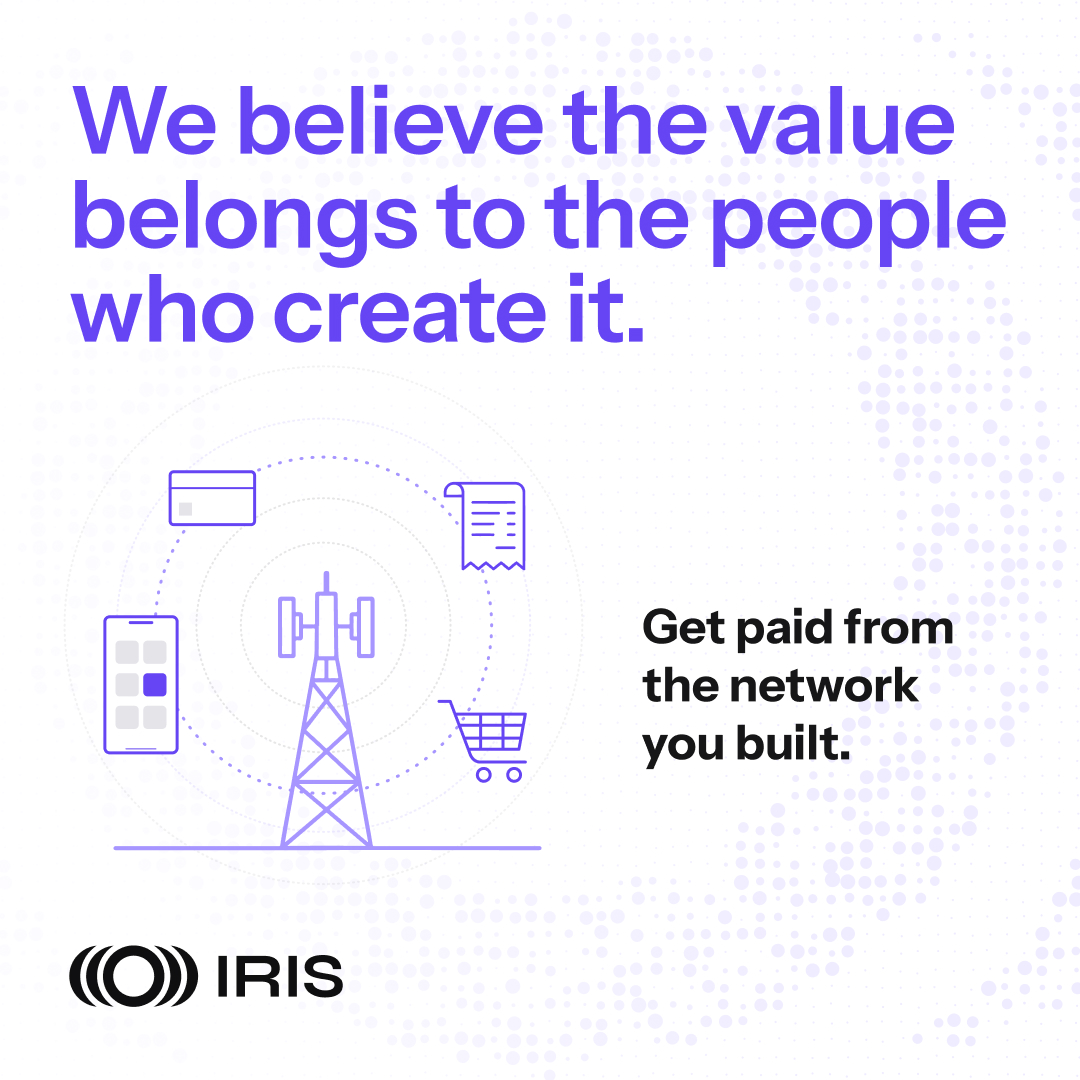
The people who built the networks keep the smallest slice of the value that runs on them. For telecom operators, that has been true since the platforms arrived.
Iris is the network telecom operators plug into to earn on what they already own. Same business, new revenue, settled in dollars.
Europe's central bank has picked two groups that include telecom operators to provide the network connections for its potential digital currency. Operators are starting to get paid for running financial infrastructure.
Iris starts closer to home, with the subscribers and the billing relationship an operator already has. Iris is the network telecom operators plug into to earn on what they already own. Same business, new revenue, settled in dollars.
Read more: https://t.co/mDiz2AZHuj
Before a telecom CFO asks what Iris can earn, they ask what it could risk. Do we have to hold crypto? What goes on chain? Is it live?
The answers are in the graphic. Iris is the network telecom operators plug into to earn on what they already own. Same business, new revenue, settled in dollars.
In telecom, the distribution already belongs to the operator: the SIM in the phone, the app on the home screen, the dealers who sell airtime.
On Iris, the operator switches on new products for the subscribers it already reaches, and the new revenue settles in dollars.
Life AI, Kalbe Farma and KALGen took a genetics-based stroke prevention program from DNA results into real-world use in Indonesia.
Deployment time dropped from roughly 24 months to 3, and the regulator accepted it.
Life AI brought the data and the AI. Kalbe brought the reach. It's the same pattern @BuildOnIris runs in telecom: build on the distribution someone already owns.
https://t.co/DnWH3s5ihb
In Hong Kong, a central bank pilot now settles tokenized deposits between banks around the clock, in tokenized central bank money. Corporate treasury is one of the uses.
Telecom operators already run networks that never close. Iris is the financial network for telecom operators. On Iris, reconciliation inside an operator's own business that took 60 days across multiple teams settles instantly.
Read more: https://t.co/VaQtGt1KoR