Exciting news! We've entered into an agreement to acquire @calypsoai, a pioneer in enterprise AI security. 🤝
Learn how #F5 and #CalypsoAI plan to bring advanced #AI guardrails to enterprise AI deployments across hybrid and multicloud environments. 👉 https://t.co/bYpVh8uhMA
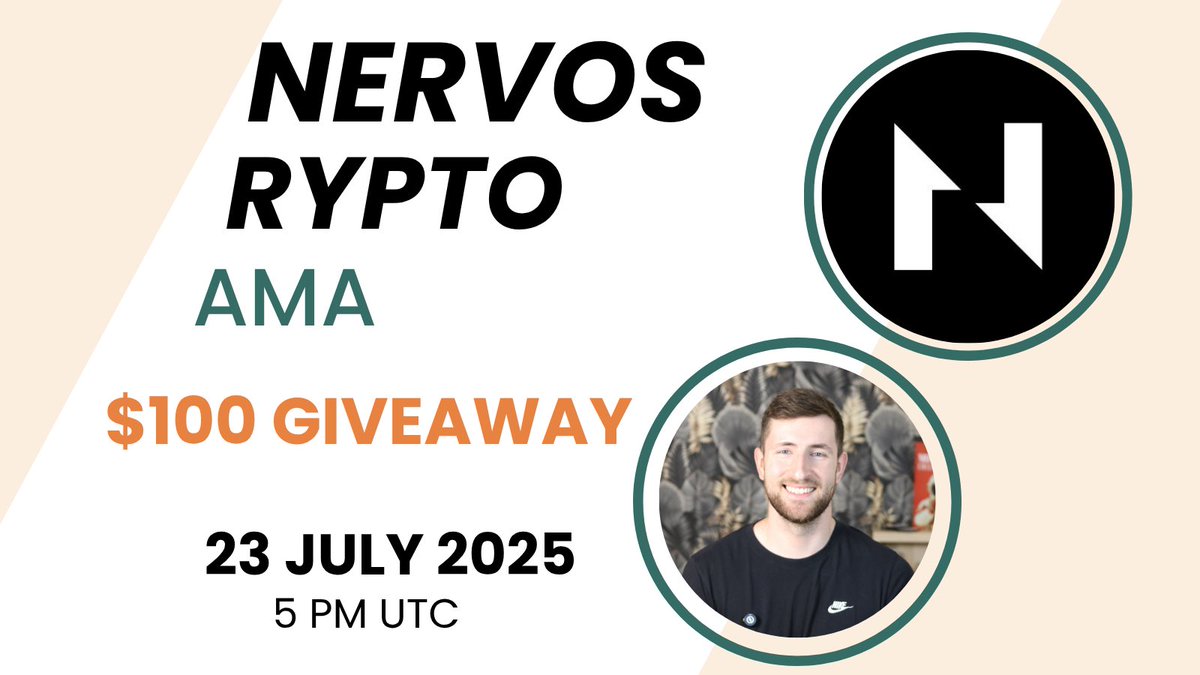
🚨 LIVE STREAM 🎥
Tomorrow 5pm UTC (23rd July)
Join me with @NervosNetwork
There’s $100 in $CKB to be won to someone asking the best questions.
Must be a subscriber to telegram channel (link in comments) ⬇️
🧠 Bold prediction: PoW chains won’t disappear — they’ll rise again as the foundation of trust in the BTCFi ecosystem.
📊 Which PoW chain is best positioned to anchor verifiable state in the future?
Highly recommend the community supports this. An open source quest platform that rewards the community with $CKB, custom tokens, and points for completing various actions.
With it, we can more effectively coordinate social and onchain activity
https://t.co/N7iYvqnuWi
Bitcoin’s base layer is notoriously conservative: great at keeping coins safe, not built for fancy apps.
Yet, today, we see NFTs, stablecoins, and even decentralized exchanges flourishing right on top of it.
What gives? What sorcery makes this possible?
Let us share the sauce 👇
Enter metaprotocols.
Bitcoin metaprotocols are extra rules that “hitchhike” inside ordinary Bitcoin transactions without touching Bitcoin consensus. Bitcoin still enforces ownership, while specialized clients enforce additional logic.
It’s critical to highlight that metaprotocols differ significantly from typical Layer 2 solutions, like rollups, which operate their own block production, or sidechains, which adhere to their own consensus rules.
With Layer 2s, users typically must bridge their assets into a new execution environment that has different, albeit somewhat connected, security assumptions from the base layer.
With metaprotocols, users control real Bitcoin UTXOs, and the additional assets or apps merely piggyback on those UTXOs, which means that the security assumptions for asset ownership are based entirely on the Bitcoin consensus.
Now, based on how they approach validation, metaprotocols can be loosely grouped into two categories:
On-Chain Metadata: Metaprotocols where the whole token or NFT message is embedded directly in a Bitcoin transaction via OP_RETURN, Taproot script-path, or witness blob. Anyone can parse the chain and verify the state—no off-chain proofs needed. These include well-known projects like Counterparty, Ordinals, Runes, and BRC-20.
Client-Side Validation (CSV): Commitment-based metaprotocols in which a Bitcoin transaction records only a commitment (a hash or succinct proof) to the real token state. The full state lives off-chain, and every wallet that wants to recognize the asset retrieves—or is already carrying—that off-chain state, verifies it against the commitment, and only then adds the transfer to its local ledger. These include projects such as RGB, Taproot Assets, Charms, and RGB++ (a hybrid).
Since there is already a wealth of information about Ordinals (Inscriptions) and the like, we’d like to direct your focus toward CSV-based metaprotocols, which are arguably more innovative and interesting.
To help you understand how they work, in the following posts we’ll explain their basic components, including CSV, single-use seals (pioneered by RGB), and zkVMs.
Then, we’ll get into the specifics of each CSV metaprotocol and highlight their differences.
Stay tuned! 🧵
JS devs — we see you.
The latest Nervos docs (v2.20.0) now include more JavaScript/TypeScript content, with TS examples:
- Quick Start: https://t.co/4EdIDsYOTZ
- Introduction to ckb-js-vm: Mechanism and Capabilities: https://t.co/iQ5OVEbPDa
Check out the full release notes: https://t.co/zYLciSBvB4
@CKBDevrel@NervosNetwork
JS devs — we see you.
The latest Nervos docs (v2.20.0) now include more JavaScript/TypeScript content, with TS examples:
- Quick Start: https://t.co/4EdIDsYOTZ
- Introduction to ckb-js-vm: Mechanism and Capabilities: https://t.co/iQ5OVEbPDa
Check out the full release notes: https://t.co/zYLciSBvB4
@CKBDevrel@NervosNetwork
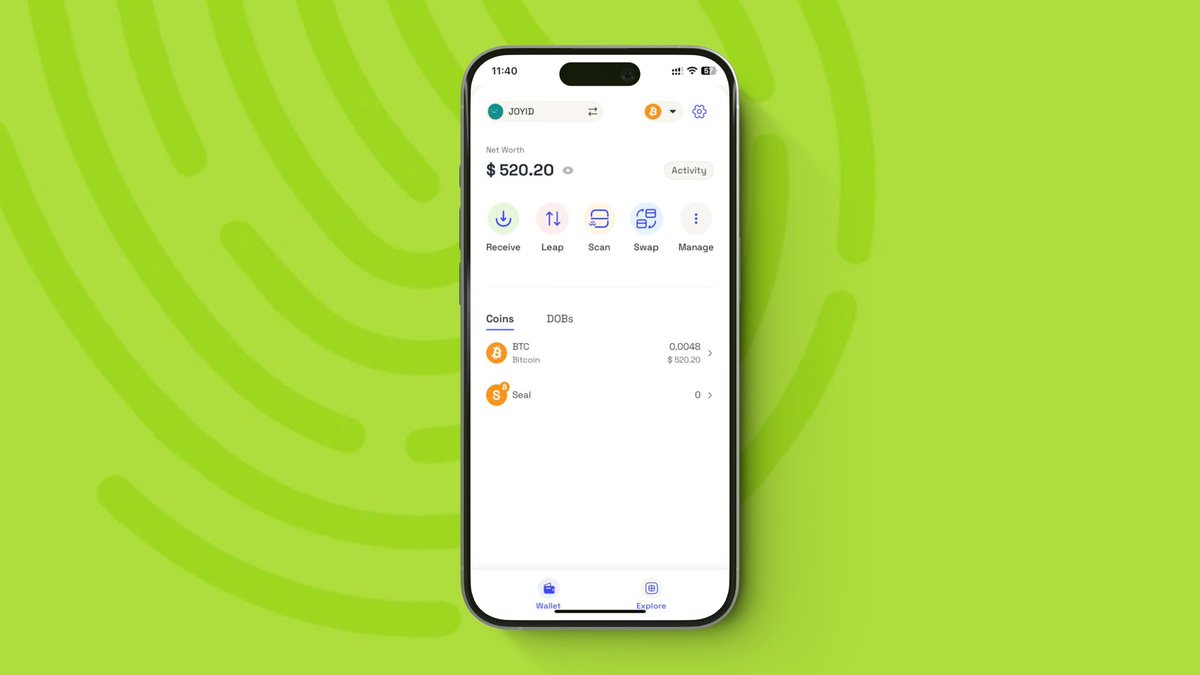
⚡ What’s the big deal with BIP21 support in JoyID?
With BIP21, a single QR code can contain both:
✅ On-chain Bitcoin address
✅ Lightning invoice
Your wallet picks the best way to pay—seamlessly.
One code, two networks. Just scan & go. ��
@magickbase With this swing towards the future as of today, where is the best ‘GoTo’ source to send people about to build on Nervos Network for practical knowledge & support?
Thanks. 👌🏻✅✅
#NervosNetwork The 9.2 billion $CKB in the DAO & iCKB’s flexible withdrawals in 2025, involve 1000’s of unique depositors. Est..10,000–100,000 $CKB per deposit, this implies 92,000–920,000 depositors, #DYOR Our community is strong. 💫 #BuildOnNervos ✅✅