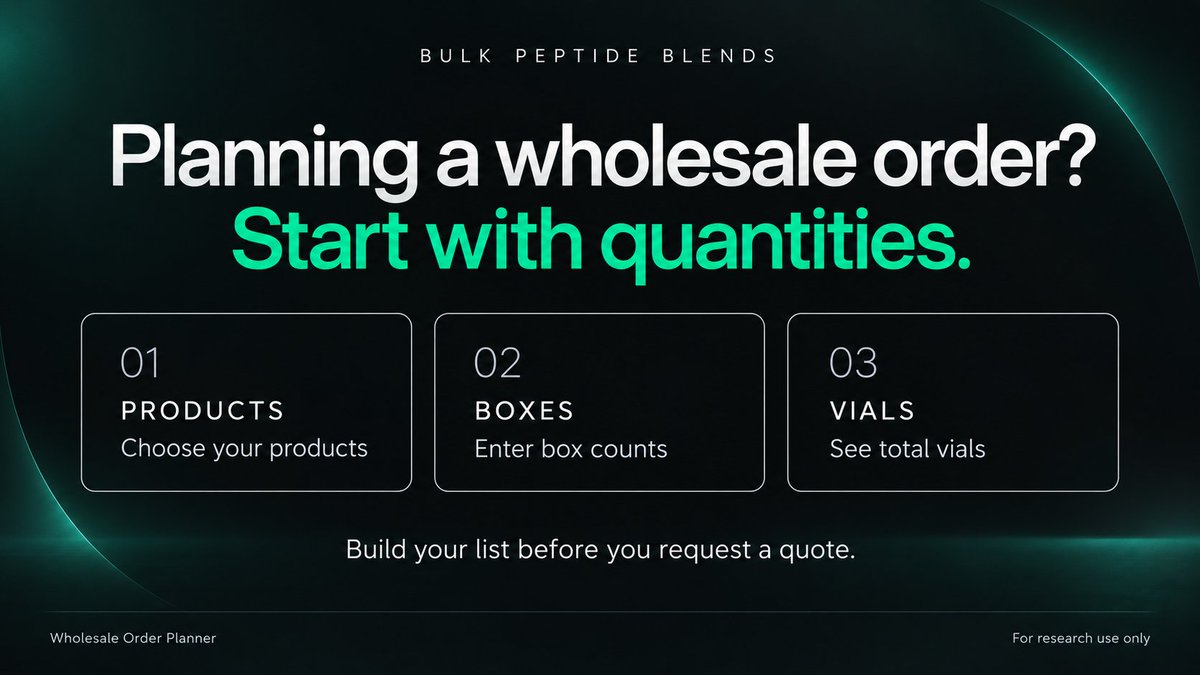
Planning a wholesale research peptide order? Choose products and box counts in our Wholesale Order Planner. See total vials before you request a written quote.
For research use only.
https://t.co/eN3KOBAYXT
@fookylin One practical addition: record the report’s revision date. If the lab amends a COA, keep the original, amended copy and explanation with the purchase record. Otherwise two reviewers may be comparing different versions.
@bfPepResearch Thanks for adding the source and clarifying the limits. Labeling which result comes from which study will make the note easier for a research team to check.
@UKMAXXofficial Does the QR link keep the original report available after a batch sells out? For a lab’s purchase record, a downloadable report tied to the vial’s lot helps preserve the evidence even when the current catalogue changes.
@PioneerPeptides Can a lab review the current lot’s HPLC and MS reports before ordering, then have that lot identified on the quote? That would make the documentation review and the eventual shipment easier to reconcile.
@Sennaresearch For repeat lab purchases, I’d add report date and revision to that checklist. If a lab corrects a COA, the purchasing record should make clear which version was used. Do you keep superseded reports available alongside the current lot report?
@PeptideBriefs If I had to pick one, identity testing. I’d record the method and result, rather than just “COA available.” The lot number is what connects that result to the material used. Your reported/not-reported line would be a useful start.
@AluxResearch You’re right—my question was too generic. I meant measured amounts for each component of the finished blend, but I should have checked the report before asking.
@PeptideComp How do you handle a supplier changing its COA or pricing after a comparison is published? A dated source snapshot and a visible correction history would help research buyers understand exactly what was reviewed.
@AndersonAmino Thanks for clarifying your affiliate role. For research brands, keeping a downloaded COA with each purchase record makes repeat-lot comparisons easier, even when the public library changes.
@RegenRsrch That makes the vial-to-report link easier to follow. Can buyers also download the lot report with its test date and methods, so they can keep a procurement record alongside the NFC check?
@Vitalitipeptide Matching the lot is a good first check. I’d also check which tests the report actually contains: an HPLC purity result alone doesn’t establish identity or cover metals, endotoxin or sterility. Missing tests should stay “not reported,” rather than be assumed clear.
@PeptideBriefs For research procurement, make the comparison method-for-method too. Two purity percentages can come from different methods, and neither tells you measured peptide amount. A useful comparison table keeps identity, purity and amount in separate columns.
@ForgePerformCo One detail worth adding to a brand’s document process: keep the report version and issue date. If a lab later corrects a report, buyers should be able to tell which version supported the original lot review and what changed.
@PeptideComp A blend name is a starting point, not a specification. For a brand comparing quotes, the useful comparison is the exact components and amount of each per vial. Otherwise two “GLOW” prices may describe different products.
@NewsRamp_Alerts For brands adding vial QR codes, a downloadable report matters too. Lab teams need a record they can retain with the order, even if the website or QR destination changes later.
@AluxResearch Good to have checkout back. Did failed attempts remain visible in the order history? A clear unpaid/paid status is useful for lab buyers reconciling orders after an outage.