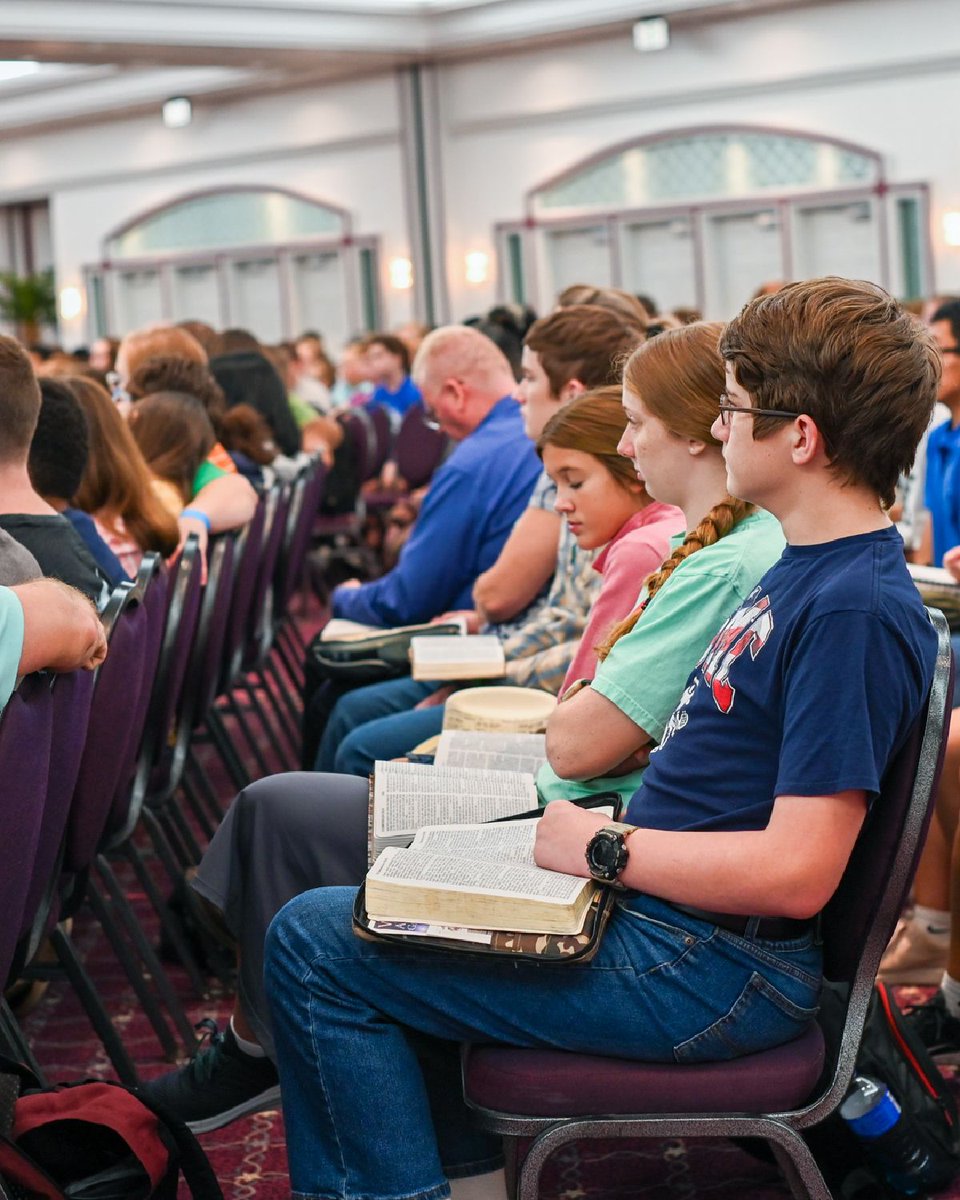
Huge shout-out to the students @ConnectPCC who gave their time and energy to help with hurricane cleanup! Thank you for rolling up your sleeves, serving others, and making a difference. Grateful for each of you!
@pauljlange@Hoops_Companion Agree. I’m doing this over the weekend with our team but taking more time to write strengths and weaknesses and where to go with each player next. For many, it is 1v1 conversations about the next things they should be focusing on. Don’t stop at a number…climb to the next
John Wooden was asked, "How do you define success?"
Most coaches would've talked about championships.
Wooden said something completely different - something timeless and still misunderstood today.
It's one of the greatest definitions I've ever seen because it applies to everyone.
Here's what he said and why it matters:
"Success is peace of mind attained only through self-satisfaction in knowing you made the effort to become the best of which you are capable." — John Wooden
Read that again.
No mention of titles, trophies, or outcomes.
It's about effort and growth. That's it.
Why This Definition Is Genius...
Most definitions of success are comparative.
You're successful if you win more than others. If you make more money. If you get more recognition. If you achieve something others haven't.
Wooden's definition removes all of that.
His definition is about becoming YOUR best.
That's why it works for everyone. It levels the playing field.
We're not all born with the same resources, talents, or opportunities - but we all have the ability to give our best.
The goal isn't to be better than someone else. The goal is to be better than you were yesterday.
The Four Pillars of Wooden's Success - When you break down Wooden's definition, you see four key elements:
1: Peace of Mind - Success isn't anxiety-driven achievement. It's not the restless pursuit of external validation. It's peace - the quiet confidence that comes from knowing you did everything you could.
2: Self-Satisfaction - Not public recognition. Not praise from others. Self-satisfaction. You know whether you gave your best. You can't lie to yourself about that.
3: Made the Effort - Success isn't about results. It's about effort. That's what you control.
- Did you show up?
- Did you do the work?
- Did you give everything you had?
4: Become the Best You're Capable Of - Not the best in the world. Not the best on the team. The best YOU are capable of. That standard is personal, not comparative.
Why We Struggle With This Definition...
Here's the hard truth: Most of us don't want this definition.
We want success to be measurable. Visible. Comparable.
We want the trophy. The title. The recognition.
Wooden's definition asks a harder question: Are you becoming who you're capable of being?
That question is uncomfortable because:
- Only you know the real answer
- There's no finish line
- You can't fake it
- It requires brutal honesty
It's easier to chase championships than to chase your best self.
But only one of those will give you peace of mind.
The Daily Standard
Success isn't a title you earn once and keep forever.
It's a standard you choose every day.
Ask yourself:
- Did I grow today?
- Am I working to become my best?
- Did I give the effort I'm capable of?
If the answer is yes, you were successful today - regardless of the scoreboard.
If the answer is no, you weren't - regardless of whether you won.
The Application
Wooden's definition cuts through the noise and brings it back to what you can control:
Effort. Attitude. Growth.
- You can't control whether you win the championship. You can control whether you prepared like a champion.
- You can't control your players' talent level. You can control whether they're getting better.
- You can't control the outcome. You can control the standard.
When you make success about becoming your best, you free yourself from comparison, external validation, and outcomes you can't control.
You focus on the process. The daily habits. The incremental growth.
That is the goal.
Nick Saban says one of the biggest mistakes leaders make when their environment changes is sitting around complaining about the new rules, and says his philosophy was that complaining is actually a distraction to the solution, so you should always spend that energy figuring out how to adapt
“You have to be flexible, number one. If you’re flexible, then you have a willingness to adapt. And I think your willingness to adapt is really, really important because things are changing.”
“There’s a lot of changes that are ongoing that you have to adapt to. And I think that rather than complain about it, which a lot of people sit around and complain…”
“Complaining is actually a distraction to the solution. I think that you’ve got to spend most of your time trying to figure out, ‘What is the solution? How can we adapt?’”
“That’s the way we’ve tried to look at all these challenges, to try to improve the quality of the program that we have.”
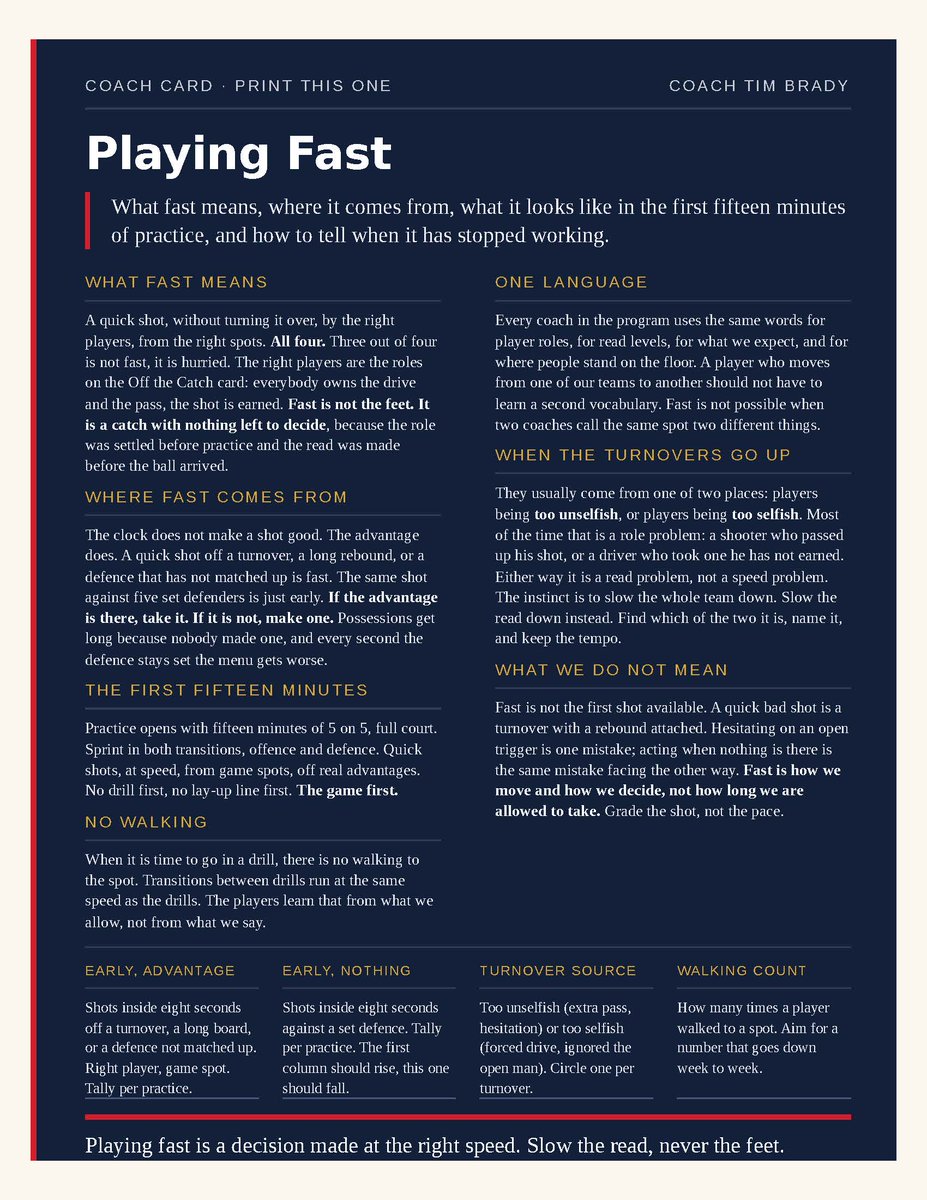
Every coach in the program wants to play fast, and most of us mean something slightly different by it. This card says what we mean. Fast is a quick shot, without turning it over, by the right players, from the right spots, and it only counts when all four are true. It comes from an advantage, not from the clock, so a quick shot against five set defenders is not fast; it is early, and early with nothing behind it is the most expensive habit a young team can pick up because it never looks like a mistake. Fast is not the feet. It is a catch with nothing left to decide, and that is built before practice, in the roles, and before the catch, in the read. The tally strip on the bottom is how we know whether it is working. Count both columns honestly. The first should climb, the second should fall, and if they move together, we are hurrying, not playing fast.
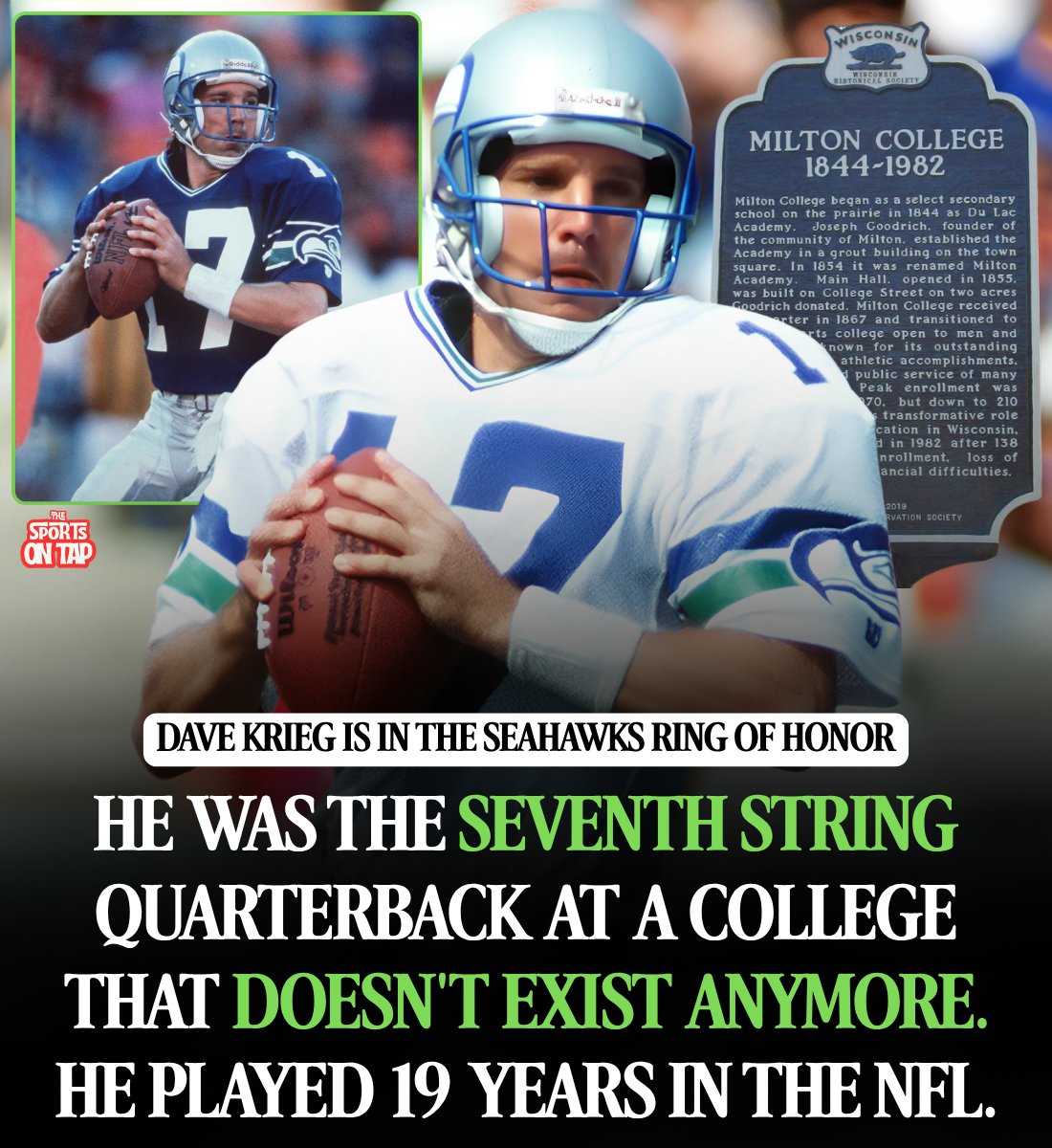
Dave Krieg went to Milton College, a tiny NAIA school in Milton, Wisconsin.
He arrived as the seventh string quarterback.
Not the backup. Not third on the depth chart. Seventh.
In the fourth game of his freshman season, the starter got hurt and they ran out of options in front of him. Krieg went in and completed four passes.
Three of them went for touchdowns.
He started the rest of his college career.
In 1980 he went undrafted. Every team passed on him, partly because scouts had almost nothing to go on. Milton was playing in front of a few hundred people in rural Wisconsin.
Seattle gave him a tryout anyway and kept him as the third string quarterback.
He played in exactly one game his rookie year. A few meaningless snaps at the end of a bad season.
Two years later, in 1982, Milton College shut down entirely. Declining enrollment, no money. The school just closed.
So the guy who was seventh on the depth chart at a school that no longer existed made his first NFL start in 1981 against the Jets and won it 27-23, throwing a 57 yard game winning touchdown to Steve Largent.
By midseason 1983, Chuck Knox made him the starter.
That year Krieg took the Seattle Seahawks to the first playoff berth in franchise history.
He played 12 seasons in Seattle and 19 in the NFL. Three Pro Bowls. 213 games. 38,147 passing yards. 261 touchdowns. He rewrote the Seahawks record book and held most of those marks for decades.
Only two players in NFL history ever came out of Milton College. Krieg is one of them.
Back in 2019, Milton alumni held a tailgate on the old campus to honor the coaches who used to work there. Krieg showed up and asked where the name tags were.
Nobody needed one to recognize him.
"What brought me back to Milton was to honor our coaches," he said. "You have to think you had three coaches that took care of kids that just came from their parents, their first time away from home, and showed us the right way how to do things."
Then he said the thing that sums the whole career up.
"What a unique story to come from this school and make it in the NFL."
The school is gone. The Ring of Honor in Seattle still has his name on it.
For more stories like this, follow us on any platform @thesportsontap
The man who died next to Jesus had nothing.
No baptism.
No communion.
No confirmation.
No speaking in tongues.
No mission trip.
No volunteering.
No financial gifts.
No church clothes.
He couldn't even bend his knees to pray.
Nails through his wrists meant no folded hands.
No sinner's prayer crossed his lips.
No altar call for a dying criminal.
He was naked.
Bleeding.
Worthy of death under the law.
Jesus didn't remove his pain.
Didn't heal his broken body.
Didn't silence the crowd mocking them both.
Didn't bring him down from that cross.
The thief had no testimony to share.
No before-and-after transformation story.
No time to prove his faith was real.
No chance to clean up his life.
Just a dying breath used to say:
"Lord, remember me."
And Jesus blood running down His face
Turned to this worthless criminal and promised:
"Today shalt thou be with me in paradise."
No theologian's spin needed.
No brilliant sermon required.
No worship team or mood lighting.
No haze machines or hip pastor.
No coffee bar in the lobby.
No small group sign-ups.
Just a naked man dying on wood.
Unable to move.
Unable to serve.
Unable to give.
Unable to perform.
Unable to impress.
Unable to earn.
All he could do was believe.
Believe that the bloodied man next to him
Was who He claimed to be.
That was it.
That was everything.
He entered paradise the same hour as Christ.
Not because of what he did.
Because of who Jesus is.
This criminal understood in his final moments
What religious men spend lifetimes missing:
Salvation isn't in your performance.
It's in His promise.
"For God so loved the world,
that he gave his only begotten Son,
that whosoever believeth in him
should not perish,
but have everlasting life."
A thief.
A cross.
A Savior.
A promise.
THAT IS ENOUGH.
----------------------------------
Photo credit: https://t.co/i4iVEJzT3M
Junior Bridgeman made about $2.95 million in his entire twelve year NBA career.
Never more than $350,000 in a single season.
He died worth $1.4 billion.
And the way he did it started with him working a drive-thru window while he was still an active player.
Here's the whole thing.
Bridgeman went 8th overall in the 1975 draft, then got traded to Milwaukee in the deal that sent Kareem Abdul-Jabbar to the Lakers.
He was never a star. He was a sixth man, one of the best in the league at it, long before there was an award for the job. Twelve seasons, 13.6 points a game, zero All-Star appearances.
Solid pro. Nothing that makes you rich.
So in the late 1970s, during the offseason, Bridgeman got a job at a Wendy's in Milwaukee.
Not as an owner. Not as an investor.
As a cashier. Working the window, taking orders, handling complaints, watching how the kitchen timed tickets during a lunch rush.
He didn't need the money.
He needed to know how the business actually worked.
Then in 1988, a few years after he retired, a woman walked up to the counter at a Wendy's in South Milwaukee and a tall man handed her a tray.
She recognized him as an NBA player.
Later that week she called a local radio station to complain about it. Bridgeman was driving to his downtown office when he heard her on the air saying it was a shame that a former NBA player had to work fast food.
He owned the restaurant. And several others in the city.
His first attempt at it had actually failed. He and teammate Paul Silas opened a Wendy's in Brooklyn together and it went under.
He started over in Milwaukee with a handful of locations and just kept buying.
At its peak his company owned more than 450 restaurants across the country. Wendy's, Chili's, Fazoli's, Golden Corral. At one point he was the second largest Wendy's franchisee in America.
In 2016 he sold most of it for a reported $250 million.
Then he did the thing that made him a billionaire.
He took that money and bought Coca-Cola bottling territory. Heartland Coca-Cola, covering Illinois, Kansas and Missouri, and later a stake in Coke's entire Canadian bottling operation.
Bottling is unglamorous, protected, and enormously profitable. Heartland grew toward a billion dollars in annual revenue.
In 2020 he bought Ebony and Jet magazines, two of the most important publications in Black American history, for a reported $14 million, after they'd gone through bankruptcy.
And in September 2024, Junior Bridgeman bought a 10 percent stake in the Milwaukee Bucks at a $4 billion valuation.
The team that traded for him in 1975. He went from a bench player on that roster to an owner of it.
In February 2025, Forbes put his net worth at $1.4 billion.
Only four men who ever played in the NBA have reached a billion dollars. Michael Jordan. Magic Johnson. LeBron James.
And Junior Bridgeman, who averaged 13.6 points a game.
He is the only one of the four who wasn't a superstar. The other three built on fame. He built on knowing how a kitchen runs.
On March 11, 2025, Bridgeman was in Louisville doing a television interview when he said he thought he was having a heart attack. He died at the hospital that day. He was 71.
The Bucks retired his number 2.
A sixth man who never made $350,000 in a season spent his summers learning to run a drive-thru window.
Fifty years later he owned a piece of the franchise.
For more stories like this, follow us on any platform @thesportsontap
College basketball, the coaching fraternity and the city of B’ham have lost one of the all-time greats with the passing of @joedeanjr I’m forever thankful for the impact Coach Dean had on my life & how he invested in me. An incredible man who influenced so many in our sport!
Coastal Kickoff is back! Join us on August 22nd, 10:30am to 4pm at 250 Brent Lane. A full day of games, ice skating, food, and a message from guest speaker Willie Partin, all for FREE!
Don't forget to bring a friend—this one's too good to miss.
This is awesome
At 91 years old, Harold Mulhern still coaching high school basketball at Wisconsin's Osseo-Fairchild High School.
He says he wants to coach until “He’s Dead”
THESE are the types of stories that should go viral
(Via @kare11 🎥)
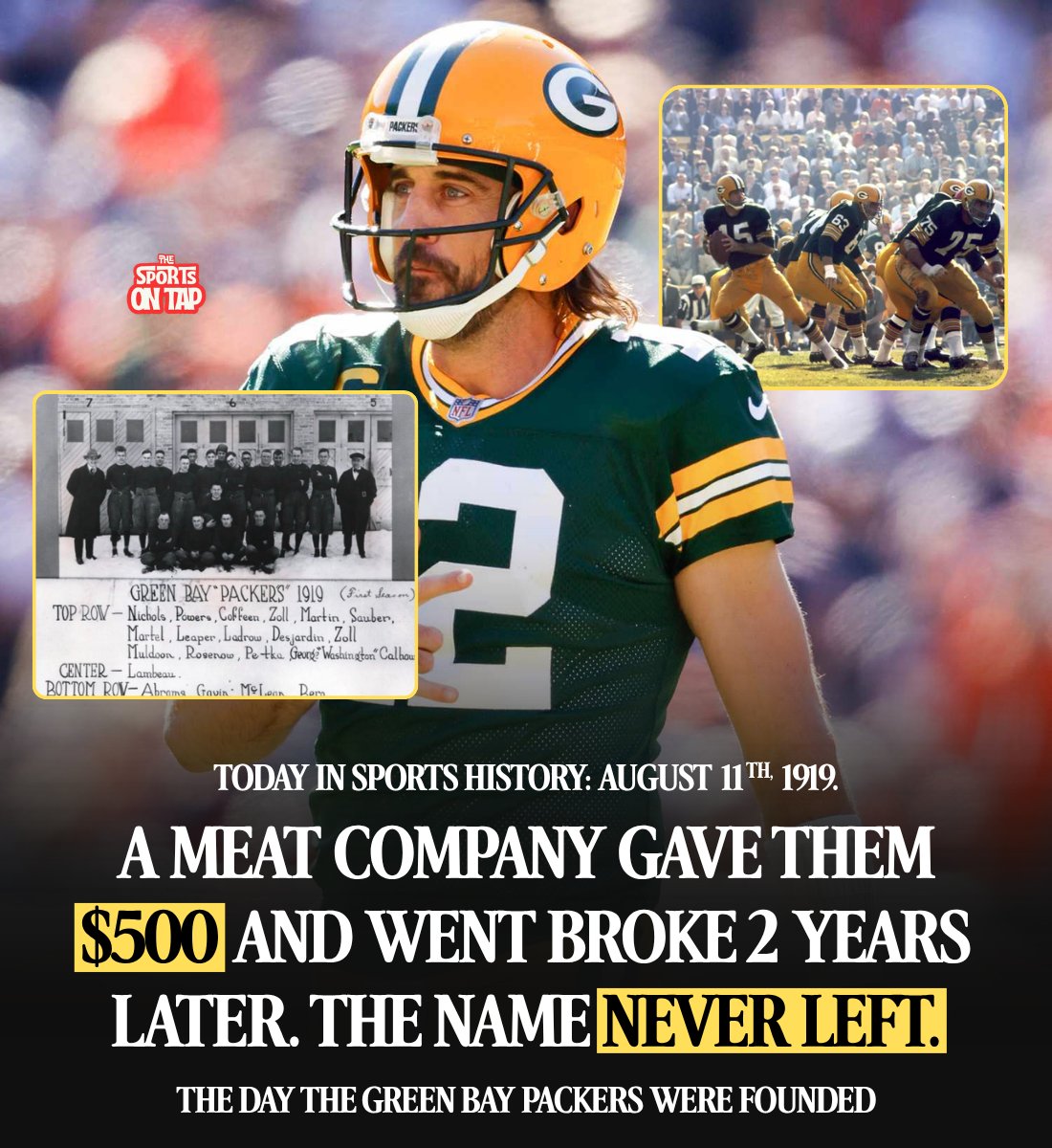
TODAY IN SPORTS HISTORY: 107 years ago today, a 21 year old shipping clerk talked his boss into giving him $500 for football uniforms.
That meat company went out of business two years later.
Its name is still on the field every Sunday.
August 11, 1919. Green Bay, Wisconsin. Population around 15,000.
A group of local athletes crowd into the editorial room of the Green Bay Press-Gazette. Most of them are former high school players from Green Bay East and West.
Two men called the meeting.
Earl "Curly" Lambeau was 21. He'd been a standout at Green Bay East, then went to Notre Dame and made Knute Rockne's varsity team as a freshman, before a brutal case of tonsillitis ended it and sent him home.
He needed a job, so he took one as a shipping clerk at the Indian Packing Company, a canned meat outfit.
But he still wanted to play football.
The other man was George Whitney Calhoun, the city editor at the Press-Gazette. A newspaperman who could put anything he wanted in front of the entire town.
They'd been talking about it all summer. Calhoun started running ads in his own paper inviting players to show up.
Then Lambeau went to his boss and asked for money.
The Indian Packing Company gave him $500 for uniforms and equipment, plus use of the company athletic field. There was one condition.
The team had to carry the company's name.
Two days later, the Press-Gazette referred to them in print as the Packers for the first time.
That's it. That's the whole origin. A canned meat sponsorship agreement.
They played home games at Hagemeister Park, which had no real seating. Fans stood along the sidelines and passed a hat around to pay the players.
They went 10-1 that first season.
In 1921 they joined the league that would become the NFL. They immediately went broke and forfeited the franchise, and Lambeau had to scramble to find new backers to get it back.
Meanwhile the Indian Packing Company was already gone. Sold to Acme Packing, and out of existence by 1921.
The sponsor lasted about two years. The name has lasted 107.
And the rest of it is the most improbable story in American sports.
Green Bay is the smallest market in the entire NFL, by an enormous margin, in a league where every other small market team folded or moved decades ago. The Duluth Eskimos. The Pottsville Maroons. The Canton Bulldogs. All gone.
The Packers survived because in 1923 they did something no other team has ever done. They sold shares to the public and became a community owned, non profit corporation.
No billionaire owner. No threat to relocate. The fans literally own the team.
That's why they're still there.
Thirteen NFL championships, more than any franchise in history. Four Super Bowls. Curly Lambeau won six titles as coach before he resigned in 1949, and the stadium carries his name. Vince Lombardi won five in seven years, and the Super Bowl trophy carries his.
Don Hutson. Bart Starr. Reggie White. Brett Favre. Aaron Rodgers.
All of it traces back to a 21 year old with tonsillitis asking a meatpacking plant for uniform money on this day in 1919.
The oldest team name still in use in the NFL belongs to a company that has not existed since Woodrow Wilson was president.
For more stories like this, follow us on any platform @thesportsontap
BREAKING NEWS: Dallas Cowboys practice was delayed two hours today after a player found an unknown white powdery substance on the field. Jerry Jones immediately suspended practice and called the police. After analysis, experts confirmed it was the goal line. Practice resumed once officials decided the Cowboys were unlikely to see it again this season.
🚨 THEY LOCKED THE PHONES AWAY… AND HISTORY EXPLODED.
For 63 years this Long Island Little League team never tasted a state title.
Then the coaches did something radical.
Five hours before every single game…
They ripped the phones out of the kids’ hands.
Dumped them in a bucket.
And threw away the distractions.
What happened next is pure fire:
The kids started talking to each other again.
They locked in.
They focused like their lives depended on it.
And they went on the greatest run in the program’s entire existence.
First New York State championship. Ever.
Regional play. ESPN cameras. History rewritten.
The assistant coach said it best:
“When the apps disappear… the real kids show up.”
The players? They love it.
They call the phone bucket their good-luck charm.
Structure works.
Discipline works.
Focus works.
Phones don’t.
This isn’t just a baseball story.
It’s a wake-up call for every parent, every coach, every school in America.
Are we raising champions…
or scrolling zombies?
Drop the phones.
Raise the standards.
Watch what happens.
Dr. Glen Foster and his wife Helaine, served with BIMI in Puerto Rico since 1972. Since her passing (2012), Bro. Foster has continued to serve both in the States and the Islands as an ARM missionary, approaching 45 years of service! We are so grateful! #BIMI#Missionarymarathon