Many UN experts, independent human rights organizations, and international observers have said that the conviction of Mahrang Baloch is unfair and inconsistent with Pakistan’s domestic and international legal obligations. But some continue to promote the false narrative that it is legitimate, despite these serious concerns.
#ReleaseMahrangBaloch
Where are the ISI bots who were calling this video AI-generated? The BLA has now released the complete video, exposing the propaganda of the defeated Pakistani military.
#Pakistan: UN experts condemn life sentence against Baloch #humanrights defender Dr. Mahrang Baloch as grave injustice. “These convictions risk silencing independent voices in #Balochistan and further shrinking civic space.”
https://t.co/0F2GhgyJDY
Breaking: A large convoy of Pakistani military has been target of a lethal attack in Walpat, Bela. Over a dozen personnel have been killed and several more have sustained injuries.
The assailants have also taken the weapons of killed soldiers.
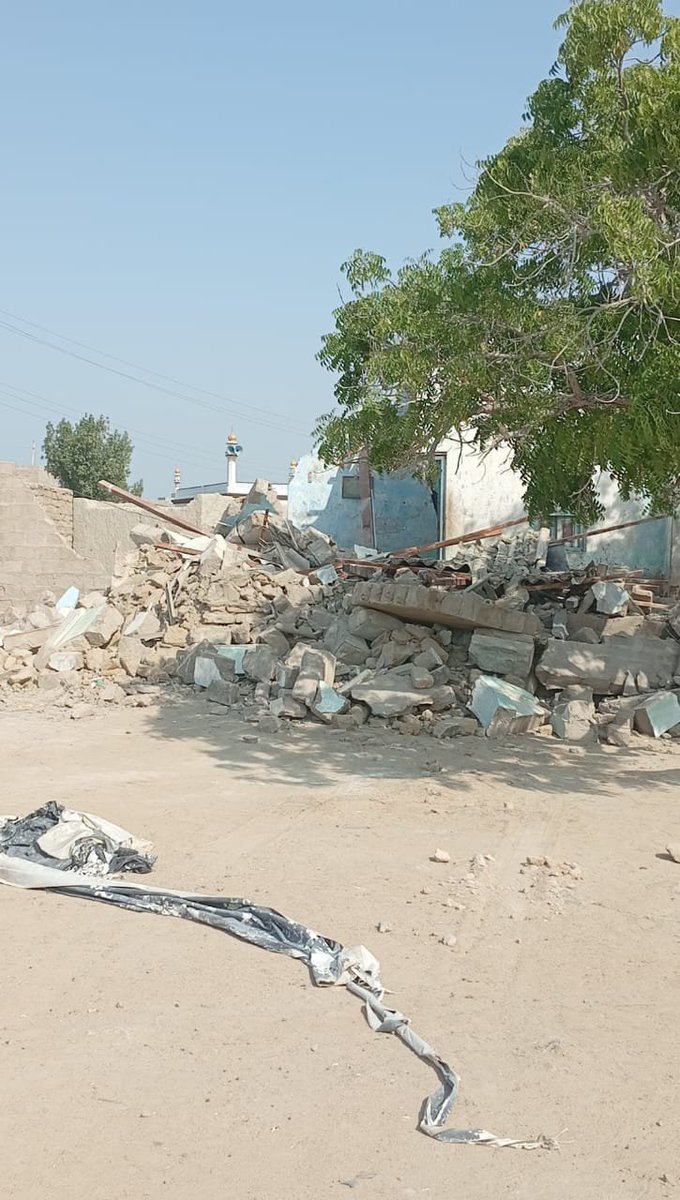
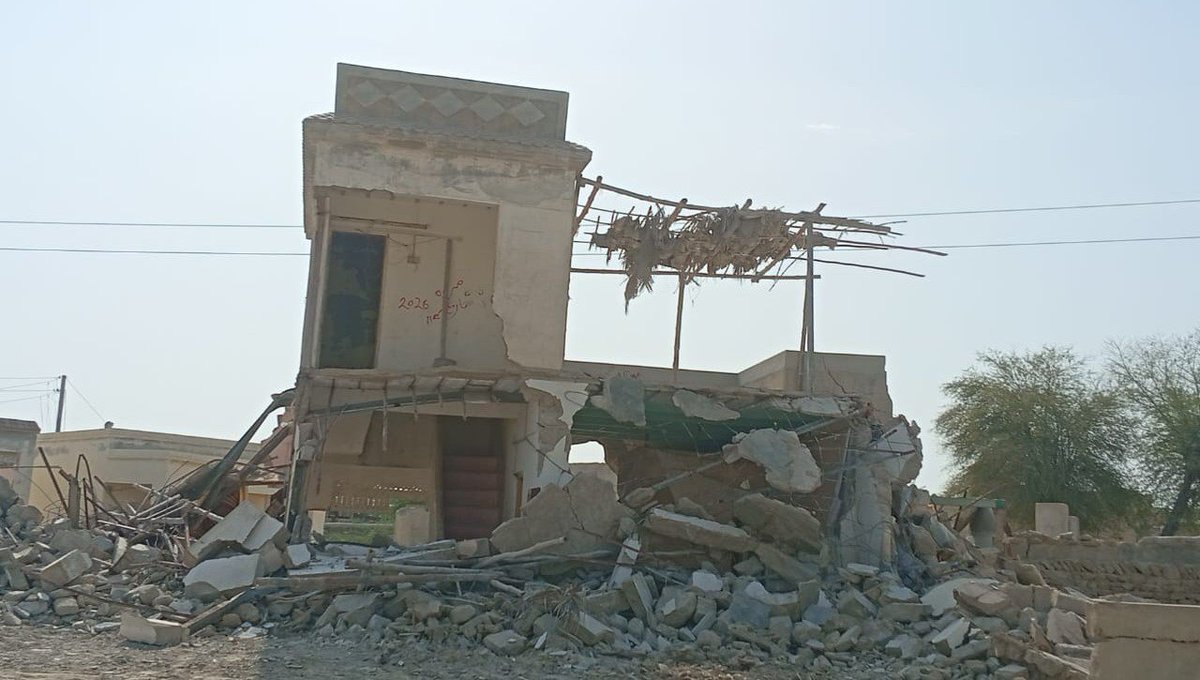
On 6 July 2026, the Pakistan Army demolished more than 10 homes in the village of Paanwan, located in Jemuri Tehsil, Gwader District.
According to information received so far, the homes of Mohammad Jan Kalmati, Jafar Kalmati, Ghulam Nabi Kalmati, Yar Jan Kalmati, Noor Mohammad Kalmati, and Peer Gul Kalmati have been destroyed. These homes were inhabited by several families.
This represents one of the harshest forms of collective punishment. Residents are facing enforced disappearances, custodial killings, and the demolition of their homes as part of these aggression.
#PaanwanUnderAttack
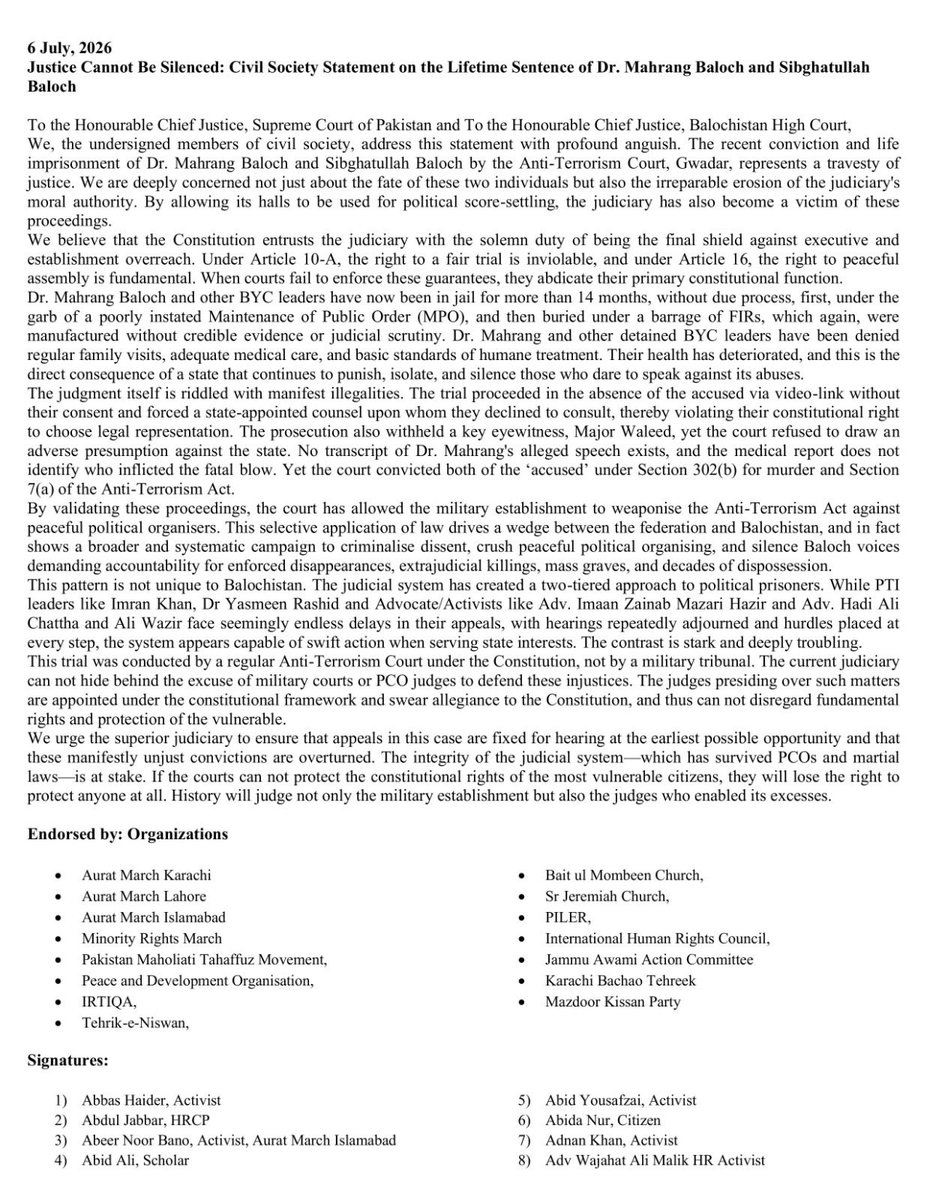
Yesterday, 320 members of Pakistan’s civil society, including senior lawyers, human rights organizations, journalists, academics, activists, political leaders, and parliamentarians such as Mehmood Khan Achakzai and Senator Allama Raja Nasir Abbas, addressed an extraordinary letter to the Chief Justice of Pakistan, Justice Yahya Afridi, and the Chief Justice of the Balochistan High Court, Justice Muhammad Kamran Khan Malakhail. Their message was unmistakable: courts do not remain neutral when they legitimise injustice through silence. Every act of judicial inaction has consequences, and every court is accountable for the precedents it allows to stand.
Today, that warning reaches the Balochistan High Court.
Our legal team has formally challenged the life sentences imposed on Dr. Mahrang Baloch and Sibghatullah Baloch. Those convictions did not emerge from a fair trial. They emerged from proceedings that excluded the accused from critical stages of their own case, denied them meaningful access to the lawyers they had chosen, prevented them from effectively confronting the evidence against them, and discarded the most basic guarantees of due process. A life sentence imposed through such a process does not strengthen the rule of law: it empties it of meaning.
This appeal is about far more than my sister and Sibghatullah. It asks whether constitutional rights in Pakistan still belong to every citizen, or whether they disappear the moment the state labels someone an enemy. It asks whether the Constitution binds the powerful as firmly as it binds the powerless, or whether due process has become a privilege reserved for those who pose no challenge to authority.
The Balochistan High Court now faces a choice that cannot be postponed or avoided. It can subject this judgment to the constitutional scrutiny that justice demands, or it can allow a conviction secured through a fundamentally defective process to stand. That choice will not only determine the fate of two prisoners. It will tell every citizen whether the guarantees written into Pakistan’s Constitution remain enforceable when they are needed most.
Courts do not defend the Constitution by invoking it. They defend it by applying it, especially when doing so is inconvenient. History will not remember the speeches made about judicial independence. It will remember what the judiciary did when confronted with a case that tested whether those words meant anything at all.
#ReleaseBYCLeaders
وزارت آنے جانے والی چیز ہے، اس وقت میں یورپ کے ٹور پر ہوں، دو مہینے کیلئے پاکستان کی سیاست پاکستان میں چھوڑ کر آیا ہوں، یہ وزارت میری کمزوری نہیں، نہ میری روزی کا ذریعہ ہے، میں لارڈ ہوں اور لارڈ رہوں گا، سردار عبدالرحمن کھیتران کی صحافی سے ٹیلیفونک گفتگو
#Balochistan
I've reported to Dutch police that I am being followed & intimidated by individuals I believe may be linked to Pakistani state interests & Pakistani Embassy Netherlands.
This has caused serious concern for my safety, especially after the recent DG ISPR press conference in..
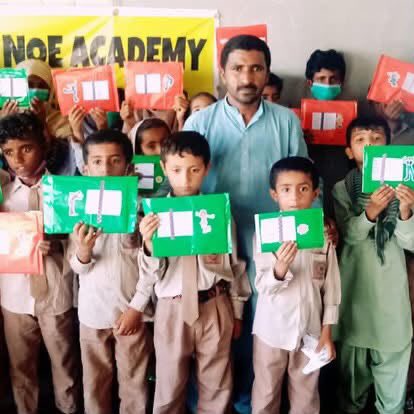
Principal of Memar-e-Nau Academy in Gwadar, Abdul Haq Baloch, Found Dead After Enforced Disappearance
Abdul Haq Baloch, the principal of Memar-e-Nau Academy in Gwadar and the younger brother of forcibly disappeared Baloch National Movement (BNM) leader Ramzan Baloch, has been found dead after months of enforced disappearance.
Abdul Haq was abducted by the Pakistani military in Gwadar in February, after which he was subjected to enforced disappearance. Today, along with two others, his body, bearing visible signs of torture, was recovered from the Panwan area of Jewani district Gwadar.
He was killed in custody and his body was dumped.
Abdul Haq Baloch held a Master’s degree in Computer Science from the University of Balochistan. He established Memar-e-Nau Academy in Mashkay to provide education to local children. However, the Pakistani military forcibly shut down the school.
Undeterred, he later founded another Memar-e-Nau Academy in Gwadar, where he continued educating children. In February, he was abducted by the Pakistani military and remained forcibly disappeared until his body was recovered.
His elder brother, BNM leader Ramzan Baloch, was also forcibly disappeared on July 25, 2009. He was abducted from Zero Point in Uthal while traveling from Mashkay to Gwadar and has remained missing ever since. He is held in undisclosed detention facilities operated by the Pakistani military.
The killing of Abdul Haq Baloch is part of a broader pattern in which educators, intellectuals, and members of civil society in Balochistan have been targeted. Previously, Zahid Askani, the head of a private school in Gwadar, was also killed by state agencies.
More recently, Baloch professor Ghamkhwar Hayat was likewise killed. These incidents underscore the grave risks faced by those dedicated to education and public service in Balochistan.
No segment of society in Balochistan is safe. Teachers, students, lawyers, journalists, doctors, and human rights defenders all remain vulnerable to enforced disappearances, extrajudicial killings, arbitrary detention, and other serious human rights violations.
The widespread practice of enforced disappearances, custodial torture, and extrajudicial killings in Balochistan constitutes a serious violation of international human rights law.
We call upon the United Nations, international human rights organizations, and all relevant national and international bodies to take urgent notice of the ongoing human rights crisis in Balochistan, ensure independent, impartial, and transparent investigations into the killing of Abdul Haq Baloch and other cases of enforced disappearance and extrajudicial execution, and hold those responsible accountable.
@UN@WGEID@UN_SPExperts
مستونگ کے علاقے دشت کمبیل میں محمد ابراہیم اور ان کے بھائی کے گھر پر ڈرون حملہ نہایت تشویشناک ہے۔
3 جون کو مستونگ کے علاقے دشت کمبیل میں ریاستی فورسز کی جانب سے ایک عام شہری محمد ابراحیم کے گھر میں ڈرون حملہ کیا گیا۔ خوش قسمتی سے اس حملے میں کوئی شخص زخمی نہیں ہوا مگر حملے میں اس خاندان کے 50 سے زائد مال مویشی ہلاک ہوئے، جو غریب خاندان کا واحد معاشی سہارا تھے۔
بلوچستان میں روزگار کے مواقع سے محروم عوام بیشتر گلہ بانی کے پیشے سے وابسطہ ہے،وہ دور دراز پہاڑی علاقوں میں اپنے مال مویشیوں کے ساتھ زندگی گزر بسر کرتے ہیں۔ مگر تکلیف ناک امر یہ ہے کہ سر زمین کے یہ محنت کش باشندے ہمیشہ ریاستی جارحیت کا براہ راست نشانہ بنتے ہیں۔ کئی مرتبہ آپریشنوں میں انکے گھر جلائے جاتے ہیں مرد و خواتین ماورائے عدالت قتل کئے جاتے ہیں، جبری گمشدہ کئے جاتے ہیں، یا انکے واحد زریعہ معاش یعنی انکے مال مویشیوں کو مارا جاتا ہے۔ ایسے افراد جو کو معاشرے میں پہلے ہی حاشیے پر ہیں انہیں انکے مال مویشی سے محروم کرنا ، یا براہراست جبر کا نشانہ بنانا انسانیت سوز ظلم ہے۔
نا صرف انسانی زندگی کا تحفظ ریاست کے زمے ہیں بلکہ انکے گھر و معاش کا زمہ بھی ریاست پر ہے، مگر ریاست پاکستان میں نا کسی بلوچ کو جان کی امان ہے نا انکے گھر بار و مال مویشی تاراج ہونے سے محفوظ ہے۔ یہ تمام امور بلوچ نسل کشی کا حصہ ہے۔
بلوچ یکجہتی کمیٹی اس ریاستی جارحیت کی شدید الفاظ میں مذمت کرتی ہے، اور اقوامِ متحدہ سمیت تمام بین الاقوامی انسانی حقوق کے اداروں سے مطالبہ کرتی ہے کہ بلوچستان میں بلوچ عوام کے خلاف جاری ریاستی مظالم، ڈرون حملوں اور انسانی حقوق کی سنگین خلاف ورزیوں کا فوری نوٹس لیا جائے، پاکستان کو بین الاقوامی قانون کے تحت جوابدہ ٹھہرایا جائے۔
Principal of Memar-e-Nau Academy in Gwadar, Abdul Haq Baloch, Found Dead After Enforced Disappearance
Abdul Haq Baloch, the principal of Memar-e-Nau Academy in Gwadar and the younger brother of forcibly disappeared Baloch National Movement (BNM) leader Ramzan Baloch, has been found dead after months of enforced disappearance.
Abdul Haq was abducted by the Pakistani military in Gwadar in February, after which he was subjected to enforced disappearance. Today, along with two others, his body, bearing visible signs of torture, was recovered from the Panwan area of Jewani district Gwadar.
He was killed in custody and his body was dumped.
Abdul Haq Baloch held a Master’s degree in Computer Science from the University of Balochistan. He established Memar-e-Nau Academy in Mashkay to provide education to local children. However, the Pakistani military forcibly shut down the school.
Undeterred, he later founded another Memar-e-Nau Academy in Gwadar, where he continued educating children. In February, he was abducted by the Pakistani military and remained forcibly disappeared until his body was recovered.
His elder brother, BNM leader Ramzan Baloch, was also forcibly disappeared on July 25, 2009. He was abducted from Zero Point in Uthal while traveling from Mashkay to Gwadar and has remained missing ever since. He is held in undisclosed detention facilities operated by the Pakistani military.
The killing of Abdul Haq Baloch is part of a broader pattern in which educators, intellectuals, and members of civil society in Balochistan have been targeted. Previously, Zahid Askani, the head of a private school in Gwadar, was also killed by state agencies.
More recently, Baloch professor Ghamkhwar Hayat was likewise killed. These incidents underscore the grave risks faced by those dedicated to education and public service in Balochistan.
No segment of society in Balochistan is safe. Teachers, students, lawyers, journalists, doctors, and human rights defenders all remain vulnerable to enforced disappearances, extrajudicial killings, arbitrary detention, and other serious human rights violations.
The widespread practice of enforced disappearances, custodial torture, and extrajudicial killings in Balochistan constitutes a serious violation of international human rights law.
We call upon the United Nations, international human rights organizations, and all relevant national and international bodies to take urgent notice of the ongoing human rights crisis in Balochistan, ensure independent, impartial, and transparent investigations into the killing of Abdul Haq Baloch and other cases of enforced disappearance and extrajudicial execution, and hold those responsible accountable.
@UN@WGEID@UN_SPExperts