Professor David Musyimi Ndetei is a highly distinguished Kenyan medical pioneer, Professor of Psychiatry at the University of Nairobi, and the Founding Director of the Africa Institute of Mental and Brain Health. Renowned as one of Africa's leading authorities on mental health, he has dedicated his career to expanding affordable psychiatric care and spearheading psychiatric research across the continent.
He earned his MBChB from the University of Nairobi (1975), followed by specialized psychiatric credentials in London, a PhD, and a prestigious Doctor of Science (DSc) degree.
Rose Mbithe Mulwa (formerly Rose Mbithe Ndetei) is a Kenyan businesswoman, politician, and the ex-wife of David Ndetei. Born and raised in iveti, Machakos County, she has maintained a public profile spanning across business, philanthropy, and ran for the Governor of Machakos County in the 2022 general elections, losing the seat to Wavinya Ndeti.
Rose Mbithe Mulwa and Professor David Musyimi Ndetei were officially divorced in 2001, bringing an end to their 31-year marriage. Prof. David Ndetei's 31-year marriage to his first wife, Rose Mbithe Mulwa, officially ended in a bitter divorce. A subsequent official gazette notice confirming her name change was published in May 2003.
Following the dissolution of that first marriage, Prof. Ndetei subsequently married Dr. Victoria Mutiso following the finalization of the divorce. Court submissions from recent legal proceedings confirm the union occurred more than two decades ago. They shared two children together. Dr. Mutiso, a prominent clinical psychologist and mental health researcher, was fatally shot on July 29, 2026, in Upper Hill, Nairobi.
Following the 2001 divorce, in 2002, Rose Mulwa filed a landmark case under the Married Women's Property Act of 1882 to claim a share of Prof. Ndetei's multi-million shilling estate under High Court Civil Case (HCCC) No. 6A of 2002. She ultimately lost the main matrimonial distribution suit, with courts ruling against her claims for a direct split of the properties. While she lost the main suit, the loss triggered a 24-year cycle of bitter civil side-battles, appeals, and property disputes.
The cornerstone of this decades-long conflict is a prime, highly valuable parcel of land legally registered as L.R. No. 1504/13. The property is a prime tract measuring over 20 acres (often referenced as 25 acres in various legal filings) situated in the North West of the Athi River Township / Mlolongo zone within Machakos District. Because of its proximity to the Mombasa Highway and Nairobi, its commercial value skyrocketed into billions of shillings over the last two decades.
During their marriage, the land was a core family asset. Following the split, Prof. Ndetei retained the title and launched agricultural and residential projects on the property. The land also became the subject of separate, highly publicized multi-million shilling litigations:
In the early 2000s, Prof. Ndetei successfully sued a neighboring factory, Orbit Chemical Industries, claiming their factory's storm water and chemical discharge ruined the agricultural usability of this specific Athi River parcel. He was eventually awarded over Ksh 269 million in damages.
The land was also entangled in commercial financing legal disputes with institutions like Daima Bank and Housing Finance Company of Kenya regarding charges registered against the title deed.
During the highly contentious 2001 divorce and the subsequent 2002 matrimonial property division lawsuit, the late lawyer, Mathew Kyalo Mbobu served as the primary legal counsel representing Professor David Ndetei.
2.) An extrajudicial interception by rogue security agents operating entirely outside the formal legal system, disgruntled by his quick return to his old ways. Because Fortune Muthina Kinyanzui's systems were linked to the theft of millions of shillings from retirees, a KSh 500,000 bail was a negligible expense for his operation. If rogue agents believed he had quietly resumed leasing out his caller-ID spoofing infrastructure to the "Mulot Swapper" network, they would view formal re-arrest as an exercise in futility. They knew he could easily raise bail a second time and remain free while the court case dragged on for years.
In Kenya's security landscape, when formal legal channels are perceived as slow, weak, or easily bypassed by wealthy suspects, rogue units have historically stepped outside the law to permanently dismantle syndicates. The use of masked men, a double-cabin pickup, swift handcuffing in broad daylight, and leaving the victim's car running are the exact trademarks of extrajudicial squads executing a permanent removal rather than a legal arrest.
Fortune Muthina Kinyanzui was a 34-year-old Kenyan businessman defined by a highly controversial background that transitions from high-profile cyber-fraud allegations to a mysterious, unresolved abduction. Originally known to law enforcement as a tech-savvy businessman and the mastermind behind a major caller-ID spoofing ring, his narrative shifted dramatically following his sudden disappearance.
Kinyanzui utilized criminal aliases long before his major cyber-fraud operations were completely exposed by the Directorate of Criminal Investigations (DCI). Under pseudonyms such as Albanas Kyalo, he maintained a history of legal friction that preceded his designation as a mastermind of high-tech bank fraud rings.
While his earlier transgressions kept him on law enforcement radars, Fortune Muthina Kinyanzui’s operations evolved dramatically when he pivoted into complex digital networks and social engineering. Using custom applications to mask his identity, he executed sophisticated caller-ID spoofing schemes to intercept unsuspecting targets.
By manipulating communication lines, Kinyanzui made fraudulent calls appear as if they originated directly from legitimate bank call centres and major network providers, establishing the technical infrastructure that eventually anchored his high-profile cyber-fraud syndicate.
Kinyanzui did not just execute individual scams; he operated as a premium service provider leasing out this spoofing application at a flat daily fee to the infamous "Mulot SIM-swapper" network. This allowed them to mask their phone lines to mimic official banking and telecom customer care desks.
According to investigations by Kenya's Directorate of Criminal Investigations (DCI), Fortune Muthina Kinyanzui's custom application manipulated the cellular network's caller identity protocols.
When a scammer placed a call using Kinyanzui’s system, the victim’s phone screen would display Safaricom's official customer care info rather than the actual fraudster's number. The software was similarly programmed to mimic the verified customer care service desk hotlines of major commercial banks across Kenya.
Because the incoming caller ID looked entirely genuine, victims lowered their guard. This allowed the "Mulot Swapper" syndicate, who leased the software from Kinyanzui, to easily social-engineer targets into giving up their M-Pesa PINs, bank passwords, and national ID numbers.
Kinyanzui syndicate specifically targeted the bank accounts of retirees, primarily women, to siphon off millions of shillings from their bank and M-Pesa wallets.
In one of the cases, a 63-year-old former female employee of the Ministry of Lands was struck immediately after her long-awaited pension benefits hit her account. Following a spoofed call that caused financial panic, Kinyanzui's syndicate entirely swept her bank and M-Pesa wallets, leaving her with an empty bag and a loss of KSh 2.3 million.
On March 14, 2025, a Kenyan woman woke up to a zero balance after the syndicate manipulated phone lines to look like an authentic bank service desk. Her accounts were systematically drained overnight, leaving her KSh 1.8 million poorer.
According to the official Directorate of Criminal Investigations (DCI) charge files, on April 17, 2025, an elderly woman fell prey to the Kinyanzui's group "sweet but venomous tongues" during an orchestrated panic call where she lost her life savings of KSh 1.2 million in a matter of minutes.
The broader network operated by Kinyanzui and his cartel, did not stop at the elderly women, reports show their automated logbooks targeted dozens of unsuspecting Kenyans across multiple stations: In a case that was logged at Nyahururu Police station, a male victim lost KSh 3.4 million on January 17, 2025, to the gang.
Fortune Muthina Kinyanzui (alias Albanas Kyalo) and his co-accused were formally arraigned at the Kahawa Law Courts on June 3, 2025, under criminal case number E062/25.
Refusing the prosecution’s request for long-term pre-trial detention, the magistrate deferred the matter to June 6, 2025, before ultimately releasing Fortune Muthina Kinyanzui and his co-accused on a financial cash bail of KSh 500,000 each.
On Thursday, March 26, 2026, during a swift, coordinated ambush in Kitengela township, Fortune Muthina Kinyanzui was abducted during the daytime.
According to family reports, Kinyanzui left his rental home at 11:00 AM, telling his wife, Rebecca Wanzala, that he was going for a short walk and would return soon. At around 5:30 PM, Kinyanzui left his house a second time driving his Toyota filder.
At around 5:50 PM his vehicle was captured on CCTV exiting the Namanga Highway opposite Enkare Club, turning onto a local rough road. At 5:51 PM, a white double-cabin pickup truck that had been trailing his car suddenly accelerated and blocked him horizontally on the road. Three masked men jumped out of the pickup and aggressively tried to pry open Kinyanzui’s driver-side door. A tense, two-minute standoff ensued as he locked himself inside.
At 5:54 PM, the abductors successfully yanked his door open and pulled Kinyanzui out of the vehicle. Despite physical resistance, he was subdued, handcuffed, and forced into the rear seat of the double-cabin vehicle, sandwiched between two of the masked men. The pickup then sped away from the scene at high speed, leaving Kinyanzui’s personal car abandoned on the rough road with the engine still running and the driver's door wide open.
Alarmed that her husband had not returned by 8:00 PM, his wife began searching local clubs and routes he frequented. Her search ended later that night at the Kitengela Police Station, where she found his abandoned saloon car parked in the yard after it had been spotted and towed by patrolling traffic officers.
Since his dramatic abduction on March 26, 2026, there has been no official trace of him alive or dead. The investigation remains entirely frozen, leaving his family in deep anguish.
The abductors did not demand a ransom from his family. This absolute silence strongly suggested to the family and DCI detectives that the abductors were motivated by either silencing him over his cyber-fraud infrastructure knowledge or executing a targeted extrajudicial operation.
The only financial demand came later from independent fraudsters executing a separate extortion scam. Seizing on the leaked media reports of Kinyanzui's abduction, external fraudsters called his wife, Rebecca Wanzala, masquerading as senior police commanders from Loima Police Station in Turkana County.
The scammers demanded immediate money transfers to cover "fuel costs, emergency medical treatment, and transportation" to bring her husband back to Nairobi. The family initially complied out of desperation before realizing they were being fleeced by independent opportunistic extortionists.
Detectives tracking the case noted that the sheer speed, coordination, and use of a trailing vehicle, coupled with the abductors immediately handcuffing Fortune Muthina Kinyanzui without asking for money, strongly match the profile of a professional, targeted extraction rather than an opportunistic crime.
Because Kinyanzui controlled the specialized caller-ID spoofing software that powered the lucrative financial theft operations of the wider "Mulot Swapper" network, investigators have entertained two core operational theories behind a targeted strike:
1.) A pre-emptive strike by high-profile cybercrime syndicates or rogue handlers to permanently silence Kinyanzui before he could strike a plea bargain or expose his networks during his active trial.
Another target in Nakuru Mwariki case lost KSh 1.3 million on April 7, 2025, strictly because the calling number perfectly mirrored his bank’s actual customer care line. Because the incoming call looked entirely official, the victim lowered his guard and complied with what he thought was a legitimate bank verification process.😭
With the victim's national ID number and M-Pesa PIN, Kinyanzui's gang could immediately initiate a SIM swap or take control of the victim's mobile money wallet.
Armed with the bank account PIN, the scammers logged into the victim’s mobile banking app, linked it to the compromised M-Pesa line, and systematically swept the KSh 1.3 million away into multiple untraceable mule accounts within minutes.
The flood of formal complaints, and the sheer volume of reported losses from desperate citizens across multiple counties in Kenya forced the DCI to launch a massive, coordinated investigation.
When the DCI’s Joint Intelligence Desk and Cybercrime Unit cross-referenced these scattered complaints, they realized the exact same technical signature, caller ID spoofing numbers mimicking major banks and Safaricom, was being used nationwide.
The realization that millions of shillings were disappearing overnight from elderly retirees, and innocent, hardworking Kenyans forced the DCI to elevate the case into a top-priority, multi-agency operation, tracking the digital signals all the way to the scammers hideouts.
Instead of trying to trace the spoofed phone calls, which masked the scammers' real identities, investigators targeted the syndicate's operational expenses. They audited mobile money data linked to active financial mule lines and uncovered a distinct, recurring pattern.
The platform required immense amounts of cellular data and airtime to keep the call-spoofing software active on the network. Forensic accountants found that the syndicate was loading exactly KSh 16,000 worth of airtime daily into specific accounts to recharge the software infrastructure.
Tracing the ultimate source of these systematic daily overhead payments led detectives directly to Fortune Muthina Kinyanzui, who was acting as the central infrastructure provider.
Simultaneously, cyber-forensics monitored the movement of the stolen funds. They isolated mobile transaction lines managed by Kinyanzui’s chief co-conspirator, Dominic Kipkoech Langat. Detectives mapped these specific lines moving massive volumes of cash, frequently exceeding KSh 1 million daily, confirming they were looking at a large-scale, live financial enterprise rather than a small, isolated ring of scammers.
Once the financial and data lines were mapped, the DCI utilized an intelligence tip to lock down the exact physical coordinates of the digital transmissions. This led them directly to the upscale Nyali estate in Mombasa.
Rather than telegraphing their arrival through local channels, the DCI Operations Directorate deployed a specialized sting team that bypassed external variables, stormed House No. B2 at the APA Apartments, and caught Kinyanzui and his five accomplices live in action on Wednesday, June 4, 2025.
During the raid at the APA Apartments in Nyali, detectives recovered:
1.) 19 high-end smartphones loaded with custom caller ID masking and spoofing applications.
2.) Hundreds of registered SIM cards from major regional networks, including Safaricom, Airtel, and Telkom Kenya, alongside MTN Uganda lines used to mask international routing.
3.) physical ledgers detailing the personal information, bank account specifics, and mobile numbers of prospective victims, with a specific focus on upcoming retirees.
4.) Operational notebooks tracking the movement of stolen funds, daily overhead expenses (such as the KSh 16,000 daily airtime top-ups), and cash distributions to the wider "Mulot Swapper" network.
A 37-year-old Kenyan woman, Caroline Chebet, was arrested by police in Nakuru County for allegedly stabbing her 27-year-old husband, Alphonse Ochieng, to death.
Neighbors reported hearing arguments and screams coming from the couple's house around midnight on Saturday, August 1, 2026. They noted that the couple had a history of frequent, unresolved domestic conflict.
Alphonse Ochieng, suffered a fatal, deep stab wound to his abdomen. His body was transferred to the Nakuru Level 5 Hospital Annex mortuary.
Family members expressed deep shock over the tragic escalation, noting that 27-year-old Alphonse was highly secretive and hid the details of his relationship with 37-year-old Caroline Chebet.
Forensic analysis of their mobile data showed their phones were systematically switched off between 4:00 PM and 5:00 PM at different geographic intervals along the Namanga Highway (Kajiado Town, Alma, Kisaju, and Korompoi). Police stated that the victims were purposefully split into pairs and loaded into separate vehicles to prevent them from staging a unified counter-attack.
Their bodies were driven over 87 kilometres away and thrown into rivers in Murang'a County. Investigators noted that during April 2021, strict COVID-19 containment travel restrictions were in place, meaning ordinary citizens could not easily cross county lines. This heavily supported the DCI theory that the perpetrators possessed essential services passes or security clearance to bypass roadblocks unvetted.
The official conclusion remains that the "Kitengela Four" disappeared and fell victim to extrajudicial elimination carried out by rogue officers or contracted enforcement squads tasked with permanently wiping out the car-breaking ring.
On April 19, 2021, the four Kenyan men were abducted and bundled into a Toyota Prado immediately after a lunch of nyama choma and drinks at the Enkare Nightclub in Kitengela town, Kajiado County.
The four men, Elijah Obuong, Benjamin Imbai, Brian Oduor, and Jack Anyango (Ochieng), were taken from the parking lot immediately after their meal. Their white Toyota Mark X was found abandoned 500 meters away the next day.
The following day, April 20, 2021, in Mukungai River along the Murang'a-Iyego-Kangema road in Murang'a County, sand harvesters spotted a suspicious, tightly tied sack hidden under a river bridge. Driven by curiosity, they approached the bag to inspect it closer. Upon getting near, they noticed unsettling signs indicating a human body was inside. Terrified by the discovery, they immediately backed away, raised an alarm to alert nearby residents, who called the local police. The police retrieved the body and moved it to the Murang'a County Referral Hospital mortuary as an unidentified male.
On the same day, April 20, 2021, in the Kamwangi area of Thika Sub-County within Kiambu County, a local plumber while working on water pipes in Kieni Forest stumbled upon the decomposing body. Unlike the Mukungai river bridge's body, which was concealed in a gunny bag, the Kieni forest's body was found abandoned in a thicket without a shirt or shoes, wearing only trousers.
The plumber immediately alerted area residents and officers from the Kamwangi Police Station. Police noted deep scars on the hands that strongly indicated the deceased had been tightly handcuffed by his tormentors before meeting his death. Authorities retrieved the remains and transferred them to the General Kago Funeral Home in Thika, booking him as an unidentified male.
Nine days after going missing, on April 29, 2021, Obuong's family traveled to Murang'a County Hospital Mortuary. His brother and relatives positively identified his body, which had been retrieved from the Mukungai River on April 20 by local sand harvesters and booked as an unknown male.
True to the excerpt, preliminary reports from the family and local observers indicated he had no massive external trauma, showing only a small mark or spot on his forehead. A subsequent autopsy later pointed to strangulation as the cause of death.
Up until that moment, the families had been searching locally around Kajiado and Nairobi. Seeing that Obuong's body had been dumped over 100 kilometers away in the Mt. Kenya region completely changed their search perimeter.
Realizing the killers were dumping the victims along major highways leading out of Nairobi toward Central Kenya, Imbai’s family immediately redirected their search to major mortuaries along that same geographical corridor. They rushed to General Kago Funeral Home in Thika and tragically found his body booked there as an unidentified male. Benjamin Imbai’s body bore the hallmarks of a violent struggle, and his official autopsy concluded that he died from strangulation and suffocation.
On May 1, 2021, in Thika River at Kiunyu Village, Gatanga Sub-County, Murang'a County, more than a week after the first two discoveries, local villagers spotted two bodies floating naked in gunny bags in the river, and quickly alerted local authorities.
Because of where they were floating, the recovery became a cross-jurisdictional effort: one body was processed under the Gatanga Police Division, while the second fell under the Kandara Sub-County jurisdiction. Due to the boundary lines, one victim was taken to the General Kago Funeral Home in Thika and the other to a Murang'a local morgue.
While initial public and media speculation heavily assumed the bodies belonged to them, forensic fingerprinting and family identification confirmed that the two victims found at the Kiunyu Village bridge were not Brian Oduor, and Jack Anyango (Ochieng).
To this day, Brian Oduor and Jack Anyango remain missing. Their actual whereabouts have never been legally discovered or verified, and neither of their remains have been recovered since they vanished from the Club Enkare parking lot on April 19, 2021.
The post-mortem examination of Benjamin Imbai, and Elijah Obuong was conducted on May 5, 2021, at the General Kago Hospital Mortuary in Thika. The findings revealed a grim timeline of Imbai's final moments. The killers used a rope to tightly pin him down, causing severe internal injuries to his neck blood vessels, muscles, and esophagus. The extensive bruising and tissue damage across his body legally proved that Imbai fiercely confronted and fought his attackers in a desperate attempt to defend himself before being completely overpowered.
Unlike Benjamin Imbai's heavily bruised remains, Obuong's body was remarkably well-preserved. It had no massive external injuries or visible marks of a violent struggle, save for a small spot or mark on his forehead.
The official investigation by the Homicide Department of the Directorate of Criminal Investigations (DCI) revealed that the "Kitengela Four", Elijah Obuong, Benjamin Imbai, Brian Oduor, and Jack Anyango, were allegedly the core members of a sophisticated, multi-county car-breaking and robbery syndicate.
Rather than a random kidnapping, detectives established that the men were living highly luxurious lifestyles funded by criminal activities, despite having no legitimate employment or solid registered businesses. Investigators described them as operating on the fast lane, funded by what police established to be high-yield multi-county robberies.
The group routinely drove high-end luxury vehicles. On the day they vanished, they arrived at Club Enkare in a flashy, white Toyota Mark X. Despite having no visible tax footings or corporate holdings, 30-year-old Benjamin Imbai privately owned three top-tier luxury vehicles with an estimated total value exceeding Ksh 11 million, including a Toyota Land Cruiser TX 120 series and a Toyota Lexus RX 270h.
Elijah Obuong lived in the expensive Greenspan Estate in Donholm, Nairobi. Other members lived in similarly secure, upscale neighbourhoods that required steep monthly premiums. When questioned by relatives about his sudden wealth, Elijah Obuong consistently told his family that his luxurious lifestyle was being entirely funded by a wealthy grandmother and relatives residing in the United States.
Friends and club operators noted that the quartet spent vast amounts of money on high-end alcohol, expensive meals, and nightlife entertainment around Nairobi and Kajiado. They were known to effortlessly drop tens of thousands of shillings in a single seating.
To project a legitimate source of wealth to their families and neighbors, Brian Oduor (alias Compe) and Jack Anyango (alias Benteke) claimed to run a successful, luxury car hire and leasing business out of Donholm, Nairobi.
While their families strictly maintained that the four were honest, upcoming entrepreneurs, DCI homicide tracking of their bank accounts, properties, and prior criminal history proved they were living vastly beyond any legitimate means.
Police records linked the quartet to a string of robberies stretching across Nairobi, Kajiado, Machakos, and Mombasa. The syndicate targeted bank clients. They collaborated with corrupt, rogue bank employees who would tip them off when clients withdrew large sums of money. The group would then trail the victims and break into their vehicles to steal the cash.
Court records placed Benjamin Imbai in a Mombasa court in 2016 for a Ksh 100,000 theft charge. The syndicate was also tied to another known criminal operative, Victor Jakambare, who was previously accused of breaking into a car outside an Ongata Rongai bank to steal Ksh 900,000. Jakambare was similarly found murdered and dumped in Kinale Forest.
The murder of Bilha Omare and her two older children by her husband, Justus Ogendi Kebabe, took place between October 11 and October 13, 2010, inside their apartment in Vadnais Heights, Minnesota. According to criminal complaints and Kebabe’s own courtroom confessions, the killings were carried out systematically over a multi-day span.
On Monday, October 11, Kebabe initiated a violent confrontation, accusing Bilha of having extramarital affairs. When Bilha began to scream for help, Kebabe blindsided her by striking her from behind with a golf club. While she was incapacitated, he used an electrical cord to strangle her to death. Kebabe moved her body into the apartment bathroom and stuffed a towel under the door to prevent blood from seeping into the hallway.
The couple’s older children, Kinley (12) and Ivyn (9), returned home from school later that Monday completely unaware that their mother was dead inside the locked bathroom. They went to sleep normally. The following morning, Tuesday, October 12, Kebabe prepared fruit juice for the children and heavily laced it with crushed Tylenol PM pills to sedate them. Once the sedatives took effect, Kebabe led his son, Kinley, into the bathtub and held him underwater until he drowned.
He then went to his daughter, Ivyn, smothering her with a pillow before using his hands to strangle her to death.
Kebabe spared his youngest daughter, who was only 4 years old at the time. He packed her into the family vehicle and drove south on Interstate 35, attempting to flee the state.
On October 13, his car ran out of gasoline on the highway near Elko, Minnesota. A passing Minnesota State Trooper stopped to assist the stranded vehicle, grew highly suspicious of Kebabe's erratic behavior, and detained him.
When Ramsey County deputies conducted a welfare check at the Vadnais Heights apartment later that night, they discovered the bodies of Bilha, Kinley, and Ivyn. Following his arrest, Kebabe confessed to the timeline in graphic detail during his first court appearance.
On October 15, 2010, Justus Ogendi Kebabe was formally arraigned in Ramsey County District Court. He was charged with three counts of intentional second-degree murder. Rather than proceeding to a lengthy jury trial, Kebabe entered a surprise straight guilty plea on January 19, 2011. In exchange for his plea, he was required to recount the killings in open court. He admitted in graphic detail to strangling his wife with a cord, drowning his son in the bathtub, and smothering his older daughter. He stated he spared his 4-year-old daughter because she was "too young to understand."
On March 17, 2011, District Court Judge Gary Bastian sentenced Kebabe to 76 years and six months in prison. During the hearing, Judge Bastian called the murders "the ultimate act of cowardice" and stated that Kebabe had destroyed an entire generation of his family. Under Minnesota law, Kebabe must serve at least two-thirds of his sentence (roughly 51 years) before becoming eligible for supervised release, meaning he will likely spend the remainder of his life behind bars.
Bilha Kwamboka Omare was a 32 year old Kenyan woman, and a mother of three children from Kisii county. She was raised in the Seventh-day Adventist (SDA) faith, a community that remained central to her spiritual and social life.
Seeking higher education and better economic prospects, Bilha migrated from Kenya to the United States as a young adult alongside her husband, Justus Ogendi Kebabe. The young family eventually settled in Vadnais Heights, Minnesota—a St. Paul suburb with a growing Kenyan immigrant population. Together, they raised three children: Kinley, Ivyn, and a younger daughter.
In Minnesota, Bilha balanced the demanding responsibilities of motherhood with a rigorous academic schedule. She enrolled in nursing school, aiming to join the healthcare sector, which is a highly prominent career path within the Kenyan diaspora.
By the autumn of 2010, she was a 32-year-old mother on the cusp of a major life milestone. She was only two months away from completing her nursing degree and had already begun inviting extended family from both Kenya and the U.S. East Coast to attend her December graduation ceremony. Tragically, her life and aspirations were cut short in October 2010 due to a severe instance of domestic violence.
Justus Ogendi Kebabe was a 43 year old Kenyan. He grew up in Gesere village, located in the Nyaribari Chache constituency of Kisii County. Like his wife's family, he belonged to the Kisii community and was affiliated with the Seventh-day Adventist (SDA) church networks that connected many members of the local diaspora.
Kebabe was among the earlier waves of Kenyan immigrants from his region to move to America, migrating to the United States in 1996. He lived in the U.S. for seven years before his wife, Bilha Omare, joined him in 2003.
On the surface, Bilha Omare and Justus Ogendi Kebabe lived a modest, hardworking lifestyle centered around family, church, and academic advancement. However, behind closed doors, their daily life was defined by severe financial stress, isolation, and a toxic culture of domestic terror. Bilha Omare had previously disclosed to law enforcement that Kebabe had subjected her to years of physical abuse, including an incident in Kenya where he beat her unconscious.
Neighbors and police reports later revealed that Bilha lived a highly restricted lifestyle defined by fear. Her daily movements and social interactions were intensely monitored by her husband. Kebabe struggled heavily with the shifting gender roles of the U.S. In Kenya, he held patriarchal authority, but in America, Bilha’s rapid academic progress toward a lucrative nursing career created massive marital friction.
Close family friends revealed to the media that Kebabe was "over-imagining" his wife's interactions. He reportedly grew deeply paranoid and jealous watching her interact with male classmates from her nursing school and coworkers at her healthcare job.
Kebabe, who had previously worked as a registered nursing assistant, had lost his job. He blamed his unemployment on a 2008 domestic violence conviction. Consequently, he felt immense pressure and shame as the family's primary financial dynamics shifted.
With Bilha just two months away from graduating and entering a high-paying nursing career, prosecutors and close friends noted that Kebabe was consumed by a severe fear of abandonment. He believed she would leave the marriage once she achieved financial independence. His unfounded accusations of infidelity were an extension of his pathological jealousy and a desire to maintain absolute control over her life.
During the first week of October 2010. Bilha suddenly stopped showing up to her healthcare job, and the two older children, Kinley and Ivyn, were kept home from school. Neighbors later reported that the apartment went unusually quiet during those final days, masking the escalating hostage-like environment inside before the attack occurred on October 11.
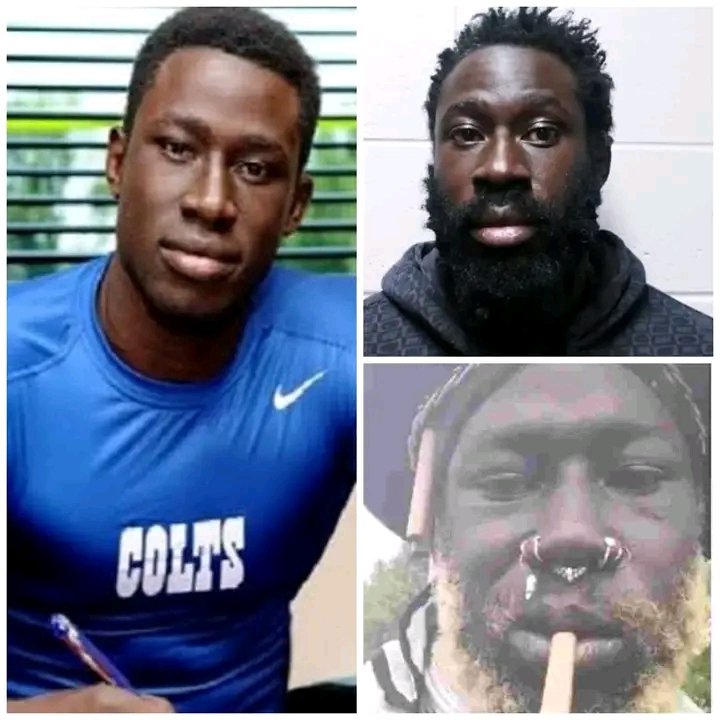
Following his release, Adongo remained in the United States, but his athletic visa officially expired in 2016. Over the next decade, Adongo battled severe mental health issues, homelessness, and addiction. This culminated in several run-ins with Indiana police, including a 2020 conviction for criminal mischief that carried a jail sentence.
A misdemeanor for criminal mischief with property damage, means intentionally or recklessly damaging someone else's property without their permission. This is a category of crime that is less serious than a felony. In Indiana, misdemeanors are minor offenses usually punishable by local jail time rather than state prison.
In the US legal system, a 364-day sentence is highly specific. Judges often issue a sentence of exactly one day short of a full year (365 days) because a sentence of 365 days or more triggers automatic federal immigration penalties for non-citizens, such as immediate deportation hearings.
Following his release from county jail, where he ultimately served six months of his 364-day sentence due to time-served credits, Daniel Adongo returned to a transient lifestyle in Indiana while continuing to battle severe, unaddressed mental health challenges.
In August 2020, shortly after his release, highly disturbing videos of Adongo surfaced on social media. The viral footage showed him looking heavily unkempt, smoking, talking to himself, and exhibiting erratic behaviour. The clips sparked widespread concern among Kenyan fans and family members, who noted in court filings that his personality had drastically shifted after his athletic career ended. Forensic medical experts later suggested he was suffering from acute psychosis and potentially Chronic Traumatic Encephalopathy (CTE) from cumulative brain trauma sustained during his intensive rugby and NFL years.
Indiana judges twice ruled him mentally incompetent to stand trial because he could not understand the legal process or assist his defense lawyers. Following a 2017 case, a judge ordered him committed to a state psychiatric hospital for observation after an expert witness testified that Adongo was actively suffering from acute psychosis.
In 2025, Daniel was arrested and faced misdemeanor battery charges explicitly alleging battery resulting in bodily injury. Because Indiana judges twice found Adongo mentally incompetent to stand trial, he was committed to state psychiatric hospitals rather than undergoing a standard criminal trial.
On March 23, 2026, a federal immigration judge reviewed his continuous 10-year visa overstay alongside his cumulative police record and officially issued a final removal order. On June 20, 2026, the U.S. Immigration and Customs Enforcement (ICE) officially executed the order, boarding Adongo onto a flight and deporting him back to Nairobi, Kenya, bringing an end to his turbulent thirteen-year chapter in the United States.
Because he was formally removed by an immigration judge after overstaying a visa for 10 years, Adongo is subject to strict statutory bars under the U.S. Immigration and Nationality Act (INA). For accumulating more than one year of undocumented presence, he faces an automatic 10-year ban from attempting to re-enter the U.S.
Daniel Adongo is a 36 years old former professional rugby player and outside linebacker who made history as the first Kenyan-born player to play in the NFL. He was signed by the Indianapolis Colts in 2013 despite having absolutely no prior American football experience.
Adongo attended the prestigious Strathmore School in Nairobi, where his athletic prowess quickly stood out. He began playing high-level domestic rugby for the Kenya Harlequin club in 2006. That same year, his exceptional performance at the 2006 Safari Sevens earned him a call-up to represent Kenya internationally on both the Kenyan Under-18 and Under-21 national rugby teams, right before South African talent scouts recruited him to join the Natal Sharks academy.
As a teenager in 2007, Adongo moved to South Africa to join the world-class Sharks Rugby Academy in Durban, steadily climbing through the ranks of the highly competitive South African and New Zealand professional rugby systems.
Between 2007 and 2010, he sharpened his skills playing academy and age-group provincial rugby for the Sharks before moving to Pretoria in 2012 to play for the Blue Bulls while pursuing his studies at the University of Pretoria. Later that same year, his immense talent caught the attention of legendary coach Tana Umaga, prompting a move to New Zealand where he played for Counties Manukau in the ITM Cup and helped power the team to a championship victory.
In 2013, Adongo returned to South Africa to play Super Rugby for the Southern Kings (and the Eastern Province Kings), where his unique physical attributes took center stage. Standing at 6-foot-5 and weighing over 250 pounds, his rare blend of an imposing, powerhouse physique and elite sprinting speed immediately caught the eye of NFL scouts searching for world-class crossover athletes. This discovery directly paved the way for his groundbreaking transition to American football later that year, when he signed with the Indianapolis Colts.
Following his highly publicized signing with the Indianapolis Colts in July 2013, Daniel Adongo's transition into the NFL became one of the league's most ambitious developmental experiments.
Having never played a single down of American football, Adongo was initially assigned to the Colts' practice squad to learn the complex rules and technical nuances of playing outside linebacker.
On December 8, 2013, just months after picking up the sport, Adongo was promoted to the active roster. He made his official debut against the Cincinnati Bengals, becoming the first Kenyan-born player to take the field in an NFL game. His momentum stalled in 2014 when he suffered a severe bicep injury during the preseason, forcing the Colts to place him on injured reserve for the entire 2014 season.
Adongo bounced between the practice squad and the active roster during the 2015 season, ultimately appearing in three regular-season games primarily as a special teams contributor.
In December 2015, Indiana law enforcement opened a domestic violence investigation involving Adongo and a female companion at his Fishers home.
Police were dispatched twice in three months regarding potential domestic violence. In one instance, a woman living at the residence text-messaged a friend for help, prompting the friend to call the authorities. Adongo was not at the home when police arrived. The woman declined medical assistance and did not push for a case.
Although no criminal charges were brought against him from that specific incident, the Colts permanently waived him on December 17, 2015. The NFL subsequently conducted its own investigation and issued a suspension, effectively bringing his professional sports career to a sudden end.
Immediately after the July 29 assassination along Ralph Bunche Road, DCI forensic teams swept the Upper Hill crime scene. They successfully extracted two spent cartridges and one bullet head, forwarding them to the National Forensic Laboratory for instant ballistic profiling. Detectives also seized and locked down the taxi involved for deep forensic examination while pulling CCTV footage from all surrounding office buildings to map the getaways.
The primary breakthrough occurred when surveillance teams tracked the registration and chassis details of the Toyota Prado used by the spotters to block Dr. Mutiso's taxi. DCI data banks revealed that the SUV was not a randomly bought vehicle; it was explicitly identified as one of the vehicles reported missing or stolen during the disputed, hostile February 12 demolition of Dr. Mutiso’s family compound in Mlolongo. This provided immediate, actionable proof connecting the homicide back to the land battle.
Homicide detectives audited records at local police stations and pulled a critical report from the Kilimani Police Station. They confirmed that exactly 24 days prior to her murder, Dr. Mutiso reported surviving a July 7 ambush near Junction Mall, where motorcycle-riding men pointed a gun at her. In that active file, her husband, Prof. David Ndetei, had recorded a formal statement explicitly naming his son, Chris Mulwa, as the armed pillion passenger riding that motorcycle.
Armed with the vehicle nexus and the prior identification, an elite DCI operational team staged a midnight raid at Rose Mulwa's family residence in Karen. During the sweep, detectives seized Over 40 mobile phones, a Mitsubishi Pajero vehicle, and multiple personal electronic devices and computers.
Cybercrime and forensic units are currently auditing these mobile phones to map out call data logs, geographical tracking trails, and financial transactions. Detectives believe these communication trails will link the mother and son directly to the contract hitmen, who are still at large.
Following these findings, Rose Mbithe Mulwa and her son Chris Mulwa were arrested on Thursday, July 30, 2026. The DCI homicide detectives apprehended them at their residence in Karen, Nairobi, during an intelligence-led operation just one day after the shooting of Dr. Victoria Mutiso. The duo was subsequently presented before the Milimani Law Courts the following morning, Friday, July 31, 2026.
In their formal application to hold the suspects for 30 days, investigators argued that keeping the mother and son in custody is necessary to prevent them from warning the shooters, remotely wiping, destroying, or altering call logs, text messages, and digital forensic data. The magistrate ordered them held through the weekend, with a definitive ruling on their 30-day detention set for Monday, August 3, 2026.
Professor David Musyimi Ndetei is a highly distinguished Kenyan medical pioneer, Professor of Psychiatry at the University of Nairobi, and the Founding Director of the Africa Institute of Mental and Brain Health. Renowned as one of Africa's leading authorities on mental health, he has dedicated his career to expanding affordable psychiatric care and spearheading psychiatric research across the continent.
He earned his MBChB from the University of Nairobi (1975), followed by specialized psychiatric credentials in London, a PhD, and a prestigious Doctor of Science (DSc) degree.
Rose Mbithe Mulwa (formerly Rose Mbithe Ndetei) is a Kenyan businesswoman, politician, and the ex-wife of David Ndetei. Born and raised in iveti, Machakos County, she has maintained a public profile spanning across business, philanthropy, and ran for the Governor of Machakos County in the 2022 general elections, losing the seat to Wavinya Ndeti.
Rose Mbithe Mulwa and Professor David Musyimi Ndetei were officially divorced in 2001, bringing an end to their 31-year marriage. Prof. David Ndetei's 31-year marriage to his first wife, Rose Mbithe Mulwa, officially ended in a bitter divorce. A subsequent official gazette notice confirming her name change was published in May 2003.
Following the dissolution of that first marriage, Prof. Ndetei subsequently married Dr. Victoria Mutiso following the finalization of the divorce. Court submissions from recent legal proceedings confirm the union occurred more than two decades ago. They shared two children together. Dr. Mutiso, a prominent clinical psychologist and mental health researcher, was fatally shot on July 29, 2026, in Upper Hill, Nairobi.
Following the 2001 divorce, in 2002, Rose Mulwa filed a landmark case under the Married Women's Property Act of 1882 to claim a share of Prof. Ndetei's multi-million shilling estate under High Court Civil Case (HCCC) No. 6A of 2002. She ultimately lost the main matrimonial distribution suit, with courts ruling against her claims for a direct split of the properties. While she lost the main suit, the loss triggered a 24-year cycle of bitter civil side-battles, appeals, and property disputes.
The cornerstone of this decades-long conflict is a prime, highly valuable parcel of land legally registered as L.R. No. 1504/13. The property is a prime tract measuring over 20 acres (often referenced as 25 acres in various legal filings) situated in the North West of the Athi River Township / Mlolongo zone within Machakos District. Because of its proximity to the Mombasa Highway and Nairobi, its commercial value skyrocketed into billions of shillings over the last two decades.
During their marriage, the land was a core family asset. Following the split, Prof. Ndetei retained the title and launched agricultural and residential projects on the property. The land also became the subject of separate, highly publicized multi-million shilling litigations:
In the early 2000s, Prof. Ndetei successfully sued a neighboring factory, Orbit Chemical Industries, claiming their factory's storm water and chemical discharge ruined the agricultural usability of this specific Athi River parcel. He was eventually awarded over Ksh 269 million in damages.
The land was also entangled in commercial financing legal disputes with institutions like Daima Bank and Housing Finance Company of Kenya regarding charges registered against the title deed.
During the highly contentious 2001 divorce and the subsequent 2002 matrimonial property division lawsuit, the late lawyer, Mathew Kyalo Mbobu served as the primary legal counsel representing Professor David Ndetei.
The execution of the eviction went far beyond a standard property demolition. In her subsequent complaints to the police, Dr. Mutiso alleged that the raiding party assailed the home and destroyed their personal belongings, attempted to forcefully abduct her and her husband, and stole several personal vehicles that were parked securely within the family compound.
Dr. Mutiso went to the Mlolongo Police Station immediately on February 12 to report the break-in, property destruction, and attempted abduction. However, she later stated that a senior local police commander actively interfered with the process. Because of this internal interference, the station refused to log the incident on the day it occurred, and Dr. Mutiso was only able to secure an official police entry months later, in May 2026, under OB Number 42/04/05/2026.
On the morning of Wednesday, July 29, 2026, in the Upper Hill area of Nairobi, as Dr. Mutiso's taxi was navigating traffic, a Toyota Prado intentionally drove in front of the uber car, forcing the taxi driver to slow down and come to a halt. Immediately after the vehicle was blocked, hitmen riding on a motorcycle pulled up alongside the rear passenger window. The pillion passenger pulled out a firearm and shot Dr. Mutiso at close range before speeding off. The attackers did not steal any money, electronics, or personal belongings from the vehicle, signaling a clear premeditated contract killing.
The Directorate of Criminal Investigations (DCI) Homicide Unit has officially linked the September 9, 2025, assassination of lawyer Mathew Kyalo Mbobu and the July 29, 2026, assassination of Dr. Victoria Mutiso under a single investigation baseline.
In both assassinations, the two victims were primary targets of hostility stemming from the same 25-year matrimonial property dispute following the 2001 divorce of Rose Mbithe Mulwa and Prof. David Ndetei. Lawyer Kyalo Mbobu was the long-term legal counsel who represented Prof. Ndetei in court, successfully shielding and preserving the title of the multi-million shilling 20-acre Athi River land (L.R. No. 1504/13) against Rose Mulwa’s claims while Dr. Victoria Mutiso was Prof. Ndetei's second wife and was explicitly named as the third defendant in Rose Mulwa’s fresh civil lawsuit seeking to reclaim a stake in that exact asset.
Both hits were carefully timed to exploit Nairobi's traffic jams. Mbobu was struck while stuck in an evening traffic snarl-up along Magadi Road in Karen while Dr. Mutiso was ambushed while commuting in a taxi during morning traffic in Upper Hill.
In both executions, hitmen were riding on motorcycles, and in both cases, the pillion passengers pulled alongside the victims' vehicles, opened fire at close range, and immediately melted back into the city traffic. Neither attack involved any element of theft. The attackers left cash, electronic devices, and personal belongings inside the vehicles completely untouched, verifying that both incidents were pre-planned contract killings.
Both victims were subjected to professional, point-blank fire directed primarily at their upper bodies to guarantee a fatal outcome. Mbobu succumbed to 8 gunshot wounds targeting his neck and upper body; Dr. Mutiso succumbed to 3 gunshot wounds, two to her head and one to her upper back. Both victims were killed while actively entangled in escalating friction over the land title. Dr. Mutiso was killed exactly 24 days after reporting to the Kilimani Police Station that a motorcycle gunman had tracked and pulled a pistol on her.
As the legal battles dragged on and legal fees escalated, a portion of the disputed 25-acre Athi River property was temporarily transferred and registered into Kyalo Mbobu's name. This transfer was heavily contested by Rose Mbithe Mulwa, who claimed it was a fraudulent maneuver to strip her of her matrimonial share and shield the asset from the ongoing division-of-property suit.
Outraged by the land transfer, Rose Mulwa publicly accused lawyer Kyalo Mbobu of unprofessional conduct and collusion. In response, Mbobu filed a massive defamation lawsuit against Rose Mulwa in 2004, claiming she had severely damaged his professional reputation as a senior advocate.
Following years of legal back-and-forth and eventual court rulings that favored Prof. Ndetei in the main matrimonial property suit, the land title was eventually cleared of its encumbrances and transferred back to Prof. Ndetei and his second wife, Dr. Victoria Mutiso.
On the evening of Tuesday, September 9, 2025, Mathew Kyalo Mbobu was brutally assassinated in a targeted execution. Up until the night he was shot dead along Magadi Road, Mbobu remained the central figure blocking Rose Mulwa’s legal attempts to seize or auction the disputed 25 acres land in Mlolongo.
The assassination of prominent Nairobi attorney Mathew Kyalo Mbobu occurred on the evening of Tuesday, September 9, 2025, along Magadi Road in Karen, Nairobi. The attack sent shockwaves through the country due to its execution-style, predetermined nature.
At around 5:09 PM, Mbobu left his Nairobi office and began driving home toward his Bogani residence in Karen. He was actively trailed by hitmen riding a motorcycle.
As his vehicle slowed down due to evening traffic along Magadi Road, the motorcycle pulled up right beside his car door. An assailant dismounted, pulled out a firearm, and opened fire into the vehicle at point-blank range. The gunmen immediately sped off into the traffic on their motorbike, leaving the vehicle at the scene. No valuables or money were stolen from his car, suggesting it was a targeted hit.
An official postmortem examination conducted by government pathologists revealed that Mbobu was shot 8 times. The vast majority of the bullets penetrated from his right side, indicating the killer fired straight through the driver’s side window. The cause of death was certified as massive internal bleeding resulting from severe trauma to the neck and spinal column.
Immediately following the killing, the Directorate of Criminal Investigations (DCI) Homicide Unit took over the case and pursued multiple financial and land-related motives, but all the trails grew cold.
Seeking to reclaim a stake in the asset, Rose Mulwa filed a fresh civil suit at the Machakos Law Courts naming Dr. Mutiso as a primary defendant. Shortly after the Machakos lawsuit intensified, the legal gridlock culminated in a highly aggressive enforcement that resulted in the physical eviction and demolition of residential properties belonging to Dr. Mutiso’s family on the Athi River land.
On February 12, 2026, a highly chaotic and aggressive raid took place at the Mlolongo residential home of the late Dr. Victoria Mutiso and her husband, Professor David Ndetei. The events of that day completely shifted the nature of the 25-year matrimonial property dispute from a civil courtroom battle into a violent criminal investigation.
According to police and court records, a large group of hired individuals—accompanied by police officers allegedly led by a senior officer from the Mlolongo Police Station—invaded the approximately 20-acre property. Under the guise of enforcing a Machakos court-issued eviction notice, they used heavy machinery to completely flatten and demolish the residential properties belonging to Dr. Mutiso’s family, causing millions of shillings in property damage.
On November 20, 2009, Murphy was sentenced to 31 years in prison by King County Superior Court Judge Palmer Robinson. Judge Robinson explicitly chose the maximum requested penalty of 31 years in prison, noting in the courtroom that it was a deeply fitting punishment because it equaled exactly one year for every one of the 31 stab wounds Murphy inflicted upon Jane Kariuki.
Jane Kariuki was a 42-year-old Kenyan immigrant who lived in Washington State, USA. She migrated from Kenya to the United States and established her life in the Greater Seattle area, where she resided from at least 2003 onward.
Jane lived in her own residential home in Kent, Washington, a prominent suburb located just south of Seattle. Public records and court briefs highlight Jane's financial and domestic independence, emphasizing that she successfully maintained her own household and held full authority over her living space.
Jane possessed a very close-knit, highly protective local family structure in Washington. Her sister and brother-in-law lived nearby in the Seattle area and served as her primary day-to-day emotional and physical support system. They were deeply involved in her life and actively stepped in to help her navigate difficult life transitions.
Jane maintained a profound, lifelong bond with her mother, Rosemary Kariuki, who lived in Kenya.
Christel David Murphy was a 42-year-old American citizen whose personal history before arriving in the Pacific Northwest was heavily defined by structural instability and severe, interstate criminal behavior. Long before relocating to the West Coast, Murphy resided on the East Coast of the United States. His public record during this earlier chapter of his life includes a conviction for manslaughter in North Carolina.
In the early 2000s, Murphy moved across the country from the East Coast and established himself in the Greater Seattle area of Washington State, eventually settling in the suburban city of Kent, where he met Jane Kariuki. Early after Murphy began dating Jane , he integrated into her suburban lifestyle, and moved into her residential space in Kent.
According to police investigation details and legal summaries, Murphy was characterized by a severe inability to regulate his emotions, exhibiting highly unpredictable shifts from standard interactions to sudden hostility. In his daily life, Murphy was described by investigators as highly controlling. When things did not go his way, he detached emotionally and resorted to intimidation rather than communication. Public trial records frequently highlight a deeply chilling behavioral trait: his capacity to remain completely unbothered and detached directly after an intense outburst.
In February 2006, a domestic dispute between Christel David Murphy and Jane Kariuki inside their Kent home escalated from a verbal argument into severe physical violence. According to police investigative reports filed by the King County Sheriff’s Department in Washington State, Murphy shifted into an uncontrollable rage, beating Jane, dragging her across the room, and shattering glass objects around the house. At the peak of his anger, he slashed at her with broken glass, grabbed knives from the kitchen, and explicitly threatened to kill her.
When the police arrived, Murphy's rage abruptly vanished into an eerie, detached calm. The investigation led to his arrest and a 60-day jail sentence for third-degree assault, alongside a strict court-ordered no-contact order. However, court records show a tragic turn in their timeline: in 2007, Jane successfully petitioned the court to have that specific protective order lifted so they could reunite, which ultimately allowed Murphy back into her house.
In late 2007, the toxic cycle of domestic violence resurfaced inside the Kent home just months after the protective order was lifted.
Christel David Murphy exploded into another unprovoked rage, subjecting Jane Kariuki to a second severe physical assault. This attack mirrored the terrifying, unpredictable hostility of the 2006 incident, as Murphy completely overreacted to a minor household interaction and turned physically aggressive.
The King County Sheriff's Department responded to the residence once again, leading to Murphy's immediate arrest. He was subsequently convicted of fourth-degree assault. This second conviction within two years established a legally documented pattern of chronic, escalating danger, proving to local authorities that Murphy posed a continuous threat to Jane's safety whenever they shared a space.
The situation reached a critical breaking point on the morning of October 16, 2008, when Jane Kariuki officially exercised her independence and ordered Murphy to pack his belongings and permanently vacate her home. Refusing to accept the eviction quietly, Murphy triggered a day-long, highly volatile argument inside the residence. Murphy told Kariuki, According to police, Murphy told Kariuki, "If you kick me out, I'll come back and finish my job! Bang! Bang! Bang!"
Rather than allowing the conflict to escalate further in isolation, Jane immediately contacted her brother-in-law (her sister's husband) for emergency intervention. Her brother-in-law arrived at the house to serve as a physical buffer, and mediator to try and de-escalate the situation. To physically remove Murphy from the house without provoking an immediate physical escalation inside the residence, the brother-in-law suggested they all get into his SUV. The immediate goal was to drive north to Northgate to drop off a friend of Murphy's.
Once they were successfully done dropping Murphy's friend at Northgate, the plan was for Murphy to go back to Kent and pack his belongings. Christel David Murphy fully understood that his time at the Kent household was finished, and that he was only returning to the property under strict supervision to remove his personal items.
As the SUV traveled southbound on Interstate 5, Murphy sat in the back seat directly behind Jane Kariuki, watching her and realizing that his control over her life was entirely broken. Rather than accepting the reality of the permanent eviction, his volatile rage took over. He drew a hidden four-inch knife and launched a surprise assault. While the vehicle was moving at highway speeds, Murphy put Jane in a chokehold from behind and stabbed her 31 times in the neck, face, and chest. The brother in law immediately pulled over to the side of the freeway near the North 85th Street exit and called emergency services.
While Jane’s brother-in-law fought to save her life, Christel David Murphy calmly stepped out of the back seat. He tossed his bloody four-inch knife onto the ground, walked over to the concrete highway guardrail, sat down, and lit a cigarette. When Seattle Police officers arrived moments later, Murphy surrendered without a single word of resistance, exhibiting the same eerie, detached calm he had shown during his 2006 arrest. Kariuki was rushed to Harborview Medical Center, where she tragically succumbed to her injuries later that evening.
Murphy was officially charged with first-degree domestic violence murder. Due to his extensive out-of-state manslaughter record and his highly dangerous pattern of chronic domestic abuse in Washington, the judge ordered Murphy held in the King County Jail on a $5 million bail bond, ensuring he could not walk free before trial.
Christel David Murphy was charged with first-degree domestic violence murder and pleaded guilty on September 24, 2009, following overwhelming evidence. During the November 2009 sentencing hearing, Rosemary Kariuki confronted Christel David Murphy in court, questioning why he stabbed her daughter 31 times after traveling from Kenya to Seattle. Murphy, maintaining a detached demeanor, told the judge he did not know why he committed the murder, leaving the family without closure.
Following the tragic events in Adelaide, Caleb Leriano's family and the local community organized deeply emotional tributes to honor his life before returning his body to Kenya. The Kenyan diaspora gathered on March 29, 2026, for a solemn memorial service at the Brighton Catholic Parish in South Australia.
Members of the community expressed deep shock and sorrow, with the Kenyan Community in Victoria (KCV) releasing a poignant statement remembering him as a highly valued, respected, and deeply loved individual. Friends on social media described the talented chef as a "bright light" and a warm, kind soul who was taken far too soon.
His father, Mike Leriano, remembered his eldest son as a true "gentleman" who thoroughly enjoyed life, pursued his personal goals with determination, and was incredibly passionate about his culinary career and going to the gym.
On March 11, 2026, at around 1:30 a.m., emergency services responded to reports of a maroon BMW sedan slamming into a Stobie pole (electricity pole) on Golflands View in Morphett Vale, a southern suburb of Adelaide. Inside the vehicle, they found the sole occupant, an unresponsive, severely injured driver who could not speak to them.
Officers immediately ran the licence plates of the 2003 red BMW 3-Series through the transport database to determine the registered owner of the vehicle.
As paramedics attempted CPR, traffic and patrol officers searched the console, glovebox, and the victim's clothing for a driver's licence, wallet, or work identification.
Because the crash happened on Golflands View—just 100 meters from Caleb Leriano’s home—the vehicle registration and ID immediately led officers right up the road.
By knocking on the door of the nearby residence, detectives located Leriano's parents in the early hours of the morning. His parents confirmed that their 24-year-old son, Caleb Leriano, had been out driving the maroon BMW.
Caleb Leriano was a 24-year-old Kenyan national who had recently migrated to Australia in March 2025 to build a new life. Described by his father, Mike Leriano, as a jovial and cheerful young man, Caleb moved abroad determined to pursue the "Australian dream".
Prior to his relocation, Caleb completed his culinary studies at the Kenya Utalii College in Nairobi, Kenya. Once in Adelaide's southern suburbs, he began work as a specialized chef across aged-care and disability support facilities.
According to statements provided by his relatives, the Caleb was the eldest son in his family and shared a suburban home with his immediate family members on Golflands View in Morphett Vale. Police reports show he owned and operated a 2003 BMW sedan for his personal transport and daily work commute before it was involved in a fatal incident on that very street.
With the driver’s identity confirmed by his parents, paramedics continuously tried to save Caleb's life on Golflands View, but he failed to regain consciousness and died at the scene. According to South Australia Police updates, the 24-year-old was officially pronounced deceased inside the vehicle while investigators cordoned off the crash site. 😭
According to statements from South Australia Police, patrol officers and major crash investigators initially treated the scene as a standard, albeit tragic, single-vehicle traffic accident. Because the 2003 BMW had collided with a Stobie pole on a quiet suburban street, first responders naturally assumed the driver's critical condition was the direct result of the impact.
It was only after forensic pathologists and medical teams examined Leriano’s upper-body trauma that the case took a dramatic turn. Investigators quickly realized his fatal wounds could not have been caused by the car crash, prompting the immediate involvement of the Major Crime Investigation Branch.
While his 2003 BMW had hit a Stobie pole at what appeared to be low speed, the physical trauma on Leriano's body did not match that type of vehicular impact. According to South Australia Police, detectives noted a severe trauma concentrated around his upper body and neck, which matches the profile of a violent blade attack rather than structural damage from hitting a Stobie pole.
According to the South Australia Police Major Crime Investigation Branch, the realization that they were dealing with a homicide immediately shifted the focus of the investigation from the crash site to the victim's final movements. Detectives quickly established a digital dragnet, analyzing local CCTV footage, dashcam recordings, and mobile phone data to reconstruct the hours leading up to the 1:30 a.m. impact.
When South Australia Police analyzed Caleb Leriano’s phone data and reviewed local CCTV footage, they uncovered a digital footprint that mapped out his final hours.