Pagar pra ser torturado e humilhado no quarto é fácil. Prefiro misturar coordenadas polares e retangulares na mesma equação e deixar a matemática dilacerar meu córtex frontal. A agonia algébrica em somar fasores com números imaginários é o fetiche masoquista que me faz gozar.
Having a relationship where you’re both comfortable enough to be as feral and unhinged as you want sexually, with no worry of being shamed or judged is like winning the lottery
building an ESP32 project? before you buy another sensor, learn how to choose the right one, wire it safely, filter noisy readings, and turn physical changes into reliable actions. this guide takes you from the first signal to a working machine: https://t.co/q8rlZyjApL
Quem nunca passou a madrugada no mato caçando hidrogênio, fumando resina boa, céu limpo e o silêncio só quebrado pelo barulho da gente se pegando devagar? Esses nossos campings de stargazer são outro nível.
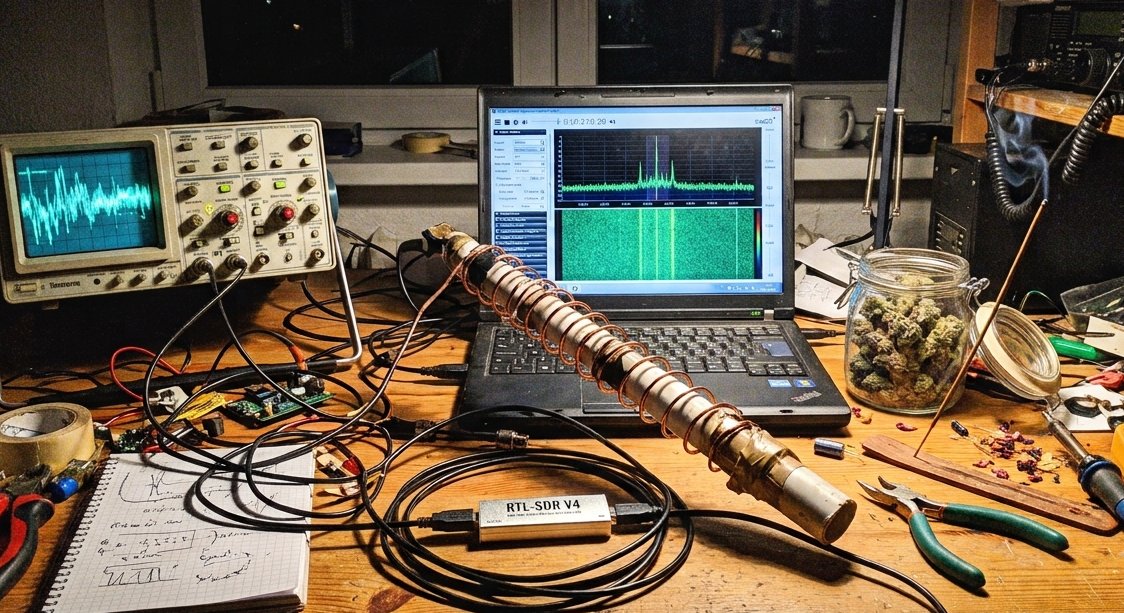
✅ Green flag: aceita passar a madrugada no mato caçando hidrogênio no espaço com um RTL-SDR V4 acompanhados da degustação de opulentas resinas florais em absoluto silêncio.
🚩 Red flag: acha que a polarização circular da antena não importa para o futuro do nosso relacionamento.
despite LMTN academics claiming the existence of a theoretical 4th fundamental mog, the standard model only describes the heightmog, framemog, and facemog
✅ Green flag: aceita passar a madrugada no mato caçando hidrogênio no espaço com um RTL-SDR V4 acompanhados da degustação de opulentas resinas florais em absoluto silêncio.
🚩 Red flag: acha que a polarização circular da antena não importa para o futuro do nosso relacionamento.
High Speed Digital Design: A Handbook of Black Magic
fica a dica de presente pra quem quer esse corpinho aqui
*realmente pensando em me prostituir pra comprar essa obra*
My dad has been working at TSMC as an engineer for the last 20 years, and he’s been in semiconductors as a whole for the past 30. A few days ago, he gave me one of the textbooks he’s referenced from when he was working at SK Hynix as a design engineer in the late 90’s.
The book (published in 1997) everything to do with CMOS circuit design and simulation, and what I find interesting is that the fundamental math and physics behind it has not changed in the last 30 years. What really has changed, is the simulation technology behind circuit verification that has evolved in the last 50 years, all the way from when SPICE v1 was released in the 70s, to whatever we have now.
It really does feel cool to be working on the next iteration of a technology that has been around for so long, yet is so difficult to use and develop even now.
I just think semiconductors and simulation is so interesting. I’m really happy that I get to work on this full time with my own startup, with others who also believe in the vision.