House-Hunting in Brockley, Stab City, SE4
Dispatches from London’s Coolest Zombie Property Market. Your Sunday thought piece.
I’ve been viewing houses this past fortnight, so I thought I’d share my anecdotal 2p on the state of the London property market.
I’m looking in Brockley, SE4, which, if you don’t know it, used to be rough AF, but is now where all the cool kids are. The area has benefited from the various London rail line extensions – you can be in Shoreditch or Canary Wharf in 15 minutes; the Jubilee and Elizabeth lines are a similarly short step away – and that has attracted the slay crew to the area.
The road links though are still horrendous though, made worse by 20mph speed limits and bus lane misallocation of essential road space. The drive to west London is interminable.
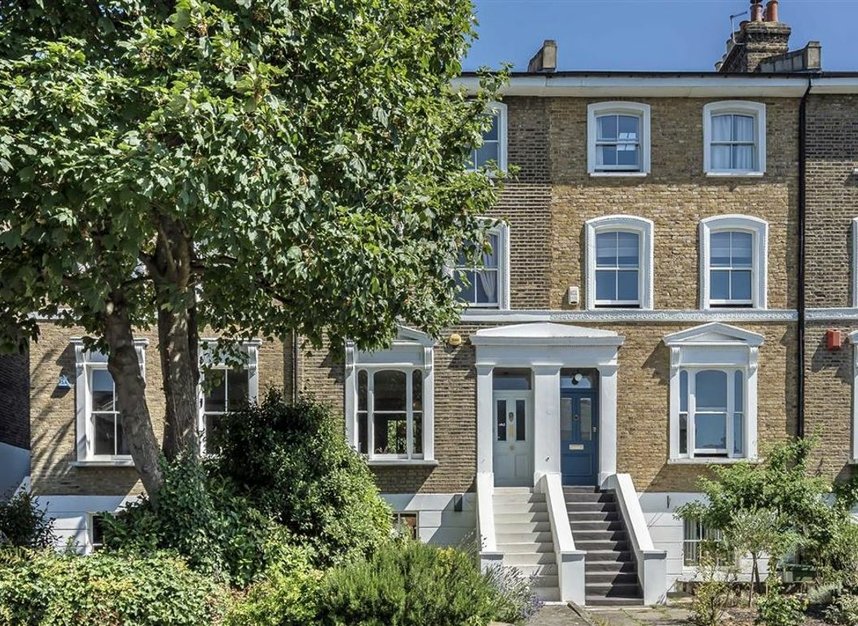
Brockley has a good stock of beautiful detached, semi-detached and terraced Victorian houses. (see pic)
With its proximity to Greenwich and the river docks, it was once a wealthy area, though, like most of south-east London, it got bombed to heck in the war.
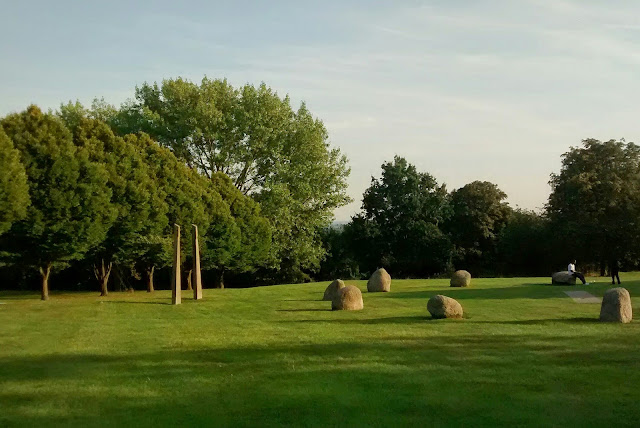
There are plenty of nice parks too. One of them, Hilly Fields, was modelled on Hampstead Heath (see other pic - it even has its own stone circle), and there are many gorgeous houses in the roads running off it. Not quite Hampstead gorgeous, but getting there.
Brockley also has the highest density of cemeteries in London, if you fancy dying any time soon, it’s highly convenient. It is, I gather, London’s most haunted area.
It is only a bit stabby. Nothing like as bad as neighbouring Lewisham. (Maybe “only a bit stabby” will one day make it into estate agents’ jargon, perhaps to replace “vibrant”. I can’t believe how normalised stabbing now is that I’m talking like that.)
The stabbiness is offset, however, by the plethora of nice restaurants, cafés, bars, craft ale breweries, the farmers’ market, mini-festivals, pilates studios et al. (see vid shot from the steps up to the station) I understand, in Browns, the area boasts London’s best coffee and, in Babur, its best Indian restaurant. (Technically Babur is in Honor Oak, but, like England and many of its foreign sporting greats, we’ll claim it as our own.)
Brockley feels younger and more up-and-coming than the once-cool areas to the west like Queen’s Park, Kensal Rise, Clapham and so on, probably because of its easy access to east London. (A lot of people from Hackney move down here.)
I moved here begrudgingly and skint in 2015 and have grown to really like it.
But what about the housing market?
(articles continues - see link in next tweet)
To illustrate just how nonsensically these tariffs were calculated, take the example of Lesotho, one of the poorest countries in Africa with just $2.4 billion in annual GDP, which is being struck with a 50% tariff rate under the Trump plan, the highest rate among all countries on the list.
Why? Does Lesotho apply extortionate tariffs on U.S. products and the U.S. is merely being "reciprocal" here? Not at all, despite what Trump is saying, it's NOT the way these tariffs are defined.
As a matter of fact Lesotho, as a member of the Southern African Customs Union (SACU), applies the common external tariff structure established by this regional trade bloc.
Which means it applies the same tariffs on U.S. products as South Africa does, as well as the 3 other members of the bloc: Namibia, Eswatini and Botswana.
So since the tariffs charged by these 5 countries on U.S. products are exactly the same, they must all be struck with a 50% tariff rate by the U.S., right? Not at all: South Africa is getting 30%, Namibia 21%, Botswana 37% and Eswatini just 10%, the lowest rate possible among all countries.
So what gives? Again, the way these tariffs are calculated has absolutely zero relationship with actual tariffs imposed by these countries on U.S. products. Instead, they appear to be simply derived from trade deficit calculations.
Looking at Lesotho specifically, every year the U.S. imports approximately $236 million in goods from Lesotho (primarily diamonds, textiles and apparel) while exporting only about $7 million worth of goods to Lesotho (https://t.co/uHvem6nH2o).
Why do they export so little? Again this is an extremely poor country where 56.2% of the population lives with less than $3.65 a day (https://t.co/GEho8xFjAp), i.e. $1,300 a year. They simply can't afford U.S. products, no-one is going to buy an iPhone or a Tesla on that sort of income...
The way the tariffs are ACTUALLY calculated appears to be based on a simplistic and economically senseless formula: you take the trade deficit the U.S. has with a country, divide it by that country's exports to the U.S and declare this - falsely - "the tariff they charge on the U.S."
And then as Trump did in his speech last night, you magnanimously declare that you'll only "reciprocate" by charging half that "tariff" on them.
As such, for Lesotho, the calculation goes like this: ($236M - $7M)/$235M = 97%. That's the "tariff" Lesotho is deemed to charge this U.S. and half of that, i.e. roughly 50% is what the U.S. "reciprocates" with.
It's extremely easy to see why this makes no sense at all.
First of all, there's nothing Lesotho can do about it: they can't change tariffs they allegedly charge the U.S. to reduce the tariff rate the U.S. "reciprocates" with because, again, it's NOT based on any tariff that they charge.
Similarly they can't do much about reducing the trade deficit they have with the U.S. because, again, they simply don't have enough money to buy U.S. products.
Also the main rational Trump gave for the tariffs is to get production back to the U.S., to "bring manufacturing back". 47.3% of Lesotho's exports are diamonds: how do you bring the "manufacturing" of that "back to the U.S."? Anyone can see it makes just about zero sense.
The Lesotho example exposes the fundamental economic incoherence of these tariffs. Rather than addressing actual trade barriers, they punish countries based on trade deficits that arise from structural economic realities. All the more countries like Lesotho which pose zero competitive threat to American industry.
Worse yet, these tariffs will likely make these structural realities even worse: the U.S. is Lesotho's second most important export destination so it's a fair bet that applying 50% tariffs on their products will make people in Lesotho even poorer, and therefore even LESS able to afford U.S. products.
But perhaps the most unfair and detrimental aspect of all this is that these tariffs represent a complete reversal of longstanding U.S. development policy, and therefore a betrayal of countries - like Lesotho - who chose to follow U.S. advice in the past.
For decades the U.S. has used preferential trade access to encourage economic development in the world's poorest nations, recognizing that trade, not just aid, could get them out of poverty and ultimately put them in a position where they too could afford iPhones or Tesla.
They're now effectively penalizing countries for following previous U.S. policy, a lesson which I bet they won't forget anytime soon.
So all in all the irony is painful: in the name of fighting unfair trade, America has just demonstrated what truly unfair trade looks like.
This isn't something designed to address genuine trade issues, but simply a mechanism based on arbitrary math to punish countries for the affront of selling more to the United States than they buy.
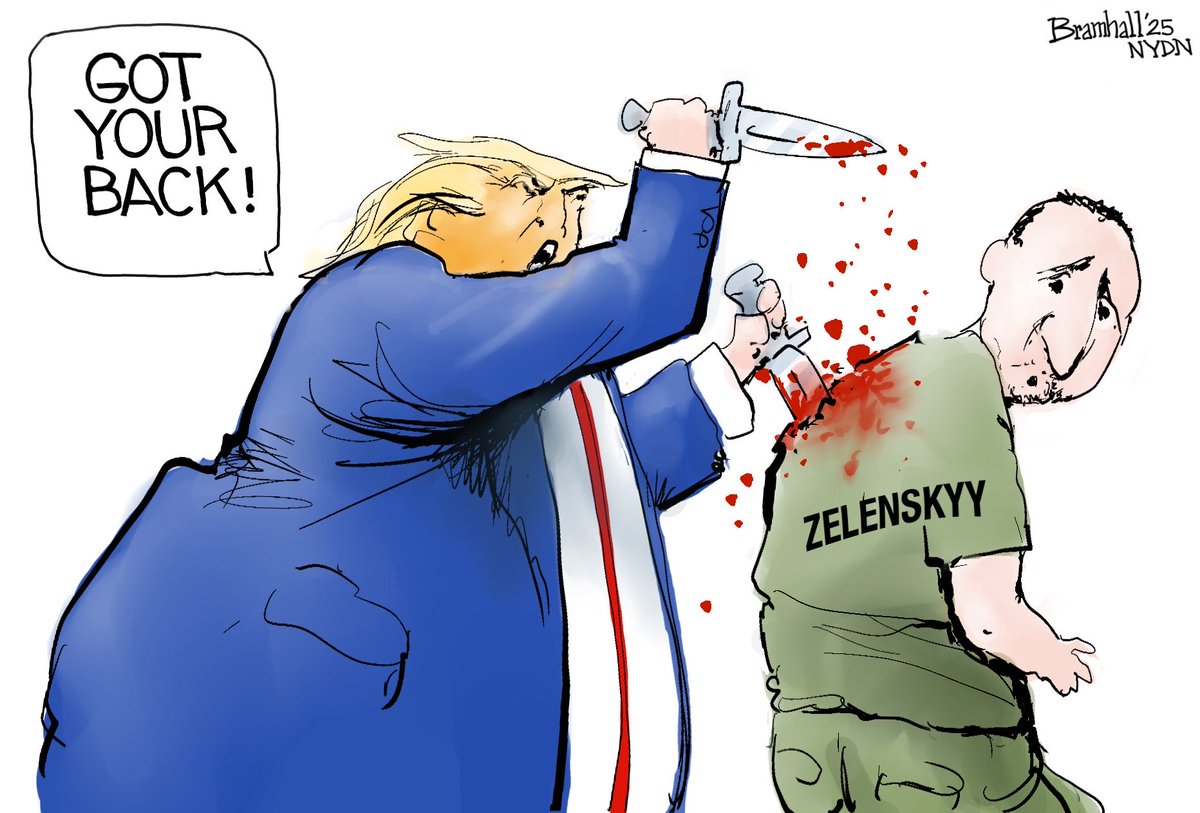
(Reuters) - U.S. President Donald Trump's administration is planning to revoke temporary legal status for some 240,000 Ukrainians who fled the conflict with Russia, a senior Trump official and three sources familiar with the matter said, potentially putting them on a fast-track to deportation.
The move, expected as soon as April, would be a stunning reversal of the welcome Ukrainians received under President Joe Biden's administration.
@tedhesson
https://t.co/q90wGMUuK4
@historyrock_@MarksLarks Knebworth 1979. No mobile phone torches, we lit our milk cartons and waved in the air. Got separated from friends, slept under a fence and then walked to phone box in Stevenage for a lift home from Dad.
One in three house sales fall through costing time and money.
We’re making the process quicker so the dream of homeownership doesn’t disappoint.
This is part of our Plan for Change to drive up living standards and deliver the 1.5 million homes we need.
#Planforchange