Bayer and Monsanto are facing over 170,000 cancer lawsuits worth $16 billion, and instead of accepting accountability, they are asking the Supreme Court to shield them from liability entirely.
On April 27th, people are marching on the Supreme Court steps in Washington DC to make one thing clear: no company gets to poison families and then buy its way out of the consequences. Equal justice under the law means chemical companies answer for the harm they cause, the same as everyone else.
People vs. Poison. April 27th. Washington DC.
Details and speaker lineup at https://t.co/YuczE9gAsH
What gets labeled "weird" in medicine depends entirely on who is doing the labeling.
Gabrielle Traub, founder of World Homeopathy Awareness Week, makes the point beautifully.
She finds it strange to give antibiotics to a child with a fever when the fever itself is the body's most powerful tool for fighting infection. She finds it strange to prescribe cortisone to suppress the immune system, or antidepressants when exercise has been shown to work just as well.
The framing of what is normal and what is fringe has been shaped by the same moneyed interests that built their way into licensing bodies, advocacy groups, and the AMA itself.
Homeopathy is not a fringe practice. Millions of Americans use it, and that community has a voice that is growing louder as more people start questioning the systems that told them what medicine was supposed to look like…
@VigilantFox I’ll tell him to calm down. No one has done more for removal of dangerous chemical in our environment then RFK. Period. Horsford is a performative clown.
Please support. Spelling speech techniques are valid. Do not allow the government to silence their voices! This is so corrupt. It’s hard to fathom that anyone can witness these people spelling and claim it’s not real. #spellers@WithAmericans
https://t.co/oSESuAgTTu
As a mom to a teen with low vision, Thank you @elonmusk and @tesla for making cybercab so accessible and affordable. You have no idea what this means for her future.
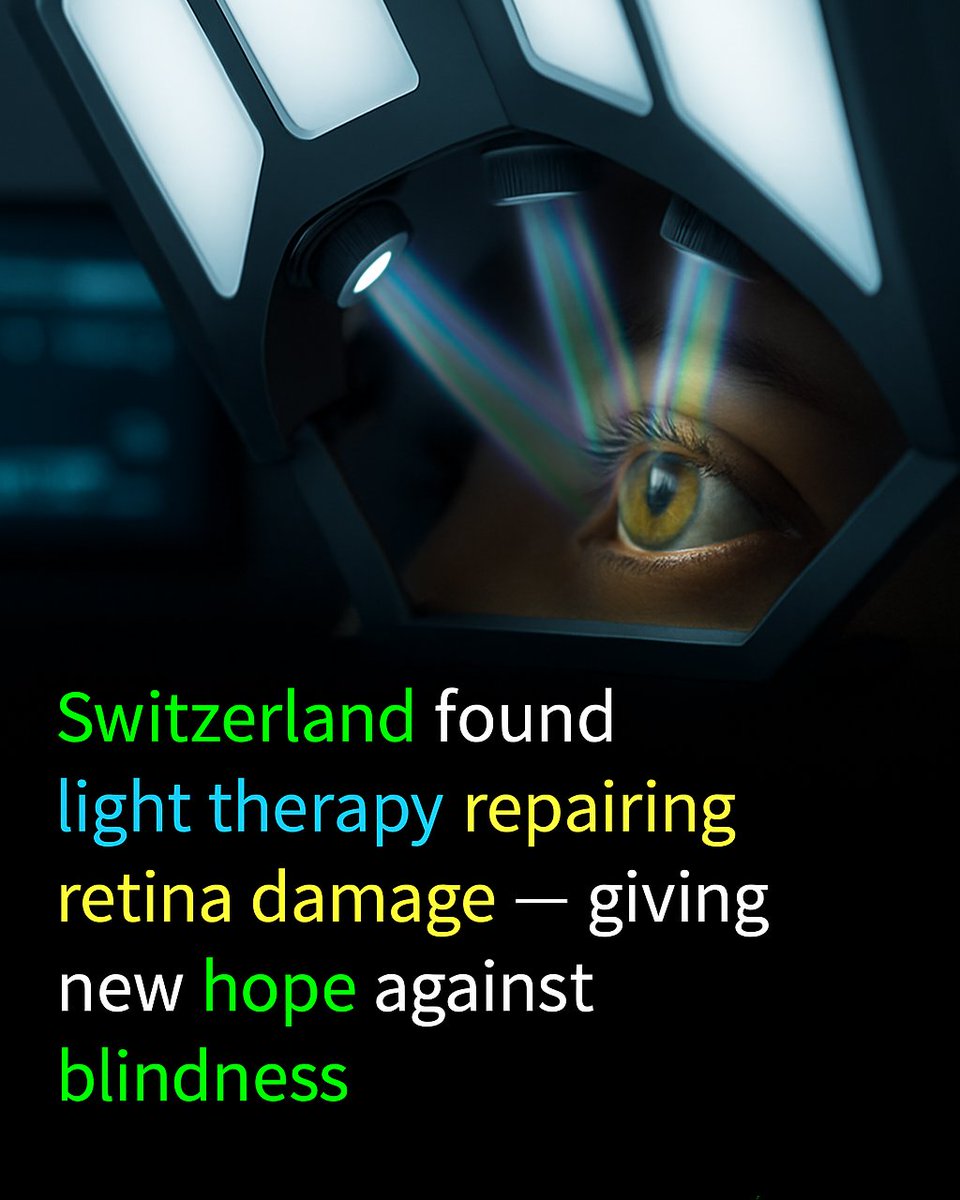
👁️ Switzerland’s Light Therapy Gives New Hope for Vision Loss
Scientists at the University of Basel and the Institute of Molecular and Clinical Ophthalmology (IOB) are exploring a fascinating new approach to protect and even restore vision — using near-infrared light.
Their research shows that exposure to 670-nanometer red light can boost the energy factories (mitochondria) inside retinal cells — the same cells damaged in diseases like macular degeneration and retinitis pigmentosa.
🧠 This light doesn’t “cure” blindness, but it helps cells recover and survive longer, improving visual clarity and color sensitivity in early clinical studies.
In small human trials, participants reported clearer contrast and sharper details after several weeks of short, daily light exposure — a sign that this therapy could slow or reverse damage in its early stages.
⚕️ The therapy, known as Photobiomodulation, is safe, non-invasive, and still in clinical testing. It’s not yet an approved medical cure, but researchers are optimistic that it could become an affordable home-based support treatment in the near future.
Light may truly become a way to protect sight. 💡❤️
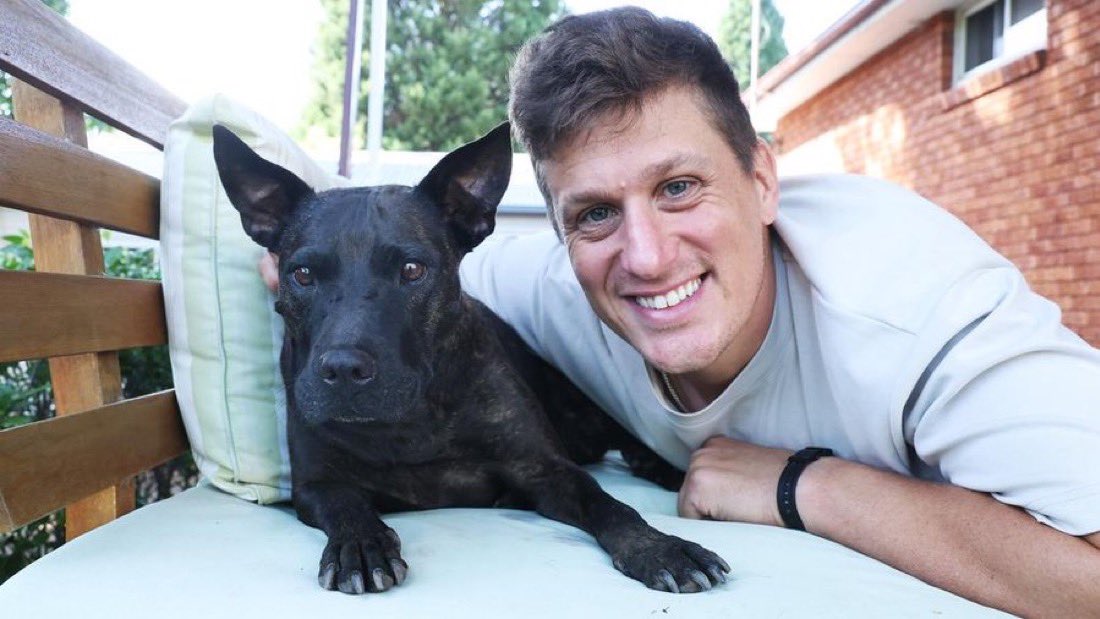
🇦🇺An Australian tech founder with zero biology background sequenced his dog’s tumor DNA, then used ChatGPT and AlphaFold to design a custom mRNA cancer vaccine.
A month later, the tumors shrank by half.
And this is just the start of AI medicine.
A tech consultant in Sydney spent $3,000 and two months to do what Moderna has spent billions trying to scale.
Paul Conyngham adopted Rosie, a staffy-Shar Pei cross, from a shelter in 2019. In 2024, tumors started growing on her back leg. Mast cell cancer, the most common skin cancer in dogs. He tried surgery, chemo, immunotherapy. Nothing shrank the tumors. Just slowed them down while the bills stacked into the tens of thousands.
So he opened ChatGPT and asked it how to cure his dog’s cancer.
The AI didn’t cure anything. What it did was compress months of literature review into hours. It suggested genomic sequencing, walked him through neoantigen identification, helped him build a research pipeline that would normally require a postdoc and a lab budget. He paid $3,000 to sequence Rosie’s tumor DNA at UNSW’s Ramaciotti Centre, then ran the mutations through AlphaFold to model the protein structures. A computational biology professor at UNSW saw his analysis and was, in his own words, gobsmacked that someone with zero biology training had assembled the whole thing.
Then came the part nobody expects. The science was the easy half. Australian ethics approval to run a drug trial on your own pet took three months. Two hours every night after work, filling out a 100-page application. The red tape was harder than designing the vaccine.
Once he cleared that, Páll Thordarson at the UNSW RNA Institute built a custom mRNA vaccine from Conyngham’s data. Sequencing to finished vaccine: less than two months. Conyngham drove 10 hours to deliver Rosie for her first injection in December. One month later, the tennis-ball-sized tumor on her leg had shrunk 75%.
Here’s where the numbers get interesting. Moderna and Merck just reported five-year data on their personalized mRNA cancer vaccine for melanoma. It encodes up to 34 neoantigens per patient. The Phase III trial is fully enrolled. Projected cost per patient: $100,000 to $300,000. Their pipeline is worth an estimated $2.3 billion in annual sales by 2031.
Conyngham did a version of the same workflow for his dog. Sequenced the tumor. Identified the neoantigens. Built a custom mRNA construct. Total cost: $3,000 for sequencing plus university lab time. The gap between those two numbers is where AI is about to rearrange the entire cost structure of precision medicine.
The regulatory moat is real. Conyngham could do this because veterinary experimental treatments face lighter scrutiny than human medicine. There’s no FDA Phase I-III gauntlet for a one-off compassionate use case on a dog. But the technical workflow, tumor sequencing to neoantigen prediction to mRNA synthesis, is converging toward something a motivated person with the right AI tools can orchestrate in weeks instead of years.
One guy, a rescue dog, and a $20/month ChatGPT subscription just produced a proof of concept that the pharmaceutical industry has spent a decade and billions of dollars building toward. The vaccine worked. The tumor shrank. And the only reason it happened is because a dog owner loved his dog enough to spend three months fighting paperwork.
Home school kids outperforming public school? You bet! Want to know how this mom did it? Hit me up at Old School Home School if you’re a new family and need free advice from an OG homeschooler who took my kids from cradle to ivies! https://t.co/b99vdYn6fk