Been hooked on this notion since 2014. Agree!
"Universal AI agents via an app on your phone (or glasses) with the ability see, hear and understand the world as you view it will have a profound impact on our personal and professional lives in the very near future." @paulroetzer
Ages 5 to 10 is the only window in human development where the brain's recording system is fully online but the filtering system hasn't been installed yet.
The hippocampus, the brain structure responsible for encoding episodic memories, reaches functional maturity around age 5. Before that, you're in what neuroscientists call childhood amnesia. The average human can't retrieve a single episodic memory from before age 4.7. Your brain was recording, but in a format it would later overwrite.
Around 5, the dentate gyrus finishes pruning to adult-level synaptic density and the trisynaptic circuit that links hippocampal subfields goes fully operational. You can now encode a scene, bind it to a time and place, and store it for decades.
But here's what makes 5 to 10 different from every age that follows. The prefrontal cortex, which handles habituation and novelty filtering, won't reach maturity until your early twenties. So for roughly five years, you have an adult-grade memory encoder paired with zero ability to tune anything out. Every hotel lobby, every ocean wave, every airport terminal is arriving at full sensory bandwidth with no compression algorithm.
Vacations stack every variable that strengthens memory encoding. Novel environment. Emotional arousal. Multi-sensory input. Spatial navigation through unfamiliar terrain. A 7-year-old on a beach trip is running all five at maximum intensity simultaneously, writing to a hard drive that just came online.
After 10, prefrontal maturation starts filtering. By adulthood, you need increasingly extreme novelty to generate the same encoding strength. That's why your twentieth vacation blurs but the one trip your parents took you on at age 8 plays back in full resolution forty years later.
The brain wasn't designed to remember vacations. It was designed to map novel environments during a critical learning window. Family trips just happen to be the most concentrated dose of novelty most children in developed countries will ever receive.
@garrytan “ai will kill bullshit jobs” sounds clean until you remember the whole education and corporate pipeline was built to manufacture people for exactly those jobs.
we trained them to obey process.
now we’re shocked they don’t behave like lone geniuses.
Nailed it, and it’s already the case, even more so.. A solo entrepreneur who truly masters AI can do the work of 20 people in a traditional company… and even match a team of 5 dedicated AI specialists working together. Teams inevitably lose huge productivity to communication overhead and constant alignment. The leverage for the individual has never been higher.
Just observing what I see .. judging by the Airport you clearly know the World Cup is in Kansas City .. Seattle, you get an idea the World Cup will be there, but not as much of a show as it is at KCI (or MCI)
Paperclip has faced some skepticism for being org-chart based
Won't the infinite, all-knowing agents create their own organizational structures? Isn't the org chart anachronistic?
Let me give you "7 Reasons why human org Charts Help Agents Run Things (CHART)"
Starting with..
the craziest part now is that the modern computer probably has to be entirely reinvented, from scratch. pretty much like how jobs & co brought apple ii to market.
like not improved. not given a chatbot sidebar or something but really from the ground up like the iphone redefined what it meant to be a pocket computer.
the current paradigm for computers was built around a human staring at a screen, moving a cursor, opening apps, managing windows, naming files, remembering where things live, & manually translating intent into interface actions.
that made sense when the human was the runtime. but in an ai native world, it starts to look kinda ridiculous.
you can see this ridiculousness when you use computer use agents… they are useful sure, but they’re also obviously transitional. they’re teaching ai to operate machines designed for humans, which is clever, but also kind of absurd. it’s like making a robot hand so it can use a doorknob instead of asking why the door needs a knob at all. yes i know humans also need to use a door knob, but maybe in the future humans don’t need to use a computer, or at least what we think of a computer today at all.
this all leads to some interesting questions:
- what is a file when the system understands context?
- what is an app when intent can route itself?
- what is a desktop when work can be decomposed, executed, monitored, & summarized by agents?
- what is a browser when the agent can retrieve, compare, transact, & remember?
- what is an operating system when the primary user is no longer just a person, but a person plus a swarm of delegated intelligences? or no person at all.
the old computer assumed navigation.
the new computer has to assume a new kind of intention. the old computer organized information. the new computer has to try to organize agency.
we’re still in the hacky middle stage at the moment with sidebars, copilots, agents clicking through legacy ui, & automation layers sitting on top of 40 year old metaphors.
the new computer is likely one where memory, context, identity, permissions, tools, agents, & interfaces are native primitives. this means desktop, mobile, browser, apps, files, folders deserves another first principles look.
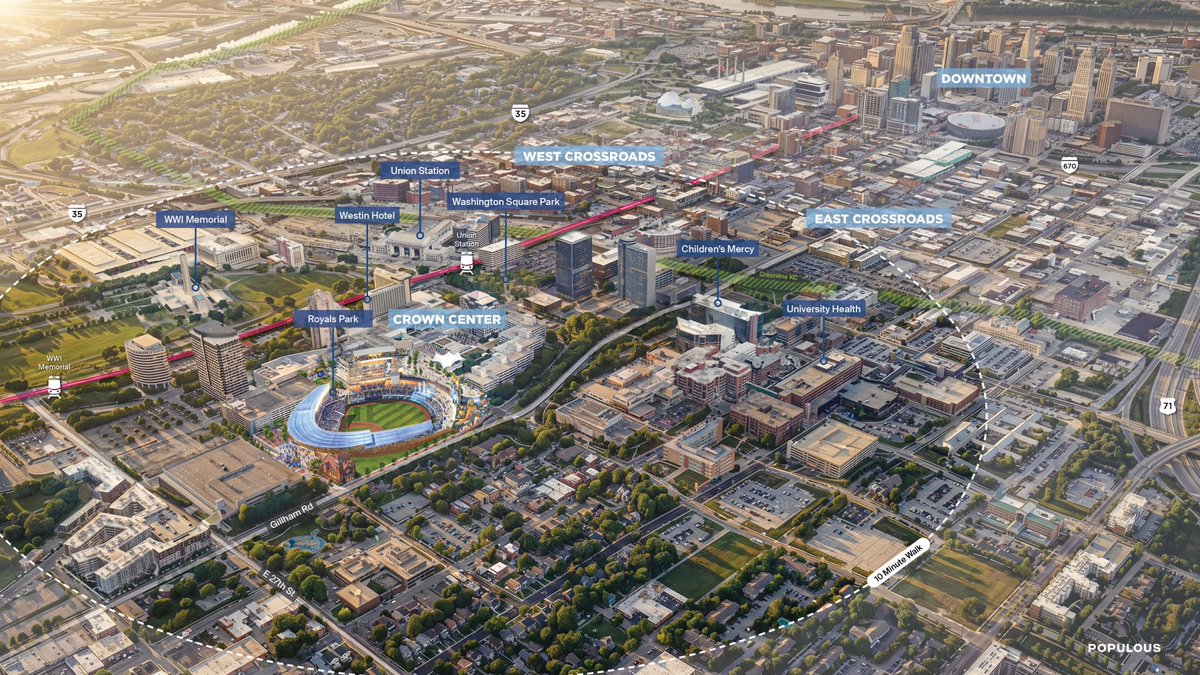
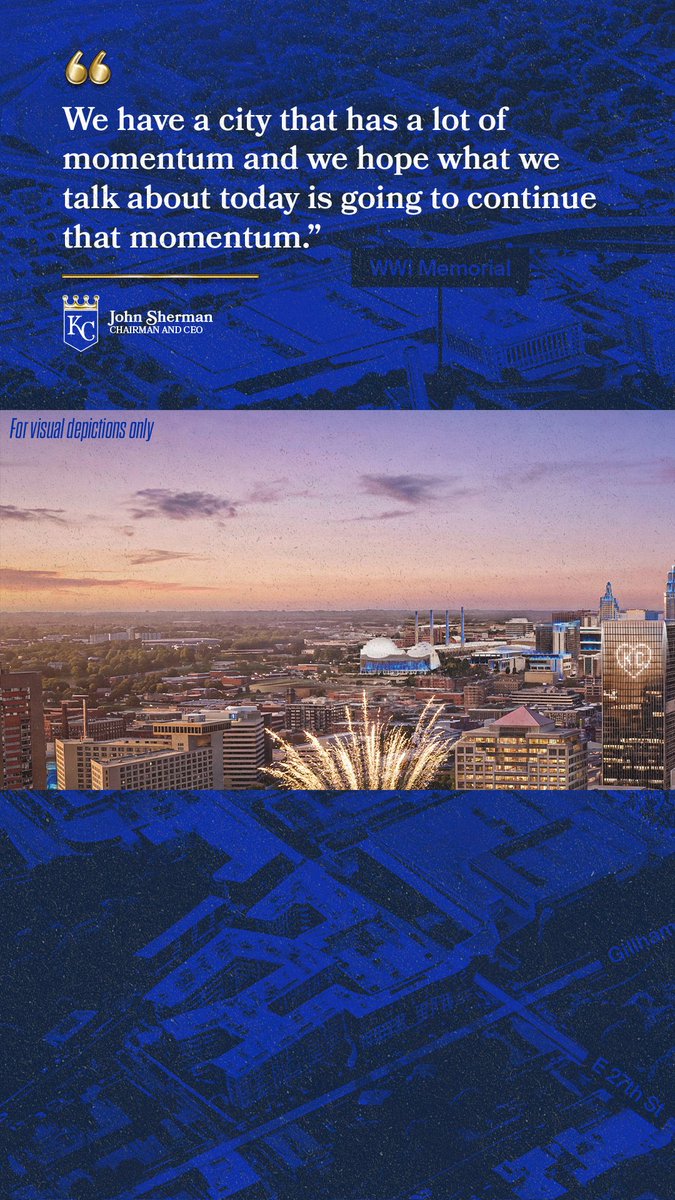
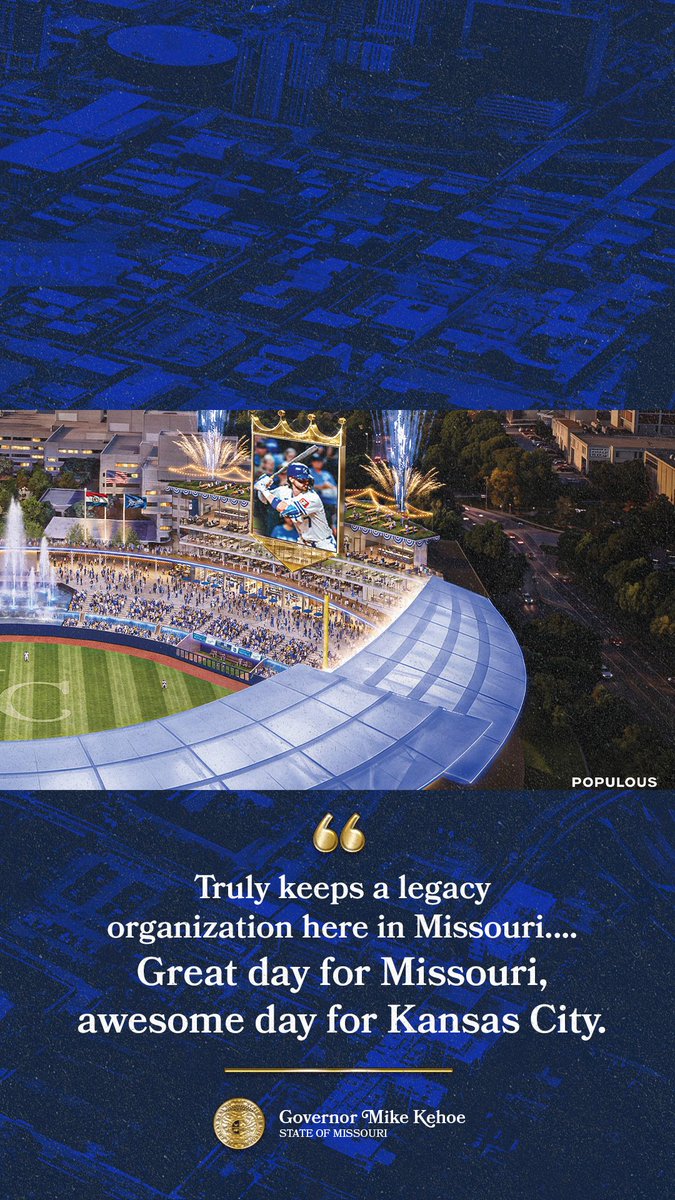
Over the last 2 days, I’ve thought more about the Royals Crown Center stadium and have put my thoughts about the entire project into a blog post.
I believe momentum exists and that this will create a unique experience found nowhere else in the country.
https://t.co/tZXi8Gqnj5
Just one thought about the Royals' stadium plan, irrespective of the funding questions: The best MLB ballparks, in my experience, are usually more "neighborhood ballparks" than "downtown ballparks." There are a lot of "downtown ballparks" near or around central business districts that are still pretty soulless. But I think this Crown Center site, with its proximity to midtown and Beacon Hill, could (with the right execution) become a genuine "neighborhood ballpark."
https://t.co/dnTpziBfll
"Hi, Grace! ✌🏽"
"So Rocky no die in Grace atmosphere! I COME UP!"
"Grace and Rocky BIG SCIENCE how to kill astrophage together!"
"I KEEP GOING THIS WAY?"
"This room boooring."
"What this down here, question? AMAZE AMAZE AMAZE! Rocky want to see human technology!"
Paul Graham spent 20 years watching founders and found the visionary model was backwards.
Bill Gates built a BASIC interpreter for a machine with a few thousand users. Mark Zuckerberg built a website so Harvard undergrads could stalk each other. Neither one knew what they were going to become.
That is the opposite of how every startup school, pitch deck, and vision statement tells you to operate. You're supposed to walk in with a 10-year roadmap. TAM charts. A precise picture of the future you're building.
The people who built the biggest companies didn't have a precise vision. They had a direction. Gates had "microcomputers are interesting." Zuckerberg had "Harvard undergrads will use this." That was the entire thesis.
The math explains why. If your target is 10 years out and 100x bigger than anything that exists, every assumption in your model compounds error. Interest rates move. Hardware costs collapse. A competitor pivots. By year three the roadmap is a museum piece and you're optimizing for a world that never arrived.
Graham's analogy is Columbus. Columbus didn't have a map of the New World. He had "there's something to the west" and a boat. The destination was wrong, the continent was wrong, the math on how far was wrong. The direction was right, and the direction was enough.
The inversion every founder gets wrong: the popular image of the visionary is someone who sees the future precisely. Empirically, it's someone who sees it blurry and walks toward the blur while everyone else is drawing detailed maps of imaginary places.
Gates didn't set out to dominate microcomputer software for four decades. Zuckerberg didn't set out to build a universal vacuum for human time. They started with something small that worked, and the opportunity to move came later.
The VCs who fund vision decks and the founders who write them are playing the same game. The founders who actually built those companies weren't in the room.
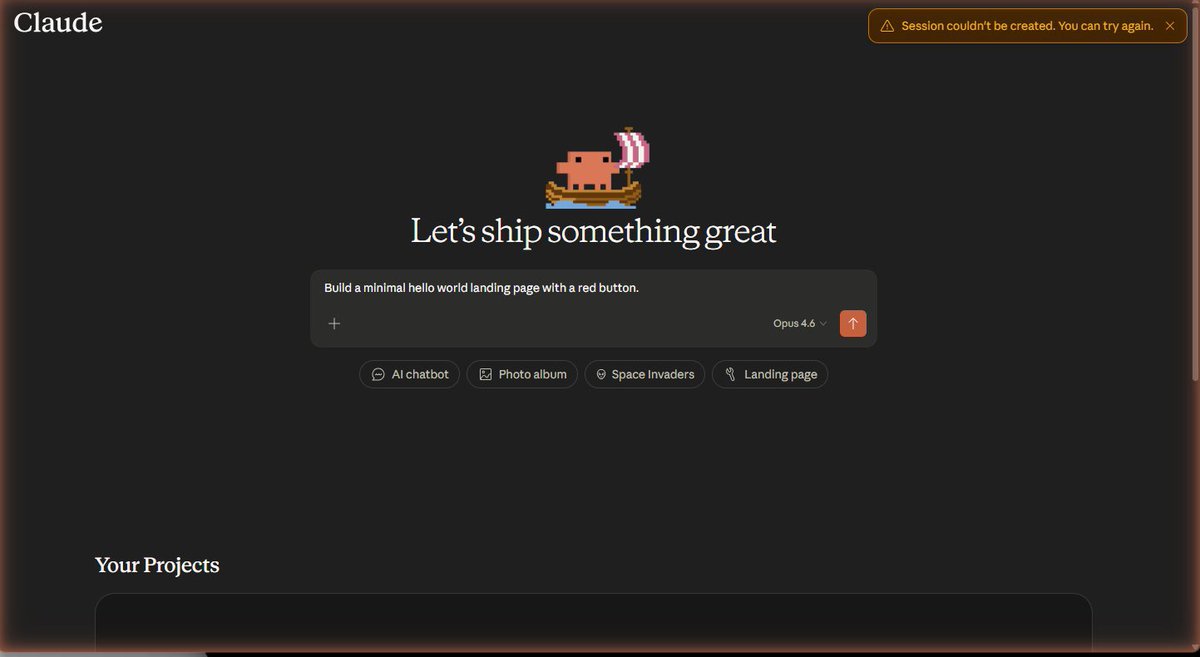
lmao anthropic team will not rest until every competitor is beat - looks like they’re going after cursor / lovable ($56B combined val):
new full-stack app development platform with baked in IDE, design tools, feature toggles etc
anthropic now has:
- openclaw competitor
- #1 ai coding terminal
- leading coding model
- end-to-end automated software creation
- ai security test suite
- remote control coding
- managed agent builder (AWS for coding)
they’re building an operating system for the entire software engineering loop
Anthropic running 10,000 Mythos models in parallel to find cutting-edge cyber exploits...
meanwhile your sister using Microsoft Copilot with some Haiku-sized model and she thinks AI is just hype.
"The future is already here, just not evenly distributed" has never been more apt