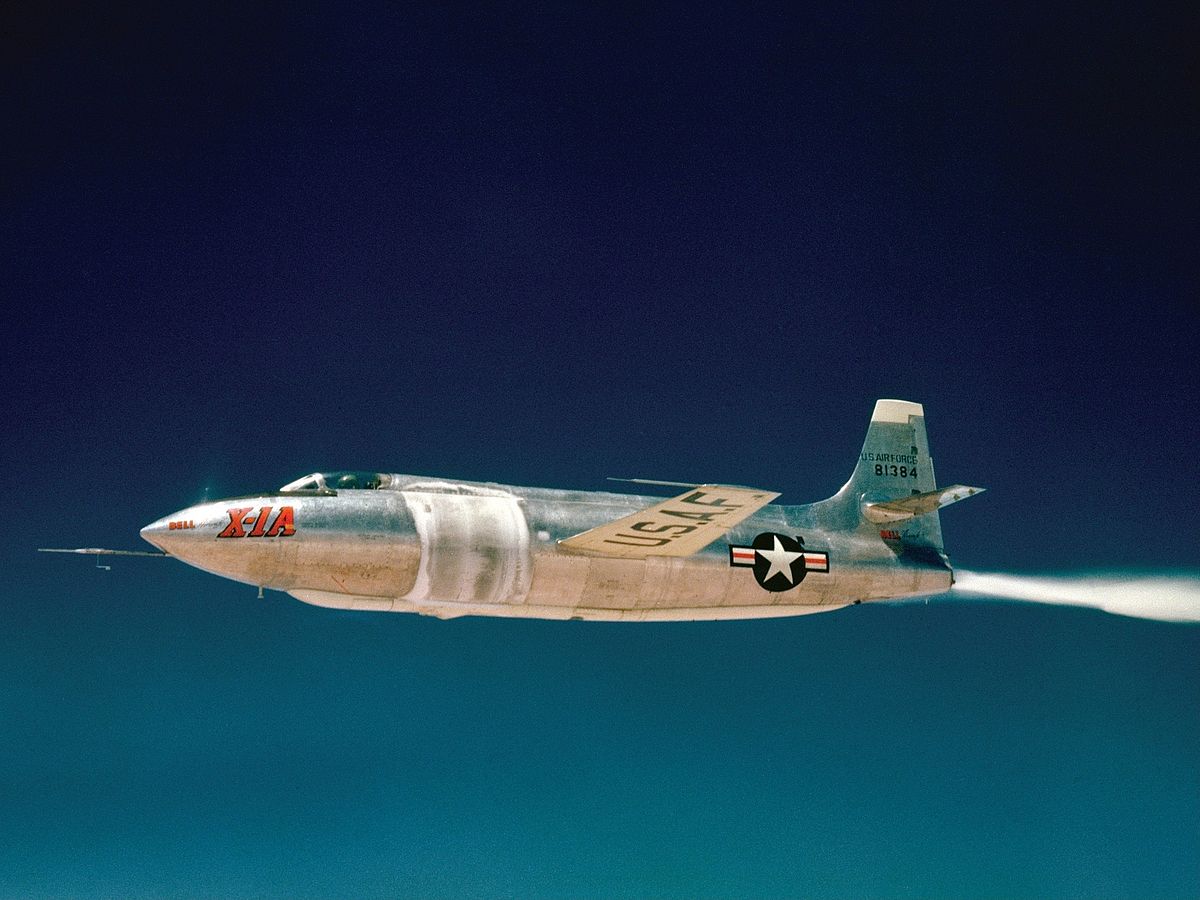
#OTD in 1953, Chuck Yeager piloted Bell X-1A to Mach 2.44, a new record for piloted aircraft at the time. After reaching Mach 2.44, the X-1A tumbled out of control, twice reaching 8 Gs. Yeager recovered from inverted spin and landed the aircraft.
📸: Bell X-1A in flight
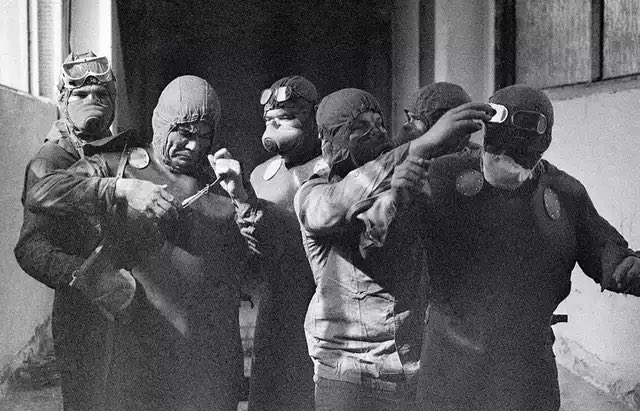
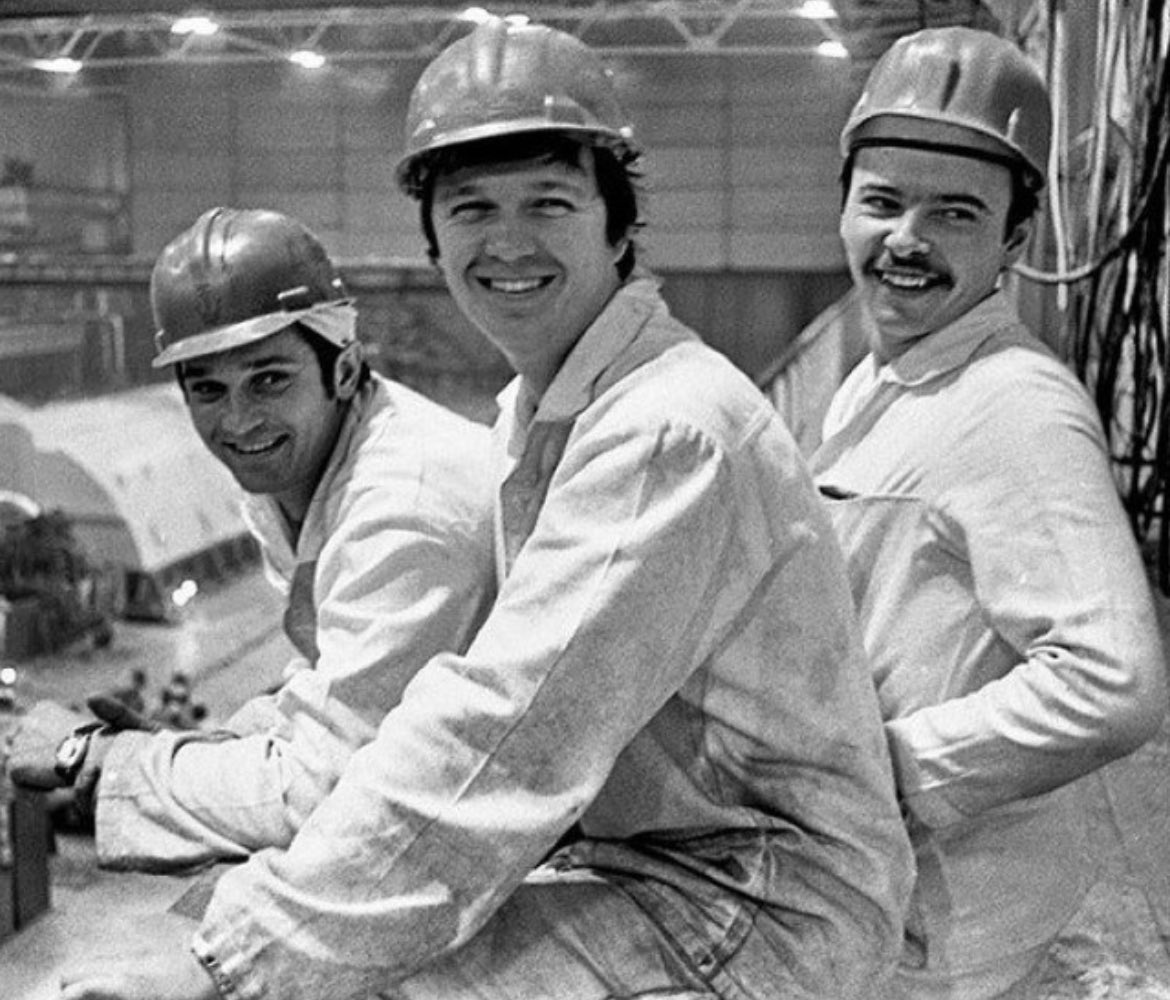
The three heroes gearing up to save Europe from nuclear fallout: Alexei Ananenko, Valeri Bezpalov, Boris Baranov, 1986.
10 days after the Chernobyl accident, engineers learned of impending nuclear steam explosions. The plant's water-cooling system had failed, and a pool of water had formed directly under the reactor. Without any cooling, it was only a matter of time before the reactor's core dropped into the pool, setting off massive steam explosions, shooting radiation high into the sky and spreading it across Europe and even parts of Asia and Africa.
Only one man knew the location of the release valve, and his name was Alexei Ananenko, one of the plant's engineers. He, along with another engineer Valeri Bezpalov and shift supervisor Boris Baranov, were asked to take on the suicide mission. The men were given the option to refuse; however, Ananenko simply replied, "How could I do that when I was the only person on the shift who knew where the valves were located?"
They entered Chernobyl via the reactor's chamber, standing in waist-high radioactive waters in total darkness. Baranov's diving light was reportedly dim and periodically flickering on and off. Every minute spent in the facility was another minute that isotopes freely ravaged their bodies. The light eventually burned out permanently, but not before they saw a familiar pipe that they knew led to the valves they were looking for. They grabbed the pipes and followed it until they found the two gate valves, which they twisted open to let the water out. The pool quickly began to drain.
Many news sources reported that all three men died within a few weeks due to radiation sickness. However, according to Andrew Leatherbarrow, author of the 2016 book "Chernobyl 01:23;40," Ananenko continues to work in the nuclear energy industry, and Bezpalov was also found to be alive. Baranov died in 2005 of heart failure at the age of 65.
It is believed that the water absorbed much more radiation than initially believed and ultimately saved their lives.
Alexei - or Oleksiy - Ananenko, 62, A hero who saved the world in the 1986 Chernobyl nuclear explosion has been pictured today fleeing for his life, as he attempts to escape his blitzed homeland.
In poor health following a road accident four years ago, he and wife Valentina, 53, were forced leave their home in Kyiv amid the fear of Russian bombing.
Known as the "Chernobyl Three," engineers Alexei Ananenko, Valeri Bespalov, and Boris Baranov risked their lives to prevent an apocalyptic catastrophe just days after the historic explosion at the nuclear power plant in 1986.
Almost as soon as firefighters started pumping water into the reactor, it began flooding a basement room directly below. The basement contained the valves that controlled the coolant liquid that normally kept the reactor stable. But as the reactor rose to 2,000 degrees Fahrenheit, it began to melt the protective concrete floor below.
Experts feared that if the molten nuclear material came into contact with the water, it would unleash a gigantic steam explosion that would destroy the entire power plant, level Kyiv 60 miles away, and release so much radiation into the air that most of Eastern Europe would be uninhabitable for at least 100 years.
So on April 28, 1986, Ananenko, Bespalov, and Baranov volunteered to descend into the basement, locate the valves, and drain the tank. Protected only with diving suits and respirators while armed with a single flashlight, they waded through the radioactive water in near pitch-black darkness.
It took several days of many descents for them to find the valve and turn it enough to begin the draining process, and by May 8, a full 20,000 tons of water had been pumped out, sparing millions of lives from a nuclear winter.
Food banks appreciate monthly donations of money because they have recurring expenses not covered by food donations. They have to pay office & storage space rent. They maintain a fleet of trucks. They pay their permanent staff. The list goes on….
This is a really useful post. Especially with a recent loss of “Covid” government funding, food banks need more donations to pass on to a large population still struggling with high prices for housing and healthcare.
So, I spoke to people getting food at a food bank and here are some things I learned from those in need:
1. Everyone donates Kraft Mac and Cheese in the box. They can rarely use it because it needs milk and butter which is hard to get from regular food banks.
2. Boxed milk is a treasure, as kids need it for cereal which they also get a lot of.
3. Everyone donates pasta sauce and spaghetti noodles.
4. They cannot eat all the awesome canned veggies and soup unless you put a can opener in too or buy pop tops.
5. Oil is a luxury but needed for Rice a-Roni which they also get a lot of.
6. Spices or salt and pepper would be a real Christmas gift.
7. Tea bags and coffee make them feel like you care.
8. Sugar and flour are treats.
9. They fawn over fresh produce donated by farmers and grocery stores.
10. Seeds are cool in Spring and Summer because growing can be easy for some.
11. They rarely get fresh meat.
12. Tuna and crackers make a good lunch.
13. Hamburger Helper goes nowhere without ground beef.
14. They get lots of peanut butter and jelly but usually not sandwich bread.
15. Butter or margarine is nice too.
16. Eggs are a real commodity.
17. Cake mix and frosting makes it possible to make a child’s birthday cake.
18. Dishwashing detergent is very expensive and is always appreciated.
19. Feminine hygiene products are a luxury and women will cry over that.
20. Everyone loves Stove Top Stuffing.
In all the years I have donated food at the Holidays, I bought what I thought they wanted, but have never asked. I am glad I did. If you are helping a Family this Christmas, maybe this can help you tailor it more. It does for me!
Arrival Skunk Works May 1965
The next week, we all left our families and drove to the “Skunk Works” (SW) in Burbank, California, to attend the first course ever taught about the SR-71. The course was for the pilots and Navigators and would last about six weeks. The Navigators would stay at the SW for several weeks longer to learn about the navigation and sensor systems.
The first eight crewmembers were invited to Bob Gilliland’s (first man to fly the SR) house looking over Los Angeles. Tony LeVier (test pilot) was sitting at Bob’s bar when we arrived. The story of how the U-2 was named came up. During the first flight at the Ranch, Kelly was on the radio telling Tony how to land the U-2, front wheel first. Every time Tony tried landing the front wheel first, the aircraft would bounce up into the air. Kelly had insisted on the front wheel first; finally, Tony gave Kelly the finger as he bounced by, and Kelly returned, giving Tony the finger and yelled, “U-2”. The staff quickly wrote down the name.
R-12 course
The course was taught on the top floor of the SW. The first four SR-71 Crews were present. They were Pilots Al Hichew, Robert “Grey” Sowers, Charles ”Pete” Collins, and John Storrie. RSO’s Coz Mallozzi, Tom Schmittou, Dave Dempster, and myself. Colonel Nelson and Haupt attended most of the time and sat in the back row. I was in awe of just being in the world-famous Skunk Works.
A former Navy enlisted man taught the SR-71 course (SW called it the R-12). He did not know very much about our airplane. I believe he was on a loan from the Lockheed California Company to teach this course because the SW didn’t have anyone to teach, and the management didn’t have the time. He told us if we had any questions that he could not answer, someone from the SW would come in on the break and answer them. Little did we know that the “someone” could be the world-famous founder of the SW, “Kelly” Johnson, or the next head of the SW, Ben Rich!
Early on in the course, Kelly came in to answer a question. He went straight to the blackboard and covered it with mathematical formulas to explain why our question worked on the SR. When he finished, he asked us, “Did you get it?” We all froze, and no one could speak or even think to question the aeronautical genius. He said nothing, did not greet us or shake our hands, just walked out. We soon learned that it was Kelly’s way to be direct, to be quick, and to the point without any frills or nice talk.
Ben Rich was totally different. He would come in, put us at ease, shake our hands, pat us on the back, and tell us jokes, then answer the question. One question we asked him was: why are the engines located where they are on the SR-71? He said the engine designers wanted the engines on the wing tips so they could get undisturbed air directly into the engine. The airframe designers wanted the engines located along the aircraft's center for structural reasons. With a straight face, he said; if you notice, the engines are located precisely halfway between the wing tip and the fuselage. We didn’t know if it was a joke or not.
Most every day, we would be given a tour of the SW and the production line of the SR-71 Program. I saw the aircraft I would be making my first flight in, 955, being put together. I had seen aircraft lines before, such as the B-58 & B-47. They were mostly assembly lines, putting the parts together, but the SR line was different, and they were building the aircraft from the ground up, making the key parts right there, in the SW. The forging of titanium alloys was the most impressive thing I saw.
Written by , Col. Richard “ Butch” Sheffield
Is the story about the U2 that was told to my Dad by Tony LeVier true? Maybe not, but Kelly was known to tell some very interesting stories. The pilots were sent to Area 51 to learn how to fly. The trainers were not made yet. There was no simulator yet.  I’m so glad my Dad wrote down this unique piece of American history.  Linda Sheffield.
Oct. 5, 1905: My favorite day in aviation history. Wilbur Wright flew 24+ miles making 30 circles around Huffman Prairie (near Dayton, OH) in 39 minutes. No one on Planet Earth had figured out how to TURN an aircraft. The Wrights designed, built, & learned how to fly a plane.
Major Brian Shul, USAF (Ret.) SR-71 Blackbird 'Speed Check' https://t.co/yICmHcSWQG via @YouTube his story lives one in case you didn’t know, Brian passed away earlier this year. Watch his Speed Check story… if you want to smile, or even laugh.
This below is what I posted on May 21 of this year. We were all shocked by Brian‘s death, but the Speedcheck story still lives on. Brian was a storyteller.
I admired him for the way he fought back from extensive medical damages that occurred while flying and crashing a fighter airplane.
SR 71 pilot Brian Shul suddenly died last night in Reno, Nevada, at age 75, of a cardiac arrest. He is well known for his story speed check. He was a courageous man who fought his way back from a debilitating plane crash in 1973. His goal was to fly the SR 71, and he achieved his goal.
Brian died doing what he enjoyed the most, talking about the SR 71. He was last night's keynote speaker at the Nevada military support alliance annual gala. After his speech, he keeled over, and doctors in the house performed emergency CPR to no avail. Prayers for his family
Linda Sheffield
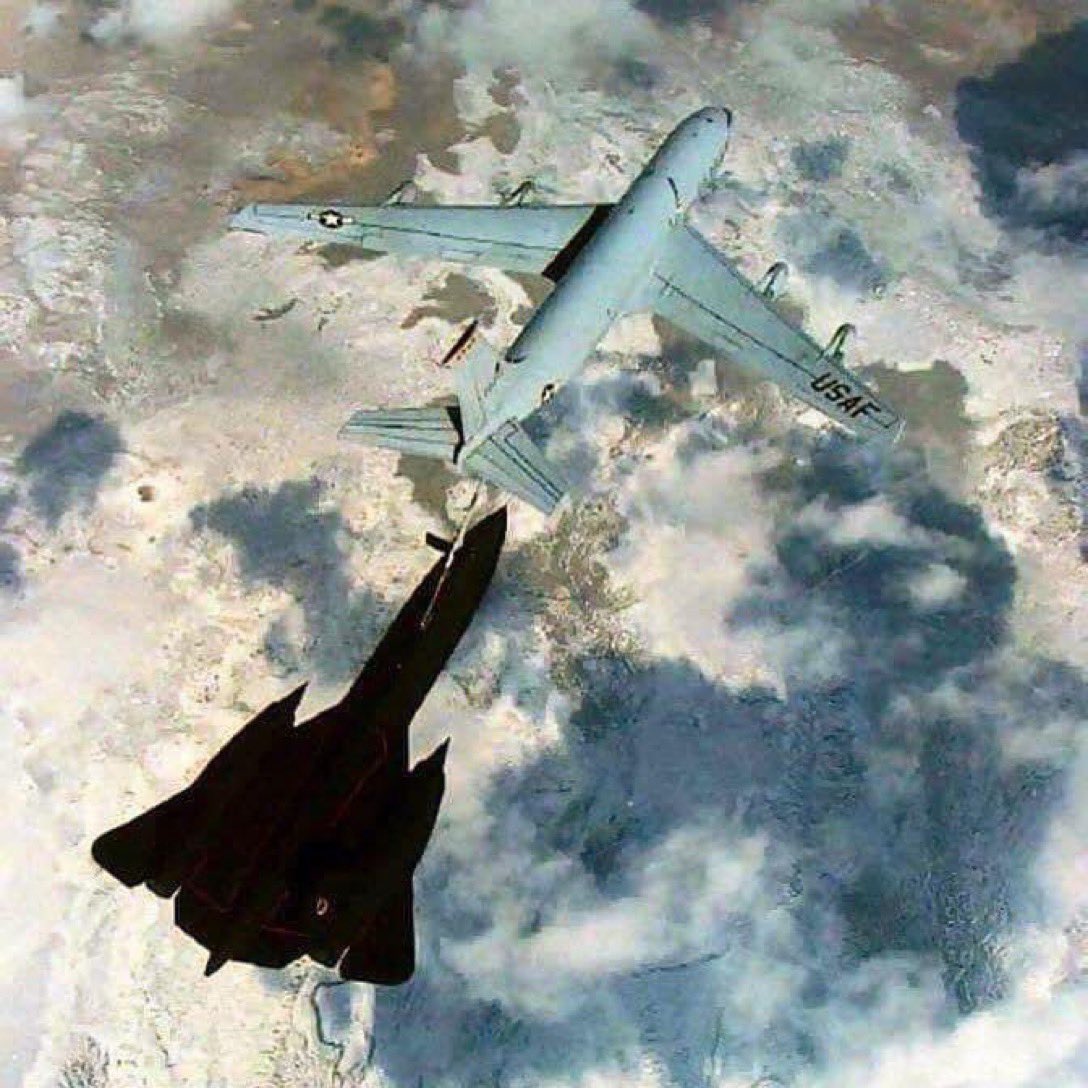
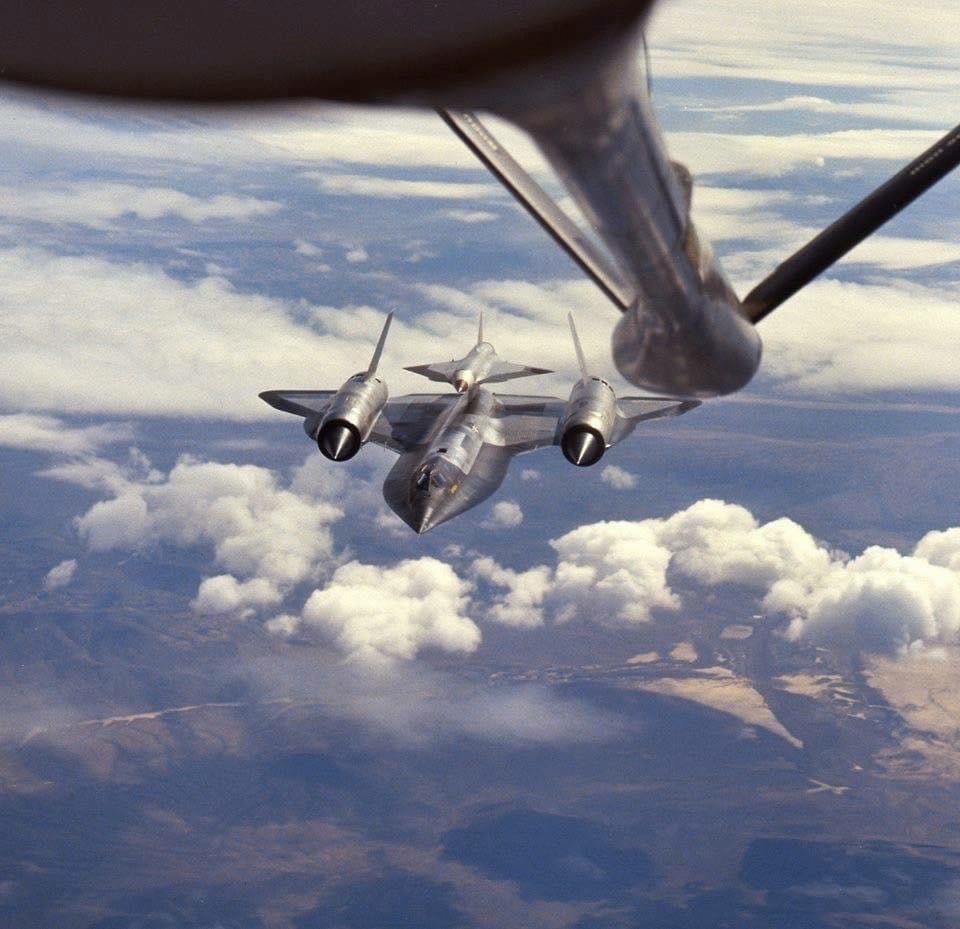
Communication between the SR 71 and the KC 135Q had to be secure. The enemy would listen in vain, trying to find their location and their next rendezvous with a tanker. The RSO had a Modulator/ demodulator modem control panel. He used a five-digit code that he punched to secure communications. The KC 135Q, which is equipped with the same UHF radio and has the correct mission code and address number, could receive the SR 71 range as well. There was an interconnected phone that the crewmembers of both the SR 71 and the KC 135Q could talk to each other during this refueling time.
 The tankers were always a welcome sight to the SR 71 crew. After a while, the cockpit would get a little warm. After refueling, the cockpit was noticeably cooler. Tankers could give life-saving information to the crewmembers by being able to look at the airplane and noticing if something was Wrong (Engine on fire, yes, that happened) with the airplane. Thank you to all KC 135 pilots and crewmembers for helping keep the SR 71 going all those years.
Written by Linda Sheffield Miller
I first met Brian Shul at an air show in Santa Rosa, CA. He signed his book for me. I subsequently “followed” him to lectures & to his shop in Marysville, CA, where he signed a 2nd book for me. He was modest & as eager to talk about flying the SR-71 as I was to listen. RIP.
"One moonless night, while flying a routine training mission over the Pacific, I wondered what the sky would look like from 84,000 feet if the cockpit lighting were dark.
While heading home on a straight course, I slowly turned down all of the lighting, reducing the glare and revealing the night sky. Within seconds, I turned the lights back up, fearful that the jet would know and somehow punish me. But my desire to see the sky overruled my caution, I dimmed the lighting again.
To my amazement, I saw a bright light outside my window. As my eyes adjusted to the view, I realized that the brilliance was the broad expanse of the Milky Way, now a gleaming stripe across the sky. Where dark spaces in the sky had usually existed, there were now dense clusters of sparkling stars Shooting stars flashed across the canvas every few seconds. It was like a fireworks display with no sound. I knew I had to get my eyes back on the instruments, and reluctantly I brought my attention back inside.
To my surprise, with the cockpit lighting still off, I could see every gauge, lit by starlight. In the plane's mirrors, I could see the eerie shine of my gold spacesuit incandescently illuminated in a celestial glow. I stole one last glance out the window. Despite our speed, we seemed still before the heavens, humbled in the radiance of a much greater power.
For those few moments, I felt a part of something far more significant than anything we were doing in the plane. The sharp sound of Walt's voice on the radio brought me back to the tasks at hand as I prepared for our descent."
Brian Shul -
Sadly, Brian Shul passed away May 2023, after speaking at a full house engagement about the SR 71. He’s certainly had a beautiful way with words. Linda Sheffield.
The Blackbird is a standout, and stories about it never fail to amaze me. Thank you to everyone who designed it, flew it, maintained it, and continues to write about it today!
The SR 71 was at least 60 years ahead of its time.
The question was …is the SR 71 a product of its time? (Time frame would be late 1950s to 1966.)
Former U-2 technician Damien Leimback wrote; the following *In my opinion, this man is brilliant.*
He Disagrees with the question that the SR 71 was a product of its time.
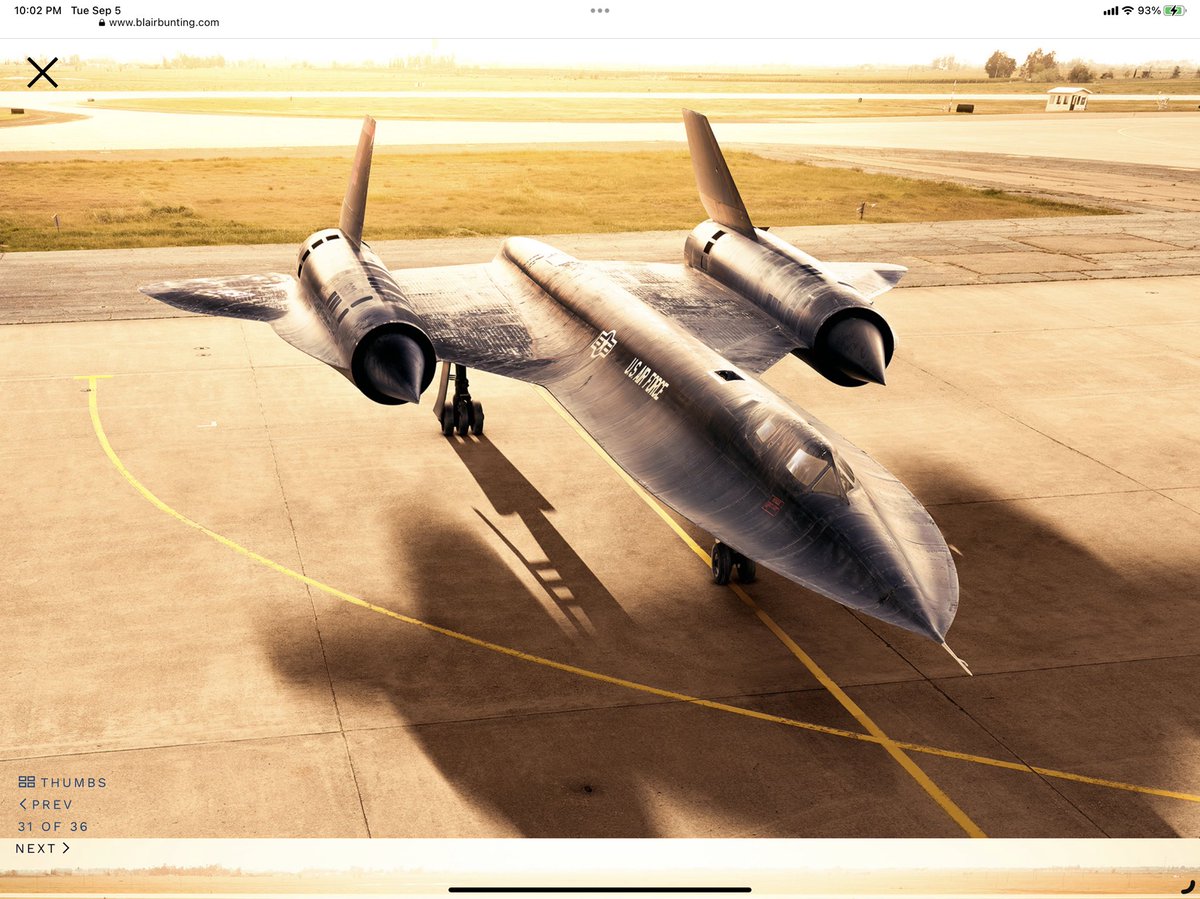
I disagree because of the technologies that had to be invented or perfected in order for the plane to work that did not exist before the types (I include the A-12 here) introduction.
Here are some examples……
Using titanium in such massive amounts was unheard of in an aircraft; most of it is sourced from the Soviet Union through shell companies. New fabrication methods and new titanium alloys had to be created to build the plane.
Corrugated panels that expanded without changing shape were used in a novel way, as well as new types of glass for the windscreen and new ways of fusing it to the frame without the use of glue (that would melt under high temps) were used.
The fuel was routed through the leading edges of the wings to keep them cool and also to preheat the fuel for a better burn, novel approaches used for the first time on this plane.
The fuel itself was a custom blend and had a radioactive isotope added to it that allowed the ionization to scatter Radar waves in the high atmosphere. C-50 was used to secure the contract for the CIA. it was also called panther pi%s
Oils and lubricants had to be custom blended for the aircraft in order to function at the high and low temp extremes the plane would encounter.
The David Clark company built a pressure suit for the pilots, as the one the U-2 pilots wore was insufficient. The U-2 pilots later adopted the same suit.
The tires had aluminum mixed with latex in order to withstand the temps that would be encountered in the wheel wells during flight.
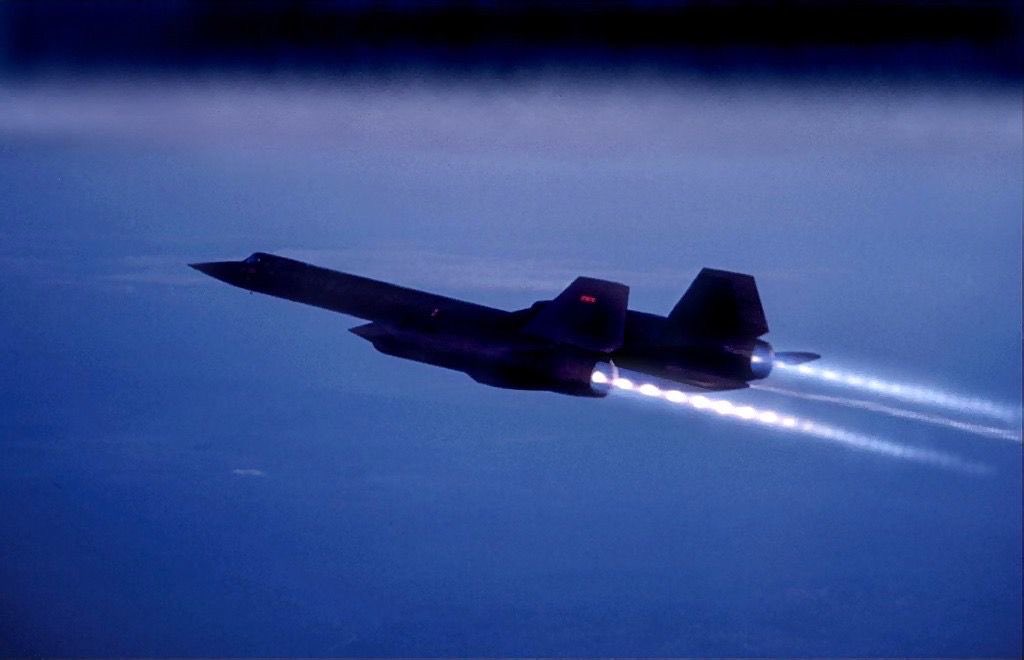
The J-58 engine was a hybrid of the turbo jet and ramjet, and MOST EFFICIENT at Mach 3.2, unheard of anywhere before or since.
And this is just a small sampling of the technologies that had to be invented or perfected in order for this plane to work. No one else was capable of flying anything like it in the 1960’s and its performance has yet to be matched today, almost 60 years later. If that's not ahead of it's time, I don't know what is.
Posted by Linda Sheffield
Two years ago today, I took Tori to freshman orientation at NMSU. When we passed Clara Belle Williams Hall I got excited. Tori hadn’t heard of her. Clara Belle was the first African-American to graduate from NMSU in 1937. She wasn’t allowed in the classrooms so she sat in the hallway. She was later inducted into the Teacher’s Hall of Fame. They couldn’t, didn’t break her and like Clara Belle, they won’t break us either. This is Black History, American history…OUR history
Today, We wish a very happy 90TH BIRTHDAY to former NASA Flight Director, Gene Kranz!
Born Aug 17, 1933 in Toledo, OH, Kranz served in director positions throughout the Mercury, Gemini, and Apollo programs and was an instrumental force during both the Apollo 11 & 13 missions.
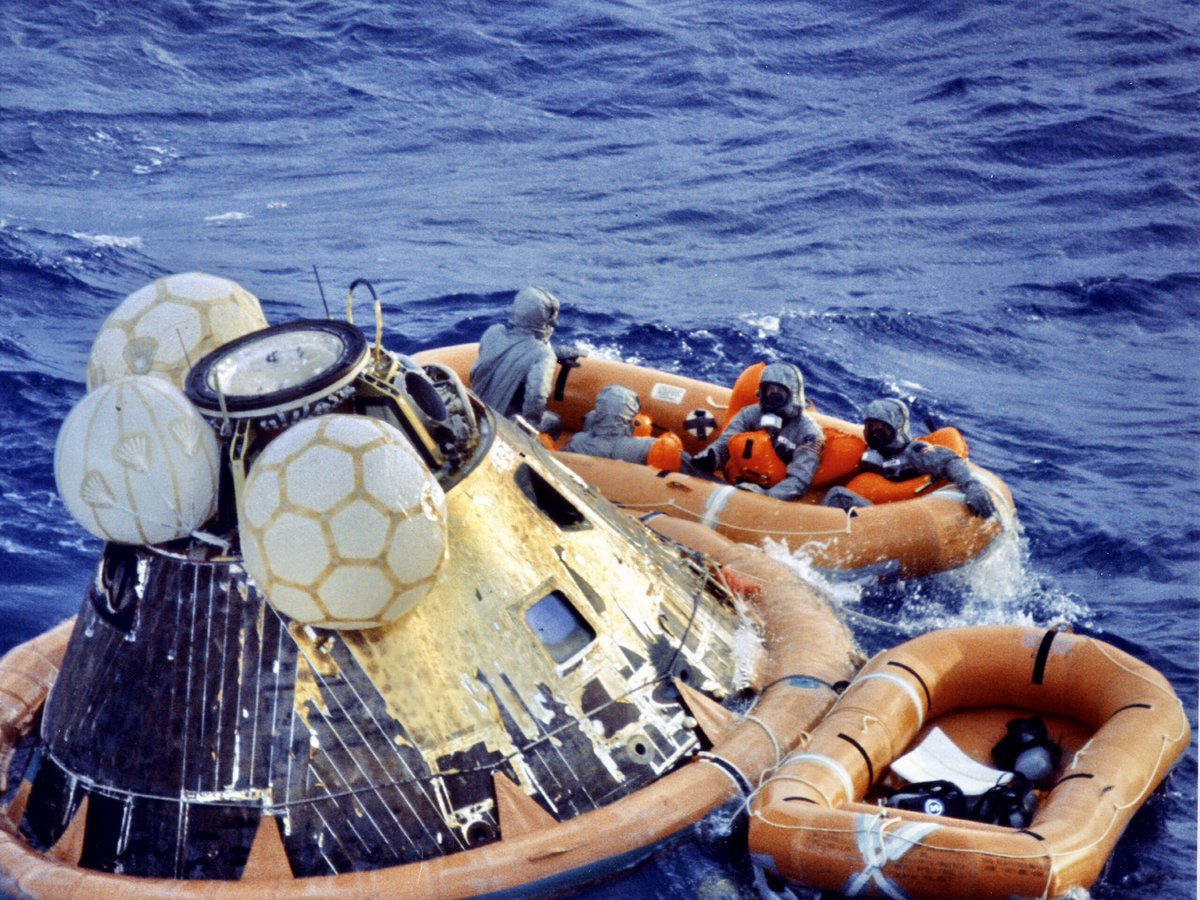
JULY 24: #OnThisDay in 1969, the Apollo 11 astronauts splashed down in the Pacific Ocean after an eight day expedition to the lunar surface and back.
The astronauts were recovered by US Navy Frogmen (UDT-11) Clancy Hatleberg, Wes Chesser, Mike Mallory, and John Wolfram.
Big news earlier today at @USNatArchives when Dr. Colleen Shogan, Archivist of the United States, announced plans to have the Emancipation Proclamation on permanant display in the Rotunda at the National Archives Museum.
https://t.co/gqbYRTxM2I
Note we rec’d this AM: “On https://t.co/16xiJMQjFB, we’ve started phasing in automated agents that use neural networks rather than rules.” Translation: Forget talking to an agent & solving your problem in ONE minute. The robot route took 30 min. to fix my problem.
After nine years of testing, @Wirecutter is confident this is the best air purifier to reduce airborne allergens such as pollen and smoke from wildfires.
https://t.co/T5KAFKX1kN