“Above all, do not lose your desire to walk.”
- Søren Kierkegaard
Søren Kierkegaard wrote these words in an 1847 letter to his ailing sister-in-law, emphasizing that walking was essential not only for physical health but also for mental clarity. The Danish philosopher, who was known for his daily walks through the streets of Copenhagen, believed that constant movement was one of the best remedies for existential anxiety and mental stagnation.
By saying he could walk away from even his heaviest thoughts, Kierkegaard portrayed walking as more than a simple distraction. He saw it as a powerful way to work through grief, anxiety, and life’s most difficult questions. His words remain a timeless reminder that physical movement can inspire emotional and intellectual progress, while remaining still can leave us feeling trapped.
@TLiterarian It’s taken me decades to get to it but now that I’m in, there is that lovely feeling of knowing I’ll have the company of a good book for (many) months ahead
@CovidSolidarit1 This is such a beautifully written and insightful piece. It uncovered so much that I hadn’t yet been able to put into words. Thank you for sharing.. lots to think on
Rare “Pincer Attack” Giant Wave Discovered - Western Australia.
A rare ocean phenomenon created a massive vertical water explosion off Australia’s southwest coast, recently.
Water spray reportedly reached up to 40 meters, even striking the filming drone.
The wave formation is extremely dangerous and visually so unusual that many viewers initially thought the footage was AI-generated.
Reported by ABC Australia, with comments from photographer Allen.
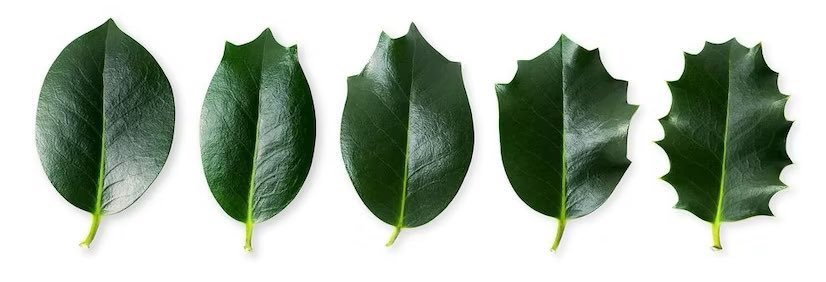
Five holly leaves from the same tree 🌳
If holly is allowed to grow into a tree it is highly likely to do the same
Holly evolved to fight back against the large herbivores that used to roam the Earth. The higher the tree grows the smoother the leaves get
Photo: Emmanuel Lattes
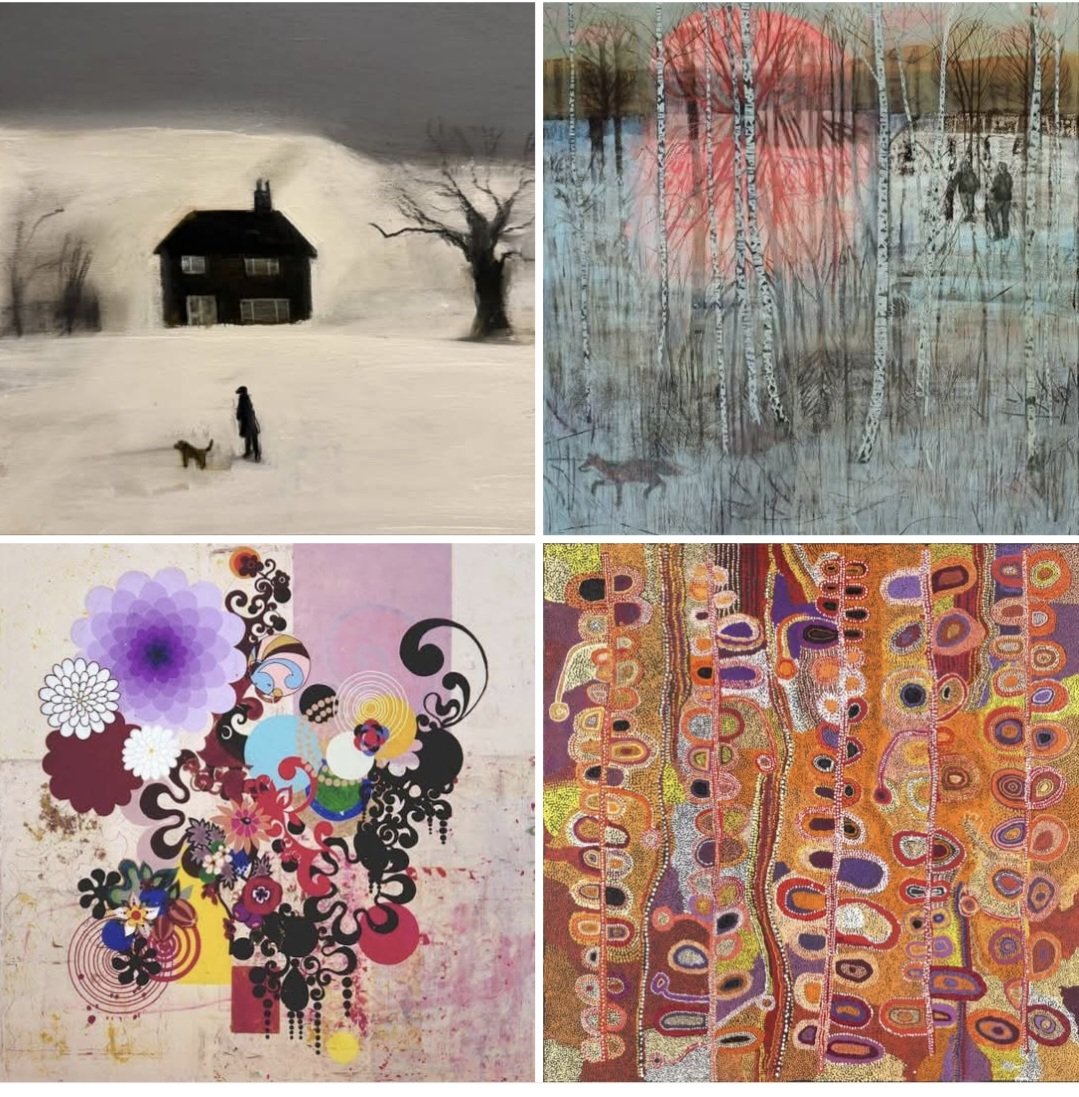
Winter/summer #Solstice in the Northern and Southern Hemispheres 🌎 🌏 🌍 Artworks by Sarah Evans, Dawn Stacey Wawiriya Burton and Beatriz Milhazes #WomensArt
🚨 Farewell to 3IATLAS: The Visitor That Defied Expectations
On December 19, 2025, 3IATLAS reached its closest approach to Earth within the solar system, marking a rare and closely watched cosmic event
After months of intense observation, the interstellar object is now drifting away yet the questions it raised remain unresolved
Data analyzed by Harvard astrophysicists, including Avi Loeb’s team reveal a combination of characteristics that defy conventional explanations for known celestial bodies
The trees were talking. And no one had been listening. For decades, foresters believed trees were competitors—silent giants fighting for sunlight, water, and space. Cut down the weak ones, they said, and the strong would thrive. But Dr. Suzanne Simard, a Canadian forest ecologist, suspected something else was happening beneath the soil. So she did an experiment that would change how we understand forests—and life itself.She discovered that trees aren't isolated individuals. They're part of a vast, intelligent, underground network—a "wood wide web" where they share resources, warn each other of danger, and care for their young.The forest, it turns out, isn't a battlefield. It's a community.Suzanne Simard grew up in the forests of British Columbia, Canada. Her family were loggers. She spent her childhood among towering trees, watching them fall and new ones planted in their place.She became a forester herself, working for the logging industry in the 1980s. But she noticed something disturbing: when forests were clear-cut and replanted with a single species—usually Douglas fir—the new trees struggled to survive.Foresters blamed the birch trees growing nearby. "They're competing for resources," they said. "Cut them down so the firs can grow."But Suzanne didn't think that made sense. In natural forests, birch and fir grew side by side, thriving together. Why would they compete in replanted forests but not in natural ones?So she designed an experiment to find out. In the early 1990s, Suzanne planted birch and fir seedlings in a forest plot. She covered some with plastic bags to isolate them from each other. Others, she left uncovered.Then she did something radical: she injected tiny amounts of radioactive carbon into the trees—different isotopes for birch and fir—so she could track where the carbon went.If the trees were truly isolated competitors, the carbon would stay inside each tree.But if they were connected somehow, the carbon would move between them.Suzanne waited. Then she used a Geiger counter to measure where the radioactive carbon had traveled.The results were stunning.The carbon didn't stay in one tree. It moved. From birch to fir. From fir to birch. Through the soil. Through their roots.But not directly. The trees were connected by mycorrhizal fungi—thread-like organisms that attach to tree roots and extend for miles underground.The fungi act as a living network, linking trees together. In exchange for sugars the trees produce through photosynthesis, the fungi provide trees with water and nutrients from deep in the soil.But Suzanne discovered something even more remarkable: the fungi weren't just passively transferring nutrients. The trees were actively sharing resources with each other. In summer, when birch trees had full leaves and were photosynthesizing, they sent carbon to the fir trees, which were shaded and struggling. In fall, when birch leaves fell and they could no longer photosynthesize, the fir trees—still green—sent carbon back to the birch to help them survive the winter.The trees were cooperating. Helping each other. Balancing the ecosystem.Suzanne called these networks "mycorrhizal networks"—and the largest, oldest trees in the forest became known as "mother trees" or "hub trees."These mother trees act as hubs in the network, connecting hundreds of younger trees. They send nutrients to struggling saplings. They share information about drought, disease, and insect attacks through chemical signals.When a mother tree is cut down, the entire network weakens. Younger trees lose their support system.Suzanne's research showed that clear-cutting forests—removing all trees and replanting a single species—destroys these networks. The new trees are isolated, vulnerable, and far less resilient.Her work was revolutionary—and controversial.Logging companies resisted her findings. Some scientists were skeptical. The idea that trees "communicate" and "help each other" sounded too anthropomorphic, too sentimental.
#Samhain blessings 💚
"May the warmth of the sun, nurture you;
The cool waters, cleanse you;
Nature's bounty, replenish you;
The song of the trees, comfort you;
The knowledge of the bees, guide you"
~ Stephen G. Rae
https://t.co/k1zQxEkAEv
#Halloween#Druids
@RAlbion66730@volcaholic1@Teawhalem We were as well - currently shivering in the temp drop after yesterday’s 40 degree furnace! The bright turquoise in the middle of the storm over the city was unlike anything I’d seen before.. the pre-hail sky before the golf ball sized hail!
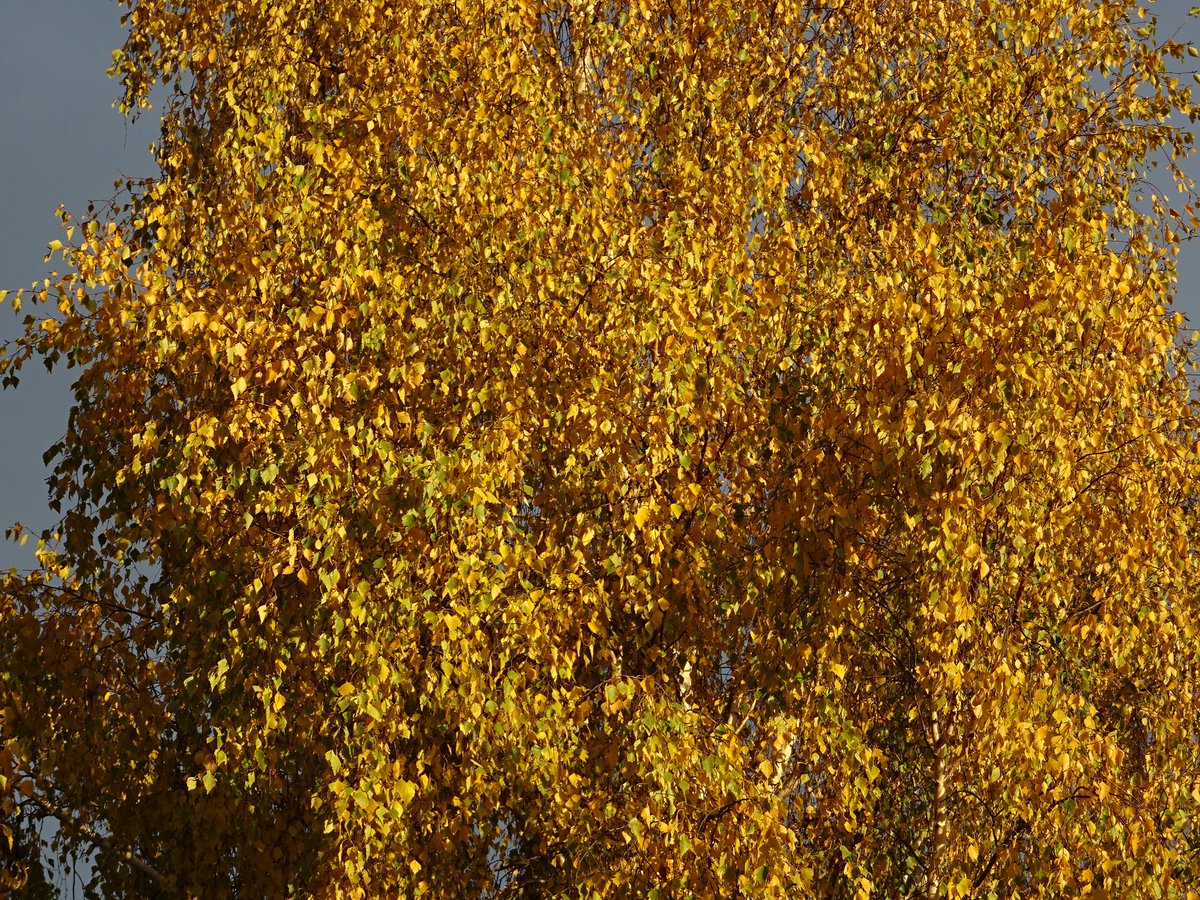
This is the time of year for a favourite Old English word: the leaves are 'fallowing', from the verb fealwian, 'to turn yellow-gold'. In Anglo-Saxon poetry fealo (fallow) is the pale golden shade of fire, linden shields, sword hilts and autumn leaves. They fallow, then they fall.