Mira Murati says human-AI collaboration needs models that can listen while they think:
"The types of models that we work with today, they're very turn-based. You talk, they talk, then they go off and think."
"While they're thinking, it's almost like they're deaf and blind. They cannot perceive anything else about what's going on."
"By contrast, our interactions with each other are very rich. There is a lot of information in our interactions when we are silent, when we're thinking, when we're interrupting one another."
"Interaction models are able to capture all of this nuance. They're not turn-based. They're more like time-based interaction, where they're continuously taking in audio, text, video, and continuously providing output."
"This enables you to catch things like interruptions and simultaneous speech, and really create a rich, high bandwidth interaction between humans and machines."
@miramurati at Bloomberg Tech live with @emilychangtv
@enjojoyy I think I might have a use case. Image generator loop. Set up the prompt generator , send to chosen image generator, audit the images and keep looping until all 500 images are completed .
#sorrynotsorry but shes being completely reasonable here. he’s insecure bc she’s a better writer than him, he blames her for taking up his time even though he CHOSE to homeschool daniel and start the renovation. his lack of time is bc of his own decisions
On Tuesday, June 9, we’ll announce the four astronauts who will orbit Earth aboard the @NASAArtemis III mission!
Watch our live event at 11 a.m. EDT (1500 UTC) to find out who will test the docking capabilities necessary for crewed Moon landings: https://t.co/TyU7StKGxH
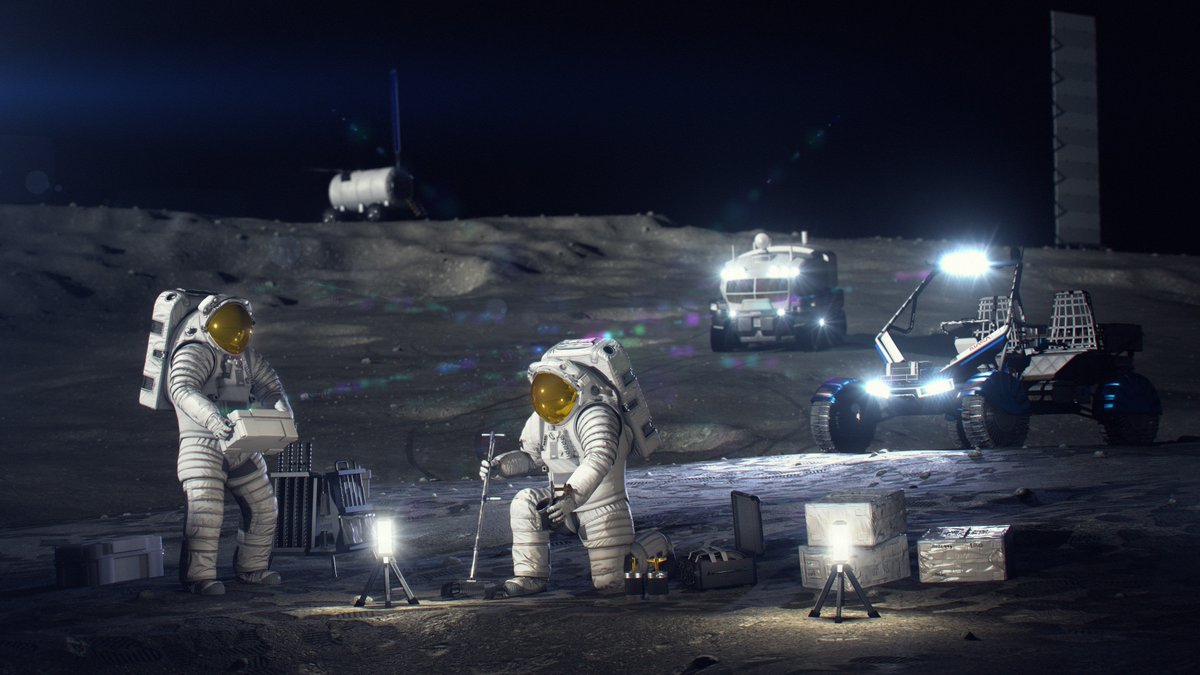
We're building a Moon Base!
@NASAMoonBase will serve as a habitat where astronauts live and work during long-term science missions.
Join us at 2pm ET on Tuesday, May 26, for a live news event where we’ll share updates on our lunar exploration plans: https://t.co/IJXA7xYwju
Gak habis pikir sama taktik gila founder Canva dulu. Demi dapet modal bisnis, dia nekat latihan selancar berbulan-bulan sampe babak belur cuma buat ngejar investor yang lagi liburan di pantai.
Nama ceweknya Melanie Perkins. Dulu pas masih kuliah di Australia, dia punya mimpi bikin platform desain yang gampang banget dipake semua orang. Pas dia nyari modal ke San Francisco, dia malah diketawain dan ditolak sama 100 lebih investor di sana karena idenya dianggap konyol.
Tapi bukannya nangis terus pulang kampung, si Melanie ini malah muter otak pake strategi gila yang gak masuk akal sehat. Dia denger info kalo ada investor raksasa yang lagi dia incar tuh hobinya main kitesurfing (selancar layang).
Karena dia gak punya akses buat ketemu di kantor, dia nekat latihan olahraga ekstrem itu berbulan-bulan sampe badannya babak belur dihantam ombak. Tujuan utamanya cuma satu, biar bisa ikutan nyebur ke laut dan dapet celah waktu buat presentasi pas si bos lagi istirahat di pinggir pantai.
Bener-bener taktik nyari modal paling ekstrem. Tapi gila, dedikasi nekatnya itu berhasil ngeluluhin hati para investor. Tahun 2013 Canva resmi rilis, dan sekarang malah sukses jadi aplikasi raksasa bernilai ratusan triliun.
Jadi buat lu yang tiap hari pake Canva buat bikin tugas atau revisi desain kerjaan, sungkem dulu sama kegigihan mbak Melanie yang ampir kelep di laut demi lu semua.
Seth Rogen calls out people who post AI slop:
“Every time I see a video that's like ‘Hollywood is cooked!’ What follows is like the most stupid dogshit I’ve ever seen in my life.”
(Source: BrutMedia)
Bong Joon-ho says he tried to make Parasite (2019) deeply specific to Korean culture, but audiences around the world all reacted the same way:
“Essentially, we all live in the same country, called Capitalism.”
Sandra Hüller on if she "feels the guilt" of Germany's past:
"Yes, I feel the guilt every day. And also I never get bored of it, to feel the guilt because it's necessary to act right." https://t.co/pLTs62rQIv
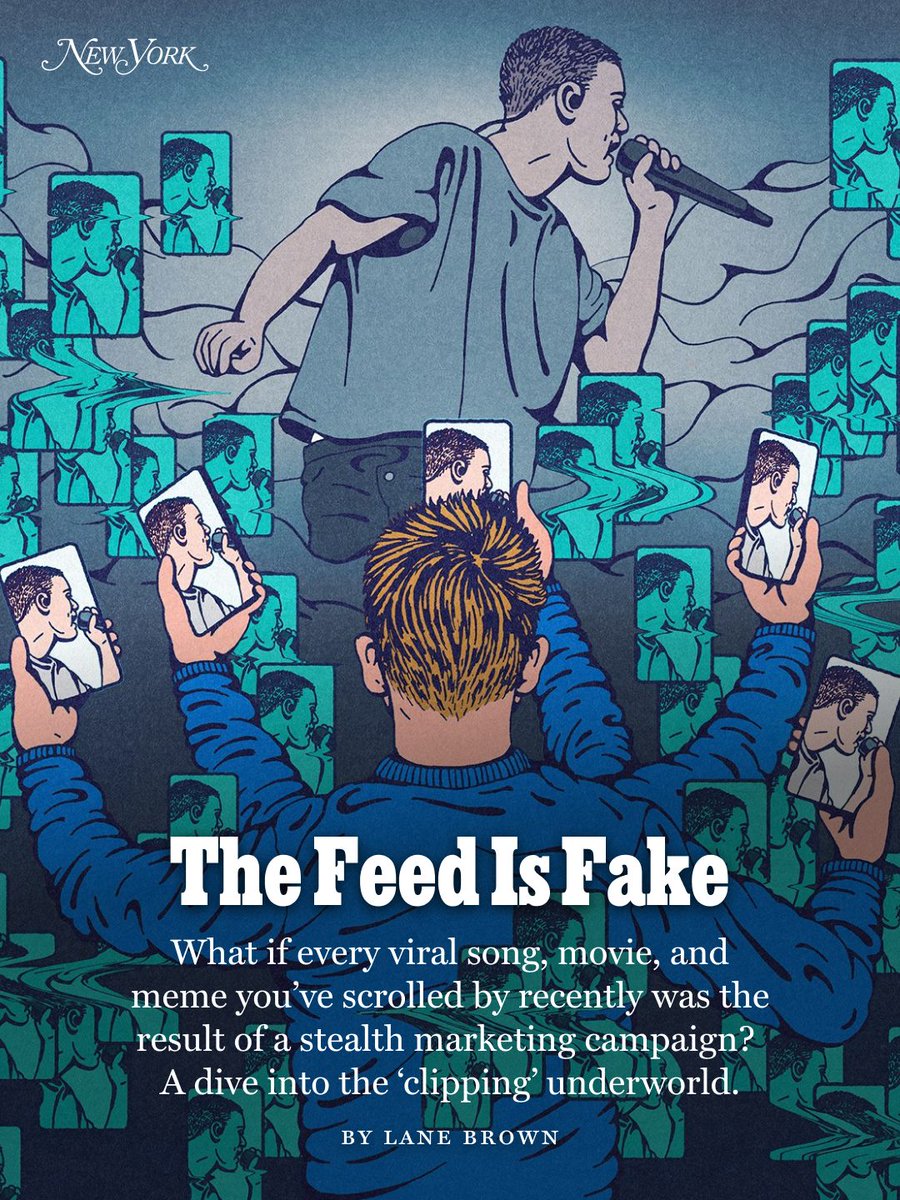
Joe Lim estimates that 90 percent of what you see on the internet is advertising in disguise, and he should know. For three years, Lim ran a company called Floodify, which at its peak operated 65,000 dummy social-media accounts used to drum up attention on behalf of paying clients.
The point of this kind of marketing is that nobody is supposed to notice it. But lately, the machinery has started to show.
In April, Justin Bieber headlined two consecutive weekends at Coachella. Coachella is the biggest stage in pop music save only for the Super Bowl, the kind of event that in theory generates its own attention. And yet on both weekends, a Discord server writer Lane Brown had been monitoring hosted paid campaigns for Bieber’s Coachella performances, offering clippers — people who are hired to turn a song, trailer, interview, stump speech, or whatever into short, social-media-friendly fragments — as much as a dollar per thousand views.
“On social media, popular opinion is being formed, measured, and manipulated all at once, and every signal the platforms produce — a trending song, a backlash, a talking point, the feeling that ‘everybody’ is suddenly talking about the same thing — can now be fabricated by unseen actors with hidden agendas,” writes Brown.
“Everybody is doing this now,” Lim says. “And if you’re not, you’re behind.”
Brown reports on how the same techniques are now being used to fool people on every app they go to in order to find out what other people think, not just in music but across entertainment, politics, consumer products, and celebrity gossip: https://t.co/hlcdfSmzPc
The Google Threat Intelligence Group has detected the first known instance of a threat actor using an AI-developed zero-day exploit in the wild. While the attackers planned a wide-scale strike, our proactive counter-discovery may have prevented that from happening. This finding is part of our new report on AI-powered threats.