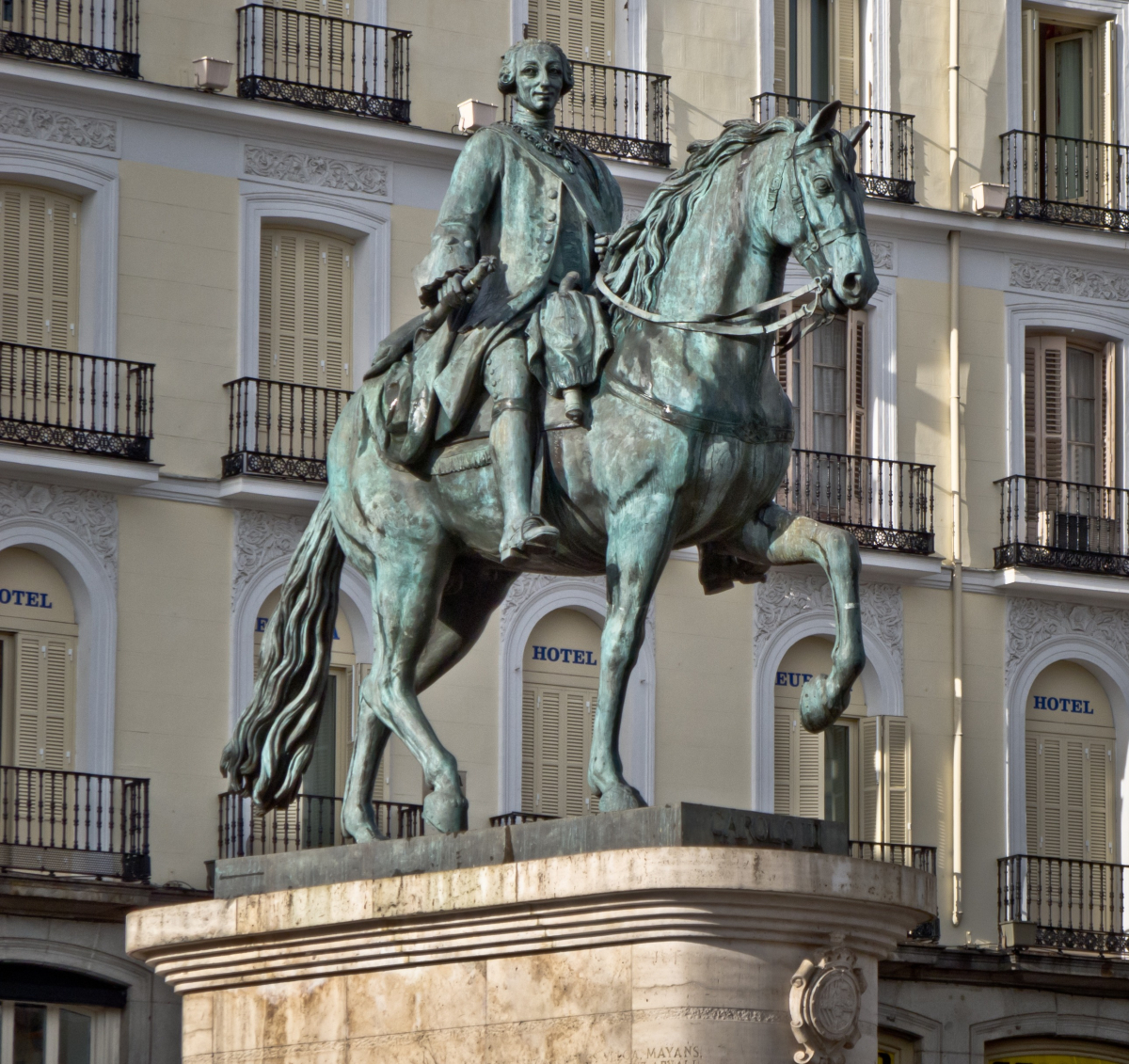
Protagonista del día: El Borbón ilustrado
Carlos III (1716-1788) nació en Madrid y era hijo de Felipe V y su segunda mujer, Isabel de Farnesio. Con apenas 15 años, se convirtió en duque de Parma y Plasencia gracias a su madre. Tres años después, te esta vez gracias a su padre, pasó ser rey de Nápoles y Sicilia. En este cargo estuvo entre 1734 y 1759, adquiriendo experiencia administrativa.
Después de su ascenso al trono español en 1759, enfrentó los efectos del Motín de Esquilache (1766), del que salió reforzado impulsando una etapa de reformas ilustradas sin desequilibrar el orden social. Ejecutó una reforma fiscal profunda —catastro, contribución única, recorte de privilegios—, reorganizó el ejército y la marina, y creó el Banco de San Carlos en 1782, precursor del Banco de España.
Impulsando infraestructura y modernización, potenció la industria con Reales Fábricas (porcelana, tapices, cristal), liberó el comercio colonial y promovió colonización interna con las Nuevas Poblaciones en zonas despobladas. Fortaleció la agricultura, liberando el mercado del grano y reprimiendo los privilegios de la Mesta. También a nivel interno es muy recordada la expulsión de los jesuitas de sus dominios.
Su mecenazgo cultural fue notable: fundó la Real Academia de Bellas Artes de San Fernando, apoyó las Sociedades Económicas de Amigos del País y modernizó la educación mediante las Reales Sociedades y los Estudios de San Isidro. Obras monumentales como la Puerta de Alcalá, el Museo del Prado, el Jardín Botánico, plazas emblemáticas y una red radial de carreteras, alumbrado y saneamiento transformaron Madrid y reforzaron la cohesión nacional.
En política exterior mantuvo la alianza con Francia, participó en la Guerra de los Siete Años y apoyó la independencia de EE.UU., recuperando Menorca. En 1779–83 España intervino en ofensivas contra los británicos, fortaleciendo su presencia en América y consolidándose como potencia global ilustrada.
Su reinado concluyó con la muerte en 1788. Carlos III fue el artífice del Estado moderno español y un gran monarca reformador. Sin embargo, su legado sería interrumpido por el estallido de la Revolución francesa y su impacto en España.
24 de septiembre 1624: fallece Pedro Téllez-Girón y Velasco ('el Grande'); Gran Duque de Osuna, Marqués de Peñafiel, Señor de Olvera, Conde de Ureña, Virrey y Capitán general de los Reinos de Sicilia y Nápoles, Grande de España 🇪🇦 y Caballero del Toisón de Oro.
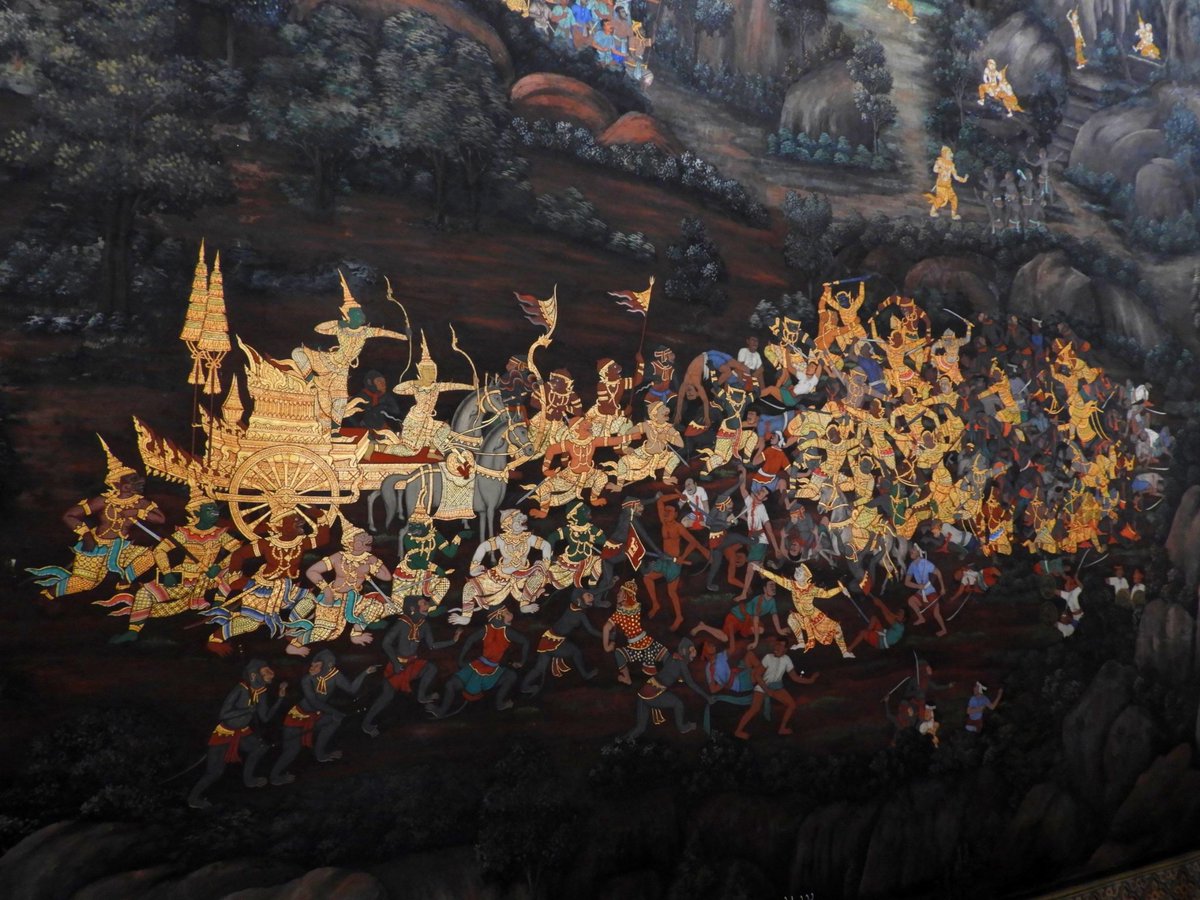
Rāma and Lakṣmaṇa ride a golden, Thai war chariot, aiming their bows at the enemy, while the Vanara Sena charges ahead against the Rakshasa forces sent by Ravana
Painting at a temple in Bangkok, depicting scenes from the Ramakien, Thailand's version of the Hindu epic Rāmāyaṇa
تورک خر که میگن یعنی همین!
الاغ!
کیرم تو دهن خودتو و پورپیرار!
ما از همون قرن فردوسی دستنویسی از کتاب الابنیه عن الحقایق الادویه داریم به خط اسدی توسی
اسدی کیه؟
شا��ر همشهری و تقریبا هم دوره فردوسی که تو دربار شاه نخجوان حماسه گرشاسب نامه رو به تقلید از شاهنامه نظم کرد!
Jatāyu fights Rāvaṇa who has abducted Sītā.
By I Ketut Gedé, in the Kamasan wayang painting style, a traditional Balinese (Indonesia) painting tradition. 1800s.
#TalDiaComoHoy de 768, en Saint Denis (Francia), muere Pipino el Breve. Fue el hijo menor de Carlos Martel y padre de Carlomagno. Sus cargos fueron: Mayordomo de palacio de Neustria con Borgoña y Provenza, Mayordomo de palacio de Austrasia y Rey de los francos
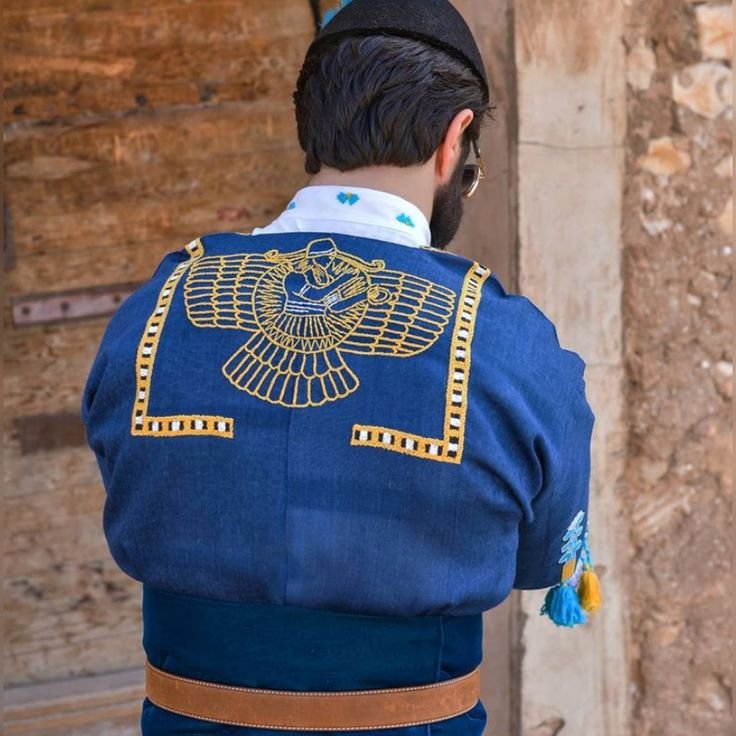
درباره درفش کاویانیِ ساسانیان ابهامات زیادی مطرح شده، سکههای ساسانی نشانی از آن ندارند و عمدتا آنرا از خلال منابع مکتوبِ پسااسلامی میشناسیم.
شواهد مادّیِ درفش عمدتا سکههایی در دوره سلوکی -متعلق به فرترکههای فارس- هستند. استاد خالقیمطلق هم منشاء آنرا فرترکهها دانستهاند.
هویت ایرانی
تو شاهنامه یه شخصیت داریم به اسم «شماخ» شاه سوریان(آشوریان)
توصیفش اینه:
چو شماخ سوری شه سوریان
کجا رزم را بود بسته میان
این شخصیت تو داستان جنگ بزرگ کیخسرو معرفی میشه بعنوان یکی از شهرب ها و متحدان ایرانشهر بعد از معرفی شاه پارس و شاه خوزی(ایلامی) در مقابل تورانیان
Don’t be deceived by the Islamic Republic’s diplomatic delegation. This is one of the regime’s tactics. Figures such as Araghchi and the negotiating team pretend that they want to reach an agreement with the United States but are being prevented from doing so by IRGC commanders. This is a lie.
They are trying to play good cop, bad cop, when in reality they are two wings of the same sinister force. Their tactic is to confuse you into believing that you can negotiate and reach an agreement with one faction of the regime if you strengthen it against another. That is the deception the Islamic Republic is trying to sell you.
All officials and power centers of the Islamic Republic are driven by apocalyptic thinking. This regime must fall.
@SecRubio@realDonaldTrump@WhiteHouse@marklevinshow@LauraLoomer@SenTomCotton@tedcruz
بخشی از سخنان محمدعلی شاه قاجار:
"رعیت را چه به آزادی!
به جهنم که نان ندارید
کار ندارید، سرپناه ندارید
آب ندارید، به جهنم که جوانانمان درگیر افیویند
به جهنم که زنان تن فروشی میکنند
همینکه سایهمان بر سر شما رعیت است کافیست
رعیت گوسفند و ما شبانیم..."
ابلهانی مثل محمدعلی، پادشاه سرزمینی به این بزرگی و مهمی بودند.
#پاينده_ایرانشهر
"من أغرب نصوص الفأل والنبؤة البابلية: يتحدث عن فترة تسودها الفوضى، وأخوة يقتلون بعضهم، وأبناؤهم يتبرأون من أهلهم، وآلام تسحق الأبرياء، والغرباء يدخلون الحكم، لكنهم لا يلبثون إلا أن يسقطوا… وكأنه يتحدث عن زماننا اليوم
فيقول نص الفال
(( سوف يأتي اليوم على بابل: يقتل الأخ أخاه، ويتبرأ الإبن من أباه، وآلام تذبح فؤادها. وتموت الأسود دفاعا عن أسوار المدينة، ويدخلها الغريب ملكًا، لكن سرعان ما يخرج مقتولًا؛ فبابل لا يحكمها إلا أبناؤها."))
"Among the most striking Babylonian omen and divination texts is one that describes a period of chaos: brothers killing one another, sons disowning their fathers, suffering that crushes the innocent, and foreigners seizing power��only to fall soon afterward… It almost seems as though it is describing our own time today.
The omen text states:
‘A day will come upon Babylon when brother will kill brother, and the son will disown his father. Sorrows will slaughter the heart. Lions will die defending the walls of the city, and a stranger will enter it as king, but he will soon depart from it slain; for Babylon shall be ruled only by her own sons.’"
داستانهای ایرانشهر، داستانهای شگفتانگیزی هستند که سرشار از پند و اندرز میباشند. تو گویی که این داستانها برای همهی دورانهاست. اما در این میان داستان «بردیا ی دروغین» خود سرگذشتی بیمانند دارد.
داستان از آنجا آغاز میگردد که در زمان باشندگی کمبوجیه در مصر، شخصی به نام گئومات که خود را بردیا جا زده بود، تخت شاهنشاهی ایرانزمین را با نیرنگی اهریمنی، از برای خود کرد و بر تخت نشست. کمبوجیه برای سامان دادن به قلمروی نوین خود، در آن هنگام در مصر بسر میبرد. او در راه بازگشت به ایرانزمین درگذشت و فروهرشاد شد.
داریوش بزرگ که در آن هنگام از نزدیکان و نیزهدار کمبوجیه در مصر بود، از رخدادهای پایتخت آگاه شد و متوجه نیرنگ بردیای دروغین گشت، زیرا که او به نیکی میدانست که بردیایی وجود ندارد. او شتابان به سوی پایتخت حرکت کرد تا جلوی این نیرنگ و بیدادگری را بگیرد.
داریوش بزرگ با شش تن از بزرگان و همپیمانان آریاییاش هماندیشی کرد و با یورش به دژ گئومات، او را از میان برداشتند. پس از آن و با هم اندیشی بزرگان و مِهان، داریوش بزرگ به عنوان شخصیتی نیرومند، فرهمند و شایسته بر تخت شاهنشاهی ایرانزمین نشست.
داریوش بزرگ پس از این رخدادها، داستان پیروزیهایش را در سنگنبشته بیستون به یادگار گذاشت. او همچنین در کتیبهای دیگر در تخت جمشید، نیایش جاودانهی خود را برای نگهداری از این سرزمین اهورایی و همچنین بیزاری خود از دروج را چنین هک کرد، «اهورامزاد این سرزمین را از دروج، دشمن و خشکسالی بپاید» و این پند را تا ابد جاودانه کرد و برای ما به یادگار گذاشت.
براستی که بر سر میز قدرت نشستن، مردانی از سرشت داریوش و کوروش و اردشیر میخواهد که بتوانند کشور را سامان دهن��، نه نیرنگبازان و دقلکارانی با ذات بردیا ی دروغین.
این داستان نیز به ما پندی ارزنده میآموزاند، که دروج هیچگاه پیروز نخواهد شد، پردهها خواهند افتاد، ماه از پشت ابر نمایان خواهد گشت و چهره بردیای دروغین نیز آشکار خواهد شد.
و من همچنان باور به پیروزی راستی و درستی بر دیو دروج دارم.
مَسُ وَهوُ پیروزگر باد، مِینوی مِهر ایرانزمین،
مَسُ وَهوُ پیروزگر باد، مردم آریایی،
به ایرانشهر و آتش ورجاوند، بزرگترین آتشها و بسوی ایزدان ایرانشهر باز میگردیم🔥
رضا مهربانی
نخستین روز ماه مهر ۸۵۸۵
یزش میبریم بر ایزد میترا، ایزد پیمان و بادافره پیمان شکن.
پایند�� ایران
#جاویدشاه
#بیداری_آریایی
🔥
💎
Tigranes and the Armenians in Xenophon’s Cyropaedia
Tigranes is not confined to a single episode in Xenophon’s Cyropaedia (370 BC). He appears repeatedly from Book III through Book VIII, while Armenians and Armenia remain part of the narrative for a considerable portion of Cyrus’ campaigns.
A useful list of the principal passages mentioning Tigranes is:
III.1.7, 14–15, 20, 23, 27–28, 36–41; III.2.1–3, 11; III.3.5; IV.2.9, 18, 43; IV.5.4, 35; V.1.27; V.3.42; VI.1.21; VIII.3.25; VIII.4.1, 24.
II.4 — Cyrus prepares to march against Armenia
Before Tigranes appears directly, Xenophon describes Cyrus’ preparations for a campaign against the Armenian king.
The Armenian king had previously been subject to Cyaxares and was expected to provide troops and tribute. But when he learned that an enemy army was approaching, he neither sent the required troops nor paid the tribute.
Cyaxares considers whether it would be better to force the Armenian king into obedience or avoid creating another enemy. Cyrus proposes to march against him, hoping not only to compel him to send troops and pay tribute, but eventually to make him a better ally.
Cyrus also points out that the Armenian king's sons had previously hunted with him and might therefore be useful in the campaign.
Cyrus then approaches the Armenian frontier under the pretext of going hunting. His military preparations are deliberately concealed as a hunting expedition.
He also orders his soldiers not to harm the Armenians. If the inhabitants wish to sell food and drink, they are to be allowed to do so; Cyrus wants his men to buy provisions rather than plunder the population.
III.1 — Tigranes defends his father
This is the central Tigranes episode.
The Armenian king has been defeated and captured. Tigranes, his eldest son and a former companion of Cyrus in hunting, returns and discovers that his father, mother, brother, sisters, and wife have all been captured.
Tigranes is overcome with emotion. Cyrus tells him that he has arrived at precisely the right moment: he can be present at his father's trial.
III.1.14–15
Tigranes asks Cyrus whether he may advise him concerning his father.
Cyrus agrees.
Tigranes argues that if Cyrus considers his father's actions wrong, he should nevertheless consider whether punishment is the wisest course. He tries to persuade Cyrus that his father may still become a valuable ally if he has learned from his defeat.
The conversation develops into a philosophical discussion about justice, punishment, fear, obedience, and the proper use of power.
III.1.16–24
Tigranes argues that killing his father could ultimately harm Cyrus himself.
A defeated enemy, he suggests, can become useful if he recognizes his weakness and learns moderation. Someone who has merely been defeated by force may seek revenge later; someone who has understood the superiority of his opponent may voluntarily submit.
For Tigranes, the most important lesson of the campaign is that his father has learned that Cyrus is stronger than he is.
III.1.27–28
Tigranes continues to explain why his father has already suffered a severe punishment.
The Armenian king has discovered that Cyrus could deceive him when necessary, move faster than him, and turn his own fortifications into traps.
His defeat has therefore taught him that resistance against Cyrus is futile.
III.1.36–40 — Tigranes' wife and his teacher
Cyrus asks Tigranes how much he would be willing to pay for his wife's freedom.
Tigranes replies that he would give his own life to save her from slavery.
Cyrus releases her.
Cyrus then asks about a wise teacher whom Tigranes once greatly respected.
Tigranes explains that his father had killed the teacher because he believed the man was corrupting his son.
According to Tigranes, the teacher had urged him not to hate his father, saying that his father had acted out of ignorance rather than deliberate wickedness.
Cyrus expresses regret over the man's death and encourages Tigranes to forgive his father.
III.1.41–43 — Tigranes and his wife
After returning home, everyone praises Cyrus for his wisdom, strength, composure, and appearance.
Tigranes asks his wife whether she also thought Cyrus handsome.
She replies that she had not even looked at Cyrus.
When Tigranes asks whom she had been looking at, she answers that she had been looking at the man who said he would give his own life to save her from slavery.
The following day, the Armenian king sends gifts to Cyrus and orders his troops to prepare for service.
Cyrus asks who will command the Armenian forces — the king or his son.
Tigranes replies that he will not leave Cyrus, even if he has to serve as his baggage carrier.
Thus Tigranes chooses to accompany Cyrus personally.
III.2 — Tigranes commands Armenian troops
Tigranes becomes much more than a royal hostage or advocate for his father.
He now acts as a military leader.
He explains to Cyrus where the Chaldaeans come from when they raid Armenia and where their defensive positions are located.
The next morning Tigranes appears fully armed.
He commands a force consisting of approximately:
4,000 cavalry
10,000 archers
10,000 light infantry
Tigranes leads these Armenian troops during the campaign against the Chaldaeans.
At one point he warns Cyrus that the Armenians will not be able to withstand the enemy's attack.
Cyrus explains that this is precisely what he intends: the Armenians will make a controlled withdrawal, drawing the Chaldaeans into a position where Cyrus' forces can attack them.
The plan succeeds, and Cyrus captures the Chaldaean mountain positions.
III.2.11
Cyrus asks Tigranes to summon his father and have him provide craftsmen — including carpenters and stoneworkers — to strengthen the newly captured fortress.
Cyrus also tells the Chaldaean prisoners that he has not come to destroy them, but to establish peace between the Chaldaeans and the Armenians.
III.3 — The Armenians welcome Cyrus
The Armenian king and the Chaldaeans send representatives to Cyrus.
Cyrus now has his own forces, Armenian auxiliary troops, and approximately 4,000 Chaldaeans with him.
When Cyrus reaches the inhabited parts of Armenia, the population comes out to meet him.
Men and women leave their homes because they are pleased that peace has been restored.
The Armenian queen also comes with her daughters and younger son, bringing gifts.
Cyrus tells the queen to use the money for her son's equipment rather than simply keeping it stored away.
III.3.4–5
The Armenian king accompanies Cyrus on his journey.
The people praise Cyrus as their benefactor and a brave hero.
The Armenian king increases the number of auxiliary troops he provides to Cyrus.
Cyrus then sends his army and money to Cyaxares.
He himself goes hunting with:
Tigranes and the best of the Persians.
This is the last major Armenian episode of Book III.
IV.2 — Tigranes within Cyrus' multinational army
Tigranes now appears as a regular ally and military commander within Cyrus' expanding army.
IV.2.9
The Persians join Cyrus, and:
Tigranes also joins him with his own troops.
The Armenian contingent is therefore now integrated into Cyrus' larger multinational force.
IV.2.18
Tigranes and other commanders approach Cyrus and ask what they should do concerning the Hyrcanians.
Cyrus gives them instructions on how to respond depending on whether the newcomers arrive peacefully or as armed enemies.
IV.2.43
When Cyrus discusses the distribution of captured wealth, he entrusts the task to several of his trusted allies, including:
the Medes, the Hyrcanians, and Tigranes.
Tigranes is therefore treated as one of the trusted leaders within Cyrus' coalition.
IV.5 — Tigranes and his troops
IV.5.4
After a battle, the Medes, Tigranes, and his men wash away the blood, change their clothes, and sit down to eat.
IV.5.35
Before another military operation, Tigranes' men are already fully armed alongside the Medes, Hyrcanians, and Persians.
Tigranes' Armenian contingent has therefore become a permanent military component of Cyrus' forces.
V.1 — Tigranes' loyalty to Cyrus
Tigranes is now presented as an experienced ally of Cyrus.
When the allies discuss their future relationship with Cyrus, Tigranes indicates that he has learned to obey Cyrus' commands rather than constantly offer advice.
His role has changed dramatically from the young prince defending his father to a commander who is prepared to follow Cyrus on campaign.
V.3.42 — Tigranes commands Armenian cavalry
Cyrus organizes the order of march for a night operation.
Among the commanders named is:
Tigranes, with his cavalry.
This is a particularly clear indication that Tigranes commands his own Armenian cavalry contingent within Cyrus' army.
VI.1.21 — Tigranes contributes to military equipment
During preparations for siege warfare, several of Cyrus' allies contribute resources toward the construction of siege machines.
Cyaxares finances one machine, Gobryas and Gadatas another, while:
Tigranes undertakes to provide another.
Tigranes therefore contributes not only soldiers but also his own resources to Cyrus' military operations.
VIII.3.25 — Tigranes wins among the Armenians
This is one of the most interesting later references.
Cyrus organizes competitions among the cavalrymen of different peoples.
The winners include representatives of several nations.
Among the Armenians, the winner is:
Tigranes.
Thus Tigranes is not merely a commander; he is also presented as the outstanding horseman among the Armenians in this competition.
VIII.4.1 — Tigranes at Cyrus' royal banquet
Cyrus holds a banquet for his trusted companions.
Among those invited are:
Tigranes the Armenian, Gobryas, and other prominent allies.
This is particularly significant because Tigranes is explicitly identified as “the Armenian.”
By this point he belongs to Cyrus' close circle of distinguished allies.
VIII.4.24 — Cyrus rewards Tigranes' wife
At the end of the banquet, Cyrus distributes gifts.
He gives Tigranes jewelry and fine clothing to take home to his wife, in recognition of the courage she had shown by accompanying her husband during the campaigns.
Thus the woman who first appeared as a captive in Book III ultimately becomes one of the people honored by Cyrus.
Buste de femme en bronze plaqué d’argent retrouvé à Niederbronn et conservé au musée archéologique de Strasbourg en Alsace ( milieu du IIe s. ap. J.-C.).