Quick heads-up:
I am taking a 2 week pause from game dev.
Work and family need my full focus right now.
Still here.
DMs are still open, and development will continue in 2 weeks.
The dev pipeline is finally fully moved over to the new station, tested, and all 23 migration-related bugs are fixed.
Now it is time to focus on changes based on the friends and family playtest feedback.
#gamedev#solodev#devlog
@LazyDevNL Understandable.
I am not much of an artist either, and I usually struggle with the final visual pass too.
What helps me most is staying open to iteration.
Let it breathe, keep adjusting things, and trust the process.
If you ever want a second opinion, feel free to DM me.
@IndieEcho Not even specifically a mentor.
Sometimes it is enough to have someone genuinely interested in your project, even if they are not a gamedev.
Being able to ping-pong ideas with someone can help a lot when you get stuck.
100 followers!
Thank you for following EXITRUN and BYTECRUNCH this early.
Still a long road ahead, but I appreciate every bit of support.
#gamedev#indiedev
Harsh, but there is definitely some truth to it.
A lot of projects start with a strong idea and the assumption that the weak spots will sort themselves out along the way.
Usually they do not.
That gets even worse when you are the only one looking at the project.
That is why every dev needs someone to ping-pong ideas with.
Even a bad idea can lead to a better solution.
People genuinely interested in your project are more valuable than gold.
@LazyDevNL Thank you!
I’m getting close to the end of the current UI phase, and soon I’ll be moving into another batch of systems.
They are a lot more intertwined, so they will be harder to present on X.
So let’s hope the growth continues.
Configs, plugins, references.
Always ready to throw a curveball.
Moving the whole dev pipeline from one station to another is a pain.
Even worse, I had to do it mid-project.
It is what it is. 🫤
#gamedev#solodev#devlog
I took an approach where a lot of development time went into modular, scalable systems that would later serve as a kind of framework.
Nothing genre-specific, mostly data structure, naming, reusable logic, and groundwork.
The idea was to make the next project easier to kickstart, reduce workload, and keep things maintainable long term.
I am testing that approach on my first commercial project, EXITRUN, right now.
It is still early to judge, but so far it looks like it has already saved a lot of work.
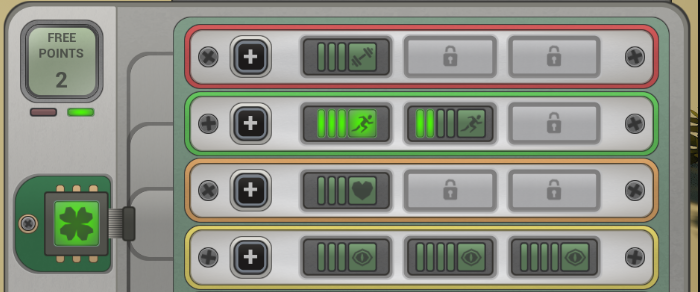
Some talent sections are not available from the start.
They have to be unlocked by finding specific items and bringing them back to the hideout.
Once unlocked, they stay on that profile permanently, even if the current survivor dies.