I'm making a wiki: https://t.co/5kdHbJregl
First, I'm loading my thesis into Metalogic, and so far you can see full detail in Ch.1: Span categories.
Second, I'll be making Logic: the story and language of category theory in three parts: Binary Logic, Matrix Logic, and Active Logic.
Research is for making a plan to systematize category theory in the 3D language of metalogic. (It will take a lot of collaboration to map out such a big project.)
Development is for the next steps toward an education and research program based on Color Logic. (Top priority: a drawing app! If you know someone who could help, let me know.)
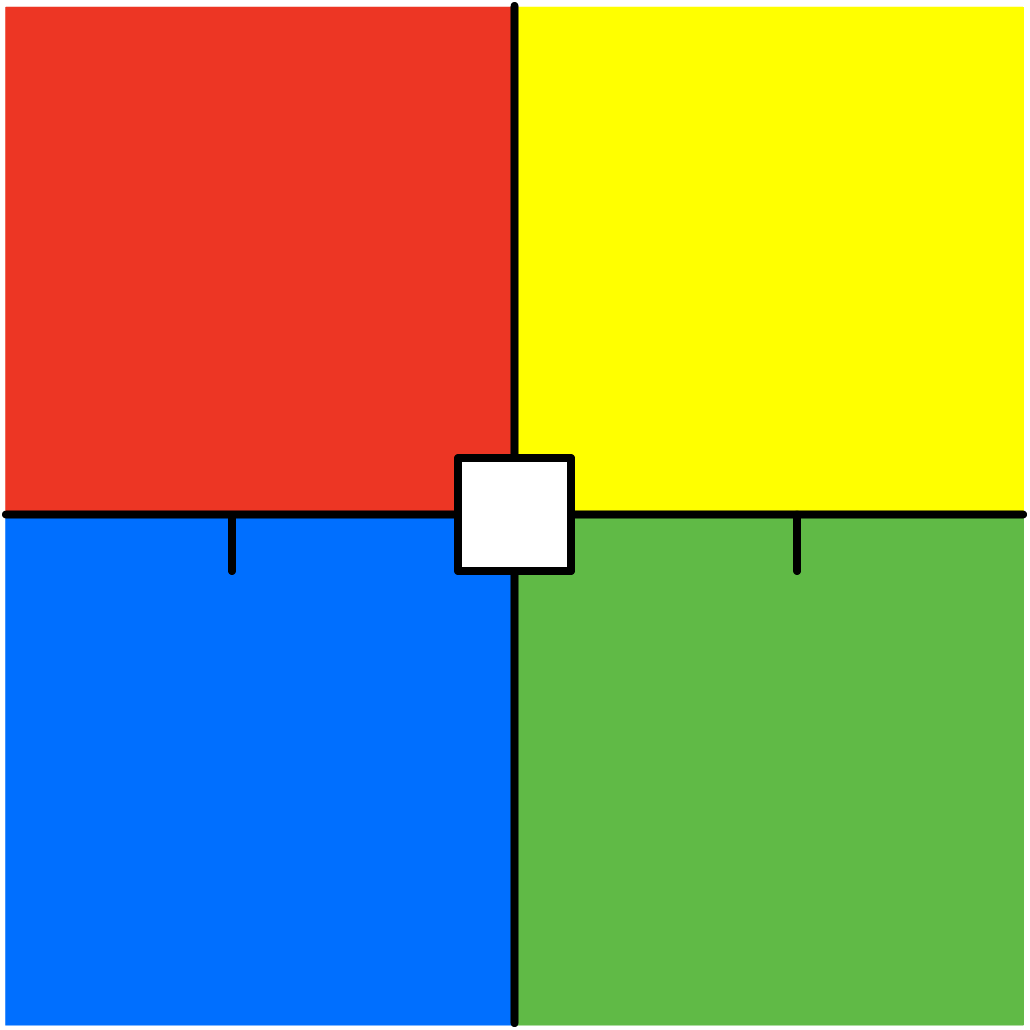
COLOR LOGIC
Colors are types, and pointers are processes.
This is a world.
Strings are relations, and beads are inferences.
This is a way of thinking about the world.
Processes compose in the world, while inferences compose in sequence.
Relations compose in thought, while inferences compose in parallel.
A logic is a system of these beads, which we compose to build and connect ideas.
@Bocse@mihaimaruseac@cosmicfibretion The string diagrams are drawn in Notability on an iPad. It's been enough for the thesis, but to scale this project we need a better drawing app.
The colored text is regular LaTeX, {\color{Red}x}.
The current drawing app Notability is decent but not enough. One example: math syntax displays *behind* everything else, so I make the colors with highlighter; but this makes the images render wrong (like dark/negative) on some devices/platforms.
So, a better app is needed.
@tangled_zans I think so, but I'm not yet familiar with the notation + terminology. What's the general idea of the definition? Also why are they called "monoidal morphisms"?
@MSpondee Hm okay, well this sounds like some kind of double weighted colimit, and if so then the co/descent calculus has an explicit formula for its construction.
Here is my thesis: Logic in 2D, Metalogic in 3D
https://t.co/il8PY9Jzj9
and here is a recorded presentation:
https://t.co/t8OpCDnZ7E
I think I got lucky and discovered a unified visual language of thinking. To me it is mind-blowing; and if you think so too, then let's meet.
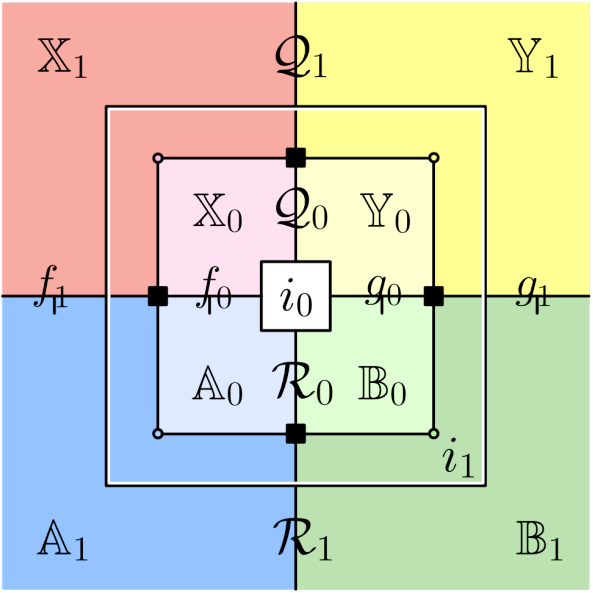
(I chose a low-res image on accident. See new post.)
It's all rough and undeveloped, as I only recently grasped the whole idea - but that's why I just want to share it now and connect with people, because it will be much better together.
@tangled_zans Yes, the key duality is the end of Ch2 - Matrix Categories: Descent. Matrix profunctors are 2-profunctors, whose language is the co/descent calculus. Just like "exists + forall" and "coend + end", composition is dual to transformation. This is what makes metalogic higher-order.
@UlyssesPascal Yes, the language of monoidal categories generalizes to that of double categories. The ZX-calculus is for compact closed mon-cats, so once we generalize this to cc dbl-cats, then zx will be contained in this language - as well as *maps* between "zx-calculi".
@evanewashington@mattecapu@DavidCorfield8 @codydroux @myers_jaz Dbl cats are logics: dim V is process (function) and dim H is relation.
Trp cats are metalogics: dim V is "metaprocess" (V-profunctors containing hetero-processes) and dim H is "metarelation" (H-profunctors), while dim T is transformation of inference (double functors).