Gm,
I've been onchain for years without ever really showing up here. Time to fix that.
Nothing changes on my end, I'll keep building crypto tools and projects for the community, except now you get to watch it happen.
Some of the best ideas will live in a studio I'm putting together to give the strongest ones a place to grow.
This industry got me hooked years ago and never let go. Might as well make it public.
The Arc Brand Guidelines and Partner Toolkit is live.
For teams building on Arc or preparing partner materials, the toolkit includes guidance on logo usage, naming, example applications, and approvals.
Your brand leads. Arc is the infrastructure.
Explore the toolkit: https://t.co/SafKFNxThh
Arc Public Testnet is now live.
Open to developers and enterprises globally, Arc is the Economic OS for the internet that unites programmable money and onchain innovation with real-world economic activity.
Start building: https://t.co/XmFdy0SG5g
Learn more: https://t.co/JOGsf9Ma5V
Now that ZKEVMs are at alpha stage (production-quality performance, remaining work is safety) and PeerDAS is live on mainnet, it's time to talk more about what this combination means for Ethereum.
These are not minor improvements; they are shifting Ethereum into being a fundamentally new and more powerful kind of decentralized network.
To see why, let's look at the two major types of p2p network so far:
BitTorrent (2000): huge total bandwidth, highly decentralized, no consensus
Bitcoin (2009): highly decentralized, consensus, but low bandwidth - because it’s not “distributed” in the sense of work being split up, it’s *replicated*
Now, Ethereum with PeerDAS (2025) and ZK-EVMs (expect small portions of the network using it in 2026), we get: decentralized, consensus and high bandwidth
The trilemma has been solved - not on paper, but with live running code, of which one half (data availability sampling) is *on mainnet today*, and the other half (ZK-EVMs) is *production-quality on performance today* - safety is what remains.
This was a 10-year journey (see the first commit of my original post on DAS here: https://t.co/Fa0jKFgObW , and ZK-EVM attempts started in ~2020), but it's finally here.
Over the next ~4 years, expect to see the full extent of this vision roll out:
* In 2026, large non-ZKEVM-dependent gas limit increases due to BALs and ePBS, and we'll see the first opportunities to run a ZKEVM node
* In 2026-28, gas repricings, changes to state structure, exec payload going into blobs, and other adjustments to make higher gas limits safe
* In 2027-30, large further gas limit increases, as ZKEVM becomes the primary way to validate blocks on the network
A third piece of this is distributed block building.
A long-term ideal holy grail is to get to a future where the full block is *never* constituted in one single place. This will not be necessary for a long time, but IMO it is worth striving for us at least have the capability to do that.
Even before that point, we want the meaningful authority in block building to be as distributed as possible. This can be done either in-protocol (eg. maybe we figure out how to expand FOCIL to make it a primary channel for txs), or out-of-protocol with distributed builder marketplaces. This reduces risk of centralized interference with real-time transaction inclusion, AND it creates a better environment for geographical fairness.
Onward.
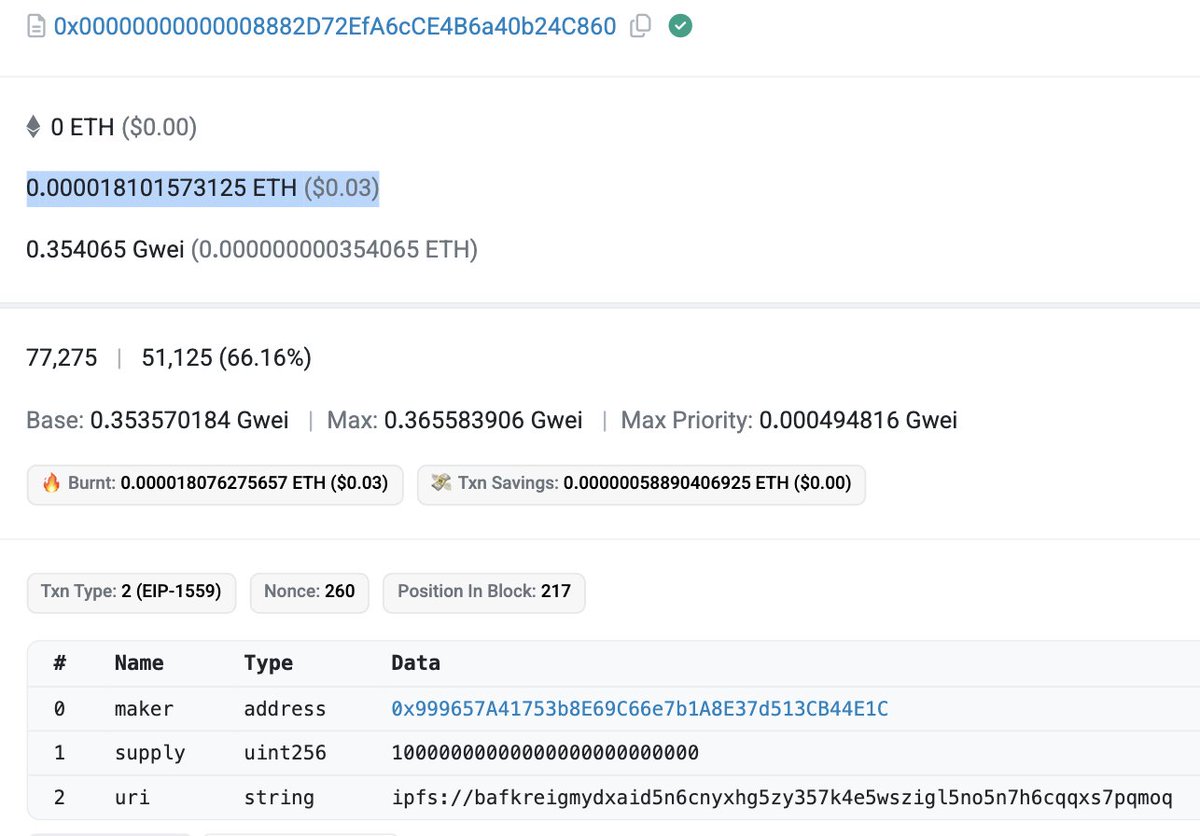
I just made an Ethereum token for $0.03. Cost is Absolutely No Barrier anymore to Creating L1 Assets.
Spent a lot of time figuring this out. And I think it's ready.
Included:
> ipfs hash
> AMM hook
> no-approvals
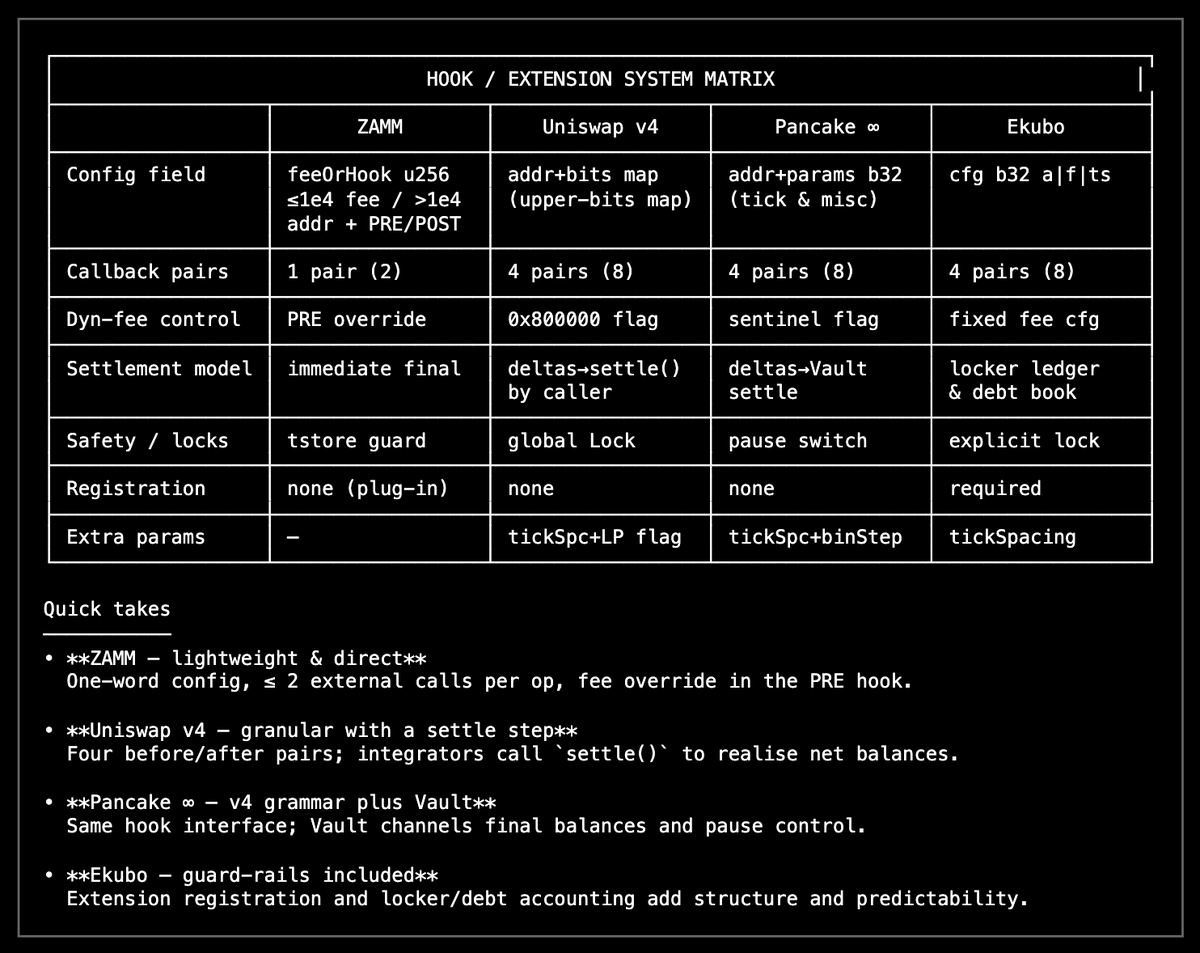
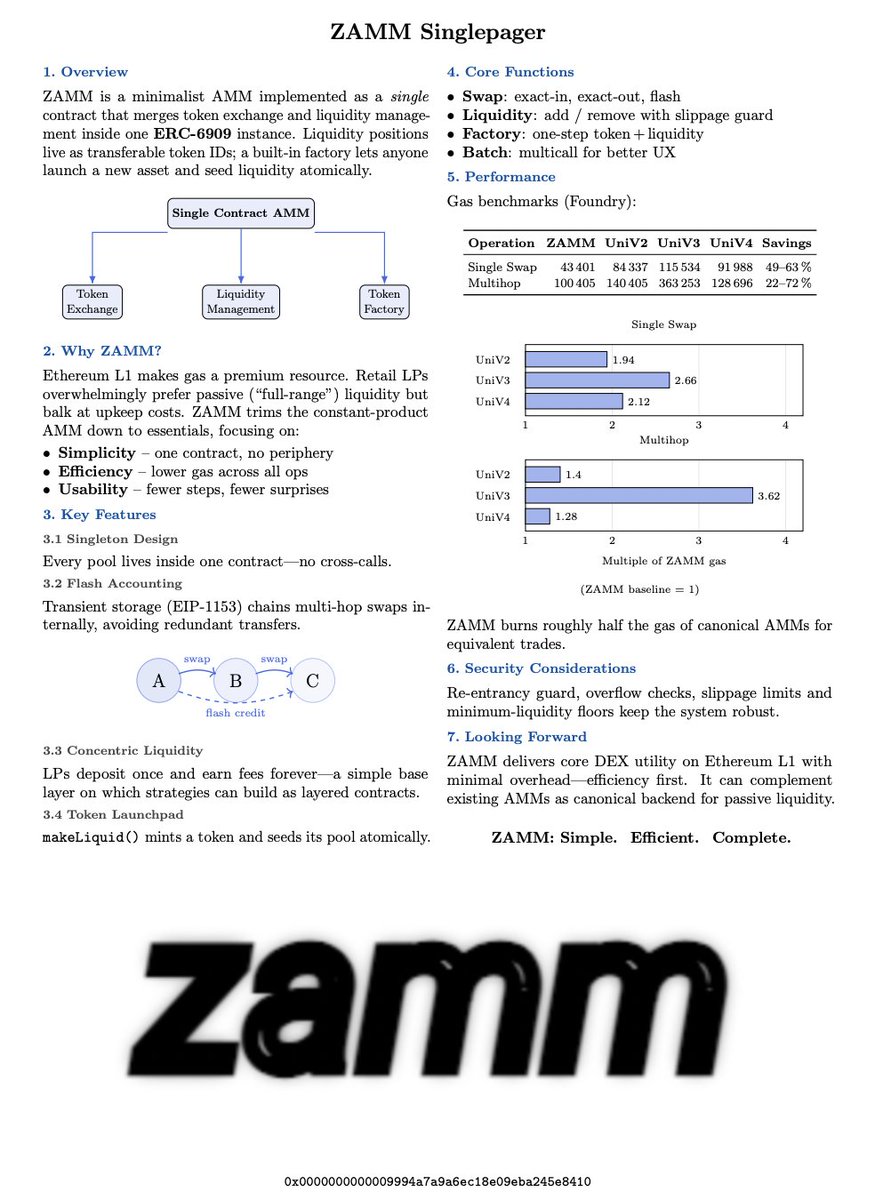
ZAMM is a DeFi singularity system that aims to unite liquidity and provide hyperoptimization to passive LP.
Making Ethereum DeFi great again (cheap and simple)!
ZAMM Singlepager: