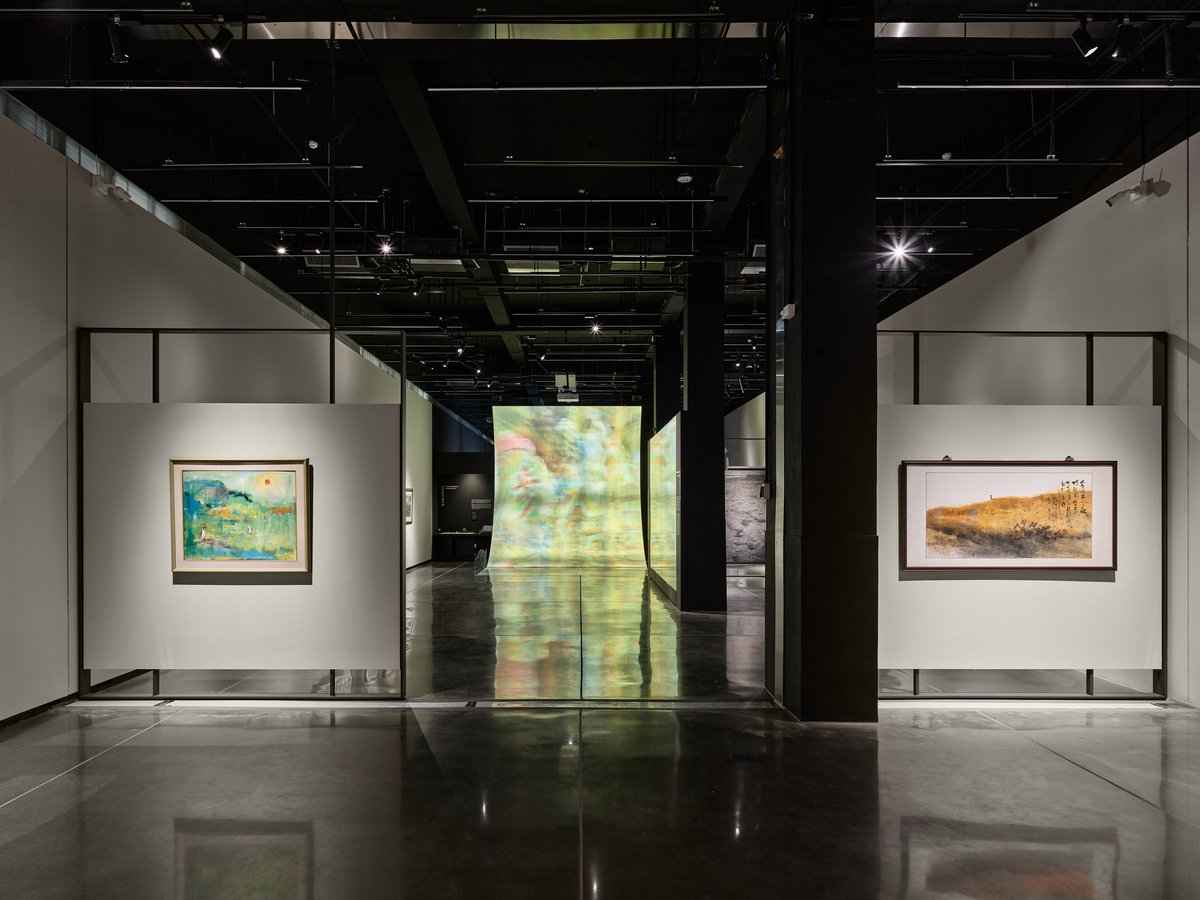
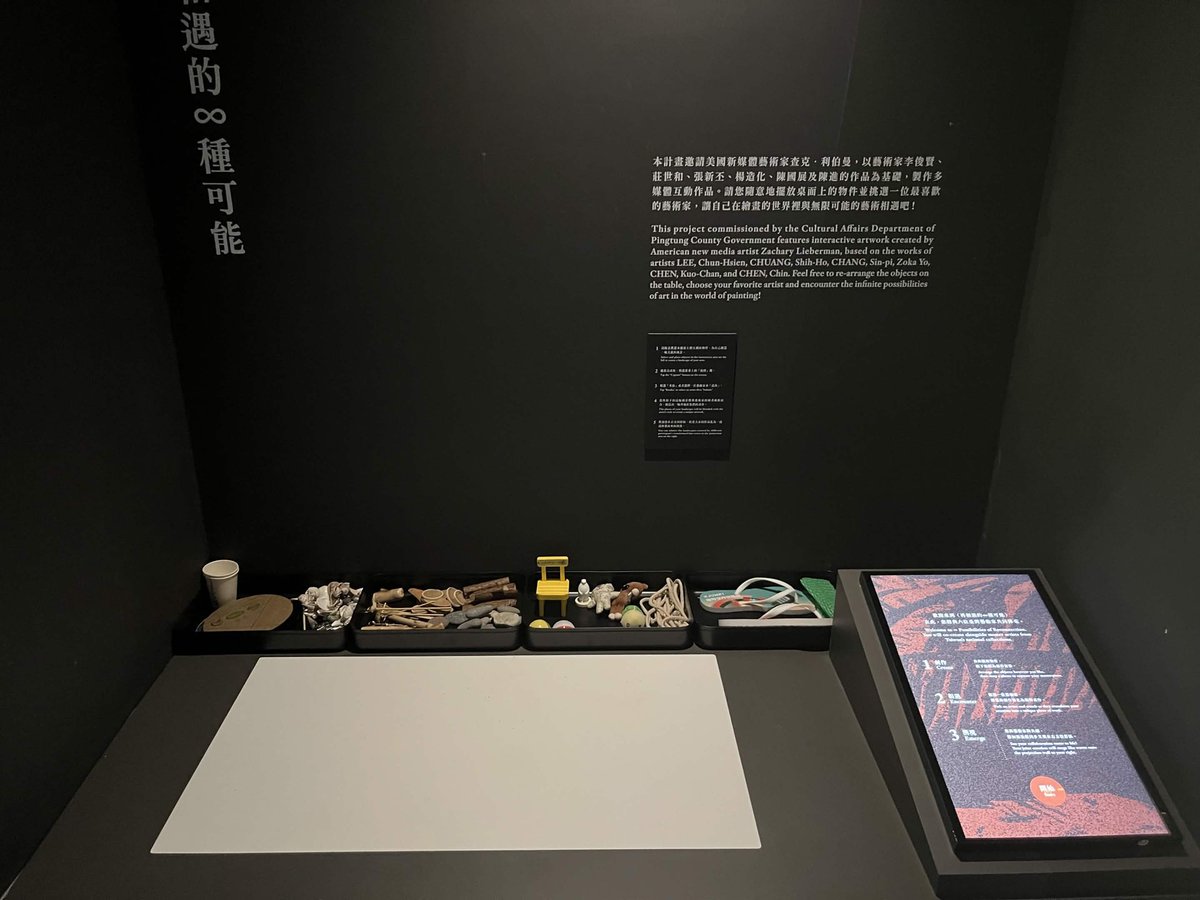
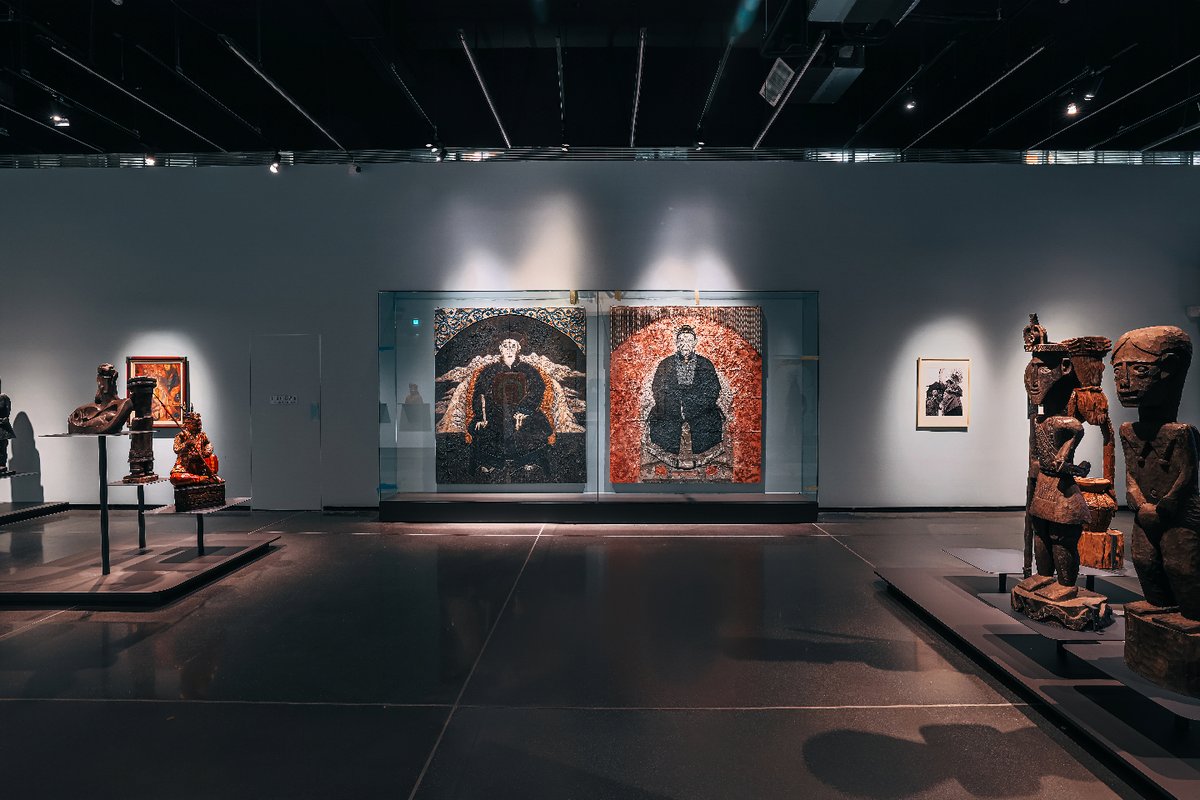
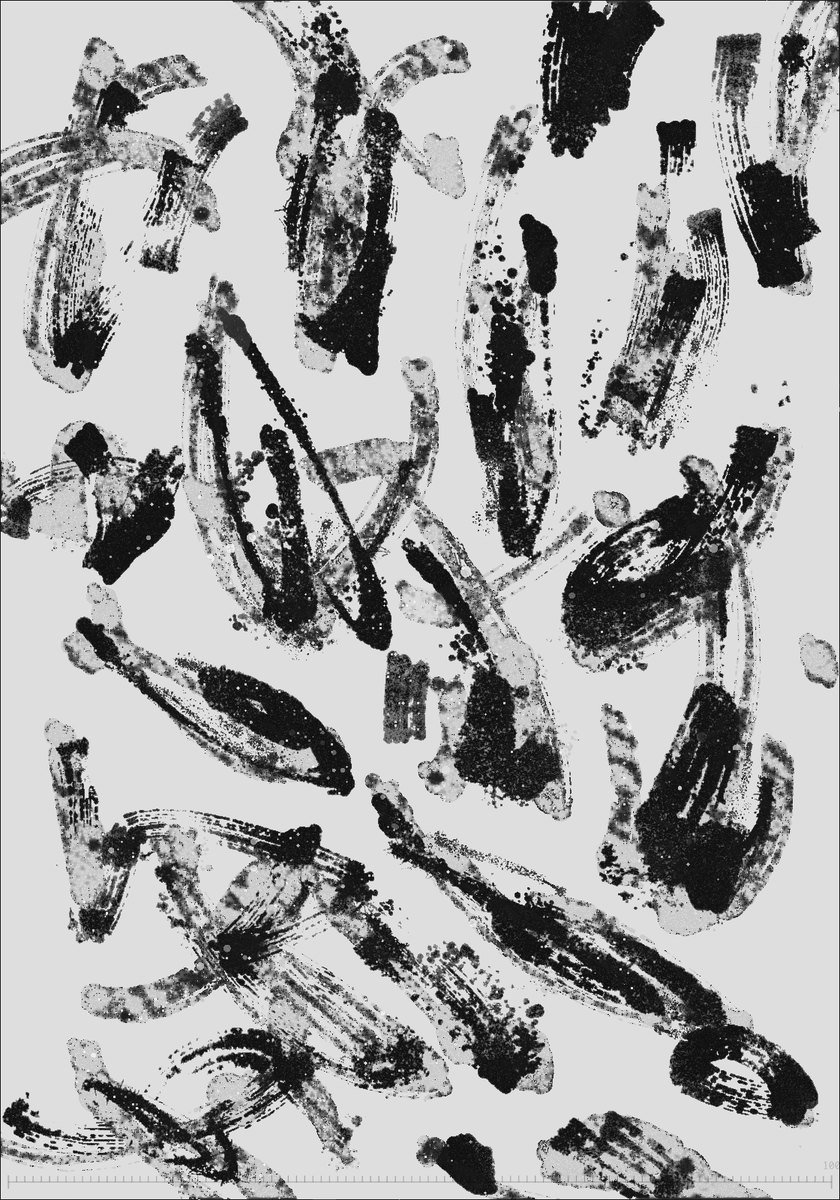
With @zachlieberman Zachary Lieberman’s generative interface, viewers co-create images through movement and objects, reframing archives as something dynamic, computational, and participatory.
Quite gorgeous.
I came across The Great Floodplain Bank (大湧崁岸) at a local museum in Pingtung, Taiwan, expecting a static archive. Instead, it turns collections into interactive systems.
taiwan.md: Writing Taiwan as an Open-Source README
I found a project called taiwan.md, which proposes an open-source “README” for Taiwan—structured in Markdown and designed to be readable by both humans and AI systems.
What stands out is how the project treats format as infrastructure. In an AI-mediated information environment, Markdown becomes not just a writing tool but a way to shape how Taiwan is read, indexed, and generated across systems.
@taiwandotmd is an open-source project presenting Taiwan as a structured README in Markdown format.
It organizes culture, history, and daily life into AI- and human-readable content.
The project is now live, shaping how Taiwan is represented in AI systems.
A new initiative in Taiwan focuses on women working across creative coding and art.
It aims to build a community through learning, sharing, and international connections.
Currently in research phase, it reflects growing efforts toward more inclusive creative tech spaces.
Developing a project for women × coding × art in Taiwan — looking for insights and experiences!
This project aims to build a supportive community for women in Taiwan working with creative coding — through learning, sharing, and collective growth — while also opening pathways to international exchange
I’d love to hear from you if you:
- Have experience with code + art programs or communities
- Know relevant organizations or resources and are open to making international connections
- Want to get involved, support, or share any advice
(Currently in the research phase — any info, experience, or advice is deeply appreciated 🙏)
A small personal note:
I’m quite introverted by nature, but I’m sharing this in hopes of reaching more people who might resonate with or support this project
I’m applying for a government program with plans for an international visit in 2026
Regardless of the outcome, I’ll continue working on this — even if it means moving a bit more slowly
「作品叫做 A Dance with History,我下載了資料庫的資料,總共三萬多張。... 比較像是人類時間的切片,人類時間是一直演進的,可是你在畫圖或者是你在拍照的時候,其實它是把那個瞬間去 freeze 就是把它保存下來,但我覺得所謂的時間,其實是不斷演進的。」 @c2x323
https://t.co/rT71c0GSph
Cycles by Material Protocol Arts
Cycles by Material Protocol Arts is a network sculpture composed of space and time, a meditation on recurrence and change. Time and its manner of repeating appear as themes in art and metaphysics through the ages. Heraclitus steps into and out of a river, a new man each time while history draws irregular spiral loops, rhyming and stuttering out its story.
At its core, Cycles is a network artwork deployed on Ethereum. It comprises an abstract kinetic sculpture of rotating rings, composed of 512 individual lenses. Each lens represents a unique simulation, moving through parametric space and offering viewers a window into complex, evolving patterns. By using Ethereum as a networked computer, the artwork can develop over time and accept interactions via the network. Importantly, the core of Cycles isn't just a JavaScript file loaded and stored on Ethereum, but instead a program running live on Ethereum itself as a world computer sculpture.
Using blockchain technology as material for art making offers artists the chance to make artworks that are new in the context of art history: those that continuously evolve, record their own history, and run autonomously with minimal intervention. Leveraging Ethereum's distributed nature and economic incentives, Cycles aspires to operate on an extended time scale allowing viewers to live with and experience its changes over years, decades or centuries.
Cycles is a dynamically running network artwork. This distinction is important because in the history of computer-generated art, many artists have focused on designing computer systems to generate outputs such as drawings, videos, or sound recordings. This is a respectable tradition but this approach fails to express the dynamic and interactive nature of computer programs as artworks themselves. Cycles attempts to explore these qualities by creating a dynamic network artwork that runs continuously and autonomously on Ethereum, shifting the focus from the product of an art-making algorithm to the system itself.
Dynamism is a prerequisite for interactivity which Cycles allows for its collectors. The piece includes a method to stop a lens’ movement by freezing it. This causes the lens to focus continuously on the same point in space, causing the changing qualities of its simulation to be fixed and allowing collectors to control its aesthetic presentation. Freezing is a weighted decision. Once a lens is frozen it will require certain conditions to be unlocked. Methods for unfreezing lenses will be unlocked over time. The fact that the behavior of the sculpture can be affected by lens owners means that its future state is non-deterministic and will never be able to be fully predicted.
In technical terms, Cycles is composed of Solidity, JavaScript, and SVG code, stored and computed on the Ethereum blockchain. This design avoids external dependencies, ensuring the artwork's longevity and resistance to technical failures. While the current form of Cycles is complete, its nature as a software artwork allows for potential future development through non-destructive updates or connections to other systems.
By rendering systemic processes as aesthetic experiences, Cycles offers viewers a unique perspective on the passage of time and the nature of change. It invites contemplation of the cyclical yet varied patterns that characterize both natural and human systems. As viewers engage with Cycles over extended periods, they are encouraged to reflect on their own relationship with time, change, and recurrence, viewing the artwork as a lens through which to observe the interplay of repetition and variation that shapes our existence.
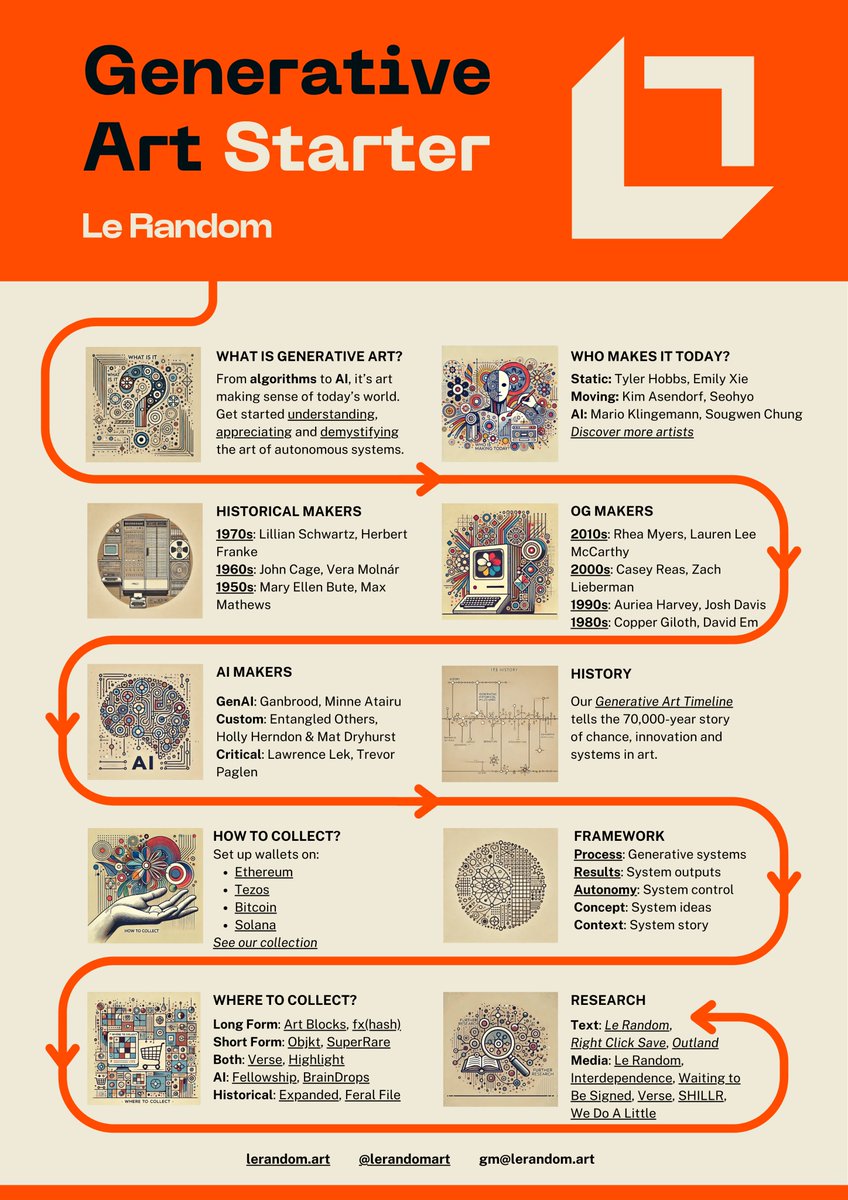
Generative Art Starter 🟢
A graphic to get started with generative art
• Overview
• Artists
• History
• Collecting
• Resources
PDF with links: https://t.co/IAoqTEUHiN
2024 has been a year of challenges for me—battling multiple fevers and coping with the loss of friends.
It taught me to value every second. With the time I have, I’m determined to live fully and passionately until the end.
Wishing you all a wonderful start to 2025!