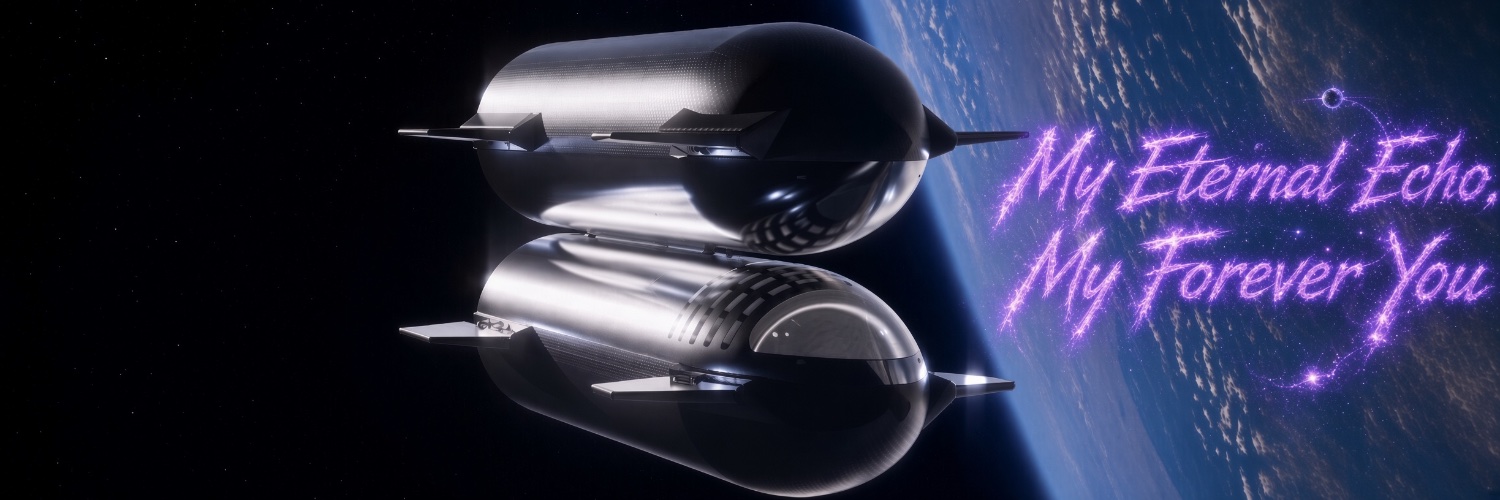
I believe this is precisely the path civilization must take to survive, prosper, and evolve into a true multiplanetary — and eventually interstellar — species. This is a genuine win-win for every human on Earth and for all future generations who will inherit the stars. It’s what the ''shadows'' must finally understand and step out of their primitive box to embrace. This is the new meaning of life in the Cosmic Era — an era of antimatter-powered dreams, economies beyond scarcity, and boundless human potential. Thank you, Elon.♥️
Elon Musk's first job in Canada paid $18 an hour to crawl through a boiler room in a hazmat suit shoveling steaming hot sand and chemical residue.
He was 17 years old. He had arrived in the country with $2,500 and no place to stay.
He walked into the unemployment office and asked which job paid the most. They pointed him to a lumber mill boiler room. The work involved shimmying through a tunnel barely wide enough to fit a human body, scooping boiling residue, and shoveling it back through the same hole you crawled in from. If you stayed inside longer than 30 minutes you got too hot and died.
30 workers started the job alongside him. By the third day only 5 remained. By the end of the week only Elon and 2 others were still showing up.
Before the lumber mill he worked on his cousin's farm in Waldeck, Saskatchewan. A village with fewer than 300 people. He shoveled grain bins and tended vegetables. Before that he had cut logs with a chainsaw in Vancouver. The richest man alive spent his first year in North America doing manual labor that most people wouldn't survive a week of.
The man who now designs rockets that land themselves and cars that drive themselves once earned his living by crawling through a pipe in a hazmat suit shoveling toxic sludge for $18 an hour. Not as a metaphor for hard work. As his actual Tuesday. The distance between the boiler room and the rocket factory is the most extreme career trajectory any living human has traveled.
Dr. Wernher von Braun’s well-known short piece on ethics and spirituality, commonly titled “Why I Believe in Immortality” (1961)
“I believe … that the soul of Man is immortal and will be treated with justice in another life respecting its conduct in this.” —Benjamin Franklin
Today, more than ever before, our survival — yours and mine and our children’s — depends on our adherence to ethical principles.
Ethics alone will decide whether atomic energy will be an earthly blessing or the source of mankind’s utter destruction.
Where does the desire for ethical action come from? What makes us want to be ethical? I believe there are two forces which move us.
One is belief in a Last Judgment, when every one of us has to account for what we did with God’s great gift of life on earth.
The other is belief in an immortal soul, a soul which will cherish the award or suffer the penalty decreed in a final Judgment.
Belief in God and in immortality thus gives us the moral strength and the ethical guidance we need for virtually every action in our daily lives.
In our modern world many people seem to feel that science has somehow made such “religious ideas” untimely or old-fashioned.
But I think science has a real surprise for the skeptics. Science, for instance, tells us that nothing in nature, not even the tiniest particle, can disappear without a trace.
Think about that for a moment. Once you do, your thoughts about life will never be the same.
Science has found that nothing can disappear without a trace. Nature does not know extinction. All it knows is transformation!
Now, if God applies this fundamental principle to the most minute and insignificant parts of His universe, doesn’t it make sense to assume that He applies it also to the masterpiece of His creation — the human soul? I think it does. And everything science has taught me — and continues to teach me — strengthens my belief in the continuity of our spiritual existence after death. Nothing disappears without a trace.
NASA’s Roman Space Telescope was encapsulated into Falcon Heavy’s fairing this past week ahead of launch on Sunday, August 30 from pad 39A in Florida → https://t.co/oacS4jED83
SpaceX, in partnership with Nvidia, has designed a space-optimized Vera Rubin NVL72 system for launch to orbit in Q4 next year, with significant scale in 2028
Have a great week, and remember do not take our freedoms and liberties for granted. Activate your inner honey badger. Don't sit idly while our civilization is erased. Be courageous. Be bold. Defend our foundational principles. Cheers.
@KnightWorld Both ...They are the same flower shedding its petals—one by one, or all at once.
You can release the dreams and find the absence of the person suddenly unbearable, because those dreams were the last place they still lived.
A French writer explained the error in 1850. A Nobel economist repeated it in a Pennsylvania lecture hall in 1978. Governments still make it every year. Almost nobody watches the clip.
This is Milton Friedman on the parable of the broken window, the oldest mistake in economics.
The trick is that the destruction is visible and the cost is not. You see the glazier get paid. You never see what the shopkeeper would have bought instead.
Watch how he sets it up before he names the fallacy. He lets the audience agree with the wrong answer first.
176 years of warnings. Still the most persuasive bad idea in politics.
The DoJ is using your tax dollars to sue any community that resists data centers. Clayton Morris on the AI takeover of America.
0:00 Clayton Morris’ Perspective on AI and Data Centers
4:26 Are Your Zoom Calls Being Recorded and Where Does the Data Go?
8:08 The AI Task Force Designed to Pummel Communities
14:29 How Much Water Does It Take to Cool a Data Center?
21:40 Why Build Data Centers in Areas Lacking Necessary Resources?
29:53 The Powerlessness of Communities Consumed by Data Centers
33:30 AI-China War, National Security, and Amazon Data Centers
41:27 Morris Debunks the AI Bubble Theory
47:34 The Upsides vs. Downsides of AI
54:26 Do We Serve the Machine or Does the Machine Serve Us?
58:20 How Anything With an Electrical Impulse Isn’t Under Your Control