@gwenshap Also, not all models are created equal, as you know. So, you also need to be on top of it until you learn the strengths and weaknesses of the model and effort. Otherwise, it becomes hard to trust it unattended.
@gwenshap Without design, yes, you have to be on top of it in the initial iterations, while the design settles and you improve your harness. After that, it is pretty decent and is able to follow well-established architectural conventions pretty much unattended.
A new milestone in automatic formalization:
We translated an entire graduate math textbook into Lean using 30K LLM agents.
Open-source, large-scale multi-agent inference that actually works
> Blueprint+Lean: https://t.co/YkhG2g1cWp
> Codebase+preprint: https://t.co/EH3IphOKZ3
1/7
AI is increasingly changing how we do mathematics.
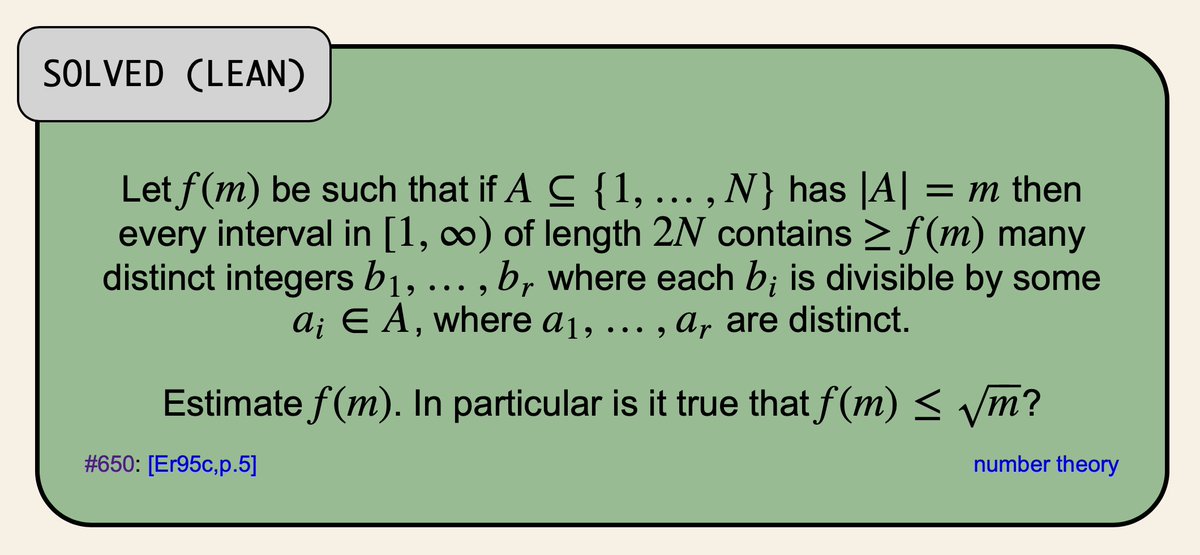
Erdős Problem #650, open for over 60 years, was solved a few weeks ago through a collaboration between human mathematicians, an informal reasoning model (GPT 5.4 Pro @OpenAI) and a formal one (Aristotle @HarmonicMath). 🧵
@leerob same, I’m writing a hypervisor type 2 like firecracker in Go without CGO, and with support also for MacOS VZ. I’m almost done and it has been probably 3 weeks since I started.