My Simmel Hypothesis paper is up at the Journal of Evolutionary Economics.
I argue that money made us WEIRD by loosening cultural-evolutionary constraints on our sacred values. Think of it as Georg Simmel + @JoHenrich.
Summary 🧵 below. https://t.co/yFJddgAKV9
Many tend to think money makes us selfish, corrupt and less connected to one another. But what if money has actually made us more moral?
@asymmetricinfo discusses with @C_Harwick on Reasonably Optimistic: https://t.co/3tk9n3LEJB
Patrick Fitzsimmons (with @MarkKoyama & @desireedesierto): Salt was a huge component of premodern tax bases, and financed war and statebuilding - but only when extracted from mines, which were easier to hold, monitor, and tax than evaporation methods. #SEA2026
Peter Hazlett: Salem had a problem of retirees squatting on valuable land, and witchcraft accusations were in practice a way to reallocate that property. #SEA2026
Relevant to @literalbanana's interests
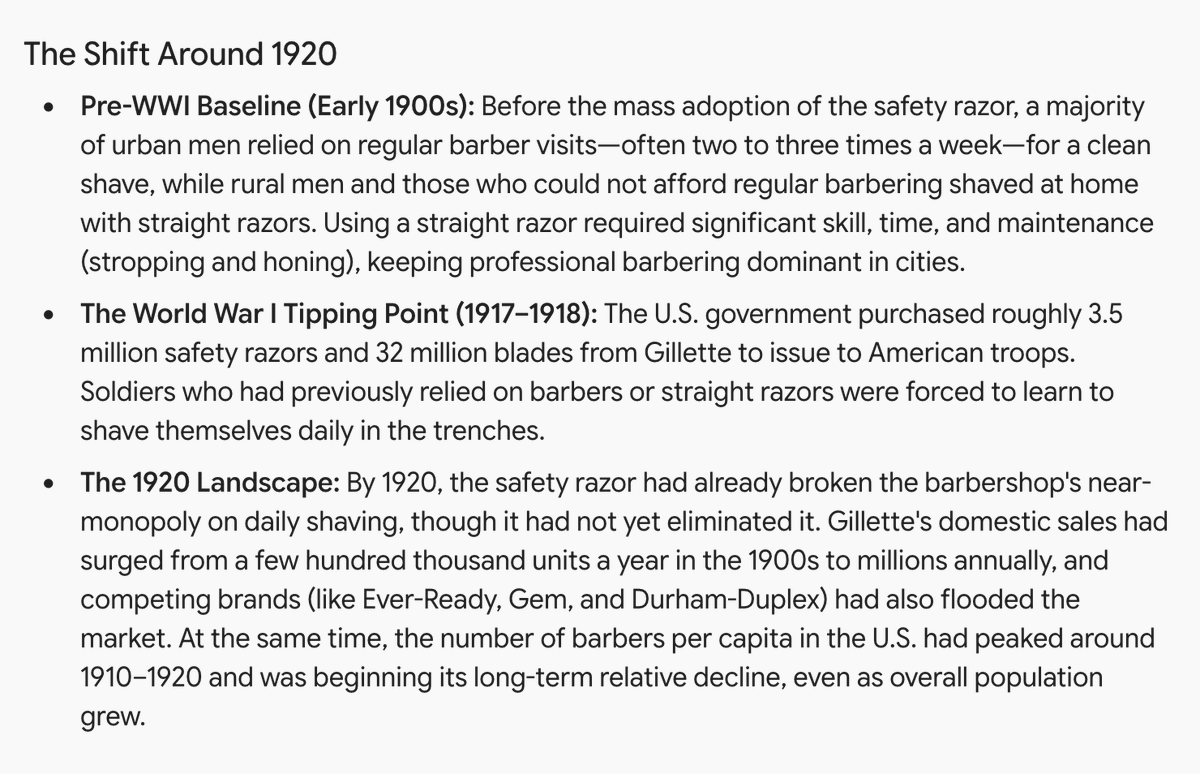
Barbershops are the canonical example of a "Baumol Cost Disease" sector where productivity is assumed to never improve. But the fact that we've substituted safety razors for going to the barber to shave should count as a big productivity increase!
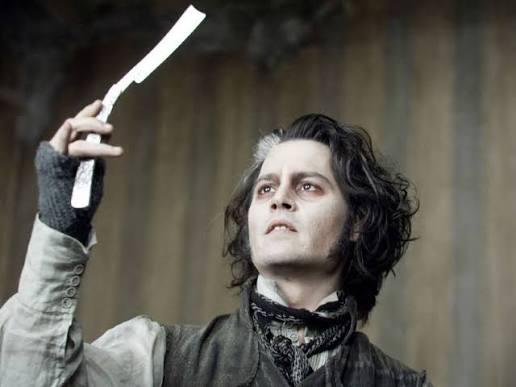
@norvid_studies My guess is you don't want a 20th percentile (maybe even 50th percentile) dexterity person with a straight razor at your face, including if that's yourself.
Apparently most men would visit the barber 2-3 times a week.
@Bfish94 Indeed. I just finished a paper that argued moral norms can be considered truth-tracking to the extent they help us cooperate but THAT DEFINITELY DOESN'T APPLY TO RELIGION because witch burnings or something
Tragic that almost every moral philosopher who takes an evolutionary origin of morality seriously is an annoying Dawkins type who makes sure to emphasize how silly they find religion.
I sat down with @robinhanson on Halloween to talk about the scariest thing we could think of: the possibility that modernity might not be evolutionarily stable. https://t.co/lbnhFi7CZ0
I had a great convo with @asymmetricinfo about the differences between modern and premodern moral life, and how modern money economies let us get away with being a lot more morally scrupulous than was possible before: https://t.co/CgPPu9tBSE
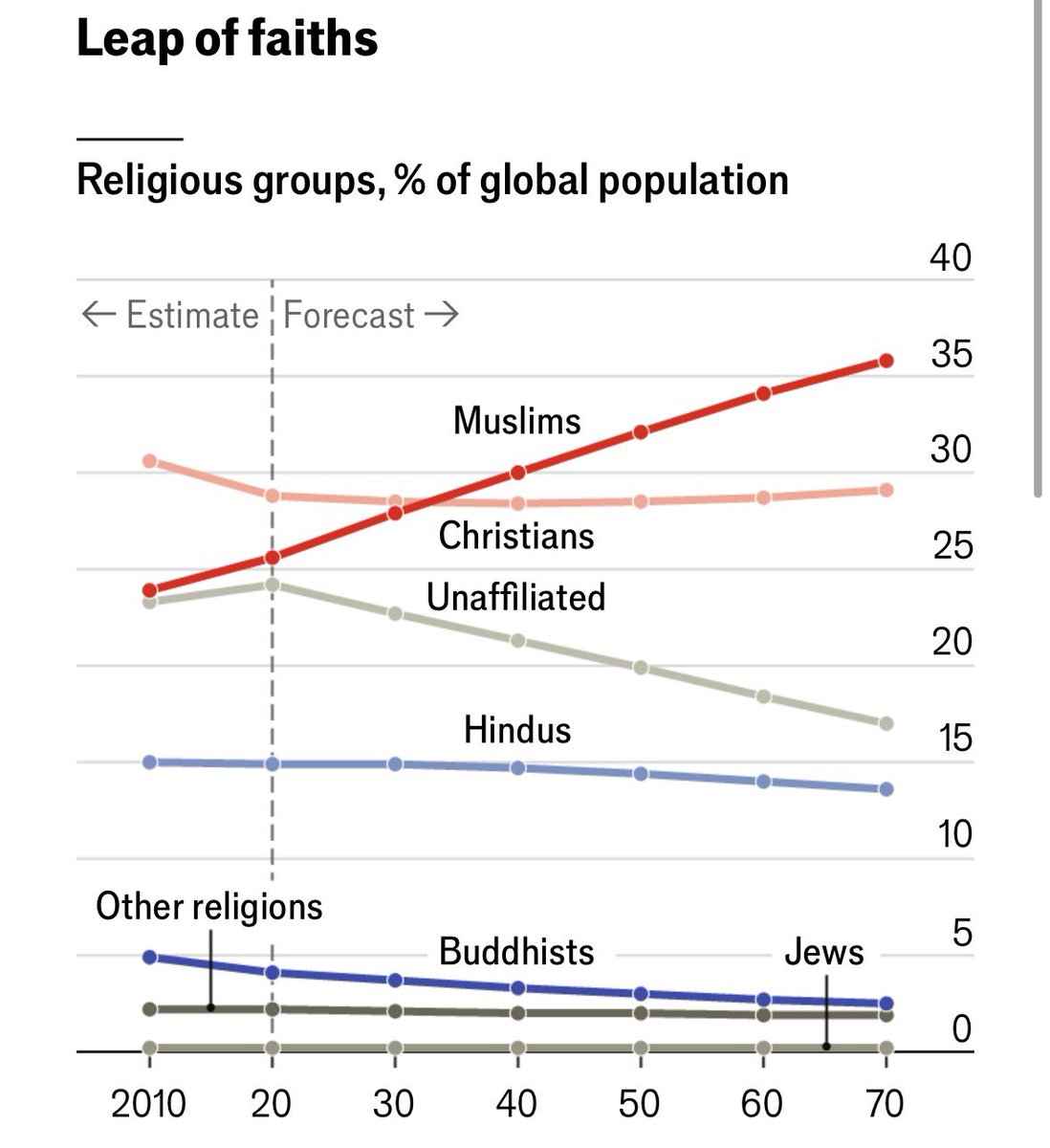
Pew projects the share of the global population that’s religiously unaffiliated to shrink, presumably because differential fertility across countries may trump secularisation within countries
@BJChippindale@GeorgeSelgin@richyphillips First of all you mean non-inflationary money creation (otherwise there is no limit), but more importantly, real resources are actually a binding constraint https://t.co/CIN3Lj49ij
MMTers always act like "just print money bro" is a crude caricature and really it's about the fact that resource constraints matter not fiscal constraints (true!), and then their whole practical program hinges on "resource constraints are always slack" lmao
If you'll be at SEA this weekend, come see me talk about the game theory of how humans navigate open-ended worlds, with Morality Is Fractal (1.C.12, Saturday 1pm) and Strategies Are Not Algorithms (3.G.6, Monday 3pm).
@alexwadecraig I know I'm playing the annoying David Enoch here, but why should I care about the generalizability of my actions? Why should I care about shaping what I want, rather than just getting what I want?
As far as I've seen, Kant provides no answer. Aristotle does, at least.
🟥 Moral nonrealist, non-theist – that tracks
🟨 Moral realist, theist – sure, theism gets you that
🟩 Moral nonrealist, theist – I could at least imagine such a god
🟦 Moral realist, non-theist – ????
One of the oddest philosophy anecdotes I know: Derek Parfit was so distressed by the thought that morality might not be objective that he once literally fell to his knees and pleaded with his students to see why it just had to be.
@Jaffui I'd have to find the originals, but (2) was "Kevin Macdonald is not a serious scholar" and (3) was "Baroque music is the 80s music of classical music (derogatory)"
To be fair, the Baroque fans mostly took it in good fun.
Sadly I don't have it in me to poast at the level of "disabled veterans are bad", so I can only recall three instances where I made a bunch of people Mad On Twitter enough to ratio me: 1. moral realists (now), 2. antisemites, and 3. Baroque music fans.
I didn't believe the video when I saw it yesterday because it lacked technical details in addition to being too attention grabbing.
But today I had Claude take apart the Android version of the game for me; Everything OP says is true.
There are lots of manipulations but the key one here involves what the code calls offer type ZHI_SI_TI (致死题, "lethal puzzle") or alternatively "algo_must_death".
The game generates puzzle pieces in sets of three, and has different algorithms that swap how the pieces are selected. Generators have behaviors like "random", "hard", "fill gaps" (to help player), "random but guaranteed not to kill you", etc. If a given algo fails to find a solution it passes to the next algo in an active set.
The "lethal puzzle" generator considers every possible move with a given set of three pieces, then only emits them if the number of placement possibilities is 0 (no solution, guaranteed death). This is activated in several situations, one apparently being that the app thinks your current play session is a little slow, and they want you to not get bored so they kill it early to start a new one.
What the video doesn't explain is the context. In the game, "rewarded" ads are ads you get some game reward for watching. The main reward is a revive/continue; If you get into an unwinnable state you can watch an ad to keep playing. You usually only get one revive per game but there are a bunch of server-activated properties to modify this constraint.
The policy at play here is that, if you're a high-value player, and there's a high-value ad queued for you, and you're in a play session nearing your high score, the game puts "lethal puzzle" to the top of the piece generator list to rig the game to fail, right when you're most likely to be highly engaged and watching the ad on the revive screen.
It doesn't end there though; The game remembers if the last game ended due to a hand dealt by ZHI_SI_TI, and triggers FatalPuzzleDeathCompensationTrait, which takes the edge off by letting you carry over your combo count from the previous session.
Like everything else this compensate-after-we-killled-you trait is an A/B feature controlled by the server. It's manipulations all the way down; there's like 5% actual game code and the rest is literally hundreds of remotely controlled toggles to control the game state for maximum engagement.