Honoring the history and legacy of the United States Coast Guard dating back to its beginnings. Specially crafted by @newbalance.
#SemperP#StaySleuthy🐻 #GoBears
Gretzky figured out the modern concepts of the game years ahead of everyone. Lemieux was the most talented player to ever live.
This is why 99 highlights leave you thinking “how bad was everyone else” and 66 highlights leave you thinking “how good was this guy”, even now
Maga is apparently now boycotting going to NYC because they hate the mayor. They say they will never go there again. I mean is this guy fucking amazing or what? That place is going to be a fucking paradise now
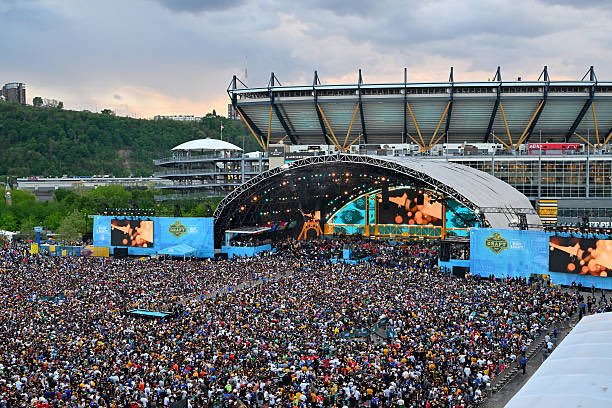
Pittsburgh broke the all-time round one attendance record with 320,000 fans tonight, topping the 275,000+ who attended in Detroit in 2024, per the NFL.
Letz go even bigger and better,,,
ALL Female US Olympians and Paralympian medalists are invited out to celebrate in Viva Las Vegas for the SHE GOT GAME Weekend ,,,
Hit a guy up and LETZ GOOO
4x Super Bowl Champion
2x 1st Team All-Pro
6x Pro Bowl
1970’s All Decade Team
5x All-AFC
Super Bowl Silver Anniversary Team l
If sacks counted, he lead the greatest defense ever in them 6x. He’d also be the record holder for most sacks in a Super Bowl.
Travesty. Enshrine him.
🏈 in Western PA - it doesn’t any get better!
And now you can celebrate its rich history on the biggest of screens!
Narrated by @PatMcAfeeShow, our first-ever immersive format documentary, The Football Town, premieres 2/28 at @KaminScienceCtr.
Tix on sale 2/13!
OTD in 1988….
“Send it in, Jerome!”
The board-breaking slam of Jerome Lane and Bill Raftery’s unforgettable call.
⬇️ Full version, worth watching just for Mike Gorman and Bill Raftery’s undying enjoyment of the dunk.
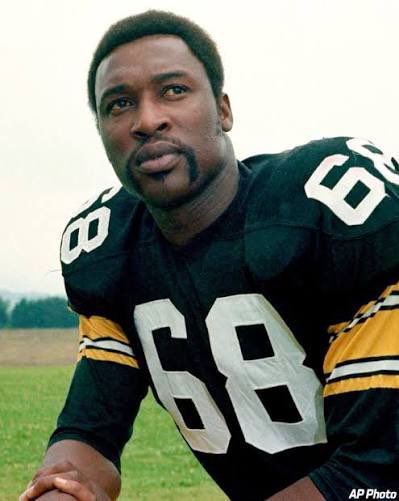
When One Cornerback Changed the Game - Mel Blount
In 1978, the NFL quietly rewrote its own future. It did so not with a headline play or a championship moment, but with a rule change born of necessity — a response to a defender so dominant that the league itself had to intervene. That defender was Mel Blount, and the change that followed would forever be known as the Mel Blount Rule.
Before 1978, pass defense was a full-contact endeavor. Cornerbacks could reroute receivers anywhere on the field, hands and forearms working freely long after the snap. Timing routes were disrupted before they began. Quarterbacks threw into traffic that looked more like trench warfare than a modern passing game.
Blount mastered that world. At 6-foot-3 and over 200 pounds, he didn’t merely cover receivers — he neutralized them. He jammed at the line, rode routes through their stems, and punished any attempt to cross the middle. In Pittsburgh’s Steel Curtain defense, Blount wasn’t just a cornerback; he was a force multiplier. Entire offensive game plans collapsed because wide receivers couldn’t reach their landmarks on time — or at all.
The league noticed. Scoring dipped. Passing efficiency stagnated. Offenses complained, quietly at first, then openly. The NFL faced a crossroads: preserve defensive dominance or unlock offensive growth. In 1978, it chose the latter.
The rule change limited contact by defensive backs to five yards from the line of scrimmage. Beyond that point, illegal contact would be enforced. It was a seismic shift — not just in how games were officiated, but in how football would be played.
The immediate impact was unmistakable. Receivers gained freedom of movement. Quarterbacks gained timing. Offensive coordinators gained confidence to expand the route tree. What followed was the acceleration of the modern passing game — higher completion rates, increased scoring, and offenses built around precision rather than survival.
And here’s the irony that history appreciates most:
The rule didn’t diminish Mel Blount’s legacy. It cemented it. Very few players force a league-wide correction. Blount did. His dominance was so complete that the NFL didn’t ask him to adapt — it asked the sport to change around him.
The Mel Blount Rule wasn’t an indictment of defense. It was an acknowledgment of excellence — and a recognition that football, to grow, sometimes has to rebalance itself.
Every spread formation, every timing route, every high-volume passing attack traces a line back to that moment in 1978. The modern NFL — fast, open, quarterback-driven — was unlocked by a defender who made passing too difficult to ignore. That is Mel Blount’s true legacy. Not just a Hall of Fame career. But a permanent fingerprint on the shape of the game itself.
Thank you for reading. I share #NFL history and stories like this from time to time — moments that still matter, and lessons that endure. If you enjoy this kind of work, feel free to follow along.
16 years ago today, President Obama quietly made history. In the middle of the night, he became the first President to witness the return of fallen soldiers. He later spent 6 hours with the grieving families.
A powerful reminder of what a real Commander-in-Chief looks like.
If you’ve never seen the National League dugout’s reaction to Dave Parker’s phenomenal throw from right field to Gary Carter in the 1979 All-Star Game, it’s even better than you’d imagine.