Just practicing MCQs isn’t enough.
You need to know why the answer is right (or wrong)
6500+ High yield MCQ
That’s why every question in this app comes with a full explanation
https://t.co/Q6L7rJrDgY
I urge President HSM: Do not return to Mogadishu or engage in political campaigns until Al-Shabaab is fully removed from Middle & Lower Shabelle and central regions. Coming back without victory risks the lives of those people, and support from the regions will be lost forever, be strategic.
To all Somalis: Regardless of political differences, we must unite behind this war. Somalia’s survival is at stake. The nation comes before individual interests.
Now is the time to stand together!
Guul ama Geeri.
#Somalia #UnitedAgainstTerror
In this surgery, we are looking at the heart of a 4-month-old baby with a congenital heart defect that makes it difficult for the blood to properly oxygenate the body, known as tetralogy of Fallot (TOF).
These are the 7 most powerful laws in the world.
Once you read and start applying them, your life will become a thousand times better.
(And no, this is not a joke)
Pay attention ⍒
According to international media reports, over 200 individuals have reportedly died hunger in the Tigray region. Instead of prioritizing the aid for his people @AbiyAhmedAli has opted to evade the reality & mislead the Ethiopian people as a way to divert attention from the internal crisis to externalize the problem.
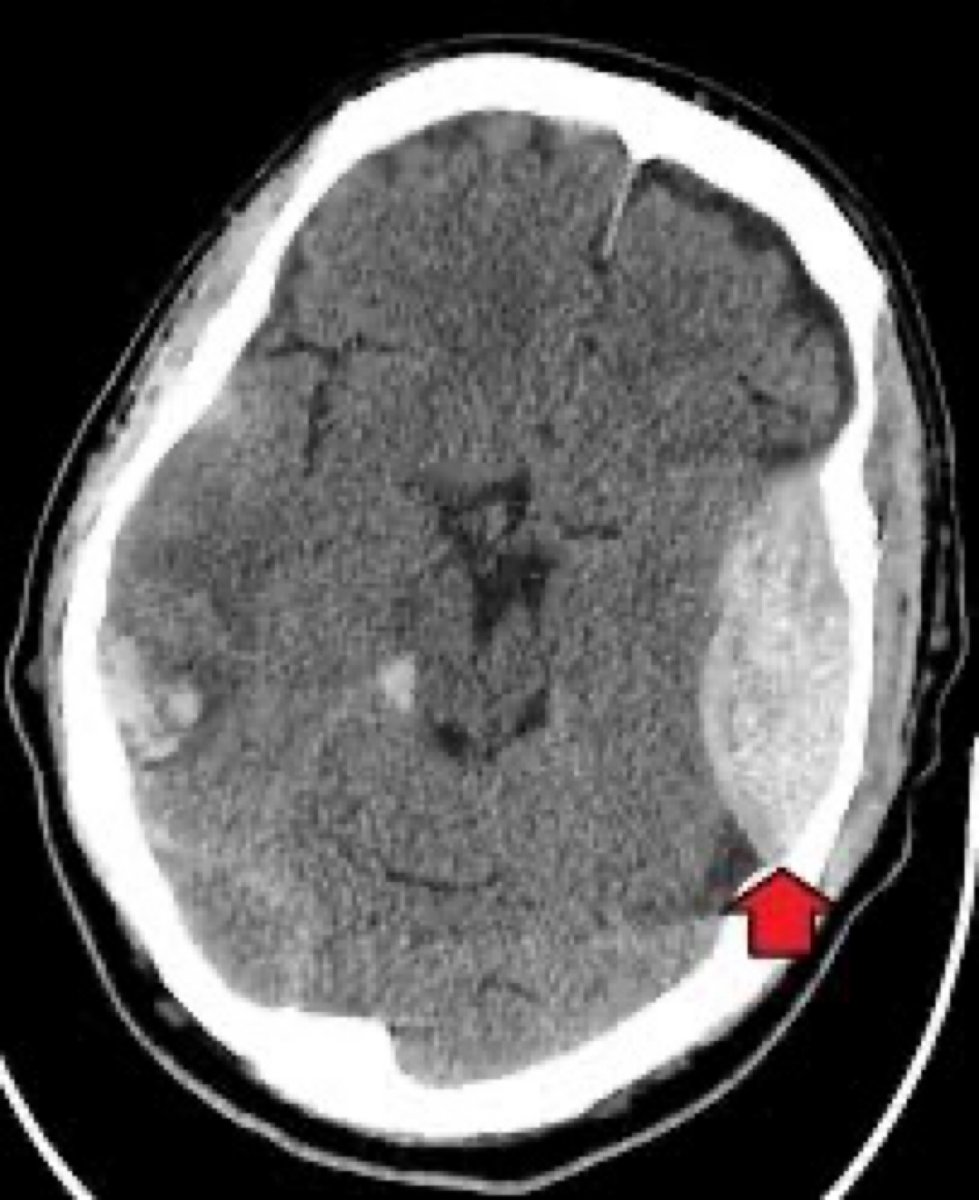
Epidural Hematoma
Explanation of CT Finding:
The CT image shows the presence of an epidural hematoma.
An epidural hematoma is a collection of blood that forms between the skull and the outermost layer of the brain, known as the dura mater.
It typically appears as a convex-shaped, lens-like lesion on a CT scan.
Etiology and Pathogenesis:
Epidural hematomas are usually caused by a traumatic injury to the head, such as a motor vehicle accident.
The injury causes a rupture of the middle meningeal artery or one of its branches, leading to bleeding into the potential space between the skull and dura mater.
The accumulating blood puts pressure on the brain, leading to symptoms.
Clinical Features:
Common symptoms of an epidural hematoma include a severe headache, persistent vomiting, altered consciousness, and neurological deficits.
The patient may initially have a brief loss of consciousness followed by a lucid interval before deteriorating rapidly.
Treatment:
Immediate surgical intervention is required for an epidural hematoma.
The goal is to evacuate the hematoma and stop the bleeding source.
This is typically done through a craniotomy or burr hole procedure to remove the blood clot and repair the injured artery.
FAQS:
1. Can an epidural hematoma resolve on its own without surgery? No, an epidural hematoma requires surgical intervention to remove the blood clot and repair the source of bleeding. It cannot resolve on its own.
2. How long does the surgical procedure for an epidural hematoma take? The duration of the surgical procedure for an epidural hematoma varies depending on the extent of the bleeding and the specific surgical technique used. It can range from a few hours to several hours.
3. What is the prognosis for patients with an epidural hematoma? The prognosis for patients with an epidural hematoma depends on various factors, including the size and location of the hematoma, the time elapsed between injury and surgical intervention, and the presence of associated brain injuries. Early diagnosis and prompt surgical management can lead to a better prognosis.
4. Are there any long-term complications associated with an epidural hematoma? In some cases, patients may experience long-term complications such as neurological deficits, cognitive impairments, or seizures. These complications can vary depending on the severity and location of the hematoma and any associated brain injuries.
5. Can an epidural hematoma recur after surgical evacuation? Recurrence of an epidural hematoma after surgical evacuation is rare but can occur in some cases. Close monitoring of the patient's condition and follow-up imaging studies are important to detect any recurrence or complications.
Try - https://t.co/3XKwhCuWoV
(Image - Global Nurse Consulting)