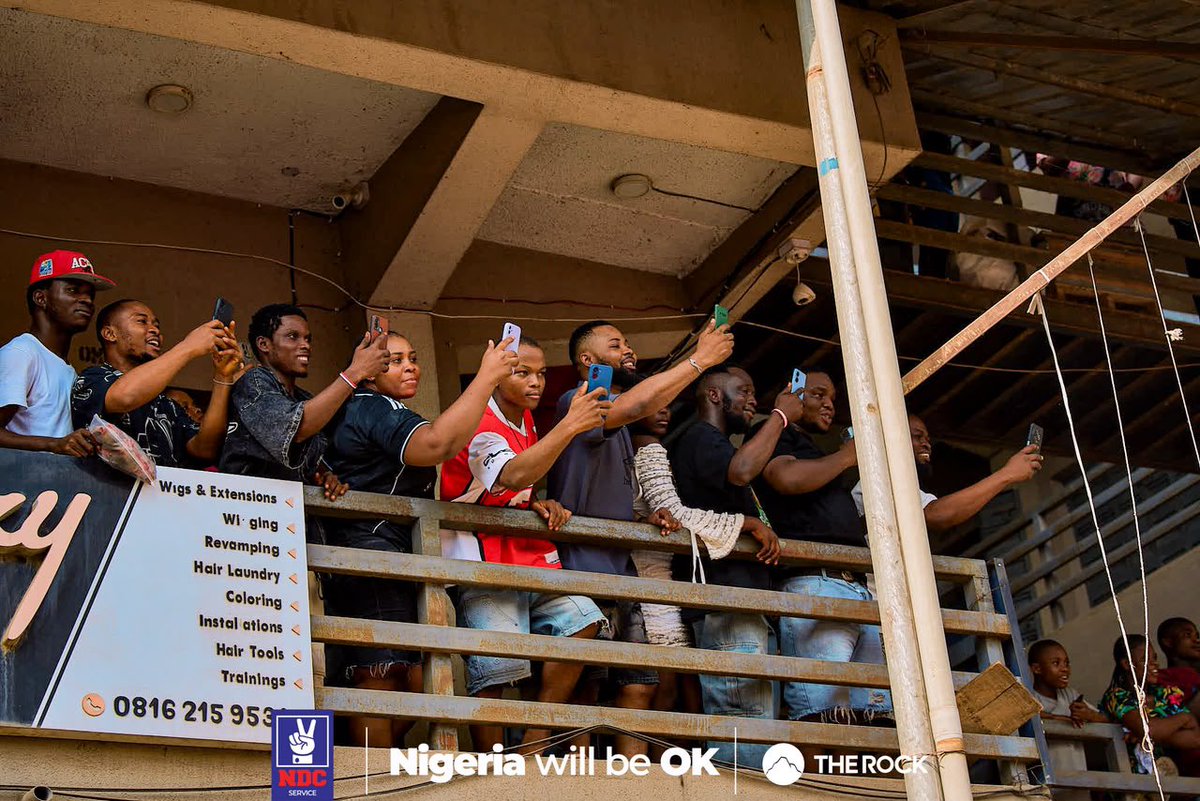
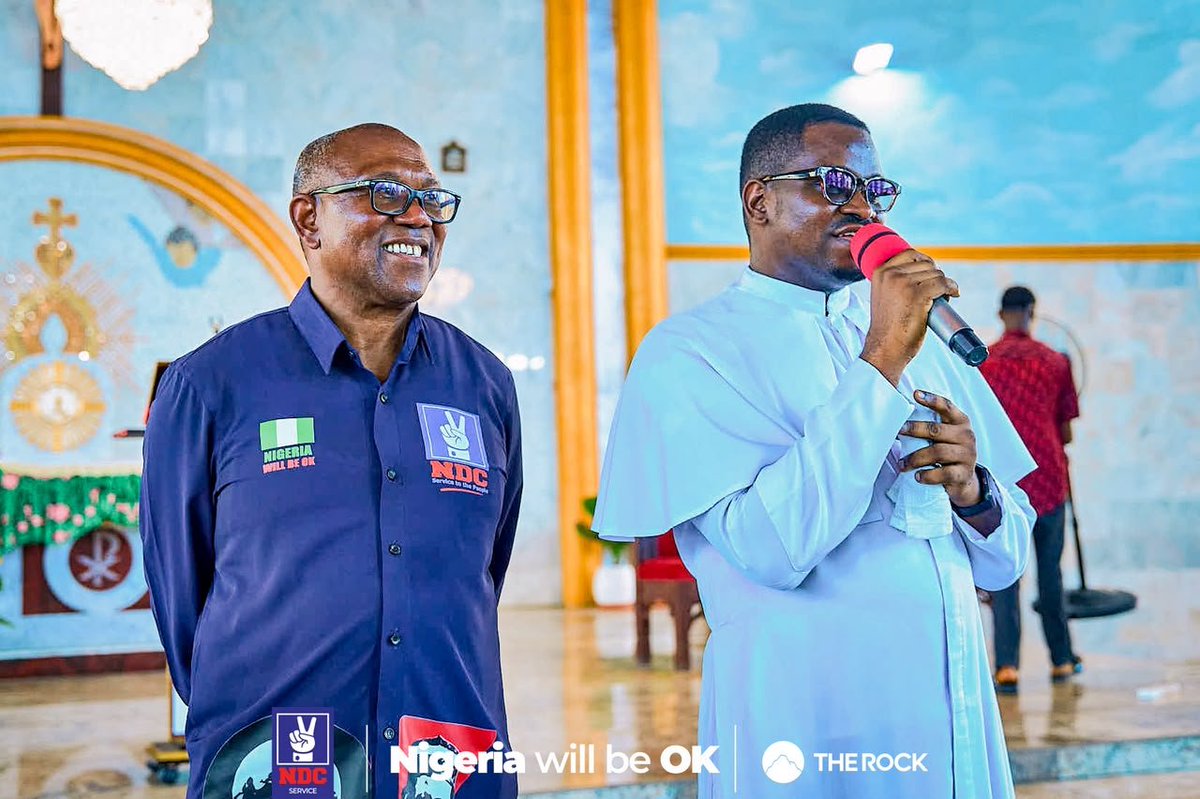
Happy % birthday to me. I am grateful to Almighty God for another year. To God be the praise for bringing me this far & for His faithfulness in ordering my footsteps in life. It’s always been a journey of belief & determination. I wish my very self all I have prayed for.
ANAMBRA TO ABUJA: FAITH, LEADERSHIP AND THE NEW NIGERIA PROJECT
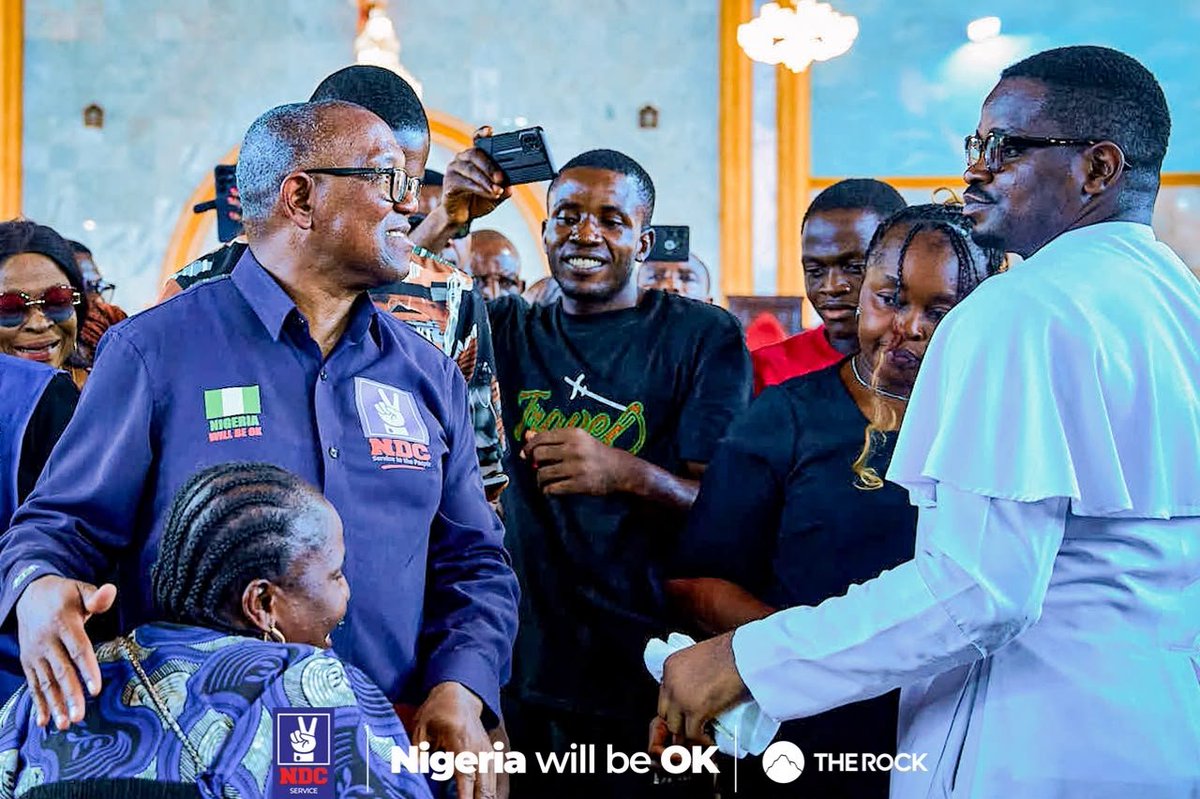
Yesterday, November 21, 2026, was marked by a full schedule of engagements in Anambra State and Abuja. In Awka, I attended the Annual Diocesan Laity Council Meeting and Award Ceremony of the Catholic Diocese of Awka. I commend the Council and express my appreciation to my Lord Bishop, Most Rev. Paulinus Chukwuemeka Ezeokafor, for his uplifting homily, prayers and thoughtful guidance.
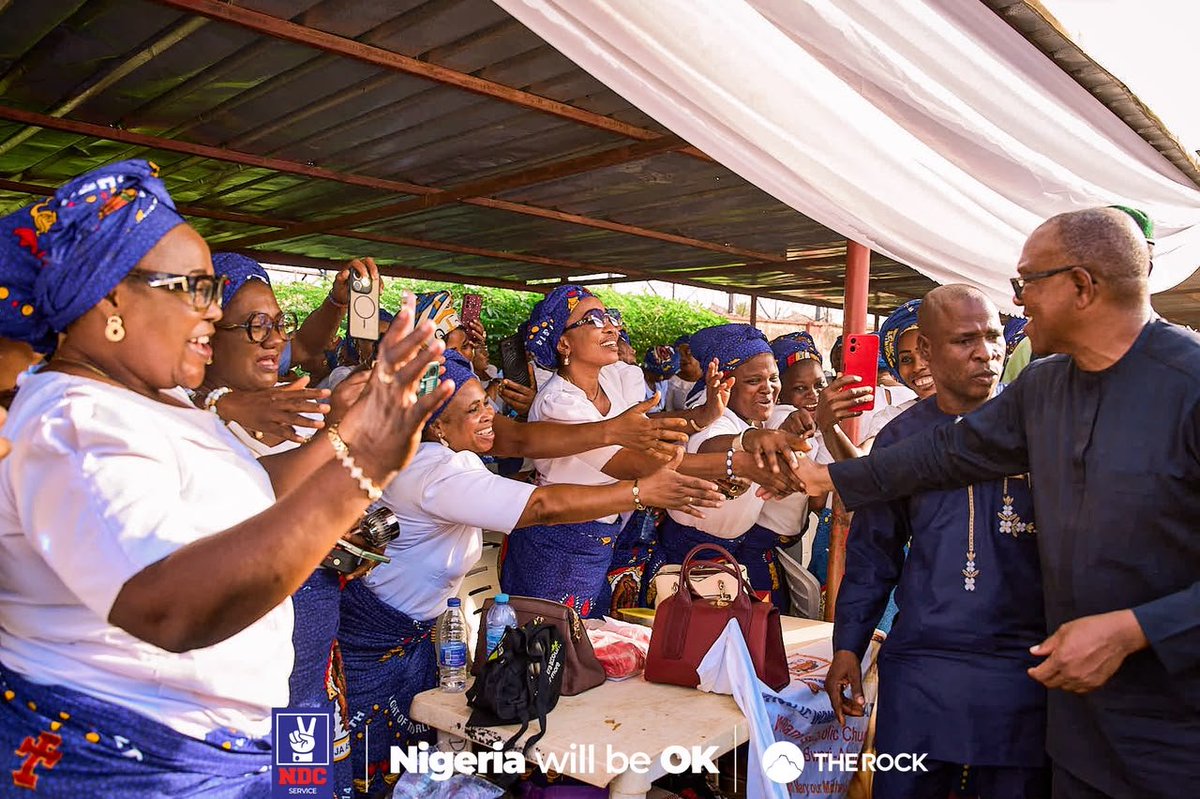
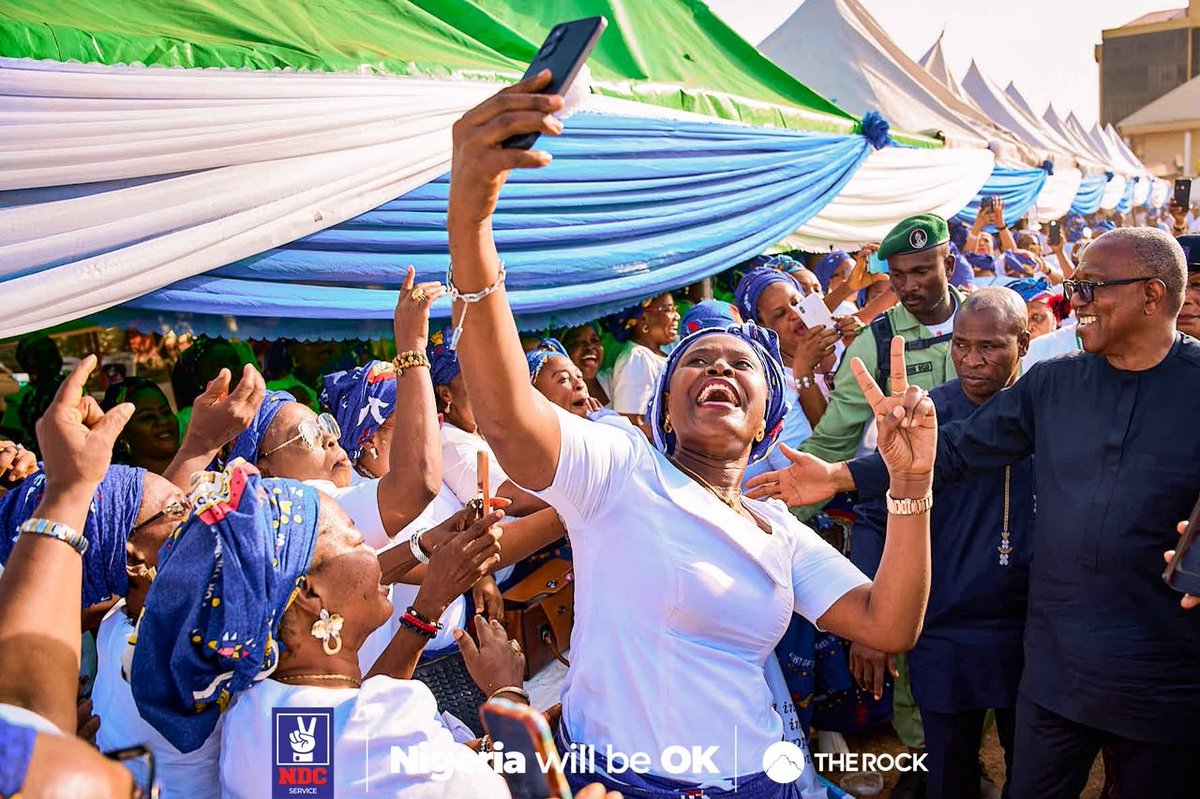
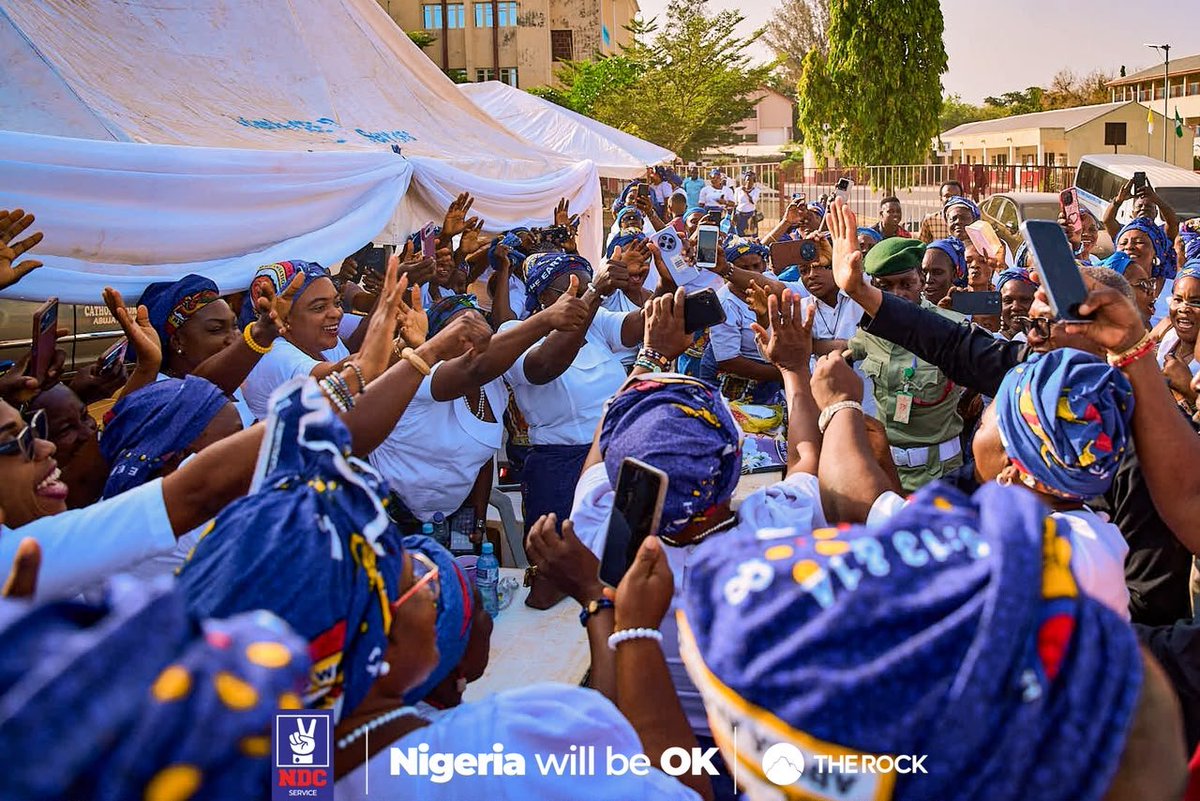
In Abuja, I participated in the 2026 Annual Reunion of the Catholic Women Organisation of the Archdiocese. I encouraged our mothers to remain steadfast in praying for public officials, so that public resources will always be managed for the benefit of the people.
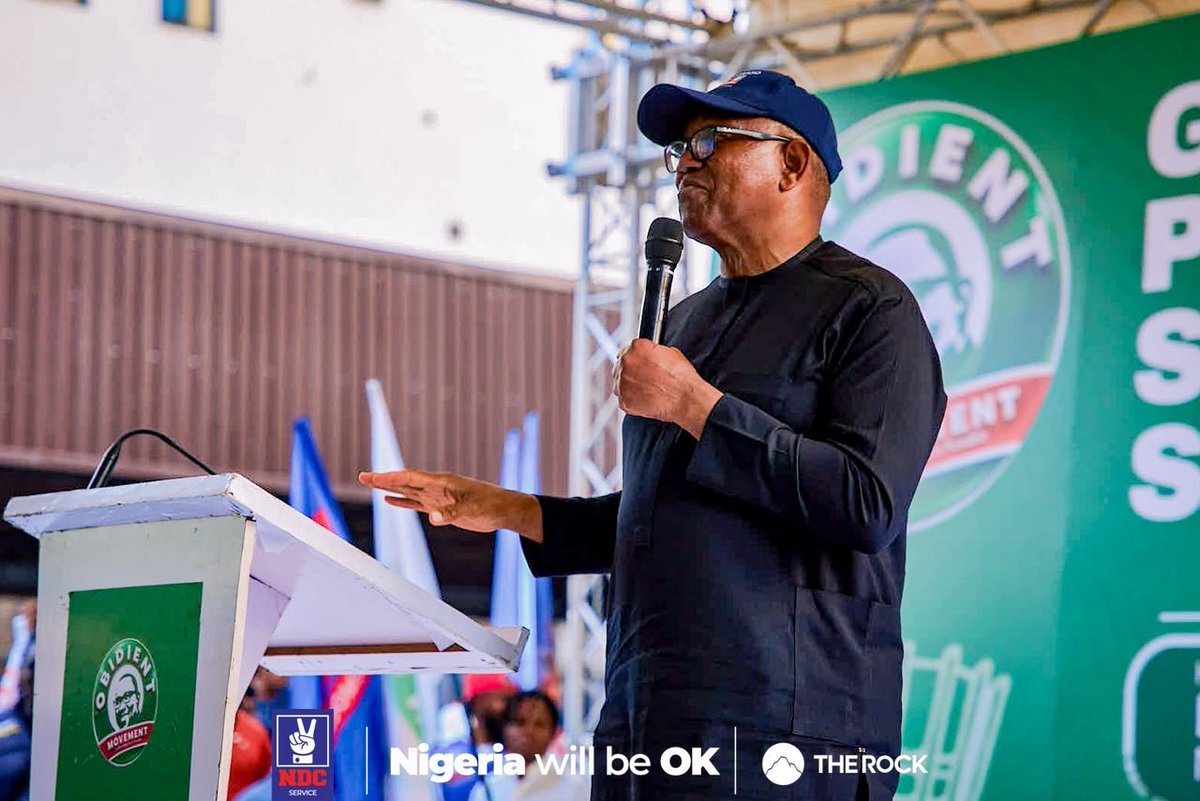
I also spoke at the Global Peter Obi Supporters Summit, where I drew attention to the difference between Nigeria's development challenges and Indonesia's progress. Alongside Senator Rabiu Musa Kwankwaso, I reaffirmed our commitment to restoring security, strengthening institutions, investing in healthcare and education, expanding opportunities and lifting Nigerians out of poverty. I called on our supporters to take this message of hope and national renewal to communities across the country.
I ended the day by paying a condolence visit to my dear sister, Hajia Aisha Binani, and her family following the death of her father, Alhaji Dahiru Ahmed Malabu. May Almighty God grant him Al Jannatul Firdaus and provide comfort to the bereaved family. Our resolve remains unwavering: a united, secure, and prosperous Nigeria is achievable. A new Nigeria is POssible! -PO
They rigged 2023 because nobody had proof.
In 2027, we will have proof.
Photograph your EC8A at your polling unit. Upload it. Get a receipt.
If they try to change the result, we will show the world the original.
Don't just vote. Protect your vote. #ProtectYourVote 🇳🇬
PO IN ANAMBRA.
It was a homecoming. A trip back to the roots, the place where it all began and where the vision for a better-working Nigeria was first conceived.
Thank you, Ndi Anambra. ✌🏾
ANAMBRA STATE : ADVANCING EDUCATION, ENERGIZING INDUSTRY AND SHAPING A NEW NIGERIA
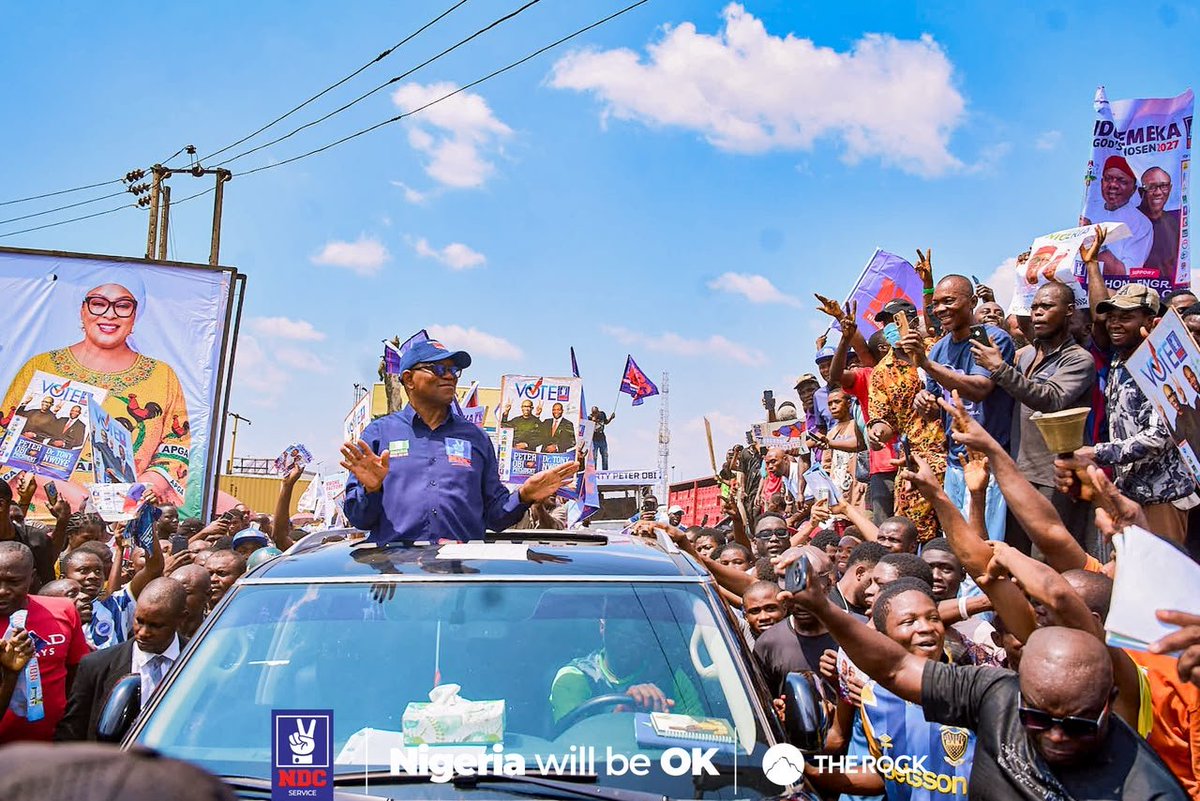
After returning from an official working visit to the United States of America, I arrived in Onitsha, Anambra State, yesterday, 20th November 2026, to continue our nationwide series of town hall meetings.
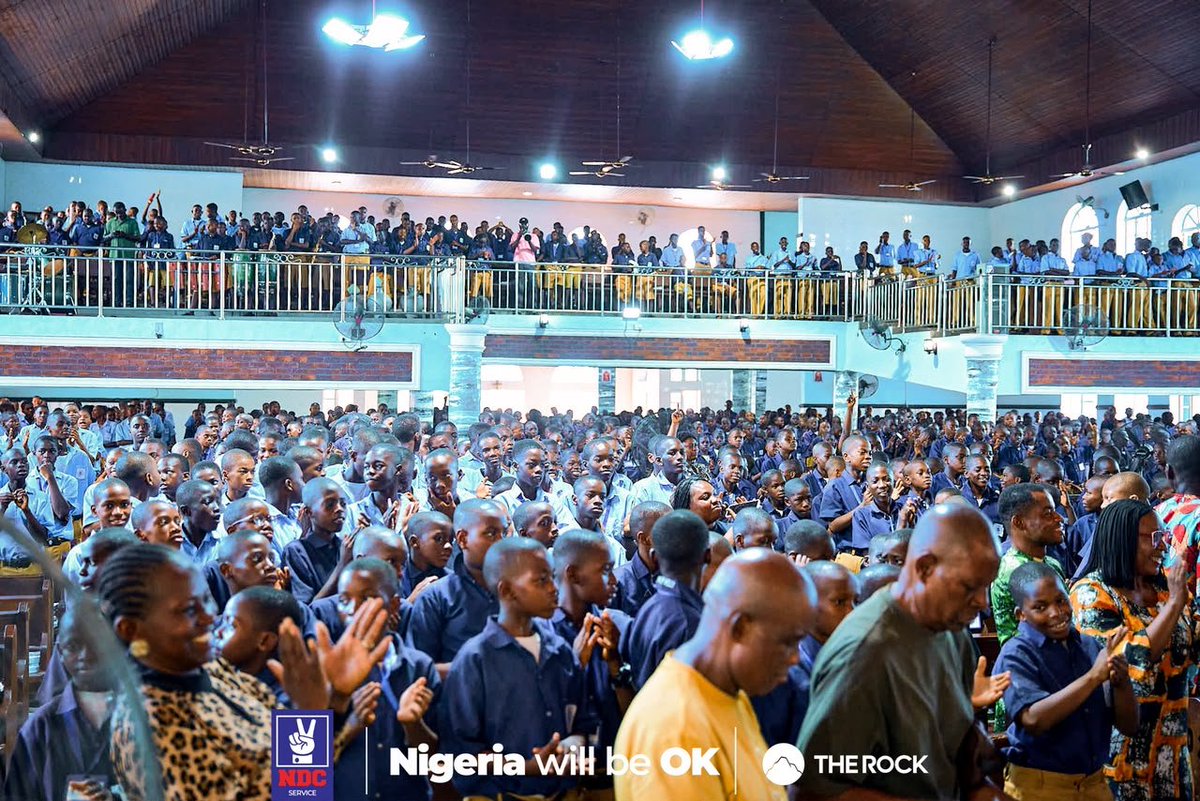
I began the day by visiting my alma mater, Christ the King College, Onitsha. Together with my friends, I am supporting the construction of a Teachers’ House to preserve the supportive teaching and learning environment for which the school is known. I commend the management and students of this distinguished institution for upholding its high standards.
We then travelled through Head Bridge, Ochanja, and Main Market, engaging with workers, traders, drivers, and other hardworking Nigerians who are striving to earn a living despite the challenging economic conditions affecting the country.
At the Archbishop C. J. Patterson International Auditorium Complex, Onitsha, where our town hall meeting took place, I reaffirmed the commitment of His Excellency, Senator Rabiu Musa Kwankwaso, and me to promoting national unity and taking decisive action to address the insecurity affecting many parts of Nigeria.
I also assured our numerous supporters and well-wishers of our determination to generate, transmit, and distribute at least 10,000MW of electricity to drive production and revive the country’s major industrial centers.
We also underscored our key priorities, especially substantial investment in education through the construction of at least 40,000 additional classrooms and the recruitment of the necessary number of teachers nationwide to tackle the problem of out-of-school children.
In the healthcare sector, we are committed to building at least 10,000 fully operational primary healthcare centers, with at least one located in every ward nationwide, thereby reinforcing the foundation of healthcare delivery in Nigeria.
These initiatives, together with other purposeful investments and policies, will contribute to our efforts to expand productive capacity and lift our people out of poverty.
I express my gratitude to the good people of Anambra State for their warm welcome and hospitality. I also commend our party leaders and members for their continued commitment and hard work in advancing the ideals of our party and engaging with our supporters.
NDC ka’ ma!
A New Nigeria is POssible, and Nigeria will be OK!
-PO
Former President Goodluck was once reportedly pelted in Bauchi and the country was calm.President Tinubu was reportedly pelted in Abuja and the country is calm.Will there be the same calmness in the country if a Presidential candidate from the North or a future president from the North is pelted in Enugu or Ekiti?.Will there not be youths in the Northern Streets shouting “Shege Biafra” or “Shege Oduduwa”?
For those of us from the North,let’s not support,applaud or encourage what we can NEVER tolerate when the table turns.
Over the past four days, I have been traversing the northeastern part of our country.
Our journey began in Gombe, from where we proceeded to Potiskum and Damaturu in Yobe State, before finally arriving in Maiduguri, Borno State.
I am happy to report that the Obi-Kwankwaso and NDC message of hope is resonating. We sympathised with the people of Yobe and Borno States, in particular, over the insecurity that continues to plague the lives of many.
I also promised that we shall work assiduously to restore the economy of the region by empowering the microeconomic systems of our country.
It is equally heartening to note that my able brother, our presidential candidate of the NDC, His Excellency Peter Obi, has been doing tremendous work in Anambra State and other parts of the country. - RMK
NIGERIANS, GO AND VERIFY (6)
SECURING LIVES AND PROPERTY: PARTNERSHIP WITH SECURITY AGENCIES
Peter Obi
In the preceding instalments, I explained how we approached governance under the Anambra Integrated Development Strategy (ANIDS), beginning with strengthening state institutions and investing in education and other critical sectors. Our conviction was that development must rest on strong institutions, capable human beings, and a secure environment.
No meaningful development can take place where lives and property are constantly under threat. Education, commerce, investment, and other productive activities can only flourish when people feel safe. This informed our approach to security. We understood that the responsibility of protecting lives and property could not be discharged through speeches and declarations alone. It required deliberate investment, effective coordination, and sustained partnership with the security agencies.
When we assumed office, Anambra faced serious security challenges. Armed robbery, bank attacks, kidnapping, and other violent criminal activities had created an atmosphere of fear. In 2006, I personally approached the then Inspector-General of Police, Mr Sunday Gabriel Ehindero, to seek urgent intervention. Following our appeal, the police authorities constituted a special team comprising experienced officers, including the late Haruna John, Alhaji Amusa Bello, and others, to confront the security challenges in the state.
We therefore made security a major priority of our administration, recognising that government must provide both the leadership and the resources required to enable security agencies to perform their duties.
EQUIPPING THE SECURITY AGENCIES
We believed that those entrusted with protecting our people must be adequately equipped. Accordingly, our administration, using funds from the security votes, provided over 600 patrol vehicles to various security agencies, including the Police, Army, Civil Defence, Customs, Immigration, NDLEA, Road Safety, Prisons, SSS, Navy, and community vigilante organisations.
Our support went beyond vehicles. We provided Armoured Personnel Carriers (APCs), armoured Hilux patrol vans, communication gadgets, repeater and linker stations, base stations, mobile vehicular radios, walkie-talkies, generators, and other logistical requirements. We also used the same security votes to provide financial support for their operations, including fuel, weekly allowances, and other essential needs of security personnel.
We paid particular attention to community security because we understood that effective policing must have a strong local presence. Again, using funds from the security votes, we provided billions of naira to the 177 communities in Anambra State to strengthen security in their respective areas. We directed traditional rulers and town union presidents to establish vigilante groups under police supervision, with the police providing uniforms for proper identification. We also contributed towards the payment of their salaries.
Additionally, we provided 250 patrol vehicles to communities across Anambra State. These vehicles were manufactured by Innoson Vehicle Manufacturing Company in Nnewi. Some towns received more than one, depending on their size and security needs. This initiative was also extended to universities and other large institutions in the state.
We also recognised that markets were particularly vulnerable because of the volume of commercial activities and the large number of people who visited them daily. Thus, in March 2014, we presented security vehicles to major markets in Onitsha and its environs. The beneficiaries included Bridge Head Market, Ogboefere Market, Building Materials Market, Ogidi, Onitsha Main Market, Marine Modern Market, Ogbaru Main Market, Ose Okwodu Market, Electronics Market, and the Amalgamated Market Traders Association.
CHRIST THE KING COLLEGE, ONITSHA: CELEBRATING MY HERITAGE AND ENCOURAGING THE NEXT GENERATION
Each year, my alma mater, Christ the King College (CKC), Onitsha, invites me to its celebration of the Feast of Christ the King, scheduled for this Sunday, November 22. Although my demanding campaign schedule will prevent me from attending this year's ceremony, I made a brief visit to the school today while on my way to engage with traders and residents of Onitsha.
It was a warm and memorable visit, and I was graciously received by the School Administrator and Senior Prefect. In my interaction with the students, I emphasised the importance of education, urged them to remain focused and dedicated, and reminded them that Nigeria's future President could emerge from among them.
I also inspected the newly constructed Teachers' House, a project I facilitated with the support of friends to strengthen the school's teaching and learning environment.
CKC remains an enduring part of my life's journey, having shaped my values, discipline and sense of responsibility. I remain grateful for this lasting bond.
Wherever life takes us, the values of our alma mater remain with us. CKC will forever be home. -PO
Today’s town hall in Anambra was more than a homecoming for our presidential candidate, His Excellency Mr. Peter Obi, CON.
It was a return to the beginning. A return to the place and the people where the vision was first formed, where purpose took root, and where the long road of SERVICE first found its direction.
Thank you, Ndi Anambra, for showing up, and for the love that reminded us why the journey matters.
NIGERIANS, GO AND VERIFY (5)
CONNECTING COMMUNITIES, UNLOCKING PROSPERITY: OUR ROAD INFRASTRUCTURE RECORD
Peter Obi
Another critical foundation of development is infrastructure, particularly road construction and maintenance.
Infrastructure is not just about constructing roads, bridges, and buildings. It is about connecting people, opening up economic opportunities, reducing poverty, and enhancing the well-being of ordinary citizens. A road that connects a farmer to a market, a patient to a hospital, a child to a school, or a manufacturer to a distribution centre is an investment in economic and human development.
This thinking informed our approach under the Anambra Integrated Development Strategy (ANIDS). We set out to connect all 177 communities in the State with motorable roads, paying particular attention to rural communities that had suffered years of neglect. Our objective was to build an interconnected road network that served the entire State, rather than concentrate projects in major cities or politically important locations.
I. The Road Revolution: Over 900 Kilometres of Road Projects
Between March 2006 and March 2014, during my two-term tenure in office, my administration asphalted over 900 kilometers of roads. These projects were deliberately distributed across the three senatorial zones of Anambra State to connect communities, facilitate commerce, and enhance transportation.
I acknowledge that Dr. Chris Ngige started the road revolution in Anambra State, and I commend the efforts his administration made in initiating several road projects. When we assumed office in 2006, we recognised the importance of continuing worthwhile projects rather than abandoning them simply because they had been initiated by a previous administration.
Among the roads we inherited from Ngige and completed were the Owerri–Ezukala–Umunze–Umuchu–Amesi–Uga–Igboukwu Road, where his administration stopped around Umuchu and we continued through Amesi, Uga, and onward to Igboukwu; the Iseke–Orsumoghu–Ukpor–Utu–Nnewi–Awka-Etiti Road, where his administration stopped at Ukpor and we continued towards Awka-Etiti; and the Ideani-Otuocha where work stopped around Awkuzu before our administration continued the project from Nteje to Otuocha.
There were also roads, such as Mmili John and Nkwelle Ezunaka bypass, which had been awarded before we took over, but on which no payment had been made by the time we assumed office. We took over these projects, assessed their status, and proceeded with the work. This was our approach to continuity in governance: acknowledging what had been started, distinguishing between projects merely awarded and those on which work and payment had actually commenced, and ensuring that important infrastructure projects were carried forward.
Some of the major roads and corridors included Amansea–Ebenebe Road; Aguleri–Umueze Anam–Mmiata Road; Nnewi–Ozubulu–Okija Road; and the Old Onitsha–Awka Road.
Other important projects included:
Awka and its Environs: Zik’s Avenue, Awka; Adazi-Nnukwu–Obeledu–Neni Road; 33 Junction–Nwafor Orizu College of Education Road; roads within the Awka Government Reserved Area (GRA); and the Old Nkpor–Amawbia Road.
Nnewi and Surrounding Communities: Nnobi–Nnewi Road; roads within Nnewi town; Akwaeze–Oraeri–Igboukwu Road; and Ekwulobia–Nkpologwu–Akpo–Achina–Umuchu Road.
Onitsha and its Environs: Bridge Head–Umunya Road; over 30 roads in other parts of Onitsha; more than 25 roads within the Onitsha GRA; over 20 stone-based roads within Harbour Industrial Estate, Onitsha; and the Nkwele Ezunaka Bypass.
Other Communities and Strategic Corridors: Awgbu–Amaokpala Road, with the Odor Bridge; Aguluezechukwu–Ogboji–Ajalli Road; Awkuzu–Igbariam Road, passing through the university; Owerri–Ezukala–Umuchukwu Road; Ugwuoba–Obosi Road; and Lilu Road.
These centers were intended to provide basic medical services, maternal care, immunization, treatment of common illnesses, and health education.
We also supplied medical equipment, essential drugs, and other materials to these facilities.
We provided solar-powered boreholes and sanitation facilities to improve hygiene and the general conditions of healthcare delivery. These interventions were particularly important in rural communities where access to clean water and adequate sanitation was limited.
Maternal and Child Healthcare
We paid special attention to maternal and child health because we understood that a society cannot develop properly when mothers and children are exposed to preventable deaths.
Anambra State won the Bill & Melinda Gates Foundation’s US$1 million award as the best-performing state in immunization in the South-East. We complemented the prize money with government resources and used the funding to construct 10 maternal and child care centers, particularly in remote communities, in partnership with religious institutions.
In September 2013, we also provided an additional ₦330 million for the construction of 11 more rural maternity and child health centers.
These interventions were designed to bring antenatal care, childbirth services, immunization, and other essential healthcare closer to women and children who would otherwise have difficulty accessing them.
We considered this particularly important because many maternal and infant deaths can be prevented when appropriate medical attention is available at the right time.
Beyond maternal and child healthcare, we also pursued broader public health interventions, working with development partners, including UNICEF, the World Bank, and DFID, on immunization, malaria prevention, maternal health, and other disease-control programs. We recognized that a good healthcare system must not only treat illnesses but also prevent them through sustained public health interventions, community awareness, and accessible preventive services.
Ambulances, Medical Equipment and Emergency Services
We also understood that healthcare infrastructure without effective emergency response was incomplete.
Consequently, we purchased and distributed close to 100 ambulances to selected hospitals and medical institutions across the state. We also provided medical utility vehicles to improve transportation and service delivery.
We regularly supplied medical equipment and essential drugs to hospitals and primary healthcare centers. Our interventions included improvements in diagnostic facilities and other specialized medical equipment required for effective treatment.
In addition, we distributed medical equipment worth ₦135 million, sourced through the Millennium Development Goals program, to over 105 government and mission health institutions across the state. This intervention was intended to improve their capacity to provide effective medical services and ensure that healthcare facilities had the necessary tools to attend to patients.
The objective was to improve the capacity of our hospitals to diagnose illnesses, respond to emergencies, and provide appropriate treatment.
Specialised Healthcare: The Joseph Nwilo Heart Centre
Another important intervention was the establishment of the Joseph Nwilo Heart Centre at St Joseph’s Hospital, Adazi-Nnukwu.
Through our partnership with the Church, we supported the construction and equipping of this specialised cardiac facility, where heart operations could be performed at affordable costs.
This was particularly significant because specialised cardiac treatment was largely concentrated in a few major centres in the country. We believed that Anambra people deserved access to such services without always having to travel outside the state.
The experience we acquired in Anambra State, as well as the lessons we observed elsewhere, provides a practical foundation for this national ambition. What we did in a state can be adapted and expanded to serve a country of over 200 million people. The scale is different, but the principles of planning, prudent management, accountability and measurable results remain the same.
In the next instalment, Go and Verify (5), I will discuss our efforts in the road sector. -PO
NIGERIANS, GO AND VERIFY (4)
Building a Healthy Nation: Our Health Sector Record in Anambra
Peter Obi
In the previous instalment of this series, I discussed our investments in education and explained why we considered human capital development central to the progress of Anambra State. Another sector that received considerable attention under our administration was healthcare. We understood that education gives people the tools to build their future, while good healthcare enables them to live healthy and productive lives.
When we assumed office in 2006, the healthcare system in Anambra faced serious challenges. Our health institutions required rehabilitation, medical equipment was inadequate, many communities lacked accessible primary healthcare facilities, and several medical training institutions had not secured accreditation. We therefore decided to approach healthcare as a comprehensive development priority, rather than concentrate resources on a few prominent hospitals.
Under our Anambra Integrated Development Strategy (ANIDS), we invested simultaneously in primary, secondary, and tertiary healthcare, medical training, maternal and child health, medical equipment, and partnerships with religious and private institutions.
Our approach was simple: healthcare should be accessible to people wherever they live, and the quality of treatment they receive should not depend on their status or whether they live in a city or a rural community.
Building a Teaching Hospital and College of Medicine
One of our most significant achievements was the establishment of the Chukwuemeka Odumegwu Ojukwu University Teaching Hospital at Awka.
We initiated, constructed, equipped, and secured accreditation for the institution, building it virtually from scratch. When I discovered that the state university was admitting medical students without having a teaching hospital through which they could complete their training, possibly with the intention of assigning them elsewhere, I considered the situation unacceptable. We therefore embarked on the construction of a modern teaching hospital to address this deficiency.
We constructed more than 25 buildings and provided facilities for the College of Medicine, laboratories, pathology, accident and emergency services, pediatrics, male and female wards, special wards, consultant clinics, and other essential departments.
We also provided vehicles, including ambulances and staff buses, to support the hospital and the College of Medicine as part of the accreditation requirements.
The objective was not merely to build another hospital but to establish an institution capable of providing specialist healthcare while training the next generation of Nigerian medical doctors.
Rehabilitating General Hospitals
We also recognized that a teaching hospital alone could not meet the healthcare needs of the population. General hospitals had to function effectively because they provide the essential link between primary healthcare and specialist treatment.
We rehabilitated and resuscitated 15 general hospitals across the three senatorial zones of Anambra State. We undertook substantial improvements in their buildings, wards, equipment, and general facilities.
In 2013, we provided ₦400 million for the ongoing renovation of 11 selected general hospitals, alongside other healthcare interventions.
Our intention was to ensure that people did not have to travel unnecessarily long distances to obtain basic secondary medical care.
Taking Primary Healthcare to the Communities
We believed that the best healthcare system is one that prevents illnesses and treats people early, rather than one that waits until minor health problems become emergencies.
That informed our extensive investment in primary healthcare. We built over 120 primary healthcare centers across communities in the 177 autonomous communities of Anambra State and rehabilitated existing facilities.
International Engagements to Strengthen Nigeria’s Democracy Continue.
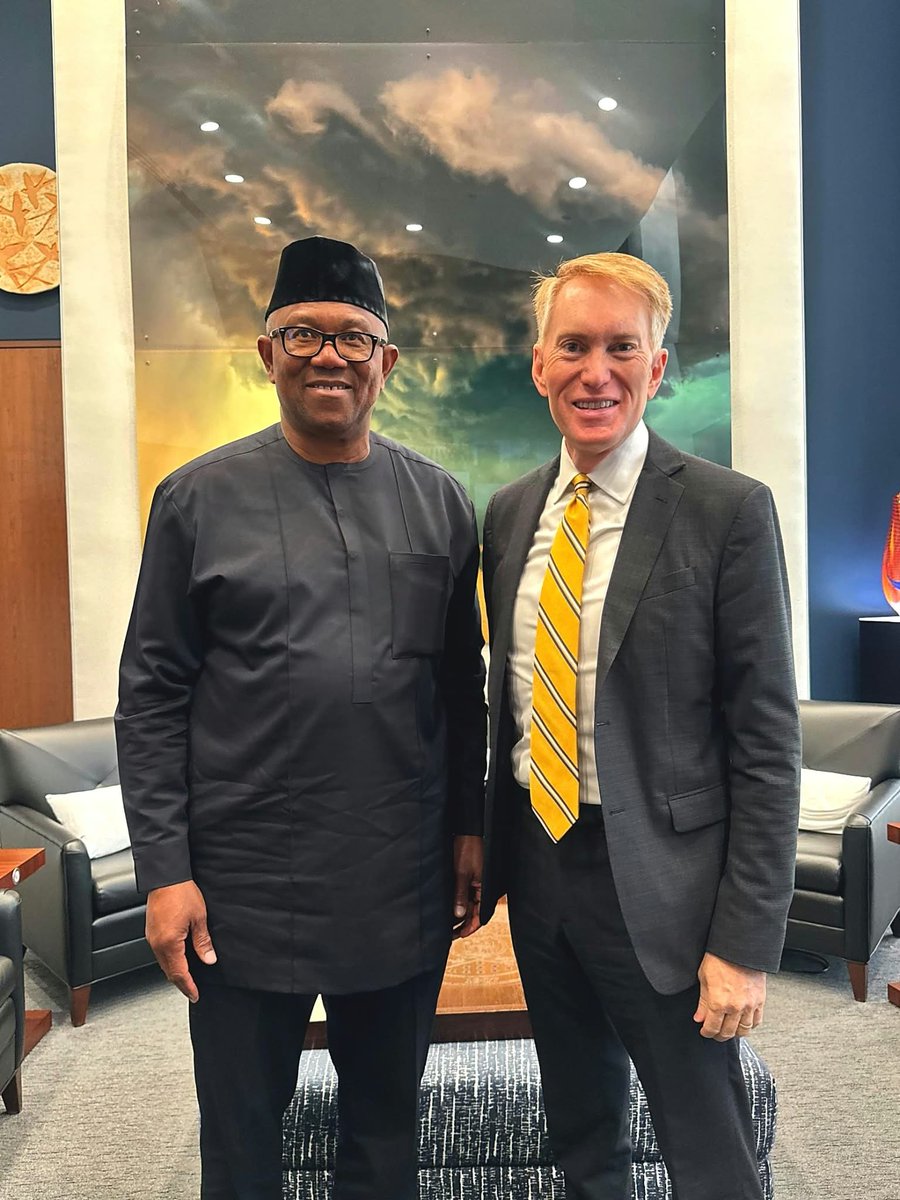
Yesterday, November 17, the second day of our engagements on Capitol Hill in Washington, D.C., we visited the United States Senate and met with some senators, including Senator James Lankford, who kindly invited me over to his office.
I am deeply grateful to Senator Lankford for his warm reception, generous time, and meaningful exchange of views on strengthening democratic institutions, fostering peace, and promoting our shared values.
Our conversations underscored the importance of international collaboration, effective governance, credible democratic processes, and the security and well-being of all Nigerians.
These engagements offer a further opportunity to deepen relationships and advance our shared vision of a peaceful, united, and prosperous Nigeria.
Our commitment to building a nation that serves every Nigerian remains steadfast.
A New Nigeria Is POssible! -PO
NDC-NCC PRESS STATEMENT:
DELE ALAKE’S ALLEGATIONS: A COVER UP - APC EXPORTING PRESIDENT TINUBU’S LAGOS PATTERN OF POLITICAL VIOLENCE/AGBERO STYLE TO THE ENTIRE COUNTRY
The Nigeria Democratic Congress (NDC) National Campaign Council rejects the false press statement by the All Progressives Congress (APC) Presidential Campaign Council Spokesperson, Mr. Dele Alake, accusing the NDC and other opposition parties of recruiting thugs ahead of the 2027 elections. Rather, the APC supporters are the ones perpetrating a yearlong campaign of terror against the NDC across Nigeria. And Nigerians are not surprised, as this ongoing violence is simply a chapter from President Bola Tinubu’s Lagos State pattern of political violence and agbero style of governance, introduced since 1999 and now being exported across the entire country.
Alake’s baseless accusation is a textbook case of the perpetrator crying victim. For the past year, the NDC and our peaceful supporters have endured relentless intimidation and targeted attacks orchestrated by thugs loyal to the ruling party. To set the record straight, the NDC states as follows a documented trail of violence against the party because Mr. Alake’s claims insult Nigerians.
Where were Mr Alake and the APC on 18 July 2025, when Edo State Governor Monday Okpebholo publicly threatened and warned our presidential candidate, Mr Peter Obi, not to enter Edo State without prior clearance during a political rally in Uromi?
Senator Francis Adenigba Fadahunsi, representing Osun East Senatorial District, was caught on a viral video in Ilesa instructing APC supporters in Yoruba to "seek out and kill" members of the rival Accord Party before the election. To date, he has faced no real accountability, proving that violence is tolerated and rewarded within the APC.
On October 10, 2026, armed thugs invaded NDC Enugu campaign office, fatally shooting our member, Ifeanyi Christopher Nwolie. On November 12, 2026, hoodlums attacked a peaceful NDC town hall in Oregun, Lagos, injuring supporters.
It was an APC governor, Governor Hyacinth Alia of Benue State, who deployed thugs to violently block, harass, and disrupt Mr Peter Obi when he sought to pay a solemn condolence visit to Yelewata for the tragic massacre of 273 innocent souls in Benue
Across Calabar, Delta, and Edo States, Mr Peter Obi and his campaign entourage have been repeatedly targeted and attacked by thugs linked to the ruling party. NDC running mate, Alhaji Rabiu Musa Kwankwaso’s team was also attacked in Kano while on campaign
Mr Alake should direct his lectures on peaceful conduct to his principal, President Bola Tinubu, who famously declared that power is not served à la carte and instructed his followers to "grab it, snatch it, and run away with it." The President is also on public record stating his desire to win by any means necessary and boasting that he enjoys seeing the opposition in disarray.
The truth is undeniable: the surging popularity of the NDC, and the Peter Obi–Rabiu Kwankwaso ticket is entirely organic. It has grown by leaps and bounds because the APC administration has failed Nigerians woefully, inflicting untold hardship through harsh, ill-conceived, and unworkable economic policies.
NDC does not need to instigate citizens who are already pushed to the wall by daily hunger, multidimensional poverty, and rampant insecurity. What the APC is witnessing at its rallies is not sponsored disruption—it is the genuine, spontaneous rejection of a failed government by a traumatised populace. NDC must not be dragged into the self-inflicted chaos of a ruling party facing the wrath of the electorate.
Unlike the APC, whose playbook relies on voter suppression and exploiting vulnerable youths, the NDC’s movement is built on ideas and competence. We view youths as nation-builders deserving jobs and education, not foot soldiers for violence.
PRESS STATEMENT:
Clarification: H.E Peter Obi’s Meeting with Some U.S. Congress Leaders Was Not an Endorsement Exercise
The public attention surrounding Mr Peter Obi’s recent meetings with certain members of the United States Congress has made it necessary to address inaccurate interpretations appearing in parts of the media.
For clarity, Mr Obi did not state that he had received an endorsement from any U.S. Congressman, the U.S. Congress, or the American government. His visit was also not undertaken to seek political backing. Any such claims did not emanate from his party or campaign team.
His discussions with some congressional leaders and other prominent American figures formed part of broader conversations about Nigeria’s development, the welfare of its citizens, democratic governance, and her strategic role in the international community as well as the future of relations between Nigeria and the United States.
Although the positive and encouraging comments made by some American lawmakers regarding Mr Obi’s leadership record are noteworthy, they should not be portrayed or misconstrued as an official political endorsement.
It is essential to distinguish between meeting with individual members of Congress and engaging officially with the United States Congress as an institution. These are separate circumstances.
Mr Obi maintains that addressing Nigeria’s challenges requires constructive engagement with international partners, mutual respect, and candid dialogue with stakeholders around the world. He has always said in his speeches that he had not come for endorsement but to let the world hear our case and help our democracy. His meetings in Washington reflected that conviction.
We welcome the favourable reception and supportive remarks from American lawmakers. Nevertheless, we call on the media and political commentators to present those engagements accurately, without embellishment, sensationalism, or attributing statements to Mr Obi that he did not make.
The objective of the meetings with his interlocutors was to promote dialogue about Nigeria, not to obtain foreign backing for a Nigerian presidential bid.
Nigeria’s future and its leadership decisions remain solely in the hands of Nigerians.
Signed:
Idris Zekeri Jnr.
November 18, 2026
NIGERIANS, GO AND VERIFY (3)
Building the Future Through Education
Peter Obi
In the first two instalments of this series, I explained how we approached the task of building strong institutions and laying a solid foundation for the development of Anambra State. One of the most important institutions we invested in was education.
For me, education was not a political game or a convenient political promise. Even before I ventured into politics, I had always regarded it as the foundation of meaningful development and the most enduring investment any government can make in its people. I believe that the future of any society depends largely on the quality of its educational institutions, teachers, learning environment, and opportunities available to its young people.
This conviction informed our decision to invest across the entire educational spectrum, from primary schools to universities, technical institutions, and adult education.
Basic and Secondary Education
One of our first major decisions was to return mission and privately owned primary and secondary schools to their original proprietors while retaining government support. We also provided billions of naira to assist in rehabilitating the returned schools, restoring the partnership between government and religious institutions that had historically contributed to educational excellence.
This policy attracted international attention. Professor Paul Collier, the Oxford economist and World Bank consultant, led a World Bank-commissioned study of Anambra’s educational transformation. His team examined our decision to return schools to their original missionary owners while retaining government responsibility for funding teachers’ salaries and supporting infrastructure. The team described the partnership model as a revolution in public service delivery and recommended it as a model that could be replicated by other Nigerian states and developing countries. We believed then, as we do now, that government does not necessarily have to own every institution to discharge its responsibility effectively. What matters is ensuring that every child has access to quality education.
For those who claim that we built no schools, I invite them to verify our records. We constructed five-classroom blocks in virtually all of the 177 communities in Anambra State, one of the most extensive community-based school infrastructure programmes undertaken by any state government. The town union chairmen and community leaders of that period can attest to this.
We also renovated hundreds of dilapidated schools, including some where trees had literally grown through abandoned buildings. Comprehensive Secondary School, Onitsha, and Oraukwu Grammar School are examples.
Beyond infrastructure, we distributed approximately 40,000 computers to schools, including more than 22,500 HP laptops. We equipped secondary schools with Microsoft Academies and connected schools across the state to the internet. We supplied generators, established and stocked libraries, revived school sporting activities, and installed boreholes in over 300 schools, including all girls’ schools. We also provided funding to support sporting activities in all our secondary schools.
These technology investments attracted remarkable international recognition. Mr Fabrice Campoy, Managing Director of the Personal Systems Group at HP Inc., described our procurement and distribution of over 22,500 HP laptops as the biggest project of its kind in the Middle East and Africa. Similarly, Mr Ken Spann, then Country Manager and Head of Microsoft Nigeria, described the establishment of Microsoft Academies in more than 500 Anambra secondary schools as the most extensive deployment of its kind in Africa at the time.
In Tanzania before the game, the players supported by supporters club sang the National Anthem with their mouths cos there was no lights in the stadium as Tanzania NT did the same thing.
They couldn't water the pitch of lack of electricity & none of their journalists that I followed mentioned it.
But my country, it will be the contents for days.
Again, Package Your Country ❤️
Endless Human Bloodletting and Failure of Intelligence
I am deeply saddened and troubled by reports that at least nine people were killed in the Zuwagal community, Mangu Local Government Area of Plateau State, in yet another assault on innocent Nigerians. These deaths have occurred amid a deeply concerning pattern of recurring attacks, displacement and the destruction of communities throughout the country.
Data from the past two weeks are alarming. OpenWatch's security incident records show 261 reported deaths across Nigeria between 2 and 15 November 2026, including 24 in Plateau during the first week and 15 during the second. Plateau also reported additional attacks on 16 November.
These victims are not merely numbers. They were fathers, mothers, children and breadwinners whose lives were abruptly ended, leaving families and entire communities to mourn.
Why are communities being threatened without receiving adequate protection? Why are intelligence reports failing to result in preventive action? How many more innocent Nigerians must lose their lives before decisive measures are implemented?
I call on the Government and security agencies to immediately reinforce security operations in vulnerable communities; thoroughly investigate these attacks and ensure that both the perpetrators and those who support them face justice; establish reliable early-warning and rapid-response systems; deliver humanitarian aid and rehabilitation services to displaced families; and release transparent, accurate casualty figures for all affected communities.
We must also confront the root causes of insecurity by strengthening accountable institutions, intelligence gathering, justice, education, economic opportunity and meaningful engagement with communities.
Every Nigerian life is valuable, regardless of ethnicity, religion or political affiliation. The right to life must never be subject to negotiation.
My deepest condolences go to the bereaved families and the people of Plateau State. May God comfort them and bless our country with peace.
Nigeria must do more than mourn those who have died. We must protect those who are still living. -PO