Not only is there wide variation in unemployment rates in local labor markets, but this variation is strikingly persistent. We tell the stories of seven of these local communities in our dive into the geography of unemployment in America. https://t.co/5IUKUHFEpu
Minnesota gained 14,400 jobs in August, the state’s largest monthly increase in jobs in two years. Find data from other Ninth District states on our Regional Economic Indicators dashboard: https://t.co/FWsYSzBcxZ
Timestamps for @OIGInstitute conf papers:
1:08:21 Local Origins of Biz Formation
2:14:17 Retirement Saving Incentives
4:25:16 Market Size & Trade in Medical Services
5:34:32 Place-Based Redistribution of Disability Insurance
6:39:08 Flexible Incentive Pay
https://t.co/BApWtHjx4i
In recent years, economists have worked to incorporate an obvious point that proved thorny in practice: People are different. Fed policymakers can increasingly ask and understand how policy might ripple out not just to the median consumer, but to everyone. https://t.co/ZNMupknhac
1/9: @JeffHorwich and I have a new short piece on the U.S. labor market. "Fewer openings, harder to get hired: U.S. labor market likely softer than it appears" (https://t.co/lUL9qRocKp). What we do in 6 figures:
Check out @ErickGarciaLuna and Joe Mahon's two-minute take on our region's #BeigeBook report for May. The theme? The Ninth District economy is getting ready for summer. 😎
Find the full report here: https://t.co/xapiZanFO3
Our new Income Distributions and Dynamics in America resource makes some 6 million statistics based on IRS and Census Bureau records available for download for use by anyone, anywhere. Visit the IDDA data center: https://t.co/rhvOXDShWc
Hospital consolidations, which often lead to higher prices, can sometimes be good for consumers -- even with higher prices. @SoundsLikeToWin explains here. To read more, visit: https://t.co/PG7LMC37LL
“Who are the Americans outside the labor force? For the latest in an ongoing @minneapolisfed series, data journalist @dhmontgomery explains the biggest group: full-time caregivers. https://t.co/lERPtLBWfD
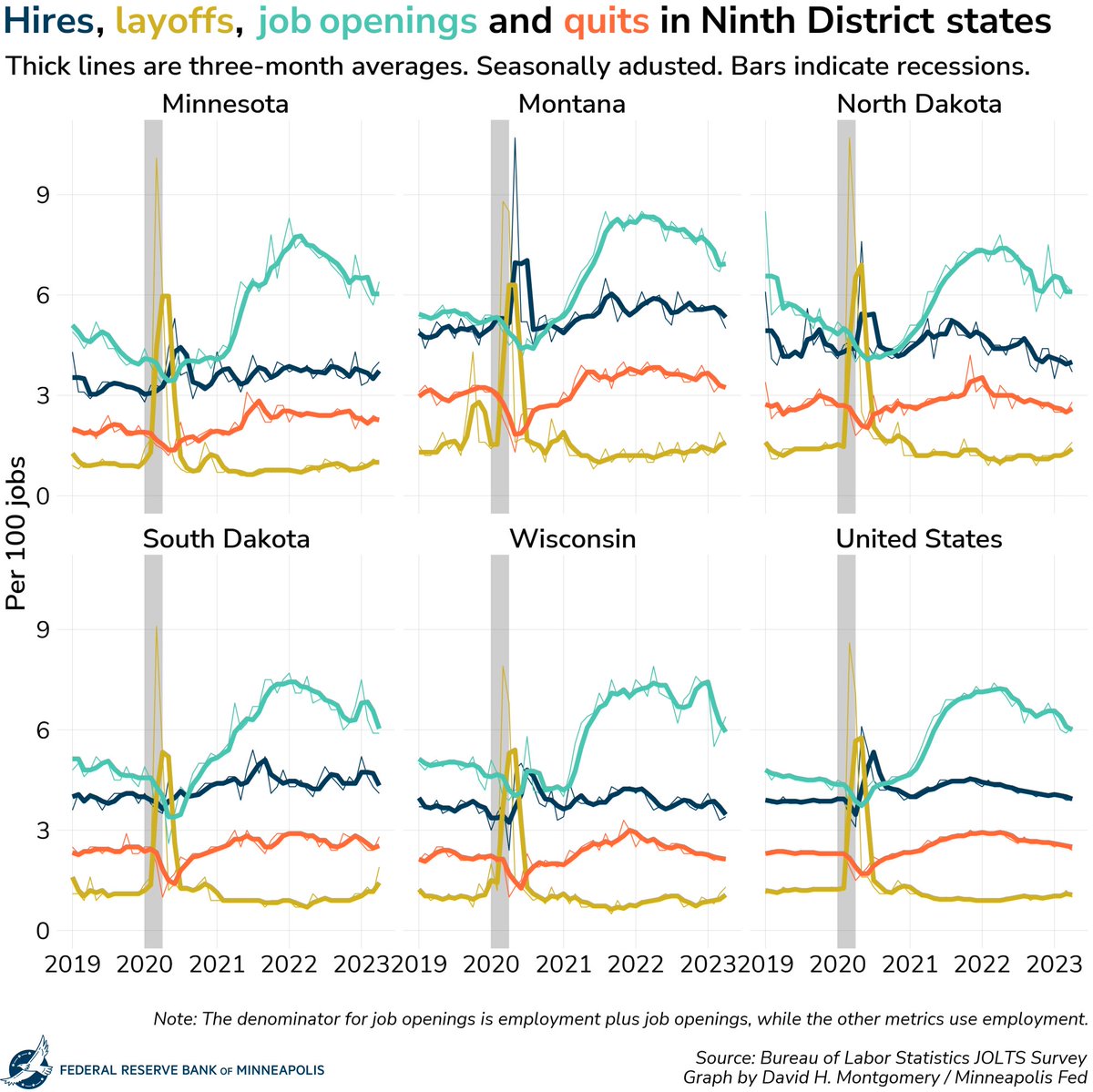
The Upper Midwest is still seeing more job openings than hires, but way more hires than layoffs. Job openings have been trending down here. All this is more-or-less in line with national trends.
Do all groups in high-income states earn above-average incomes? Short answer: No. Black incomes lag White incomes in every state.
https://t.co/qO4qXPb5qj
What can newly available data from a key Federal Reserve survey tell us about the prevalence and effects of #NonCompete agreements? @tyler_boesch, @RyanDNunn, Jacob Lockwood, and @mzabek explore the question in our latest feature.
https://t.co/ZceuNfcRIX
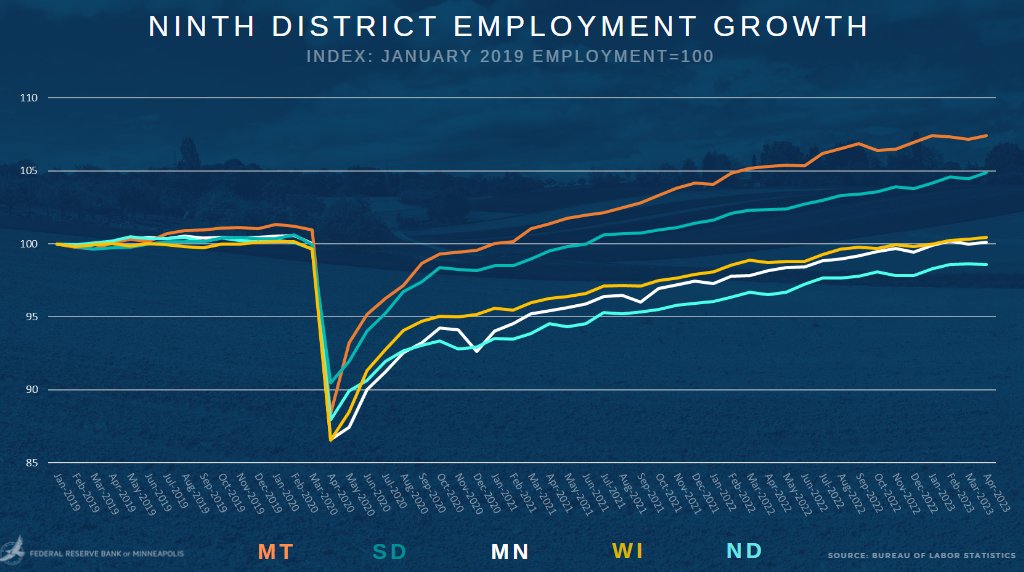
#Minnesota added 4,500 jobs in April 2023. Find data from other Ninth District states on our Regional Economic Indicators dashboard: https://t.co/FWsYSzBcxZ
Is it more expensive to rent or own a home? In a new paper examining costs of physically similar rental units & owner-occupied units, @MplsFedComDev's @kykimeng & @RyanDNunn find that renters pay a #Housing premium—& in the TC metro, it's at least $143/mo. https://t.co/retYoE2G0K
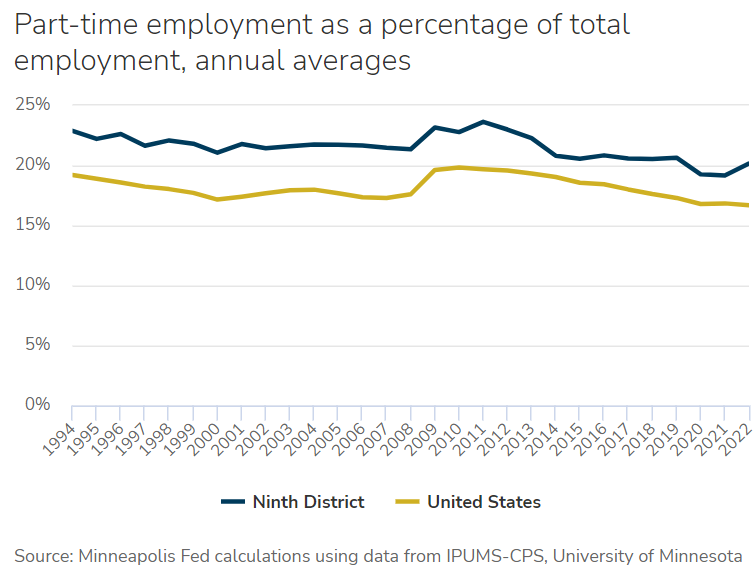
The part-time employment rate has mostly been declining over time. Meanwhile, the underlying reasons people work part-time hours are changing.
Let's dig deeper into the data to better understand these trends:🧵 https://t.co/uhSja4eysp
The Center for Indian Country Development (CICD) has engaged in many of these conversations about how to collect accurate, comprehensive data with Indian Country in ways that honor tribal data sovereignty
https://t.co/Ok6F7GRxOY
NEW: One key thing to understand how the U.S. workforce is changing? Older people are working more and younger people (i.e., under 55) are working less.
More charts & analysis in my latest article for @MinneapolisFed: https://t.co/tL2RGIq67U
Despite overall growth in investor ownership of single-family homes in the Twin Cities region, rates are falling in some lower-income neighborhoods. See Senior Data Scientist Kim-Eng Ky (@kykimeng) summarize our team’s recent research findings. #Housing https://t.co/vUDpKdbdMy
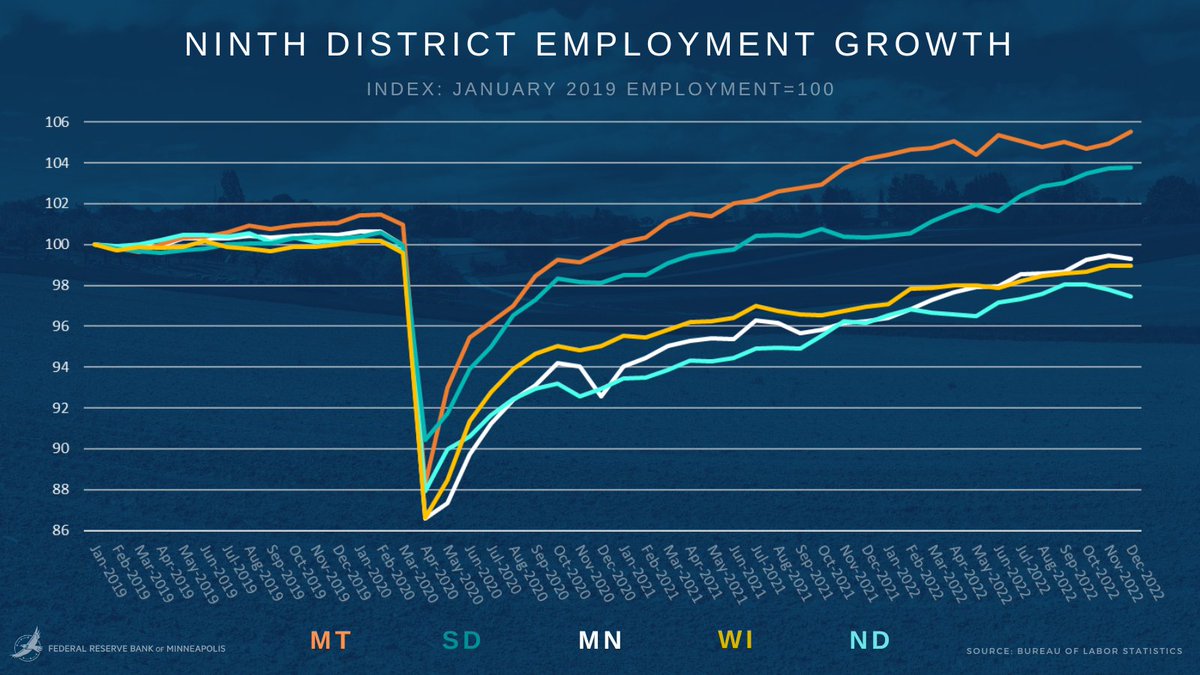
Employment levels increased slightly across Montana, South Dakota, and Wisconsin in December. See the newest data on our Regional Economic Indicators dashboard: https://t.co/FWsYSzBcxZ