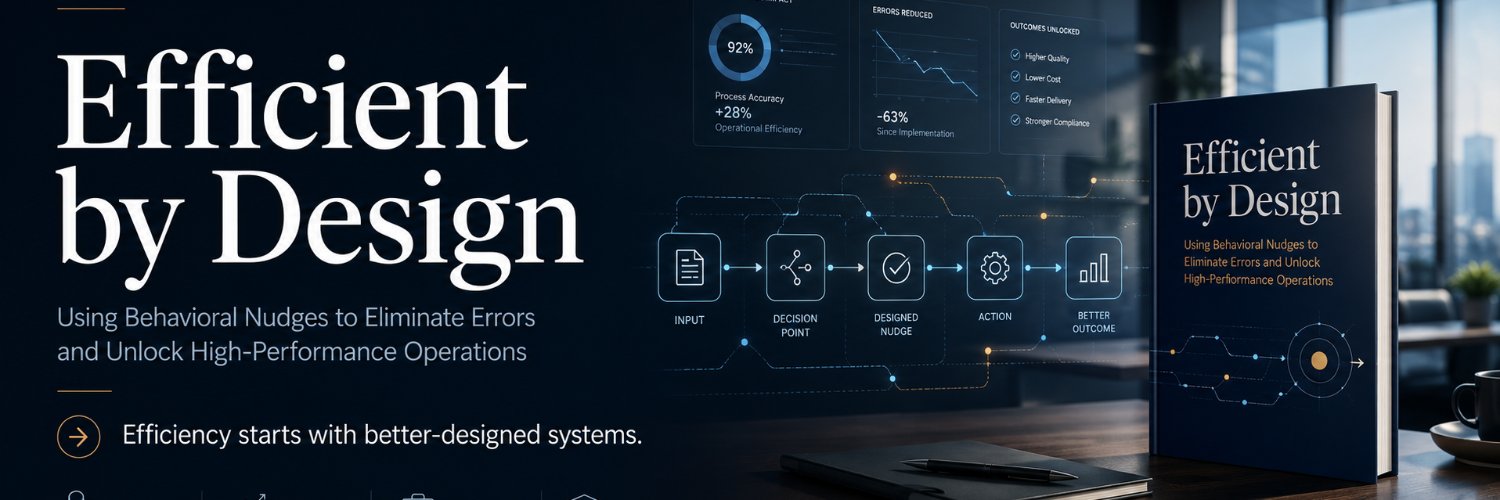
If you're interested in how Human Factors and Ergonomics work hand in glove with the Efficient by Design framework but can't attend the annual AHFE conference, here is snippet (~3 mins) of my presentation introduction.
Please share any feedback in the comments!
For more information on the conference, visit: https://t.co/aFfWdKflJB
For more information on the book, Efficient by Design, visit: https://t.co/FF5PZjbETJ
I’m excited to share that my paper, “Efficient by Design: A Human Factors Approach to Reducing Errors, Rework, and Operational Friction,” has been accepted for presentation at the AHFE International Conference in the Human Factors, Business Management and Society track!
AHFE is a highly regarded international forum for applied human factors and ergonomics, bringing together scholars, practitioners, and industry leaders working across technology, business, public policy, healthcare, design, and society. I’m honored to contribute to that interdisciplinary conversation because my work sits at the intersection of operations, behavioral economics, organizational psychology, and human-centered system design, with a focus on helping organizations build systems that work with human behavior rather than against it.
The central argument is simple: when the same errors, rework, missed handoffs, or execution problems keep appearing, leaders should pause before asking, “Who failed?” A better first question is: “What in the system made this outcome likely?”
The paper introduces a practical framework from my book, Efficient by Design, for moving from a traditional managerial mindset to a Detective Mindset, and then to an Architect Mindset. The goal is not to remove accountability, but to improve diagnosis. Once we understand the cues, defaults, incentives, feedback loops, and decision pressures shaping behavior, we can redesign the work environment so better action becomes easier.
I’m especially interested in how this applies as organizations adopt more AI and automation. Technology does not operate outside the work system; it becomes part of the decision environment people must navigate.
The full paper will be available through the conference proceedings after the conference.
Conference information: https://t.co/aFfWdKflJB
#HumanFactors #BehavioralEconomics #Operations #OrganizationDesign #SystemsThinking #AITransformation #EfficientByDesign
🚨 Real-Time Feedback That Actually Changes Behavior. The Efficient by Design companion video series brings the concepts to life with practical, visual examples you can apply immediately. What’s one process in your world that could use a “rumble strip”? Let's connect!
My latest - a video series to my book, Efficient by Design. This intro video takes you through the principles of operational efficiency, & how to design better work systems. If you're a manager/leader, in the C-suite, or an MBA student - give it a watch!
https://t.co/wAZIyWkqO0
Check out my latest article: How Evalgelizing Error Expectancy Turned a Solid Developer into a Proactive Efficiency Leader https://t.co/YJZK4yGAvU via @LinkedIn
Check out my latest article: Redesign the Choice Before You Make It: A Lesson from Procurement (Chapter 8 in Efficient by Design) https://t.co/JZ8iLuGfcc via @LinkedIn
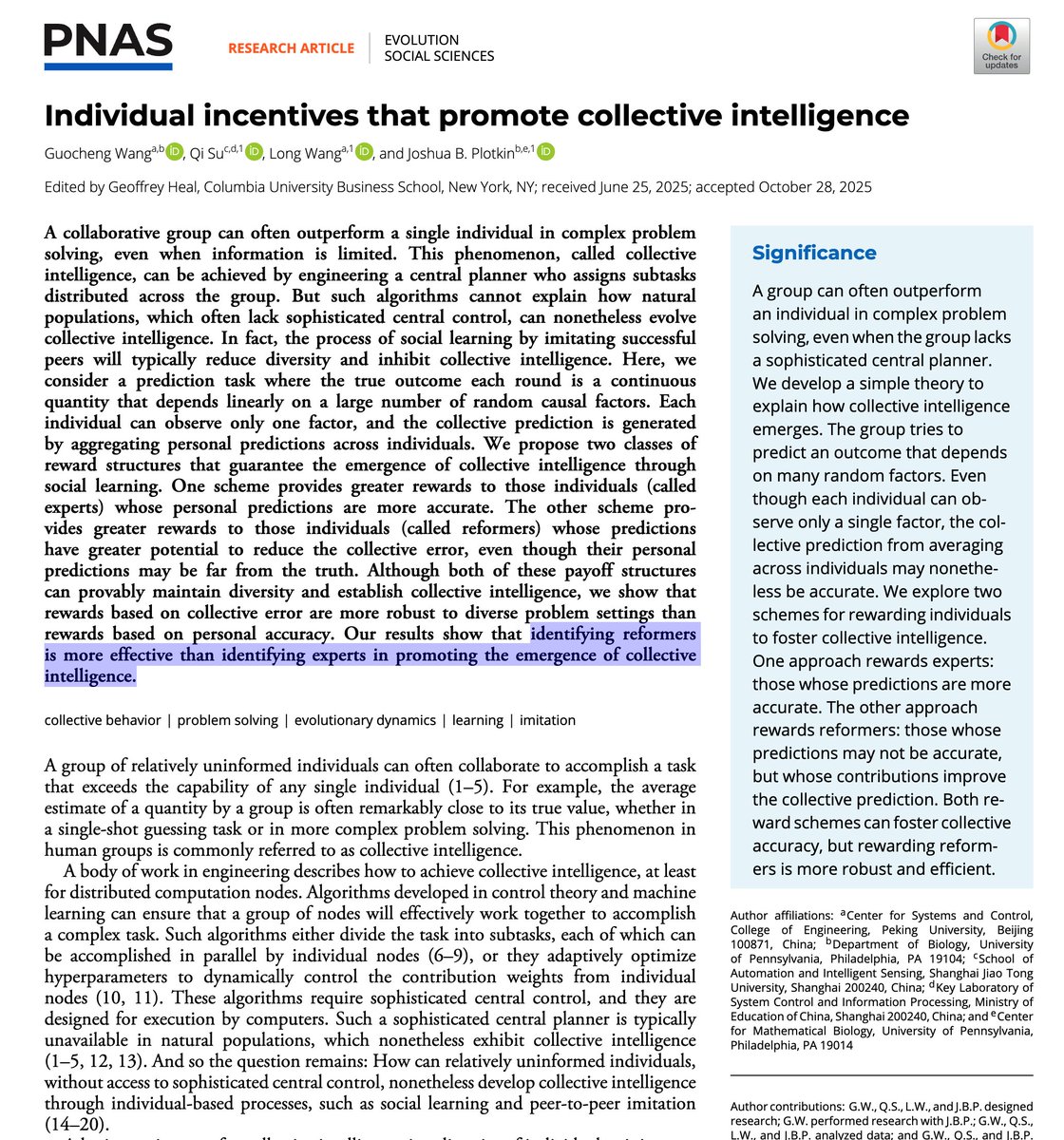
Collaborative groups often outperform single individuals in complex problem solving. A new paper examined how to create the right incentives to promote this kind of collective intelligence.
Rewarding experts who are accurate can improve collective intelligence. But rewarding reformers whose predictions have greater potential to reduce the collective error (even though their personal predictions may be far from the truth) is *much more effective* in promoting the emergence of collective intelligence!
If you want to create smart groups, you need to incentive contributions to the collective rather than mere individual success!
https://t.co/Q23DRhNAoB