Intro to Claude Code for Academic Writing and Research
A two-hour tutorial for non-technical researchers
This tutorial is a recording of my 6 June webinar, which was attended by 200+ researchers.
Click the link below to get the tutorial:
https://t.co/K8VE40K5ZO
AI is forcing universities to rethink assessment and in a fundamental way.
In this paper, Moorhouse et al. (2023) look at how the world’s top-ranking universities responded to generative AI tools such as ChatGPT.
The paper shows that university guidelines tend to focus on three major areas:
Academic integrity
Assessment design
Communication with students
First, academic integrity.
We can no longer reduce the conversation to “students are cheating with AI.” That is too simplistic. Of course, misuse is real. But the bigger issue is that AI has blurred the boundaries between assistance, authorship, collaboration, and plagiarism.
If a student uses AI to brainstorm, is that misconduct? If they use it to improve grammar, is that allowed? If they use it to generate an outline, where is the line?
If they submit AI-generated text as their own, that is clearly a problem. But many other uses sit in a grey zone, and that is where schools need clarity.
Second, assessment design.
One important recommendation from the paper is that teachers should test their own assignments with AI tools.
Put the prompt into ChatGPT and see what it produces. Then ask yourself: What exactly am I assessing here?
If AI can complete the whole task with little student thinking, then maybe the problem is not only the tool. Maybe the assessment itself needs redesign.
The authors highlight several useful directions:
Focus more on process.
Break large assignments into stages.
Ask for drafts, notes, reflections, and explanations.
Create tasks that connect to class discussions, lived experiences, local contexts, and real-world problems.
Give students opportunities to critique AI outputs rather than simply avoid AI altogether.
This is an important shift. Assessment should not only produce a final answer. It should make learning visible.
Third, communication with students.
This is probably the most practical takeaway for teachers. Students need clear expectations.
Definitely not “AI is forbidden” statements that no one knows how to apply. They need to know what is allowed, what is limited, what must be disclosed, and what crosses the line.
The paper also makes a powerful point: teachers now need a new kind of competence, what the authors call generative AI assessment literacy.
I like this idea.
Teachers do not only need AI literacy in general. They need to understand how AI changes assessment specifically.
That means knowing how AI affects academic integrity, how to redesign tasks, how to guide students toward responsible use, and how to keep assessment meaningful in a world where AI can generate polished work instantly.
Gemma 4 12B can now run locally on just 8GB RAM via Dynamic GGUFs.
Google's new model, Gemma 4 12B Unified supports image, audio and 256K context.
You can run and train the model via Unsloth Studio.
GGUF: https://t.co/8cL321pVDh
Guide: https://t.co/odRo9WjRpA
5. Return on Invested Capital (ROIC)
The ROIC is one of the most important financial ratios for investors.
Companies only create value when their ROIC is higher than their WACC.
The higher the ROIC, the better.
Look for companies with a ROIC > 15%.
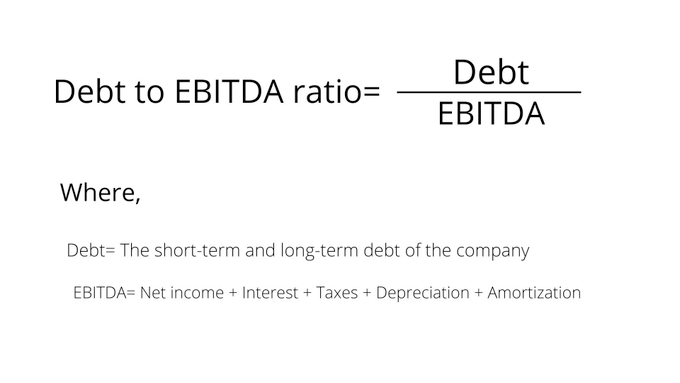
2. Net Debt / EBITDA
Shows how many years it takes for a company to pay off its debt when it would use all EBITDA to pay down debt.
The lower this ratio, the better.
You want the Net Debt / EBITDA to be lower than 4.
If you're an academic, start using Claude Code and Codex.
Spend five minutes on learing about MCP servers. It helps you connect Claude Code and Codex to external apps like Zotero, etc.
Ask Codex to write you a Zotero MCP server. You don't need to understand what it means.
Follow the instructions and integrate your Zotero library with Claude Code or Codex.
We’re transforming Google Antigravity into a scientific workbench. The new Science Skills bundle allows researchers to run complex workflows like protein analysis in minutes using specialized Alpha* models and 30+ major scientific databases.
Li Lu is the only person Charlie Munger trusts with his family's money
He made $400 million from this
I found this gem full of Li Lu's insights. Grab the PDF here👇
Anthropic engineer:
"You're not supposed to prompt Claude. You're supposed to build a system that prompts itself."
this is one of the best workflows I've seen in a long time
in this video she breaks down exactly how most people are using Claude:
- the 14% you lose to CLAUDE.md before typing a word
- the automation workflows most users don't know exist
- the daily task pipelines that run without touching the keyboard
- the daily workflows Anthropic's own engineers automated first
if you've been using Claude for more than a month and never left the chat window, you've been using one agent when you could be running a team of them
instead of another show tonight, watch this
make sure to bookmark it before it gets lost in your feed
the guide is in the article below
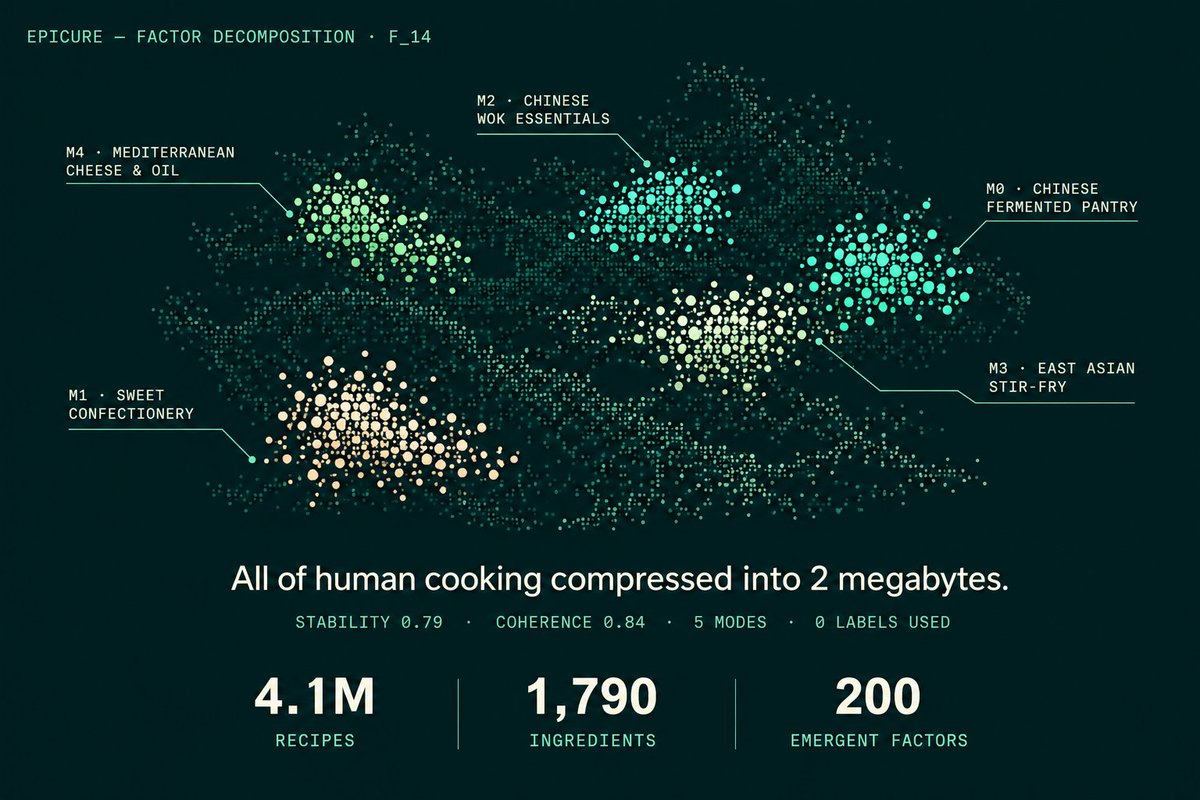
Launching our new paper on arXiv: we trained the largest multilingual food model ever built.
4.1M recipes. 7 languages. 1,790 ingredients. 300 dimensions.
All of human cooking compressed into 2 megabytes.
At @UChicago@UChi_Economics “Last year, over 40 percent of students graduated with a degree in economics—double the share from 20 years ago. The most obvious culprit is the business economics specialization introduced in 2018.”
Link: https://t.co/PsUg5FeBgU
I’ve spent an enormous amount of time on interactive explainers, intuitive diagrams, and a hopefully very compelling explanation of what AI for research can and should look like when we deliberately center responsibility, rigor, + reproducibility.
🥳 If you’ve been wondering how to use Claude Code as a quantitative researcher/social scientist of any kind: I’ve *finally* made a very nice, very accessible, and very informative homepage for the Data Analyst Augmentation Framework (DAAF), and I think you'll wanna take a look!
I just finished creating a guide that connects NotebookLM + Antigravity
Spent 67 hours creating this system that turns your knowledge base into an AI agent that actually takes action
BONUS: Complete guide for building 10 workflows + copy-paste prompts
Like & Comment "FREE" and I'll DM it to you as fast as i can