REPEATED ATTACKS ON OUR SUPPORTERS IN DELTA STATE: AN URGENT APPEAL FOR ACTION
I am profoundly troubled by the continuing attacks against our supporters throughout Nigeria, especially the latest tragic incident in Delta State, in which four people were killed during an attack on supporters of the Nigeria Democratic Congress (NDC). I unequivocally condemn this senseless act of violence.
It is no longer sufficient for those responsible to fund the dissemination of false claims against the opposition. They have now escalated to the appalling practice of murdering innocent Nigerians solely because of their political affiliations. This is completely unacceptable.
The deceased include:
1. Hon. Moses Anaughe, immediate past Federal Commissioner, Federal Character Commission.
2. Comrade Akima Efenena Umukoro, former President of the Urhobo Progress Union (UPU), Youth Wing.
3. Nyoren Okoro, an NDC chieftain.
4. An additional victim whose identity has not yet been established.
Fifteen other people sustained critical injuries and were hospitalised. Among them are Hon. Evance Ivwurie, Chairman of Senator Ovie Omo-Agege’s Campaign Organisation, and Comrade Chuks Erhire, Director-General of the same organisation.
I offer my deepest condolences to the families of those who died and pray for a swift recovery for the injured.
I urge the security agencies to conduct a comprehensive investigation, identify those responsible and their sponsors, and ensure they face justice. The authorities must also act swiftly to safeguard Nigerians engaged in political activities.
Every Nigerian has a constitutional right to support any political party or candidate without fear of intimidation or violence. Political differences must be resolved through persuasion and the ballot, never through the use of bullets.
No political ambition is worth the life of even one Nigerian. -PO
NIGERIANS, GO AND VERIFY (8)
TRANSFORMING COMMERCE, INDUSTRY AND INFRASTRUCTURE: BUILDING AN ECONOMY THAT WORKS
Peter Obi
I have always believed that economic development must go beyond the construction of roads and buildings. It must create opportunities, stimulate enterprise, support local industries, and improve the productive capacity of society. Government must not merely spend money; it must create the conditions that enable people and businesses to prosper.
When I assumed office in 2006, Anambra State already possessed enormous entrepreneurial energy. From Onitsha to Nnewi, Awka, and other commercial centres, our people had demonstrated remarkable ingenuity and enterprise. What was required was a government that could provide the infrastructure, institutional support, and enabling environment to harness this potential.
Under the Anambra Integrated Development Strategy (ANIDS), we therefore pursued a deliberate programme of commercial and industrial development, with particular emphasis on public-private partnerships (PPPs). Our objective was to modernise the business environment, attract investment, strengthen indigenous enterprises, and create employment.
Our approach was guided by a simple conviction: commerce must be supported by production, and industrial development must be supported by infrastructure. We could not continue to depend largely on buying and selling without deliberately creating the conditions for manufacturing, processing, and value addition.
MODERNISING COMMERCE: THE ONITSHA BUSINESS PARKS
Recognising Onitsha’s historical position as the commercial hub of the South-East, we initiated the First and Second Onitsha Business Parks. We wanted to provide organised, modern, and secure business environments capable of accommodating growing corporate and financial activities.
The parks attracted important financial institutions and corporate operations, including facilities for banks, alongside capital market operators and other businesses.
We also conceived the second phase of the Onitsha Business Village as a centre for information and communications technology-related activities. The intention was to move beyond traditional commercial arrangements and provide facilities that would accommodate emerging business opportunities and technology-driven enterprises.
Another initiative was the LG World-ANIDS project, conceived as a one-stop centre for electronic goods, services, and training. We wanted to connect commerce with technology, skills development, and modern business practices.
Our intention was to move commercial activities beyond the limitations of informal arrangements and provide the infrastructure necessary for modern corporate operations.
DEVELOPING HOSPITALITY AND TOURISM: AGULU LAKE RESORT AND PROTEA HOTEL
We also recognised that a growing commercial centre must have the hospitality infrastructure to support investors, business travellers, and tourists. A state that seeks to attract investment must be prepared to accommodate those who come to do business. This informed our conception of two important projects.
The Agulu Lake Resort was designed to harness the natural beauty and tourism potential of Agulu Lake, creating a destination for leisure, hospitality, and conferences. Beyond tourism, we saw the project as an opportunity to stimulate economic activities in the surrounding communities and create employment.
Similarly, the five-star Protea Hotel project in the GRA, Onitsha, was conceived as a public-private partnership to provide high-standard accommodation and hospitality services. We envisaged a facility that would serve investors, business travellers, and visitors while expanding the State’s hospitality infrastructure. Although the project was subsequently abandoned, its original conception reflected our determination to provide the facilities required by a modern commercial economy.
TERRIBLE NEWS IN NDC DELTA STATE
Moses Anaughe, a fmr House of Assembly member Ughelli North II and aide to Omo-Agege was killed today as gunmen opened fire on NDC supporters in Ughelli
3 other people are reportedly killed.
Violence has no place in politics.
It is reprehensible and we in NDC Delta state condemn this totally.
Mr Peter Obi as Governor of Anambra State fought insecurity even in Lagos.
At the first quarter of the year 2006, the whole int'l markets in Lagos came under heavy attacks of Armed Robbery with little or no assistance from the Lagos State government to curb the ugly menace.
The security personnel complained of lack of security vehicles for rapid response in time of emergencies.
Sequel to these challenges, all the int'l markets came together under the eagies of Int'l Market Association, and wrote a letter to the then Governor of Lagos State Mr Tinubu through his then chief of staff, Lai Mohamed; unfortunately, that letter met a brick walls.
As the spate of armed Robbery attacks on people's shops kept increasing, they gathered and wrote another letter to Tinubu's New Chief of Staff, Babatunde Fashola , through his Coursemate at Lagos State University LASU, that letter did not see the light of the day.
One of the executives who's a friend to Mr Victor Umeh ( the then APGA National Chairman),then suggested that they wrote a letter for security operational vehicles to the Anambra State Governor Mr Peter Obi, and they did.
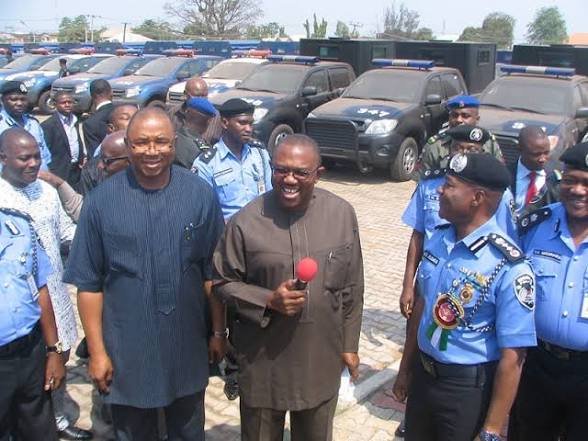
Surprisingly,upon receipt of the letter , Mr Peter Obi personally handed two Hilux Vehicles to the Int'l Market Association Electionics, and others in Lagos.
You can verify this if you have anybdy doing business in Alaba int'l market as of 2004 to 2014.
Mr Peter Obi is an exceptional leader.
Abuja Collation Centre Must Be Immediately Shut Down If Amupitan Announces First State Result Contradicting Independently Collated Figures – Netizen Charges Nigerians https://t.co/5v1SpPHtcx
Leadership Beyond Identity: The Courage to Serve and Defend Humanity.
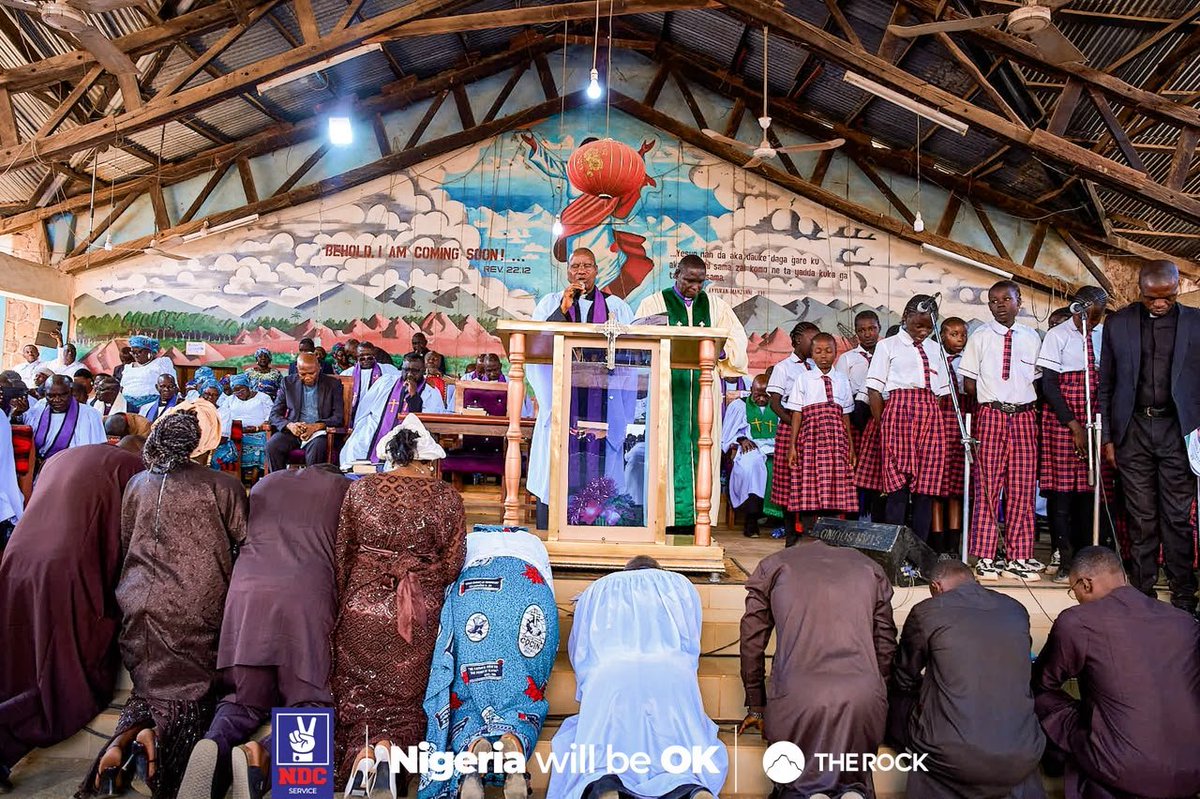
Yesterday, I was honoured to attend the retirement service of Reverend Ezekiel Dachomo in Plateau State. Although it was my first opportunity to meet him personally, I have long admired his courageous advocacy, his compassion for victims of violence, and his steadfast dedication to truth, justice, and the sanctity of human life.
Rev. Dachomo’s example reminds us that faith is expressed not only through what we profess in places of worship, but also through the courage to protect the vulnerable, challenge those in power with the truth, and uphold what is right, even when doing so is difficult or unpopular. The conclusion of formal service should not mark the end of one’s commitment to truth, justice, and humanity.
I also used the occasion to consider the leadership and choices Nigeria requires. Those who support me should not do so because I come from a particular tribe, belong to a particular religion, or benefit from personal sentiment. Their support should be based on my record, character, competence, and the principles I have consistently demonstrated in public service. Nigeria must move beyond identity-based politics and assess leadership according to the ability to deliver results, the integrity to account for public resources, and the compassion to serve those who depend most on government.
Our faith, ethnic identities, and political affiliations must never be used to divide us. Instead, they should reinforce our common humanity and our shared duty to create a nation in which every Nigerian, regardless of background, can live with peace, dignity, and opportunity.
I remain firmly convinced that Nigeria does not lack resources or potential. What we require is leadership that recognises public office as a responsibility rather than a privilege, and as a call to serve rather than an avenue for personal enrichment.
May God continue to strengthen Reverend Ezekiel Dachomo and all who, in their respective callings, remain steadfast in upholding truth, justice, and the dignity of every human being. May He also grant us the wisdom and courage to build the Nigeria we all deserve.
A New Nigeria is POssible. -PO
Tinubu held a close door meeting with Sunday Igboho inside his car at the Oyo rally today keh? 😳
This app wouldn’t have contained us all if it were Peter Obi who was seen holding a meeting with Nnamdi Kanu in his car.
INEC just claimed that before any result uploaded from the BVAS at polling units can be seen on the IRev by Nigerians, it must first go through a secret cleansing process.
This simply means that there is a secret unknown third party system, software or AI already embedded between the BVAS and the IRev to view, interrogate, or alter the results from polling units, before putting it out for Nigerians to view on the IRev.
Fellow Nigerians, we are doomed.
INEC has secretly removed real-time transmission of results from Polling units to IRev.
SmartBallot : Towards credible and Transparent Ballot
I have consistently believed that technology, combined with the creativity and resourcefulness of young Nigerians, can help reinforce our democracy and advance free, fair, and credible elections.
I am pleased to endorse SmartBallot (https://t.co/YgbAq2cLxE), a platform developed to facilitate grassroots mobilization, civic engagement, and election monitoring.
I urge our supporters and NDC candidates to register on SmartBallot and examine how its tools can assist them in organizing their communities, coordinating voters and polling unit agents, expanding grassroots engagement, and supporting transparent election monitoring.
Through the effective use of technology and collective action, we can reinforce our democratic institutions and help ensure that every vote is counted.
Credible elections require preparation, active participation, and peaceful vigilance. Let us make full use of every available resource to create a more organized, engaged, and empowered electorate.
A New Nigeria is Possible. -PO
The moment Amupitan announces the first state result that doesn't match the indepently collated result in Abuja, the collation centre must be immediately sacked. Don't allow them complete their script like 2023.
#rig
They rigged 2023 because nobody had proof.
In 2027, we will have proof.
Photograph your EC8A at your polling unit. Upload it. Get a receipt.
If they try to change the result, we will show the world the original.
Don't just vote. Protect your vote. #ProtectYourVote 🇳🇬
NIGERIA, WE MUST GET IT RIGHT THIS TIME. VOTE for Peter Obi
My dear Nigerians, the future of our country is too important for us to keep making the same mistakes.
As we approach another election, I urge everyone to look beyond political parties, tribal sentiments, religious differences and empty promises. Examine the candidates, their character, their records, their policies and their commitment to the welfare of ordinary Nigerians.
Ask yourselves: Who has a credible plan for security? Who can create opportunities for our young people? Who can strengthen our economy and protect the lives and rights of every Nigerian?
Do not sell your future for a bag of rice or a few thousand naira. Your vote is your voice, and it carries the power to shape the future of generations.
Let us pray, think carefully and vote wisely. Nigeria deserves leadership that serves the people. May God heal our nation. Amen 🙏 🇳🇬
NIGERIANS, GO AND VERIFY (7)
LIFTING THE VULNERABLE : ANAMBRA’S BLUEPRINT FOR POVERTY ALLEVIATION AND SUSTAINABLE EMPOWERMENT (2006–2014)
Economic growth that does not translate into improved living conditions for ordinary citizens is incomplete. This is one of our fundamental concerns with President Bola Ahmed Tinubu's government. Development must ultimately be measured by its impact on human lives, particularly those of the poor and vulnerable. This was underpinned by the Anambra Integrated Development Strategy (ANIDS). We believed that infrastructure, education, healthcare, agriculture, and social protection must reinforce one another. Poverty was not merely a shortage of money; it was also a lack of access to opportunities, productive resources, and the basic conditions necessary for a decent life.
Our poverty alleviation strategy, therefore, went beyond temporary handouts. It focused on restoring dignity, creating economic opportunities, and equipping vulnerable citizens with the means to become self-reliant.
Our approach attracted recognition beyond Anambra. In May 2010, Magnus Kpakol, then National Coordinator of the National Poverty Eradication Programme (NAPEP), commended our commitment to poverty reduction, declaring: “We are prepared to support you in the excellent work you are doing in Anambra State.”
1. POVERTY MAPPING: KNOWING WHERE POVERTY LIVES
We recognised that poverty could not be effectively addressed without knowing where it was concentrated and what caused it. We, therefore, undertook a poverty-mapping exercise to identify the most deprived local government areas and communities.
The exercise revealed that some of our poorest communities were also important food-producing areas. Their challenges included poor access to markets, agricultural inputs, electricity, water, and other economic opportunities.
Areas including Anambra West, Orumba South, Awka North, and Ogbaru required particular attention. The findings informed our development priorities, enabling us to direct roads, agricultural support, and social interventions toward neglected communities.
2. EMPOWERING WOMEN, WIDOWS, AND COOPERATIVES
We recognised that rural women, widows, and indigent households bore a disproportionate burden of poverty. Across the 21 local government areas, we provided financial assistance and productive support to thousands of beneficiaries.
Our administration provided financial assistance to support the establishment and expansion of small businesses and farming activities. We also introduced revolving loan schemes to promote enterprise development, economic self-reliance, and improved livelihoods.
We distributed productive equipment, including sewing machines, generators, ovens, cookers, hair dryers, shoe-making machines, and welding equipment. The objective was to help beneficiaries establish sustainable livelihoods rather than remain dependent on government assistance.
We also promoted access to microcredit and cooperative financing to enable small entrepreneurs to expand their businesses, improve their incomes, and create employment.
Our philosophy was simple: rather than merely giving people money to survive today, the government should help them acquire the means to earn a living tomorrow.
3. AGRICULTURE AND FADAMA: MAKING RURAL COMMUNITIES PRODUCTIVE
Agriculture was central to our poverty-reduction strategy because many rural households depended on farming.
Through partnerships with the Federal Government, the World Bank, and other development partners, particularly under the FADAMA programme, we supported farmers with finance and productive assets.
In November 2009, our administration disbursed millions to FADAMA Community Associations across the state. By October 2010, the National FADAMA office was commending Anambra’s commitment. Its National Project Coordinator, Buka Tijjani, represented by Charles Ugwuona, described Anambra as the leading state in the programme.
As Chairman of the South-East Governors’ Forum for several years, I also encouraged cooperation among governors and security agencies across the region. We understood that criminal networks did not respect state boundaries; therefore, the response could not be confined to individual states.
Bello specifically acknowledged the contribution of this regional cooperation to the effort to dislodge notorious armed-robbery gangs from the South-East.
A SECURITY MODEL BUILT ON PARTNERSHIP
Our experience taught us that security is not achieved by government acting alone. It requires the cooperation of the police, military, intelligence agencies, paramilitary organisations, community vigilantes, traditional institutions and ordinary citizens.
We therefore promoted a system in which the security agencies were adequately equipped, communities were encouraged to provide useful intelligence, and government remained actively involved in supporting operations.
We also understood that the welfare and morale of security personnel mattered. Officers who were sent on dangerous assignments needed vehicles, fuel, communications equipment, operational allowances and the necessary infrastructure to perform their duties.
Our approach was not to interfere with the professional responsibilities of the security agencies but to give them the support required to discharge those responsibilities effectively. Security was not simply about purchasing equipment; it also involved building trust between the police and the people, encouraging intelligence-sharing, strengthening community participation and ensuring that criminal activities had consequences.
A NEW NIGERIA IS POSSIBLE: CONFRONTING NIGERIA’S SECURITY CRISIS
Today, insecurity is arguably Nigeria’s greatest challenge. From terrorism and banditry to kidnapping, armed robbery and communal violence, Nigerians are increasingly unable to live, travel, farm and conduct their businesses in safety. Communities are attacked, farmers driven from their lands, travellers abducted and innocent citizens killed.
This situation demands more than speeches, promises and occasional military operations. It requires deliberate leadership, adequate investment, effective intelligence-gathering and sustained collaboration among all security agencies.
Our experience in Anambra demonstrated that security challenges can be confronted through proper planning, institutional support and responsible leadership. We equipped the security agencies, strengthened their infrastructure, improved their operational capacity, encouraged community participation and promoted cooperation across state boundaries.
Nigeria needs the same seriousness of purpose. Our security agencies must be properly equipped, motivated and held accountable. Intelligence-gathering must improve, criminal networks and their sponsors must be dismantled, and federal, state and local governments must work together. We must also address the underlying social and economic conditions that make criminal recruitment possible.
We did not claim that every security challenge disappeared during our administration. What we demonstrated was that determined leadership and sustained institutional support could substantially improve the security situation. The testimonies of the Commissioners of Police who served in Anambra, the public assessments of the Inspector-General of Police, together with the investments and interventions documented here, provide evidence that can be independently verified.
Protecting lives and property is not a favour government does for its citizens; it is one of its most fundamental obligations. Nigerians deserve to live without fear and to pursue their livelihoods in safety. Our country can achieve this if we make security a genuine national priority and match our commitments with action.
A New Nigeria is POssible.
In Series 7, we shall look at Poverty Alleviation. -PO
ANAMBRA STATE : ADVANCING EDUCATION, ENERGIZING INDUSTRY AND SHAPING A NEW NIGERIA
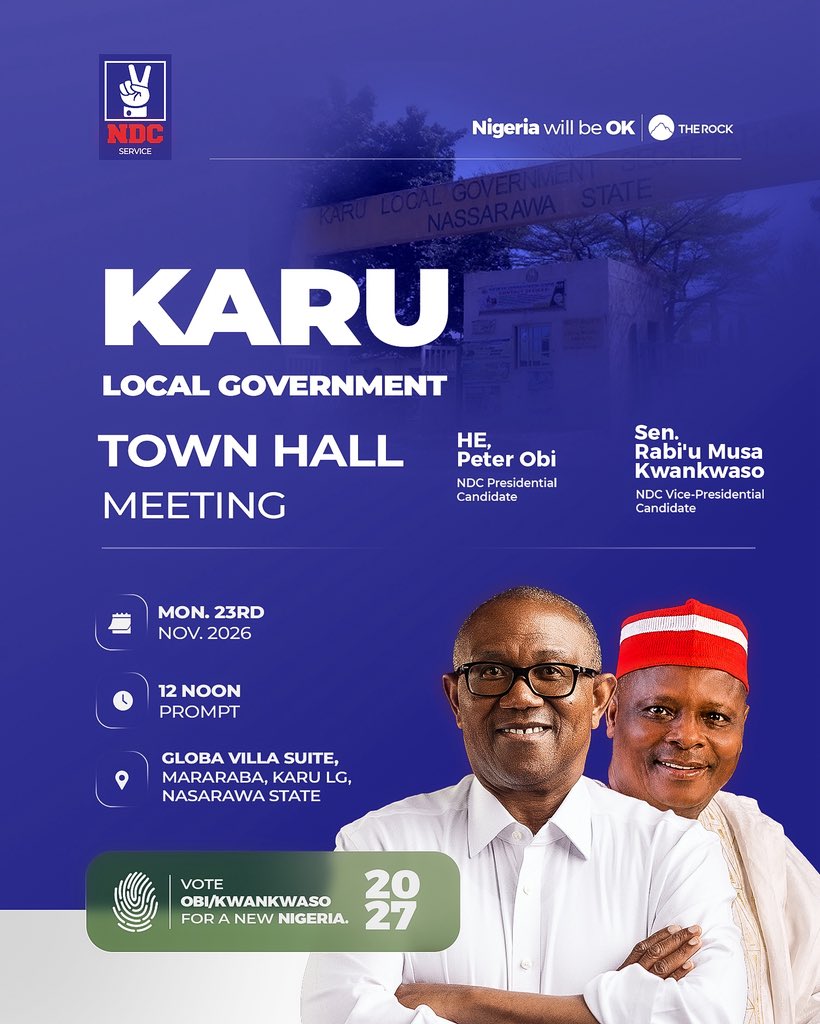
After returning from an official working visit to the United States of America, I arrived in Onitsha, Anambra State, yesterday, 20th November 2026, to continue our nationwide series of town hall meetings.
I began the day by visiting my alma mater, Christ the King College, Onitsha. Together with my friends, I am supporting the construction of a Teachers’ House to preserve the supportive teaching and learning environment for which the school is known. I commend the management and students of this distinguished institution for upholding its high standards.
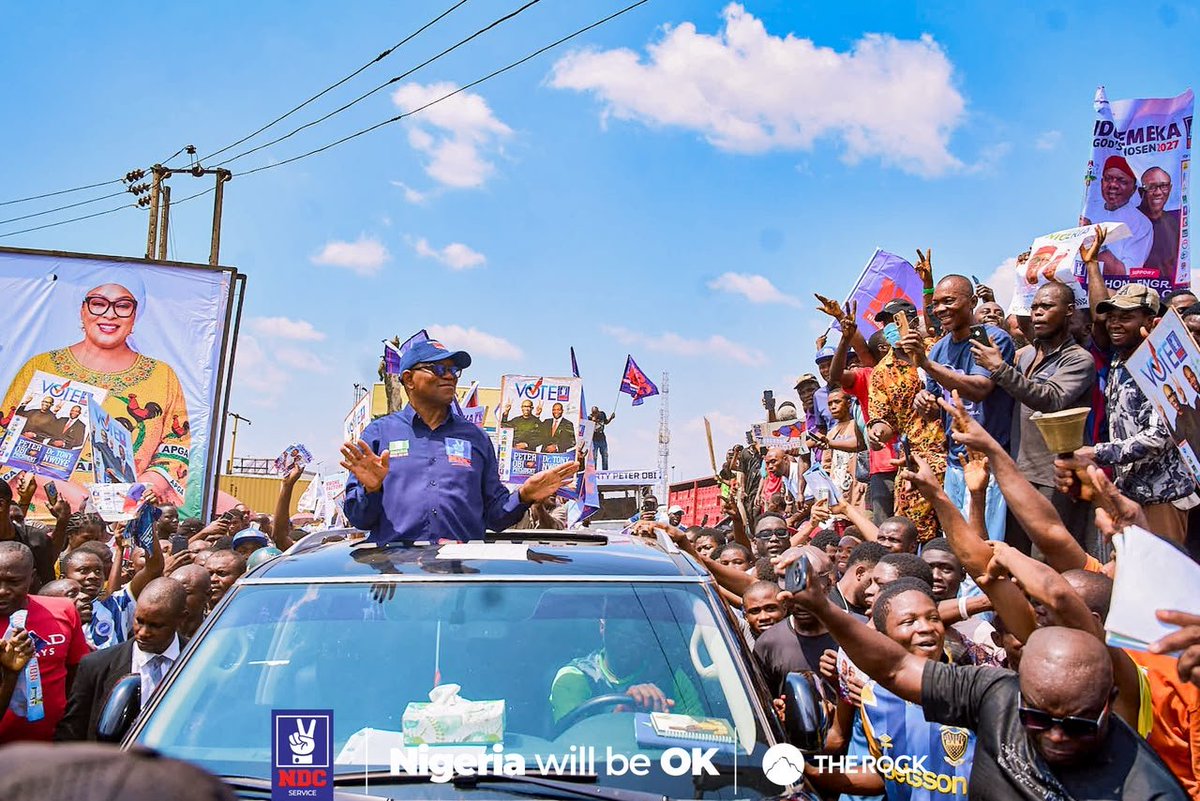
We then travelled through Head Bridge, Ochanja, and Main Market, engaging with workers, traders, drivers, and other hardworking Nigerians who are striving to earn a living despite the challenging economic conditions affecting the country.
At the Archbishop C. J. Patterson International Auditorium Complex, Onitsha, where our town hall meeting took place, I reaffirmed the commitment of His Excellency, Senator Rabiu Musa Kwankwaso, and me to promoting national unity and taking decisive action to address the insecurity affecting many parts of Nigeria.
I also assured our numerous supporters and well-wishers of our determination to generate, transmit, and distribute at least 10,000MW of electricity to drive production and revive the country’s major industrial centers.
We also underscored our key priorities, especially substantial investment in education through the construction of at least 40,000 additional classrooms and the recruitment of the necessary number of teachers nationwide to tackle the problem of out-of-school children.
In the healthcare sector, we are committed to building at least 10,000 fully operational primary healthcare centers, with at least one located in every ward nationwide, thereby reinforcing the foundation of healthcare delivery in Nigeria.
These initiatives, together with other purposeful investments and policies, will contribute to our efforts to expand productive capacity and lift our people out of poverty.
I express my gratitude to the good people of Anambra State for their warm welcome and hospitality. I also commend our party leaders and members for their continued commitment and hard work in advancing the ideals of our party and engaging with our supporters.
NDC ka’ ma!
A New Nigeria is POssible, and Nigeria will be OK!
-PO
NIGERIANS, GO AND VERIFY (6)
SECURING LIVES AND PROPERTY: PARTNERSHIP WITH SECURITY AGENCIES
Peter Obi
In the preceding instalments, I explained how we approached governance under the Anambra Integrated Development Strategy (ANIDS), beginning with strengthening state institutions and investing in education and other critical sectors. Our conviction was that development must rest on strong institutions, capable human beings, and a secure environment.
No meaningful development can take place where lives and property are constantly under threat. Education, commerce, investment, and other productive activities can only flourish when people feel safe. This informed our approach to security. We understood that the responsibility of protecting lives and property could not be discharged through speeches and declarations alone. It required deliberate investment, effective coordination, and sustained partnership with the security agencies.
When we assumed office, Anambra faced serious security challenges. Armed robbery, bank attacks, kidnapping, and other violent criminal activities had created an atmosphere of fear. In 2006, I personally approached the then Inspector-General of Police, Mr Sunday Gabriel Ehindero, to seek urgent intervention. Following our appeal, the police authorities constituted a special team comprising experienced officers, including the late Haruna John, Alhaji Amusa Bello, and others, to confront the security challenges in the state.
We therefore made security a major priority of our administration, recognising that government must provide both the leadership and the resources required to enable security agencies to perform their duties.
EQUIPPING THE SECURITY AGENCIES
We believed that those entrusted with protecting our people must be adequately equipped. Accordingly, our administration, using funds from the security votes, provided over 600 patrol vehicles to various security agencies, including the Police, Army, Civil Defence, Customs, Immigration, NDLEA, Road Safety, Prisons, SSS, Navy, and community vigilante organisations.
Our support went beyond vehicles. We provided Armoured Personnel Carriers (APCs), armoured Hilux patrol vans, communication gadgets, repeater and linker stations, base stations, mobile vehicular radios, walkie-talkies, generators, and other logistical requirements. We also used the same security votes to provide financial support for their operations, including fuel, weekly allowances, and other essential needs of security personnel.
We paid particular attention to community security because we understood that effective policing must have a strong local presence. Again, using funds from the security votes, we provided billions of naira to the 177 communities in Anambra State to strengthen security in their respective areas. We directed traditional rulers and town union presidents to establish vigilante groups under police supervision, with the police providing uniforms for proper identification. We also contributed towards the payment of their salaries.
Additionally, we provided 250 patrol vehicles to communities across Anambra State. These vehicles were manufactured by Innoson Vehicle Manufacturing Company in Nnewi. Some towns received more than one, depending on their size and security needs. This initiative was also extended to universities and other large institutions in the state.
We also recognised that markets were particularly vulnerable because of the volume of commercial activities and the large number of people who visited them daily. Thus, in March 2014, we presented security vehicles to major markets in Onitsha and its environs. The beneficiaries included Bridge Head Market, Ogboefere Market, Building Materials Market, Ogidi, Onitsha Main Market, Marine Modern Market, Ogbaru Main Market, Ose Okwodu Market, Electronics Market, and the Amalgamated Market Traders Association.
NIGERIANS, GO AND VERIFY (5)
CONNECTING COMMUNITIES, UNLOCKING PROSPERITY: OUR ROAD INFRASTRUCTURE RECORD
Peter Obi
Another critical foundation of development is infrastructure, particularly road construction and maintenance.
Infrastructure is not just about constructing roads, bridges, and buildings. It is about connecting people, opening up economic opportunities, reducing poverty, and enhancing the well-being of ordinary citizens. A road that connects a farmer to a market, a patient to a hospital, a child to a school, or a manufacturer to a distribution centre is an investment in economic and human development.
This thinking informed our approach under the Anambra Integrated Development Strategy (ANIDS). We set out to connect all 177 communities in the State with motorable roads, paying particular attention to rural communities that had suffered years of neglect. Our objective was to build an interconnected road network that served the entire State, rather than concentrate projects in major cities or politically important locations.
I. The Road Revolution: Over 900 Kilometres of Road Projects
Between March 2006 and March 2014, during my two-term tenure in office, my administration asphalted over 900 kilometers of roads. These projects were deliberately distributed across the three senatorial zones of Anambra State to connect communities, facilitate commerce, and enhance transportation.
I acknowledge that Dr. Chris Ngige started the road revolution in Anambra State, and I commend the efforts his administration made in initiating several road projects. When we assumed office in 2006, we recognised the importance of continuing worthwhile projects rather than abandoning them simply because they had been initiated by a previous administration.
Among the roads we inherited from Ngige and completed were the Owerri–Ezukala–Umunze–Umuchu–Amesi–Uga–Igboukwu Road, where his administration stopped around Umuchu and we continued through Amesi, Uga, and onward to Igboukwu; the Iseke–Orsumoghu–Ukpor–Utu–Nnewi–Awka-Etiti Road, where his administration stopped at Ukpor and we continued towards Awka-Etiti; and the Ideani-Otuocha where work stopped around Awkuzu before our administration continued the project from Nteje to Otuocha.
There were also roads, such as Mmili John and Nkwelle Ezunaka bypass, which had been awarded before we took over, but on which no payment had been made by the time we assumed office. We took over these projects, assessed their status, and proceeded with the work. This was our approach to continuity in governance: acknowledging what had been started, distinguishing between projects merely awarded and those on which work and payment had actually commenced, and ensuring that important infrastructure projects were carried forward.
Some of the major roads and corridors included Amansea–Ebenebe Road; Aguleri–Umueze Anam–Mmiata Road; Nnewi–Ozubulu–Okija Road; and the Old Onitsha–Awka Road.
Other important projects included:
Awka and its Environs: Zik’s Avenue, Awka; Adazi-Nnukwu–Obeledu–Neni Road; 33 Junction–Nwafor Orizu College of Education Road; roads within the Awka Government Reserved Area (GRA); and the Old Nkpor–Amawbia Road.
Nnewi and Surrounding Communities: Nnobi–Nnewi Road; roads within Nnewi town; Akwaeze–Oraeri–Igboukwu Road; and Ekwulobia–Nkpologwu–Akpo–Achina–Umuchu Road.
Onitsha and its Environs: Bridge Head–Umunya Road; over 30 roads in other parts of Onitsha; more than 25 roads within the Onitsha GRA; over 20 stone-based roads within Harbour Industrial Estate, Onitsha; and the Nkwele Ezunaka Bypass.
Other Communities and Strategic Corridors: Awgbu–Amaokpala Road, with the Odor Bridge; Aguluezechukwu–Ogboji–Ajalli Road; Awkuzu–Igbariam Road, passing through the university; Owerri–Ezukala–Umuchukwu Road; Ugwuoba–Obosi Road; and Lilu Road.