Based at Griffith University, CAHE is one of the largest, and growing teams of health economists, health services researchers and biostatisticians in Australia.
#IHEA2023Congress
Developing Realist Economic Evaluation Methods (REEM) and Guidance to Evaluate the Impact, Costs, and Consequences of Complex Interventions.
@cahe_griffith @MenziesHealth @healtheconomics
📢 We are thrilled to share that Professor Byrnes is a candidate for President at the Australian Health Economics Society (AES). His passion for generating and disseminating health economic insights, along with his commitment to collaboration, makes him an exceptional candidate.
As President, he aims to empower early career health economists to shape the future of our science and drive impactful change worldwide. #HealthEconomics @MenziesHealth @Griffith_Health
Their article, evaluating the cost utility of racecadotril in addition to oral rehydration solution vs oral rehydration solution alone for children with acute watery diarrhea in four LMICs, is mentioned as one of the Editor-in-Chief selected articles from the 2022! @mjdepi
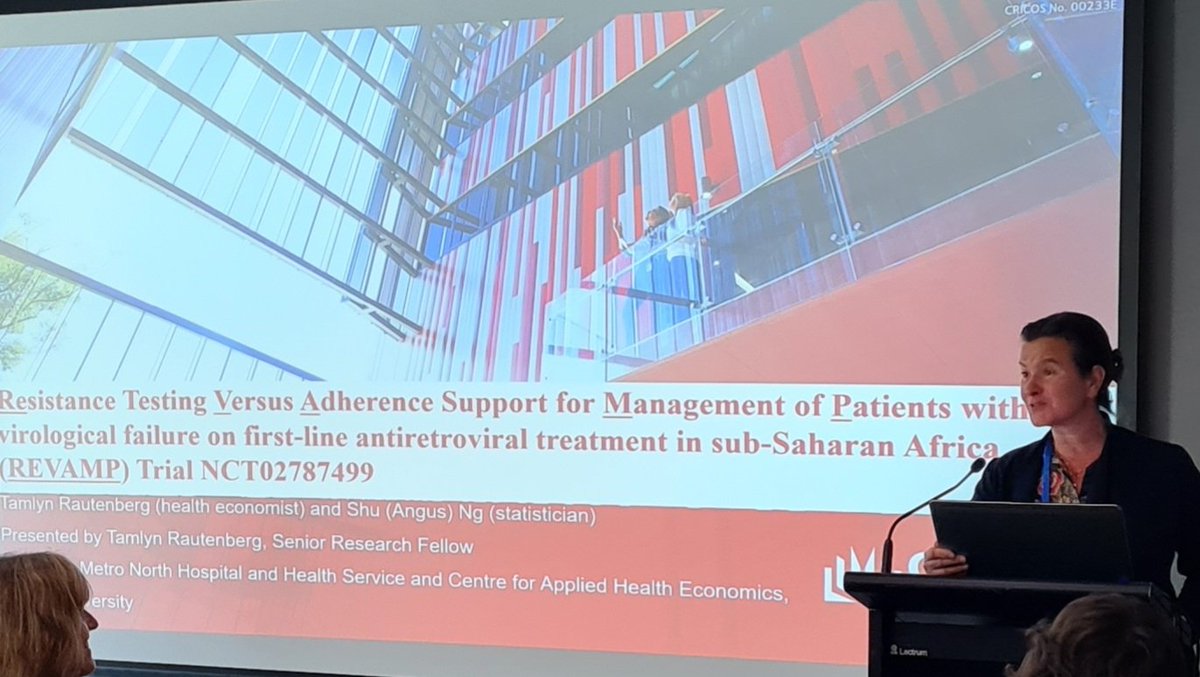
Congratulations to CAHE's Dr. Tamlyn Rautenberg, Ass/Pr Martin Downes and colleagues for making it into the review of the top 5 most read articles in The Journal of Medical Economics.
https://t.co/iEfncIB4oB @mjdepi
Peripheral intravenous catheter insertion in children is a common but challenging procedure. CAHE researcher Dr Peter Snelling's review of ultrasound-guided procedures showed a significant improvement in first pass success rates. 👉
https://t.co/Yl5nd2YRd6 #kidshealth#CAHE
Appropriate antibiotic practice is a hot topic - CAHE researcher Prof Robert Ware et al ask the question "Is an extended antibiotics course superior when treating children with community-acquired pneumonia?" Y👉 https://t.co/0l7uWeFvHq
#antibioticstewardship#CAHE
Congratulation to CAHE Ph.D candidate @troythedataguy for passing his confirmation milestone! Troy's thesis explores the junction between econometrics and biotechnology commercialisation systems. #phdlife#CAHE
Police watch-house detainees can have complex health needs. CAHE researcher @jbhealthecon et al highlight key challenges in the provision and management of detainees' health and safety in Queensland. You can read that article here 👉https://t.co/ZR0oktdYxe #CAHE#prisonhealth
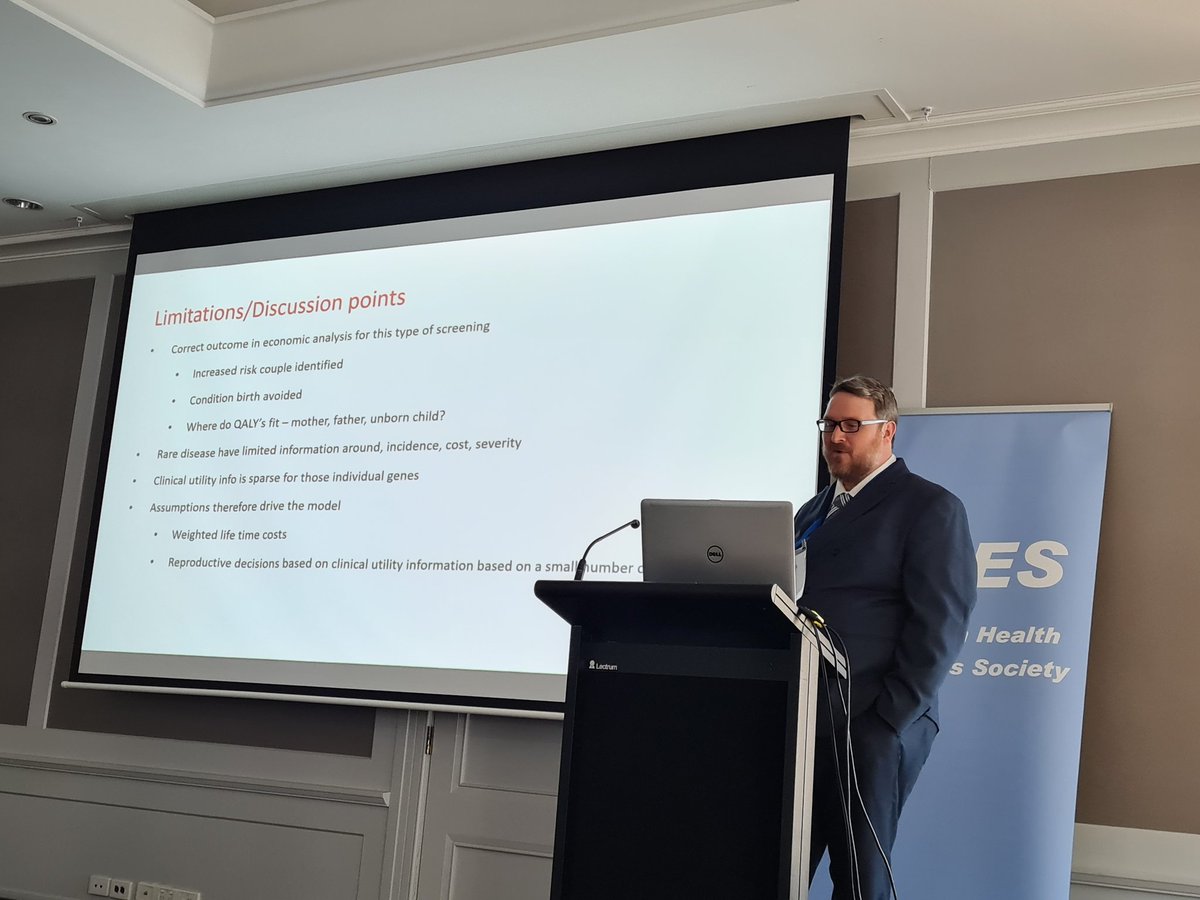
Martin was one of 3 CAHE members presenting his work at #AHES2022 he gave an overview on the cost effective of carrier screening @mjdepi @MenziesHealth
Congratulations to #CAHE member Gabor Mihala on the conferral of your Ph.D.
Dr. Mihala's thesis "Acute gastroenteritis in the first 2 years of life: a community-based cohort study" resulted in five peer reviewed publications! What a mammoth effort! #phdlife#phdjourney
Takeh home msg: the societal cost of premature mortality associated with aortic stenosis was AU$629 mil in men and $735 mil in women - a finding that calls for a possible rethinking on the current clinical guidelines for treating AS.
New Publicaiton Alert: What is the cost of premature mortality with progressively worse aortic stenosis in Australia?
Read the following article published in @LancetLongevity, CAHE staff @cliff020 and colleagues.
https://t.co/wUjhaLLvrk
CAHE researchers @ErkuDaniel, Prof Paul Scuffham, Katrina Gething collaborated with @rich_norman@Giz_tessema and others on a review of research in the region to identify the factors that shape women's preferences for these services.
One aspect of the CAHE mission is to contribute knowledge and skills to countries embedding econ eval & HTA into their health systems. Here is a recently published study by CAHE members Fatma Maraiki and Prof. Paul Scuffham in the Kingdom of Saudi Arabia
https://t.co/x5GkzMq8Wr
CAHE member Professor Robert Ware collaborated on a study to understand stakeholders’ current views and previous experiences with children with difficult intravenous access. You can read about that mixed method study here 👉 https://t.co/bFRNXLmS4i
Going to hospital can mean having an peripheral intravenous catheter inserted (an IV). But for children this can be a painful and stressful procedure, and first-attempt success rates are much lower than for adults.