Week 1 of trying to get good enough at Chess to beat my 13 year old step-son…
I know how the pieces move and I’m getting a little bit quicker at seeing the same patterns repeating, I can beat the 400-450 rated bots, but have stumbled my way into two draws against the 500-550 bots when I should of won, struggling with the endgame.
He looked over my shoulder while I was playing yesterday and asked what I was waiting for. His young brain already seeing what he said should be done, my older brain pondering each move looking for the right one and not to make any mistakes.
I’m sure there’s some comparison to be made with business and life and the successes of jumping in and compared with being afraid of making mistakes, it’s too late on a Sunday night for me to properly put it together but maybe one for next weeks update.
@oliverhenry Jealous. Just such a long flight, especially with kids 😅.
How long you staying in the US for the WC for? Till the final if England make it all the way?
A few people in my UK Tech Startup Discord group (https://t.co/cZZHJfSY2Z) recommended Getting Customers by @JamesSinclair85 , so I’ve been reading that over the last couple of days.
One thing I’m very aware of at the moment is that I’m not trying to find “any” customers, I’m trying to find the right customers.
I’m also finding myself increasingly interested in the bigger picture of my clients’ businesses, not just the technical side. I can see a future where more of my work moves towards technical strategy and helping business owners make better operational decisions.
Has anyone else made a similar move from hands-on technical delivery into a more strategic role? If so, how and what did you position yourself as?
Have been following @zachpogrob for a while and used Share Aura sporadically but as someone without an audience I wasn't a regular user.
I didn't realise that there was only posts when working out, I never thought about Strava that way either but it's true, if they pull in an audience from Instagram and people are only sharing when they work out instantly creates a higher value audience for people who value other fit people.
@dantefofante https://t.co/uCbU1DC3TY fantastic piece, thank you.
Tried many times to journal and have never been consistent and me wanting to be a perfectionist with it has meant I've destroyed them, some tiny tidbits in this article have made me realise I just need to it and stick with it and reap the benefits in years when I come back to it.
This line is brilliant and should be expanded out on further... this conjures immediately an image of myself both in and outside of a cage with me watching myself. Brilliant.
"You become a mini zookeeper on yourself and the gap between awareness and action shrinks dramatically."
@dantefofante Tell him! You will make his day and you'll probably have a great conversation on the back of it too.
We need to normalise bigging people like this up, don't let him think that nobodies noticed.
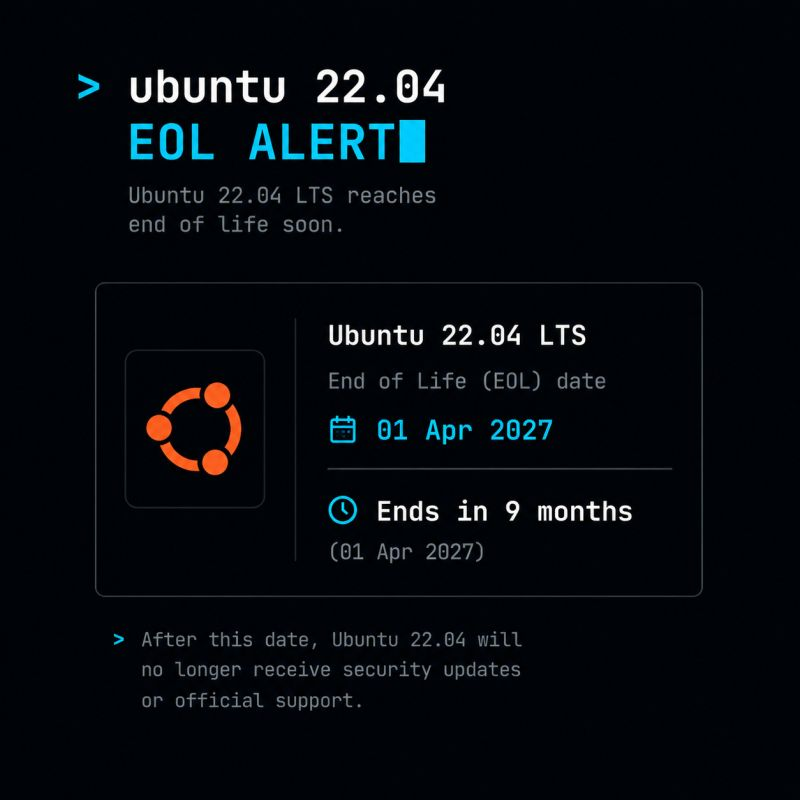
Ubuntu 22.04 is EOL at the end of April next year, if you have servers running this then you need to start thinking about your plan for upgrading or migrating them to Ubuntu 24.04/26.04 now, 9 months will soon pass and then you're at risk (or will have to pay for Ubuntu Pro to get additional security patches)
Do you know what your RPO & RTO is right now? Easy to have a conversation about backups around location, retention and frequency but when was the last time they were tested and are they fit for purpose?
Two key questions for any site or server that is backed up...
- How much data can you afford to lose?
- How long can you afford for the site to be offline?
Or to put it another way, how much does every 30 minutes of downtime cost you?
For brochure/information sites RPO can be measured in numbers of hours/days if they're infrequently updated.
It needs to be much lower than this for ecommerce, SaaS, booking platforms or client portals - 1-15 minutes would be ideal < 60s the gold standard.
If you can't answer what your (or your clients) RPO & RTO is and would happily tell the key stakeholders their RPO & RTO without grimacing then let's talk and make sure you can shout about your resilience and recovery options:
[email protected]
@ChamseddineHe Thanks for the feedback. I’m driving the engagement right now by asking lots of questions of the members and trying to drive discussion forward. I’m enjoying it so far and can see it continuing but obviously needs but in from more than just me. Any more tips?
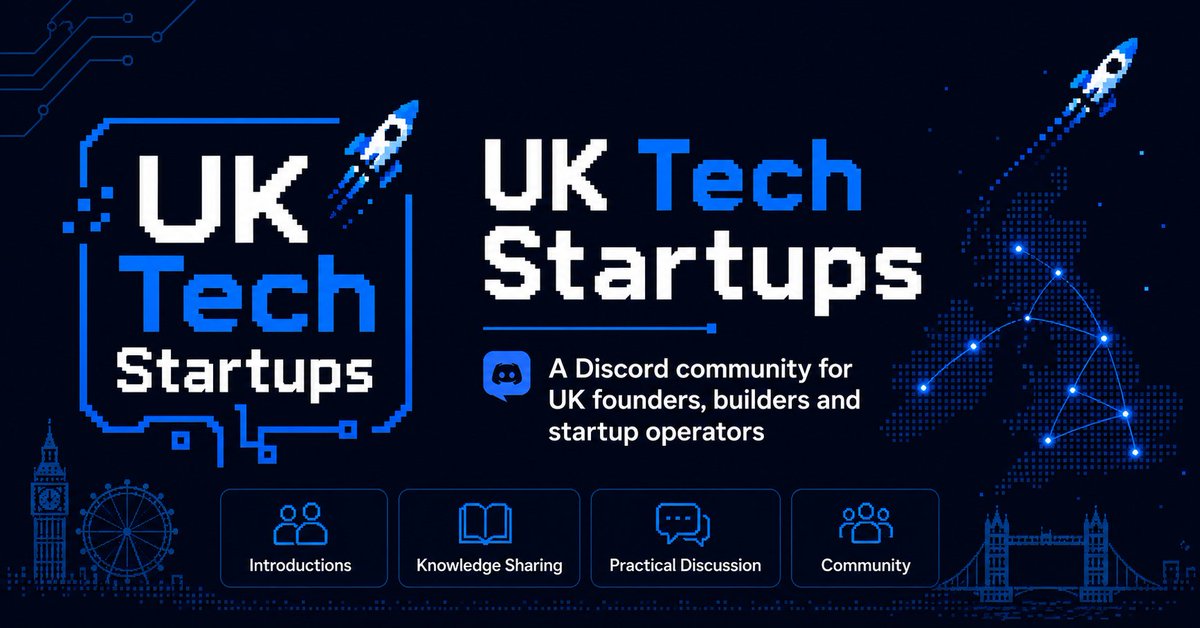
I’ve created a Discord community for UK tech startup founders, builders and operators.
The focus is practical discussion, useful intros, knowledge sharing and startup resources, with moderation to keep spam and low-effort promotion out.
It’s small at the moment, with fewer than 20 active members. The aim is to grow it to around 100 useful, relevant members rather than make it a huge open group.
If you’re building, running or supporting an early-stage tech business in the UK.
New members will be asked to introduce themselves and share a bit about what they’re working on. Inactive or off-topic members will be removed to keep the group useful to existing members.
Invite Link: https://t.co/WQCr3ok1HW
Using AI to build stuff is, at this point, a non-negotiable...
But as the saying goes, there's no free lunch.
There's always a tradeoff, whether you're aware of it or not.
You're now working faster – probably a good thing.
But it's hard to say that, with 100% certainty, without first answering the question:
"But what did I trade off?"
One common tradeoff, to varying degrees, is your understanding of how the system actually works.
Offloading /some/ understanding as we inevitably move faster is not necessarily a bad thing, but it probably shouldn't be accidental.
If you truly vibe-code something non-trivial, I doubt you have much of a clue how it's working. And indeed that was probably a deliberate tradeoff, for now.
Hand code a system like it's 2015 and you probably know every intimate decision, and understand all or most of the interactions between the parts. It probably took a lot of time effort, as you expected¹.
¹Or, probably: "underestimated".
The higher the level of abstraction from which we operate agents, the more of the underlying details we leave to be discovered later.
Whether or not that's a *useful* tradeoff depends on the individual case.
Often it may be, as long as it's deliberate.
Long before I read @paulg's "Holding a Program in One's Head", having a clear mental model of a system was always important to me.
My creativity, and even motivation to some degree, wanes the more I distance myself from the details.
But in 2026, it's too expensive to know *all* the details. It was always too expensive to know them *all*.
I used to write assembler... this mentality is nothing new to me.
But my choice to write, say, Go, is a deliberate choice to leave those details behind.
In trying to leverage AI well, what I've started doing is asking it to quiz me on my understanding of some of the decisions I've asked it to take (or make on my behalf).
I don't need to do this all the time.
Sometimes my "operating" of the agent is already close to the detail level anyway.
But after some time, as I start to feel like the system is doing some things I don't have a totally clear picture of, I ask it for a pop quiz.
"Analyse the overall system architecture, its boundaries and common interfaces. Pay attention to specific, non-standard choices, as well as common ones, and create a quiz for me. The quiz must test my understanding of how this system works. Ask me about data storage, security, data flow, interesting code paths, broader technologies in use, and parts of the code others may find unusual or questionable. Your questions should touch all aspects of the system, end to end. Your goal is to assess whether I really do understand how this system currently works."
I'm finding this useful.
Interestingly, I'm not running into too many questions I can't answer.
The fun thing about this idea is that it's deeper than you might think.
Human memory itself becomes stronger based on attempts to recall it.
Want to remember things longer? Ask yourself questions.
This is how flashcards work. Spaced repetition matters, but the key thing is the act of retrieval itself. The attempt to recall information strengthens memory.
You learn this quickly in language learning. The more you try to remember, the more you do.
So by having the agent quiz me on some details I may have forgotten, or never knew to begin with, I also feel like my understanding of the system stays very active, which plays into some other aspects of motivation and future decision making (with the AI!)
Try it out.
Give yourself (or your teammates) a pop quiz every now and then.
It'd also be cool to see some tool-based approach here that could even potentially run inside PRs and share the results. It could give other collaborators confidence that the author of the change does, in fact, (mostly) understand the system they're making changes to.
Very curious to hear if anyone's doing something similar, or more sophisticated than this. Please share.
Claude just one-shotted "GongKeeper" I pointed it to an already existing app in the App store and gave it a simple prompt, within 5 minutes it was up and running in my toolbar with instructions on how to make it persist via reboot...
"Build me something similar to this app <link> - I want it to sit in my OSX toolbar and allow me to configure when and how often it plays a certain chime - I want you to source a gong type chime to go with this"
@bagwaa Great work mate, bet you feel a world of difference don't you, not to mention you've probably just added another 10+ years to your life expectancy!