A Math Manifesto.
Watch @MitchOStokes read the full preface:
https://t.co/FM8iIy5dVe
Calculus for Everyone has a mission: rekindle the romance between STEM and the Liberal Arts, and prepare the next generation of scientists and engineers.
Part of @ClassicalConv Ch. IV program
A few frequently asked questions about Calculus for Everyone: Understanding Physics and the Mathematics of Change.
Q. What is the prerequisite for this course?
A. Algebra 1.
Q. Is it really Calculus?
A. Yes, with a focus on the fundamental theorem of Calculus, integrated with the history and philosophy of math.
Q. Does it replace pre-calc or Calc 1?
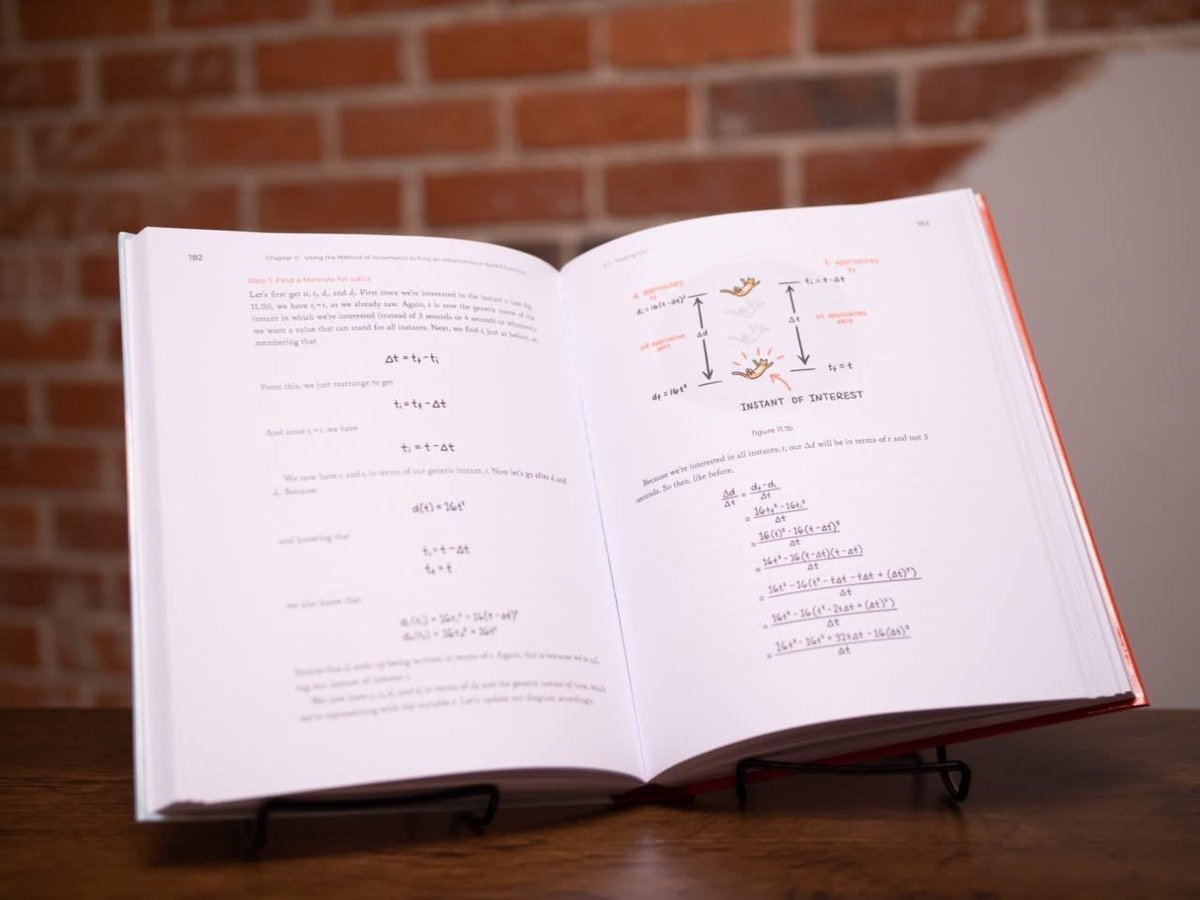
Calculus for Everyone doesn't (directly) replace traditional Calculus.
- For the STEM oriented student, it's the most important course they will take laying a cross-discipline and philosophical foundation, but it displaces rather than replaces traditional Calculus courses.
- For the non-STEM student who was perhaps not going to take Calculus, it replaces a traditional Calculus course, providing that historical and philosophical foundation as a capstone.
Q. I've seen mentions of the "crisis in physics" in your marketing...what's all that about?
A.Lee Smolin, a prominent physicist who works on quantum gravity says that physics has reached this roadblock because many of today��s physicists are familiar only with their small areas of expertise. In particular, physicists aren’t versed in philosophical issues about the nature of reality and knowledge. Smolin points out that throughout modern science, there have been two main kinds of prominent physicists. One kind is what Smolin calls the “craftspeople,” those physicists who can perform uncanny feats of mathematical daring. The other kind of physicists he calls “seers” or “visionaries,” those who can think almost entirely outside the boundaries of current theories in order to forge new paths. Smolin says that contemporary physics is in desperate need of visionaries, physicists who can see the big picture and evaluate it philosophically. Seers and craftspeople are necessary, but we are currently lacking visionaries to lead us to the next stage in physics.
Read more about that here: https://t.co/NNpaMZNl2l
Q. Ok...so that pesky transcript. I'm a homeschooler, and this course doesn't seem to fall into any categories on my transcript.
A. Ah yes, the modern transcript which represents the antithesis of classical education. You, dear parent, are the educator, and have the full and legitimate and appropriate power to determine what goes on that transcript. This course covers Calculus, philosophy, history, and more from an integrated perspective. The task you have as a parent (depending on your state - some states are free and have no requirement) is to dis-integrate it for sake of the gate-keepers and paper-pushers of the failed and pathetic state education system.
Q. Ok - I'm the parent, and have the authority and mandate to wield the transcript. Got it...but any suggestions?
A. Sure! One High School Math Credit, or one Introduction to Calculus Credit, or one High School Introduction to Physics Credit. If you are in @ClassicalConv, we recommend the last option due to where they place it in the Challenge IV strand.
Q. Would you recommend any additional resources to go alongside Calculus for Everyone.
A. Yes! Two resources published by Roman Roads Press:
1. The book "Thinking God’s Thoughts: Johannes Kepler and the Miracle of Cosmic Comprehensibility" by Dr. Melissa Cain Travis @MCainTravis. A great book to come alongside C4E, emphasizing the philosophy and apologetics aspect of the course.
https://t.co/z1k9SiE7iw
2. Old Western Culture: The Enlightenment, by Dr. Mitch Stokes. This is a unit from Early Moderns (year 4 of Old Western Culture), and tells the history of the scientific revolution from the literary perspective, with lectures by Dr. Stokes and a primary sources reader, covering Galileo, Kant, Descartes, Newton, Hume, Reid, and others.
https://t.co/ZKcwgetenI
Ready to dig into this course?
https://t.co/ARvjtdqG8z
It was very encouraging to hear the testimonials from students and teachers at Regents School of Austin recently during the Mathematics Roundtable!
Change your student's perspective on math: https://t.co/veodxQxs7b
The testimonials from students (and teachers) have been amazing.
From students who "hated math" and found a true love for it to those saw math as potent apologetics, an integrated approach is far more than a "classical flavor." It is a fundamental restoration of math with the liberal arts.
And starting this Fall, it is part of the @ClassicalConv Challenge IV program, preparing thousands of high school seniors for a world desperately in need of cross-discipline vision.
"They thought they weren't good at math..."
Give your students the big picture of mathematics. That change of perspective can shape their life.
Calculus for Everyone is an interdisciplinary, classical, Christian math course with a vision to mend the broken relationship between STEM and the Liberal Arts.
Learn more:
https://t.co/cWiRTfKBKB
Testimonials and Resources:
https://t.co/XZiF33VIYR
Recently, in an online back and forth about our government’s H-1B visa system, @elonmusk and @VivekGRamaswamy expressed concerns about the quality of our country’s high tech work force. Musk worries that we have too few “super talented engineers” and Ramaswamy thinks that we “venerate mediocrity over excellence” while we downplay the importance of mathematics.
Both men support the H-1B visa, which many tech companies use to hire highly skilled employees from other countries. But regardless of their views (or ours) on these visas, sprinkling the work force with highly competent tech workers doesn’t give us a full picture. And in any case, being an excellent engineer or scientist requires more than knowing a lot of facts about science, even when combined with mathematical virtuosity and practical know-how. These are crucial, but by themselves, they tend to produce mere technicians or calculators. “Super talented” engineers and scientists need more, namely, creativity, innovation, and the ability to see the big picture—how everything hangs together. And by “everything” I mean more than just “the science part.” I also mean the humanities, including language, history, philosophy, and even theology. In fact, focusing only on science and mathematics can result in worse engineers and scientists. Good athletes don’t train only one side of their body.
We used to know this. After all, the great scientists of previous generations received a broad, deep “liberal arts” education, which not only gave them knowledge of language, philosophy, mathematics, and science; it also taught them how to think deeply and creatively—even about mathematics and science. From Kepler to Galileo to Newton to Einstein, their liberal arts education made their visionary science possible. And they said so.
Einstein was certainly clear about the necessity of such a curriculum: “The value of an education in a liberal arts college is not the learning of many facts, but the training of the mind to think something that cannot be learned from textbooks.” It’s not that specialization is bad. But, Einstein warned, “It is not enough to teach man a specialty.” That, he says, will merely result in a person becoming “a kind of useful machine” or a like a “a well-trained dog.” Again, it was Einstein’s knowledge of philosophy and history that made possible his revolution in science.
1/2
Calculus for Everyone teaches Calculus. But it also represents one of the first tangible steps in recent years at reunifying STEM (Science, Technology, Engineering, Math) with the liberal arts. The goal is to produce a generation of classically educated students who understand the history of math, and will be better equipped to solve problems like our current crisis in Physics.
Learn more:
https://t.co/ef7hC8X6Ls
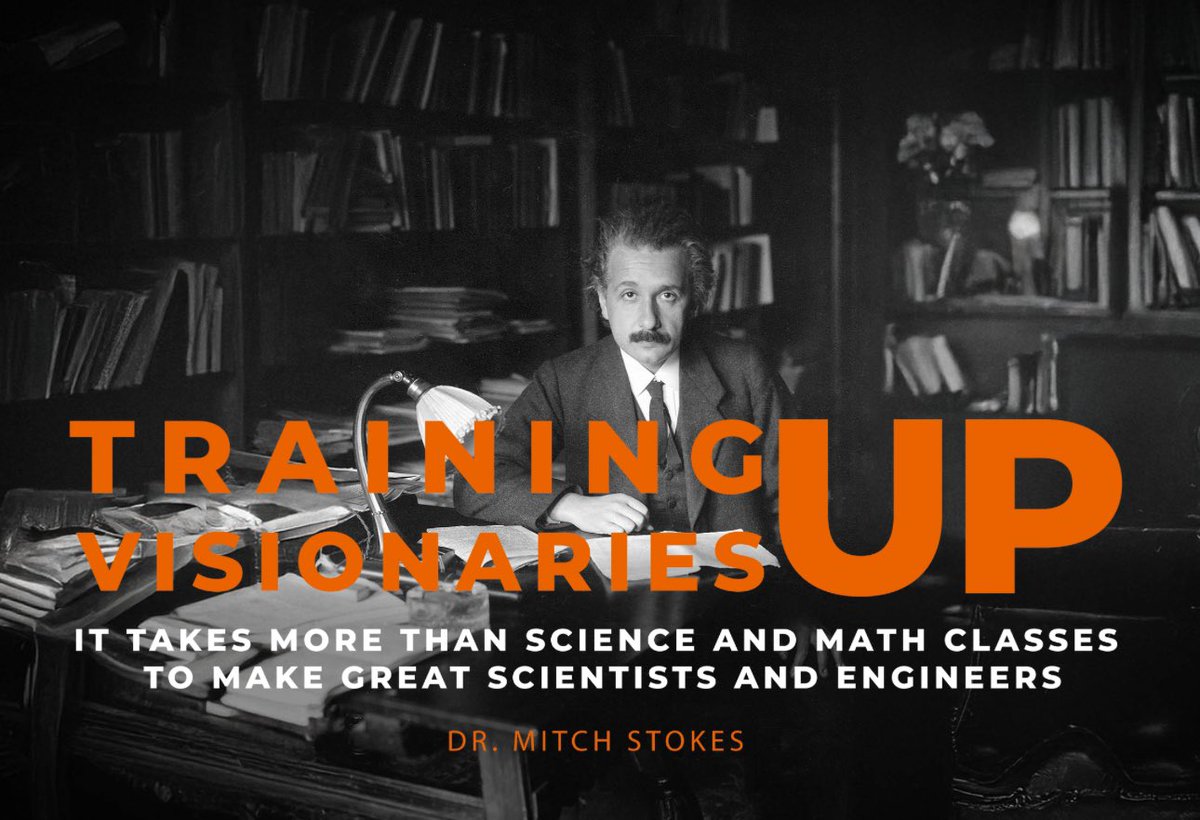
"From Kepler to Galileo to Newton to Einstein, their liberal arts education made their visionary science possible."
– @MitchOStokes, senior fellow of philosophy at @NewSaintAndrews and author of Calculus for Everyone.
Read: Training up Visionaries:
https://t.co/8kQVMsCIua
Amazon Review:
"I can safely say this is the only math textbook I've ever actually enjoyed. Part of the reason for that is it taught me the purpose of calculus which made me actually interested in learning about it. Most textbooks just jump into teaching formulas and equations without spending any time telling you why it matters. The way Calculus for Everyone is written is really clear and the illustrations throughout are really helpful at reinforcing and further explaining concepts. The exercises were really focused and truly helped me better understand the concepts from the reading rather than feeling like overwhelming busywork. Highly recommend!"
https://t.co/9DGrpGEU4V
⭐⭐⭐⭐⭐
Amazon Review of Calculus for Everyone, by Dr. Mitch Stokes.
"Understand Calculus before you do Calculus.
I have been homeschooling for 26 years and have a degree in engineering. When doing this text with my son, it was so enjoyable to actually understand the concepts before jumping to all the integrations. If I had this in college, I might not have struggled so much in my 3 Calculus courses." – Patty Marr
https://t.co/pNajd7tzcz
"Calculus for Everyone begins with discussions of Pythagorean mathematics precisely because the development of mathematics in the Newtonian paradigm depended on prior philosophical commitments in the history of western philosophy."
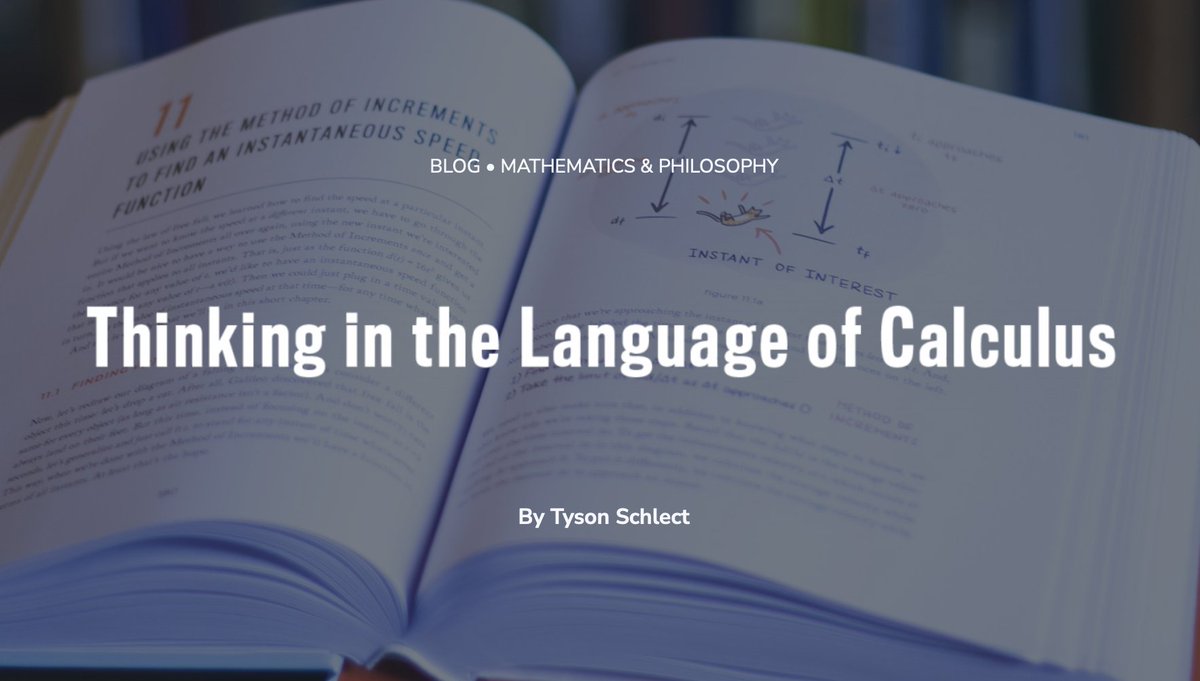
– Tyson Schlect, Thinking in the Language of Calculus
Read the article:
https://t.co/wHaOvq5fOk
#classicaleducation #classicalconversations @Calc4Everyone@MitchOStokes #STEM #LiberalArts
"Calculus for Everyone fills a unique curricular hole by introducing students to the objects to which calculus refers and drawing out the philosophical development of calculus—a vastly different pedagogical enterprise than working the mathematical manipulations of calculus which got hammered out long after Newton. Students grounded in the meaning of calculus may then progress into rigorous mathematics with broad ranging applications in the world, or into heightened philosophical reflection on the western tradition, or into a deeper reflection on the reality that we are embodied creatures who change while serving a Triune God who does not change. Whatever the future vocational calling of students, knowing the meaning of the symbolic mathematical language of calculus is a curricular and pedagogical necessity."
– Tyson Schlect, Thinking in the Language of Calculus
https://t.co/H46kQqACw9
#classicaleducation #classicalconversations #calculus #STEM #LiberalArts
@Calc4Everyone@RomanRoadsPress@MitchOStokes
💡"It is not sufficient to see only the mathematical symbols and rearrange them according to seemingly arbitrary rules. Why can’t we just divide on one side of the equation? Why do we have to divide on both sides? It is not sufficient to learn all the rules for shortcutting the Method of Increments, which is virtually the entirety of what students learn in AP Calculus. Instead, every student needs to develop the skill of thinking in the language of calculus and of knowing its meaning. No other calculus textbook accomplishes this particular pedagogical goal, and therefore no thorough philosophical education is quite complete without it."
– From Thinking in The Language of Calculus, by Tyson Schlect
🔗 https://t.co/H46kQqACw9
"It is not sufficient to see only the mathematical symbols and rearrange them according to seemingly arbitrary rules. Why can’t we just divide on one side of the equation? Why do we have to divide on both sides? It is not sufficient to learn all the rules for shortcutting the Method of Increments, which is virtually the entirety of what students learn in AP Calculus. Instead, every student needs to develop the skill of thinking in the language of calculus and of knowing its meaning. No other calculus textbook accomplishes this particular pedagogical goal, and therefore no thorough philosophical education is quite complete without it."
– From The Language of Calculus, by Tyson Schlect
https://t.co/H46kQqACw9
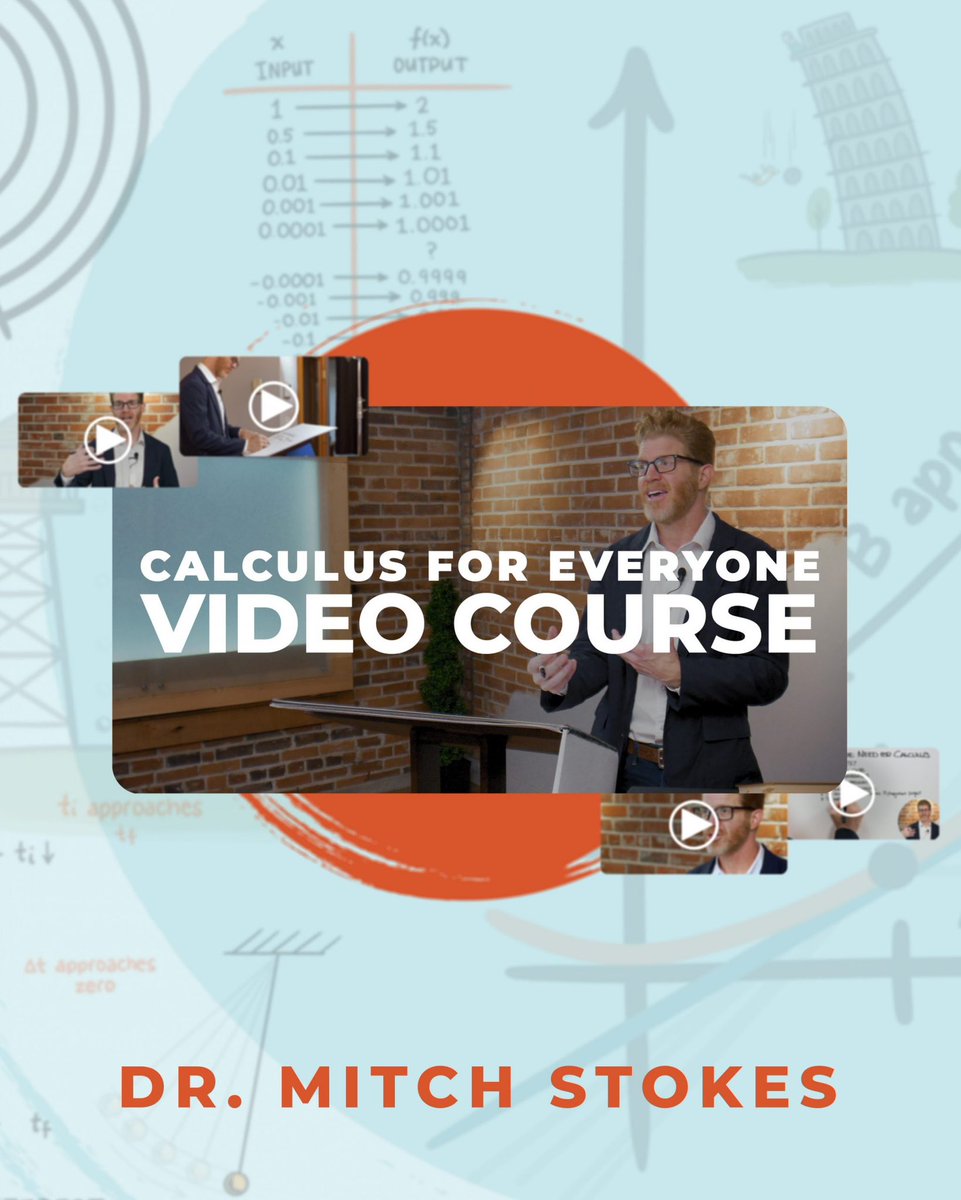
Pulling from over a decade of experience teaching Calculus, Dr. Mitch Stokes presents the mathematics of change in an extremely effective way for anyone with a first-year course in algebra in this new video curriculum. The video course is designed to accompany the Calculus for Everyone textbook.
https://t.co/2xmaHFot1O
"Histories make men wise; poets, witty; the mathematics, subtle; natural philosophy, deep; moral, grave; logic and rhetoric, able to contend."
– Francis Bacon
Aquire the ability to content: https://t.co/WU957xs88R
Aquire wisdom: https://t.co/py5q3IorFs
Aquire wit: https://t.co/PWzbBzXDGN
Aquire subtlety: https://t.co/ETM5W3oKm3