“Christ is milk for babes and strong meat for men.” – John Calvin
I was recently* involved in a conversation regarding two distinguished, voluminously-published theologians. Both are divorced; their wives left them because they spent so much time reading, writing, and teaching that their families suffered from neglect. I was also disappointed to hear of a pastor who wrote a rather helpful book on child discipline, yet has a rebellious child. All three of these men know their Bibles very well, but their lives have not demonstrated practical godliness.
Practical godliness lies at the heart of the Christian life. Knowing good and evil is important, but it is not enough. Good must be practiced.
The Scriptures speak of a difference between milk and solid food. Milk is for the immature, and solid food is for the mature. We often associate milk with simple, basic truth, and solid food with lofty theological concepts. But Scripture denies any necessary correlation between godliness and vast Bible knowledge. The men mentioned above could tell us much about the Bible’s teaching on family life, but I would never recommend them as family counselors.
We read in Hebrews that solid food belongs to “those who by reason of use have their senses exercised to discern both good and evil” (5:14). The difference between milk and solid food is practice. Truth doesn’t impact lives when it is merely affirmed; it must be applied.
A particular verse may be milk to one person and solid food to another; the difference lies in how the verse affects lifestyle. When Paul tells the church in Corinth that he feeds them only milk because of their inability to take in solid food (1 Cor. 3:2), we should not conclude that his first letter to them is full of fluff. Quite the contrary—it carries good instruction for both the young and the mature in Christ. Through perseverance, the young will become mature.
John Calvin once wrote, “Christ is milk for babes and strong meat for men.” He was correct. Every doctrine which can be taught to theologians is taught to children. As we mature in Christ, we don’t move on to different, “deeper” topics. The maturing Christian is the one who remains in pursuit of that which he has sought from the beginning. Solid food always leads Godward. The Lord remains the same; our lives change.
Chris Schlect
*Written in 1991.
#godliness #Christianity #practicalChristianity #Corinthians #solidfood #ChrisSchlect #Calvin #JohnCalvin #CCMMedia #CCMBooks
To live by faith and to walk with God are all one. Enoch was said to have walked with God (Gen. 5:24). What was this else, but to rest and believe on God, whereby he pleased Him? (Heb. 11:5-6). The moral actions of man’s life are fitly resembled by the metaphor of walking, which is a moving from one place to another. No man, while he liveth here, is at home in the place where he shall be (Heb. 11:5-6). There are two contrary homes, to which every man is always going, either to heaven, or to hell. Every action of man is one pace or step whereby he goeth to the one place or the other…
First, you are commanded to walk as Christ walked (1 John 2:6); and it concerns you so to do, if you would approve yourself to be a member of His body: for it is monstrous, nay, impossible, that the head should go one way, and the body another…
Secondly, it is all which the Lord requireth of you, for all His love and goodness showed unto you, in creating, persevering, redeeming, and saving you. For what doth the Lord require of you, but to do justly, and to love mercy, and to walk humbly with your God (Micah 6:8)?
Thirdly, if you walk with God, and keep close to Him, you will be sure to go in the right way, in that good old way (Jer. 6:16), which is called the way of holiness (Isa. 35:8); in a most straight (Prov. 3:17), most sure, and (to a spiritual man) most pleasant way, the paths of which are peace; the very happiness and rest of the soul (Jer. 6:16). God teacheth His children to choose this way (Isa. 48:17, Psalm 85:13, Psalm 37:23). And if they happen to err, or to doubt of their way, they shall hear the voice of God’s Spirit behind them, saying, “This is the way, walk in it” (Isa. 30:21).
Fourthly, if you walk with God, you shall walk safely (Prov. 3:24); you will not need to fear, though ten thousand set themselves against you (Psa. 3:5-6); for His presence is with you, and for you.
Fifthly, when you walk with God you walk with the best company, even such whereof there is most need, and best use. While God and you walk together, you have an advantage above all that walk not with Him; for you have a blessed opportunity of that holy acquaintance with God, which is expressed in Job 22:21-30. You have opportunity to speak unto Him, praying with assurance of a gracious hearing. Is it not a special favour that the most high God, whose throne is in heaven, should condescend to walk on earth with sinful men? Nay, rather call up man from earth to heaven, to walk with Him (Phil. 3:20, Col. 3:2)? It would be therefore shameful ingratitude not to accept this offer, and not to obey this charge.
Sixthly, to set the Lord always in your sight is an excellent preservative and restraint from sin… For who is so foolish and shameless as willfully to transgress the just laws of a father, king, and judge, knowing that He is present, and observes him with detestation if he so do?
Seventhly, to set the Lord always before you (Psa. 119:168) is an excellent remedy against spiritual sloth and negligence in duties, and it is a sharp spur to quicken, and make you diligent and abundant in the work of the Lord. What servant can be slothful and careless in his master’s sight? And what master will keep a servant that will not observe him, and do his commands, while he himself looketh on?
Eighthly, walking with God in manner aforesaid doth exceedingly please God (Heb. 11:54). It also pleases God’s faithful ministers (3 John 3), and doth please and strengthen all the good people of God (Psalm 119:74), with whom you do converse. It is to walk worthy of God in all well pleasing (Col. 1:9-10).
Ninthly, thus walking with God, you shall be assured of God’s mercy and gracious favor. He keepeth covenant and mercy with all His servants that walk before Him with all their heart (1 Kings 8:23). When you do thus walk in the light, you have a gracious fellowship with God, and the blood of Jesus Christ cleanseth you from all sin (1 John 1:7). There is no condemnation to you who thus walk (Rom. 8:1). Your flesh, when you die, shall rest in hope. For to them that set God before them, He doth show the path of life, which will bring them into His glorious presence, where are fulness of joys and pleasures for evermore (Psalm 16:11).
Any one of these motives, seriously thought upon by an humble Christian, is enough to persuade him to this holy walking with God.
Excerpted from "A Christian's Daily Walk" by Henry Scudder, c. 1640
#Christianwalk #walkwithGod #walkingwithGod #Christianlife #Puritan #Scudder #JimWilson #CCMMedia #CCMBooks
*You send your kids to a Christian school. You take them to church. And they still don’t turn out right. Why are so many evangelical Christians rearing children who are not Christians at all?*
Many years ago, my wife and I heard a message that we took very much to heart. It was preached at our wedding. The message had been given first more than 3,000 years earlier to a people who did not take it to heart. It was part of Moses’ final talk to the new generation.
"Fix these words of mine in your hearts and minds; tie them as symbols on your hands and bind them on your foreheads. Teach them to your children, talking about them when you sit at home and when you walk along the road, when you lie down and when you get up. Write them on the doorframes of your houses and on your gates, so that your days and the days of your children may be many in the land that the LORD swore to give your forefathers, as many as the days that the heavens are above the earth" (Deuteronomy 11:18-21).
There was very little application of this teaching by the people of Israel in the Old Testament. I have also observed hundreds of Christians, senior to me, contemporary to me, and junior to me. My observation is that evangelical Christians seem to be able to rear children who are nominal Christians or not Christians at all. Or if some of the children are clear Christians, some of them are not. I realize that such a statement may bring many letters from people whose children are walking in close fellowship with the Lord. It’s worth making such a statement just to get such a barrage of good news.
When I was a child, I heard a saying that the preacher’s kids were the worst kids in town. From my limited experience at that time with preachers’ kids, the saying seemed to be validated. I remember one such kid. He was not a roughneck, but he sure was obsequious and unctuous to all his acquaintances. From my self-righteous view, I looked down on him.
When I became a Christian years later, I looked back on my earlier years and came to the conclusion that the preachers I had known were ultra-liberal in their theology and that’s why their kids were not godly. It was a simple explanation and may have kept me from being disillusioned with the power of the Gospel. However, it was not a true explanation.
Over the years, I have spent many hours with many Christian workers about the waywardness of their children. These are mostly missionaries and pastors. I have also spent many hours loving the children of other missionaries and pastors.
In addition, the Christian gossip circuit brings to our ears stories of children of famous Christians who have gone astray. The empathy is great among the Christians for other Christians who have rebellious children. The empathy is there because they either have such children themselves or perhaps expect to have such children.
There are many explanations, and they may be right, at least in part. “The Jones’ children did not turn out because they sent them to the public schools. We will send ours to a Christian school or to a Christian boarding school.” Still they do not turn out right. In all of the empathy and sympathy there seems to be a lack of hard scrutiny concerning the cause of the problem and a lack of action taken to solve the problem.
In the Deuteronomy passage quoted earlier, two things are very evident:
1. The continuous presence of Scripture in time and place—really all the time and in all places.
2. The continual presence of the father with the children.
I think there is a lack in the Christian home on both counts, but the greater lack is on the latter. There is very little difference in the time spent with the children by a full-time Christian worker and by a father in the world system. In both cases it is very little time. If there is a difference, it is that the Christian father has a “spiritual” justification for spending so little time. He is busy serving the Lord.
It may sound simplistic, but the basic causes of rebellious and unbelieving children of Christian parents are:
1. Not enough time spent with the children, or, if there is time with the children, it is not loving time.
2. Not enough time spent with the Scriptures alone and with the children.
Christian workers will give their time in counsel, in love, in the Scriptures to anyone in need outside of the family. Children must compete for time with their father. In most cases they cannot compete effectively. In order to get attention they have to act as evil as the people to whom their father gives his time. Even then it does not work because the children have now disgraced the Lord, their father, and the ministry.
From my perspective there seem to be many Christian pastors who know that what they are doing is wrong for the family, yet they keep on doing it. Or they have already lost one or more children to the enemy, and they keep on doing what caused the children to defect.
In Titus 1 and in 1 Timothy 3, the Scripture gives the qualifications for being an elder. Among the qualifications are these:
"An elder must be...a man whose children believe and are not open to the charge of being wild and disobedient" (Titus 1:6).
"He must manage his own family well and see that his children obey him with proper respect. (If anyone does not know how to manage his own family, how can he take care of God’s church?)" (1 Timothy 3:4-5).
Among elders who hold to the inspiration and the authority of Scripture, I have encountered ignorance of these texts, hedging and defensiveness; they thought their call to preach had a higher authority than the text. There were too many explanations why the situation in their home was not covered by these verses:
1. “Yes, the children are not believers, but they are not yet adult. The text does not apply.”
2. “Yes, the children are not believers, but they are adult and no longer under our authority. The text does not apply.”
3. “The texts apply only to people who are to be appointed elders. They do not apply to those already ordained.” (If so, is this true also for drunk, violent and quarrelsome elders?)
4. “Yes, I believed that it applied to me, so I submitted my resignation to the church. The church would not accept it and begged me to continue as their pastor.” Normally there is much sympathy from the congregation because of the apparent godliness of the pastor and his wife.
5. “I was in much confusion about my position as an elder, so I sought counsel from older men of God whom I respected. They assured me that they had children who had been far away from the Lord for many years and that they had recently come to the Lord. They encouraged me to stay in the ministry, and they would pray for my children.”
6. “This is my profession. I do not know how to do anything else.”
With very few exceptions, in evangelical churches we do not find discipline of elders based upon the belief and character of the elders’ children. The church members or hierarchy would not take action because of a false view of, “If any one of you is without sin, let him be the first to throw a stone at her” (John 8:7) and “Do not judge, or you too will be judged” (Matthew 7:1). I do not think it is realistic to expect churches to suddenly reverse an attitude that has been operating a long time. If they suddenly began to make judgment on such issues, it could happen without love and with bad attitudes. However, it is realistic and right for elders to judge themselves. As it stands, we have very clear teaching in the Scripture that is universally ignored and disobeyed.
While you are rereading and praying over 1 Timothy 3 and Titus 1, look at all of the requirements, not just those concerning children. Are you still as qualified as when you were called to the ministry? If not, then confess and forsake your sins and begin to obey.
If the results of your unelderly-like behavior include such things as unbelieving and disobedient children, then leave the ministry.
These are the reasons you should leave:
1. If you have succeeded in justifying yourself, you will not confess the sin, and, consequently, you are not walking in the light. You are not qualified to be an elder.
2. For the church’s good: you are not qualified, even though you have been forgiven.
3. For your children’s good: they will not have to compete with God (or what they think is God) for your attention.
4. For your own conformity to the likeness of Jesus Christ.
It is likely that your children will turn to the Lord when they find that their father is godlier, less busy, and more loving.
One of the results is that you may be back in the ministry with power that you never had before.
In Ezekiel 18, we are told that we will not be judged for our parents’ sins or our children’s sins. We will be judged for our own sins. It is our own sins I am writing about.
Early in our ministry, when our children were very young, my wife and I made a decision, a covenant or a very strong vow: if any of our children ever fit the description of 1 Timothy 3 or Titus 1 and were wild, disobedient, unmanageable, disrespectful, and unbelieving, we would leave the ministry that same day. We have not had to do that.
We do not seem to have many good examples of fathers in the Bible. Noah, Abraham, Isaac, Eli, Samuel, David, Solomon, Jehoshaphat, and even Josiah were godly in certain ways, but poor fathers. We do not have the examples, but we do have the teaching and the promises.
#fathers #fatherhood #parenting #raisingchildren #ministry #pastor #qualificationsforministry #Christian #Christianfathers #fatherlessness #JimWilson #CCMMedia #CCMBooks
*If your parents are still alive, it’s not too late to repair your relationship with them.*
Restoring Relationships with Your Parents, Part 3
As much as possible, follow up on the letters by spending time with your parents. Show them with your attention that they are valuable to you. When you go home, express affection to your parents physically. Don’t do the polite hug. Get into it. Really give them a squeeze. Maybe even a kiss! Just rock the old man. Surprise your mom.
You may receive a favorable response to your letters. If you do not receive a response, do not think that you did something wrong. Be patient and keep on giving. Some cultures (e.g. those of Northern Europe) are not expressive with their emotions, except for lost tempers. This kind of expression from you may be embarrassing for your parents. But they still want and need to receive this expressed love, even if they do not know how to return it.
If your parents are still alive, it’s not too late to do this. One man I know who is in his late fifties wrote this kind of letter to his father. His mother replied, “I have been married to your father for sixty years. When he read your letter, that was the first time in our marriage I saw tears in his eyes.”
Some years ago, my wife Bessie and I held a summer school of practical Christianity at the Delta House of the University of Idaho. Respect for parents was one of the subjects. About forty students attended. Because the class was big, I did not get to know everyone well and did not know the effect of the teaching.
The following fall, at a noon Bible study at nearby Washington State University, I was teaching the same subject again, and one of the students spoke up. “I heard this at the Delta House last summer, and I took action,” he said. “When I was sixteen, my father kicked me out of the house and told me he would never see me again. Later, I became a Christian and married a Christian woman, and now I am a graduate student in economics. I had never seen my father since he kicked me out of the house. This summer, I wrote two letters, one to my father, and one to my mother. I didn’t know it, but my parents were on the brink of divorce, living in separate bedrooms at home in North Dakota.
“It took me several days to write each letter, so I sent them a few days apart—but for some reason, the letters arrived on the same day, and both my parents were home when the mail came. Seeing that the letters were addressed separately, my mother took her letter to her room, and my father took his letter to his room. After reading them, they came out and traded letters, and went back to their rooms to read the other letter. When they came out the second time, my father had tears in his eyes. He told my mother, ‘I’m flying out to Pullman to see my son.’”
He had seen his father between the summer school and the fall Bible study. It saved his parents’ marriage.
Another student who had recently graduated told me of the awful relationship he had with his father, and I made this suggestion of writing letters. Some months later, when I was speaking to another group on this subject, he spoke up. “Jim told me to do this several months ago, but I wasn’t going to. I hated my father. In fact, one day I was going to write to tell him what I really thought of him and what a lousy father he had been. I had the entire letter in my head. But when I sat down to write, instead of that letter, I wrote the kind that Jim told me. My father got the letter, and he came down from Spokane immediately to see me. He’s dying now, and I read the Scripture to him by his bedside.” It reestablished the relationship.
If you already have a good relationship with your parents, go ahead and write these letters anyway. It won’t hurt. One young man I know did this, and a few weeks later, he told me he had gotten a letter back from his dad. I asked him what it said. “My father said that he wrote a letter like this to his father when he was my age, and, boy, was it good to get one from me!” That is your thousand generations, when you do it right.
What do you do with disappointment? Another student wrote two letters to her mom, the first about the love and respect, and a second one later asking for advice. The mother’s response to the first letter was, “Why are you being so soupy?” and the second reply was in anger: “Why do you need this information?”
You can expect questions like this the first time around—so send more than one letter. Likewise, if you come from a family that never hugs, the first time you hug your father, he’ll stand there like a fencepost. It will be awkward. Keep doing it. Hug him when you get home, but also, when you’re at home, hug him every time he walks by.[1]
This might make him ask, “What’s your angle?” or “What is this going to cost me?”
Say, “Dad, do you really want to know? If you buy me lunch, I’ll tell you.” Get together with him. Rather than being disappointed at his response, consider those questions an opportunity to do more.
Tell him, “Dad, here is why I’m doing this. I know you love me very much, but I have had to take it by faith. You have not been the best expresser of your love. So, growing up I did not think you loved me. You fed me and clothed me and housed me and sent me off to school. I know that is love, but there’s more to love than that, and I have needed more. You wondered why I got in trouble in high school and college. It’s because I needed more affection than you were giving me. I was boy crazy because I was looking for the male affection I was missing at home. I don’t think you would want me to get it somewhere else now. I still need my father, and you need me, so I thought I’d come home and prime the pump.”
Here is a very important caveat: if you tell your parents that you are giving them affection because you did not get enough growing up, be careful not to say it in an accusative fashion. What makes the difference is your attitude, your heart, and your manner of speech. Don’t say, “Dad, you never loved me.” Say, “I know you love me. And I love you. But I didn’t always know that, and now I want to cause more love.” Say it in a helpful way. Some people will still take it accusatively, but if you keep giving affection, they will know better.
You do not need to become a constant hugger if that is not your nature, but you should go to the limits of your normal means of expression, which is probably far more than your parents have been getting, and they do need it. If you keep on giving affection after the questions you get back, you will soften your parents. In a matter of weeks, months, or years (the timeline varies with different people), you will see a real turnaround. Be patient, and keep on showing love.
There are two problems to take care of in your relationship with your parents—the heart problem and the action problem. The heart problem is first. Only a true heart repentance will 1) stop the curse, 2) cause long life, and 3) turn the three or four generations of bad news around to a thousand generations of good news. Your own unlove, your disrespect, and your ungratefulness towards your parents have to be taken care of in repentance toward God. To write these letters without being forgiven by God only ensures that your letters will be insincere and hypocritical. You may have a long wait if you wait for your father to turn to you first. You cannot afford the wait, so get right with God now. After you are clean, write the letters. Then continue writing, calling, texting, and visiting your parents, expressing respect, love, and thankfulness.
Doing these things will change you. You will become a better husband, son, and father, or a better wife, daughter, and mother. Your love and obedience will bring love for a thousand generations.
Jim Wilson
[1] How can a child show physical affection to a father who has abused him/her? Suppose you were molested by your father, and you are not up to hugging him because he does not respond like a father. In this case, I do not suggest that you hug him. Express your love some other way that is not physical. Do you not love him? Again, take care of that. Confess it and choose to love your father. Then find a different form of expression for his benefit and your benefit. A few decades ago, a young woman with this background attended our School of Practical Christianity. It was so clear that she needed a father. Her father was from another country, and he lived overseas. I suggested that she write to him and say, “Dad, I need a father. I need to be hugged; I need to hug you. Dad, will you be my father?” He wrote back a repentant, broken-down letter saying, “Yes, I’ll be your father.” She needed a father, and he needed to be one. Their reconciliation was based upon her giving him respect. I cannot guarantee that a reconciliation will happen in every instance; nevertheless, it is very important that you respect and love and be grateful to your parents, however they might respond.
“Dear friends, now we are children of God, and what we will be has not yet been made known. But we know that when he appears, we shall be like him, for we shall see him as he is. Everyone who has this hope in him purifies himself, just as he is pure” (1 John 3:2-3).
“After that, we who are still alive and are left will be caught up together with them in the clouds to meet the Lord in the air. And so we will be with the Lord forever. Therefore encourage each other with these words” (1 Thessalonians 4:17-18).
“He who testifies to these things says, ‘Yes, I am coming soon.’ Amen. Come, Lord Jesus” (Revelation 22:20).
You may have wondered what my eschatology is. I do not often speak about it. These few words from the text summarize my anticipation:
Hope
Purifies
Encourage
“Amen. Come, Lord Jesus.”
This keeps me from differing with the saints on the order of events at the end time.
Jim Wilson
This post coordinates with today's reading in the To the Word! Bible Reading Challenge. If you are not in a daily reading plan, please join us at https://t.co/cQpyoMSHPb. We would love to have you reading with us.
#TotheWord #Biblereadingchallege #comeLordJesus #Biblereading #Revelation #JimWilson #CCMMedia #CCMBooks
Are you estranged from your parents and don’t want to be? Here are some suggestions for how to reestablish relationships with them.
First, write two letters home. Do not write, “Dear Mom and Dad.” If you write that, who answers the letter? Mom. Dads are illiterate when it comes to answering letters. In many cases, the father thinks that any communication is between mom and the kids. He doesn’t think he ever gets a letter, even if it is addressed to both Mom and Dad. So, write a letter to your father and a separate one to your mother. Make them very clearly separate. Put on the outside “Dad Only,” “Mom Only.” (Yes, I am suggesting sending actual letters in the mail. It will mean more than an email.)
When you write to your father, include at least five things.[1] I recommend covering one element per paragraph as follows:
1. Tell your father how much you respect him. If you do not respect him, do not write the letter until you do respect him. You must not be hypocritical. But not respecting your father is not one of your options. How can you do it?
First, confess this disrespect for your father to God. Your father is to be honored because he is your father. God has commanded you to honor him. It is not optional. If you do not honor him, then you have sinned. The same is true with your mother. Sin is forgivable, and repentance is required.
Now with freedom and sincerity, write to your father how much you respect him. If he is not respectable, make sure you are not being dishonest. It would be a lie if you said, “I respect you for divorcing Mom, for being a drunk, for…” No. Don’t respect him for anything other than being your father. “I respect you as my father.”
2. Tell him how much you love him. If you do not love him, that has to be corrected first. You might object that you would have loved him if he had loved you first, but he didn’t. I’m sure that is true, and he should have loved you first. As a father, he should have loved you so that your natural response would have been a loving one. But we cannot go back to childhood and start over. Even if we could, that does not guarantee that your father would do it any different the second time. We address the problem from where we are, not from where we should be.
One of the reasons your father didn’t love you may be because he had never been loved. You are turning that around.
If you had to answer for your father, would he say that his father loved him? I have asked many college students this over the years. The answer I usually get is, “No, his dad didn’t love him. He’s told me all the fights they had.”
Next, would he say that his wife loves him? No, mom doesn’t love him. Would he say that his children love him? No, he doesn’t think his kids love him. Would he say that God loves him? He doesn’t know God; he’s not a Christian.
Do you meant to tell me that your father doesn’t think God loves him, his father loved him, his wife loves him, or his children love him? And you wonder why he drinks too much! He sees that everyone who should be close to him does not love him.
“His perception is wrong. We do love him, and God loves him.”
That’s not what I asked. Does he think that you all love him? No.[2]
So here we have a person who couldn’t love you first because he has never been loved. He doesn’t know how to love.
I used to ask this question when speaking to a crowd: “How many of you know that your parents love you?” Ninety-five percent would raise their hand.
Then I would ask, “How many of you think they expressed it to you adequately?” Only half of those hands would stay up.
“Of those who think it was expressed adequately, how many could have used more love?” Everybody’s hands stayed up. Nobody gets enough love at home, even when love is there.
You are now an adult, and as a Christian you have unlimited access to love and forgiveness—a love that your family does not have if they are not Christians. If you are waiting for them to love you first, you’ve got it all backwards. You are now the source of love for your family. You are the vehicle to love your parents. Straighten out your unlove for them with God. As a Christian, confess this lack of love to Him. Is it sin? Yes, it is sin. It is disobedience to the command of God. We have been commanded to love our neighbors, love the brothers, and love our enemies. Your father fits into one of those categories. Confess this lack of love and forsake it. After you have confessed and have been forgiven, choose to love your father.[3] This love requires expression, so tell him in this paragraph.
3. Tell your father how grateful you are to him. You may be grateful for a lot of things. Enumerate them. Or you might have to go back to preschool days to think of something. Think of it and thank him. Go back to some nostalgia; tell him how much you appreciated sitting on his lap when you were three, or the fishing trip you had that one time. If you are not grateful, then as with respect and love, it is your problem, not his. The procedure is the same. Confess your unthankfulness to God. When you are forgiven, express your thankfulness to your father.
After I had been teaching this for years, I wrote a letter to my mother. (My father had already passed away.) Most of it was just news, but I put one last sentence in of gratefulness and praise to her, and she called on the telephone to talk to me about it. Nobody gets enough! Start expressing respect, love, and thankfulness.
These elements are necessary and required. The next two are suggestions for further ways to convey respect.
4. Ask your father for his autobiography. He probably won’t write one, but he will be glad that you want to know about him. If you live near your parents, you can ask your dad for this in person. One young woman told me she couldn’t write home because her parents lived in the same town. I told her to just ask him. So she asked her father for his autobiography, and this man who is normally extremely quiet talked for four hours. She asked, and he was so glad to be asked.
5. Ask your father for advice, in general and on specific matters. This is part of honor. Has he given you advice before, and you didn’t like it? Unsolicited advice is generally much rougher than requested advice. It is rougher on you because you didn’t want it, and it is given rougher because you didn’t want it. But when you request advice, the person is usually much more considerate, much more thoughtful, and the advice will be better.
Ask for counsel, and be open to it. You might be really surprised at the advice you get. There are very few parents who are not concerned about the direction their children go and what they do. When you ask, you might find that they were just waiting to be asked, and they will be considerate.
If you are still single, this is especially true regarding anyone you are dating. Ask your father what he thinks of this guy/girl. You may hear things you don’t want to hear. When you do, you had better listen. Even if your father is not a Christian, he’s been around a while. His answers may be sheer prejudice, but likely they are not. He knows you, and he knows people, so pay attention. If he dislikes the person you are going with, go slow. Even if this man or woman is absolutely right for you and you both know it, it is not right until your parents also know it. It is wise to go slow even if you are right and they are wrong.
Some parents will say it doesn’t make any difference to them what you do, and you should just do what you want. Don’t believe them! They think that is the proper thing to say because you are an adult. Ask them, “If you were going to give me advice, what would you want me to do?” If they still don’t give you advice, but you know your parents well enough to figure out what they think, pay attention to that, even if they are not willing to tell you outright.
Your father may not answer the letter you have written him, but he will almost certainly read it more than once, and he will not throw it away. If you have Christian siblings, tell them what you are doing and encourage them to do the same thing.
Next, write the same kind of letter to your mother, but with one change. The first paragraph should express your love to her, and the second paragraph should communicate your respect. Both sexes of the human race need love and respect from both sexes. But of the two, women need love more than they need respect, and men need respect more than they need love. Tell your mother how much you love her; then tell her how much you respect her. The rest of the letter can follow the same pattern as the letter to your father.
(To be continued… Don't want to wait? Get Restoring Relationships with Your Parents at Amazon or https://t.co/FNj8RwQSQ9.)
Jim Wilson
[1] If you have previously been rebellious towards your parents, there is one more element you should add at the beginning of your letters. First, you must confess to God your rebellion to your father or mother, and now also confess it to your earthly father in this letter, with no excuses or accusations.
[2] Of course, sometimes the people I speak with acknowledge that they don’t love their father and that their mother hates him.
[3] The confession must be done first—you cannot obey on top of accumulated disobedience. Once you are clean, you can choose to obey this command, with God’s help.
#relationships #parents #mom #dad #brokenfamily #Christian #Christianfamily #JimWilson #CCMMedia #CCMBooks
*If I come from a broken family, how can I turn my life around?*
“Honor your father and your mother, so that you may live long in the land the Lord your God is giving you” (Exod. 20:12).
Our country is full of broken families. Whether you are a Christian or not, from a broken family or a whole one, God calls you to honor your parents. The apostle Paul tells us this “is the first commandment with a promise—‘so that it may go well with you and that you may enjoy long life on the earth’” (Gal. 6:2-3).
Your relationship with your parents affects your relationships with your spouse and children. If you are not yet married, a good way to prepare for those future relationships is to reestablish a good relationship with your parents.
The Ten Commandments give us two statements that relate to this. The first is the Exodus quote above. Here is the second:
“You shall not make for yourself an idol in the form of anything in heaven above or on the earth beneath or in the waters below. You shall not bow down to them or worship them; for I, the Lord your God, am a jealous God, punishing the children for the sin of the fathers to the third and fourth generation of those who hate me, but showing love to thousands who love me and keep my commandments” (Deut. 5:8–10).
God says that He will punish children for the sins of the fathers to the third and fourth generation. This has stumbled and troubled people for a long time. How can a just God punish you for someone else’s sin? The answer is that He does not.
“Yet you ask, ‘Why does the son not share the guilt of his father?’ Since the son has done what is just and right and has been careful to keep all my decrees, he will surely live. The soul who sins is the one who will die. The son will not share the guilt of the father, nor will the father share the guilt of the son. The righteousness of the righteous man will be credited to him, and the wickedness of the wicked will be charged against him” (Ezek. 18:19–20).
God does not hold great-grandchildren responsible for what great-grandfather did. Ezekiel says very clearly, “The soul that sins shall die” (v. 20). The person who is in sin is the one who will be held accountable.
What the Deuteronomy passage is saying is that sin flows downhill—and it does so for three and four generations. Look at your parents and grandparents. Can you see how you are affected by the things your parents did, and how they were affected by your grandparents? The sinful influence of our ancestors affects us. This is generational bad news.
However, the sentence in Deuteronomy does not end with verse 9—it continues with something more wonderful. “But showing love to thousands who love me and keep my commandments” (Deut. 5:10). God punishes the children for three and four generations, but He shows love to thousands—not just thousands of people, but thousands of generations. “Know therefore that the Lord your God is God; he is the faithful God, keeping his covenant of love to a thousand generations of those who love him and keep his commandments” (Deut. 7:9). Sin and hatred of God cause downward movement to three or four generations, and obedience and love of God cause upward movement to a thousand generations.
How do we turn our lives from three and four generations going downhill to a thousand generations going uphill? If you are part of a broken family, the solution seems obvious: get converted, leave home, and marry a Christian. That should turn it around, because you are not going to do life the way your parents did, right? You are going to love God and keep His commandments.
Certainly, a major part of the solution is to become a Christian, keep God’s commandments, and marry a Christian who also keeps His commandments. You must do those things. Without them, you can expect more bad generations.
However, although these actions are a very important part of the generational turnaround, they alone bring no automatic guarantee of halting the curse. We still have the descending promise of three and four generations, and leaving to establish a new home does not change that. Even if you have no contact with your parents, you carry those relationships and the effects of them with you into your marriage. I have heard this many times: “I decided I was not going to be the kind of father (or mother) who raised me. I would become a Christian, marry a Christian, and do it right. I became a Christian, married a Christian, and I am doing it wrong, just like my parents.”
Leaving your parents is not the answer. What you need to do is to reestablish relationships with your parents. When you get married, you will have children, and those children are going to need grandparents. If you are estranged from your parents, your children will be deprived of a very important part of their growth. They need grandparents; they need aunts and uncles; they need cousins. The entire family is important. In fact, the family is more important than the church. God created the family first. Of course, the best family is a Christian family, but your own extended family is what God speaks of and gives examples of in the Scripture.
My family holds regular reunions. The year my mother was eighty-four, her six sons, their wives, their children, and their grandchildren all met for a reunion in Moscow, Idaho. To see how all the children and grandchildren got along with each other was great. It was a wonderful time, and it was very important. Every family needs this.
If you are in the second or third bad-news generation, you do not have to wait through more bad generations. Tt is possible to turn the descent around now. But unless you change your relationship with your parents and grandparents, you will have to wait two more generations. (And preaching the gospel to your parents does not change the relationship. It needs to be repaired first.)
About 400 years before Christ, the prophet Malachi gave a negative conditional prophecy: “See, I will send you the prophet Elijah before the great and dreadful day of the Lord comes. He will turn the hearts of the fathers to their children, and the hearts of the children to their fathers; or else I will come and strike the land with a curse” (Mal. 4:5-6).
The angel Gabriel alludes to this prophecy in Luke 1:17: “And he [John] will go on before the Lord, in the spirit and power of Elijah, to turn the hearts of the fathers to their children and the disobedient to the wisdom of the righteous, to make ready a people prepared for the Lord.”
Notice that to stop the curse from happening, hearts must be turned both ways.[1] Unless you do this, you are asking for another generation of bad news. You cannot expect to be a good husband or a good father, a good wife or a good mother, if you have not turned your heart to your own father and mother.
Because we have not obeyed God’s command to honor our parents, we may be in the third- and fourth-generation promise, and we will not live long on the earth (cf. Eph. 6:1). The land is in danger of being smitten with a curse. The Malachi text is a call to repentance, a turnaround of the heart.
We can turn our family around by obeying what the Ten Commandments tell us: Honor your father and your mother (Exod. 20:12). We are promised that a thousand generations of blessing come from keeping God’s commandments, and this is one of them. If you want to turn the flow around, this is primary.
How do you honor parents who are not honorable? You may have parents who are divorced. You may have a father who left home before you were born, and you don’t even know him. You try to get in touch with him, and he does not want to know you. How do you honor someone you don’t know? How do you honor someone who is an alcoholic, mistreats his wife, or mistreats his children?
The Scripture says to honor your father and mother because they are your father and mother, not because they are honorable. When God tells us to love our enemies, does He mean that our enemy is lovely? Does he have to deserve love? No. Love is based upon the person who does the loving. Likewise, honor has to do with the person doing the honoring, not the person being honored.
Do you know any children who have been mistreated at home? How do they act in school? Poorly. On the other hand, if children are treated with respect at home, how do they act in school? Generally, they do well. If you want to make someone unrespectable, treat them with no respect. The opposite is true as well. Just as love makes people lovely, respect causes them to be respectable. As Christians, we do not honor, love, and respect people because they deserve it; we do it because they need it. Fathers and mothers need it. “No, they’ve got to earn my respect first.” No, they don’t. If you want to turn your family around, then you obey God’s command: honor your father and your mother. If you have not honored them, confess that as sin first and then choose to honor them.
(To be continued… Don't want to wait? Get Restoring Relationships with Your Parents at https://t.co/FNj8RwQSQ9.)
Jim Wilson
[1] Although most of my illustrations in this context are speaking to children, this is even more important for parents. If you are a Christian parent reading this, turn your heart toward your own parents, and turn your heart toward your children.
#relationships #parents #mom #dad #brokenfamily #Christian #Christianfamily #JimWilson #CCMMedia #CCMBooks
*When it comes to sexuality, you cannot go only on feelings. You must go on God’s absolute standard of right and wrong.*
Based upon the Word of God, if you are in a homosexual relationship, you are either a very disobedient Christian, or you are not a Christian.
Things that would indicate that you are not a Christian are the complete absence of a sense of guilt and your current manner of life.
The points for being a Christian are your conversion, if you have had one, and any previous record of Christian living.
Galatians 5:19-23 gives us two lists: the works of the flesh and the fruit of the Spirit.
“The acts of the flesh are obvious: sexual immorality, impurity and debauchery; idolatry and witchcraft; hatred, discord, jealousy, fits of rage, selfish ambition, dissensions, factions and envy; drunkenness, orgies, and the like. I warn you, as I did before, that those who live like this will not inherit the kingdom of God. But the fruit of the Spirit is love, joy, peace, forbearance, kindness, goodness, faithfulness, gentleness and self-control. Against such things there is no law.”
Which list describes you? The first list is descriptive of things a man does, and the second is description of things a man has or is. The second list is not a personality description. It is the fruit of the Spirit. Regardless of your temperament or personality, these things will be evident in your life.
Concerning the physical sexual relationship, God made man and woman. In the beginning, He made one of each, and He has been making 50% of each ever since. That comes out to one apiece. God made reproductive organs which are pleasant means to express love and reproduce. Because God made the sensation pleasant, man has made the pleasantness an end and has prostituted it outside of God’s moral law. He has done this in many ways: adultery, fornication, multiple wives, concubines, prostitutes, male prostitutes, bestiality, homosexuality, etc. All of these are outside of God’s moral law. Some of them are outside God’s moral law but still within His natural law. For instance, divorce and remarriage is outside of God’s moral law but still within natural law.
Homosexuality is outside of both God’s moral law and His natural law.
Concerning emotional friendship with another man, that is biblically alright. Jesus and John, David and Jonathan are two biblical examples of close friendships. When these close friendships become exclusive, become sexual, or replace a wife, then they have gone beyond the legitimacy of man-to-man friendship.
Adult magazines and online content get used for vicarious sexual satisfaction. You might justify this as innocent release. When you do this, the enemy sets you up for a fall. Sex outside of God’s moral and natural laws and outside of vows to a spouse cannot be called a deep friendship. If you keep doing this, the result will be your “conscience being seared as with a hot iron” (1 Tim. 4:2). The nerve endings of your conscience will not work anymore. They do not conform to the teachings in the Scripture. You are allowing your conscience to determine right and wrong, and it does not work.
Read the first nine chapters of Proverbs. Although they speak of a woman (adulterous) instead of a man, the truth is the same.
If you are married, your vows to your wife are sacred.
“Drink water from your own cistern,
running water from your own well.
Should your springs overflow in the streets,
your streams of water in the public squares?
Let them be yours alone,
never to be shared with strangers.
May your fountain be blessed,
and may you rejoice in the wife of your youth.
A loving doe, a graceful deer—
may her breasts satisfy you always,
may you ever be intoxicated with her love.
Why, my son, be intoxicated with another man’s wife?
Why embrace the bosom of a wayward woman?
For your ways are in full view of the Lord,
and he examines all your paths.”
(Proverbs 5:15-21)
“Another thing you do: You flood the Lord’s altar with tears. You weep and wail because he no longer looks with favor on your offerings or accepts them with pleasure from your hands. You ask, ‘Why?’ It is because the Lord is the witness between you and the wife of your youth. You have been unfaithful to her, though she is your partner, the wife of your marriage covenant. Has not the one God made you? You belong to him in body and spirit. And what does the one God seek? Godly offspring. So be on your guard, and do not be unfaithful to the wife of your youth. ‘The man who hates and divorces his wife,’ says the Lord, the God of Israel, ‘does violence to the one he should protect,’ says the Lord Almighty. So be on your guard, and do not be unfaithful. You have wearied the Lord with your words. ‘How have we wearied him?’ you ask. By saying, ‘All who do evil are good in the eyes of the Lord, and he is pleased with them’ or ‘Where is the God of justice?’” (Malachi 2:13-17).
Read these paragraphs over and over until you think God’s thoughts after Him.
1 Corinthians 7:3-5 says, “The husband should fulfill his marital duty to his wife, and likewise the wife to her husband. The wife’s body does not belong to her alone but also to her husband. In the same way, the husband’s body does not belong to him alone but also to his wife. Do not deprive each other except by mutual consent and for a time so that you may devote yourselves to prayer.” Your body belongs to your wife, and you are depriving her.
If you have children, you cannot fulfill your responsibility to them as their father. For children to grow up secure, they must see the closeness of their father and mother. Also, if they respect you and know what you are doing, they may wish to follow suit. And to be consistent, you should be able to endorse their homosexuality, which you cannot do. If they know you are a Christian and are immoral and do not honor your marriage vows, they could well reject Jesus Christ. And it is more likely that because they will not be getting enough affection and attention from their father they will seek other male affection. The result will be that they will be taken sexually in junior or senior high school.
You cannot go only on feelings. You must go on God’s absolute standard of right and wrong. Choose to turn away from homosexuality based upon truth, not on subjective feelings nor on cultural standards. Guilt is not about how you feel. Repentance is an act of the will based upon turning from real guilt.
Leaving your homosexual partner is a must in the repentance. Do not buy the lie that he will be hurt, as if that were primary. That was not important to you in leaving your wife and children.
Hedonism, a life of selfish pleasure, is where you are and where you are headed. You must turn around.
1 Corinthians 5 requires that you be removed from the body of Christ and turned over to Satan for the destruction of the flesh, that the spirit may be saved. This is not to be done if you are repentant.
If you are a Christian, that means accepting the Word of God as your authority. Do not accept an interpretation of the Word from someone who is violating the Word. Do not accept a justification for murder from someone who has committed murder, nor on divorce from someone divorced, nor on homosexuality from someone who is practicing homosexuality.
An attraction to the same sex is no basis to practice homosexual acts any more than an attraction to the opposite sex is a legitimate reason to practice heterosexual acts.
You know that God loves you, and that Christians in your life love you. Accepting or endorsing your sin would not be love for you.
Jim Wilson
#homosexual #Christian #homosexuality #LGBTQ #Christiansexuality #JimWilson #CCMMedia #CCMBooks
“Then those who feared the LORD talked with each other, and the LORD listened and heard. A scroll of remembrance was written in his presence concerning those who feared the LORD and honored his name” (Malachi 3:16).
“We proclaim to you what we have seen and heard, so that you also may have fellowship with us. And our fellowship is with the Father and with his Son, Jesus Christ. We write this to make our joy complete” (1 John 1:3-4).
God listens to us talk about Him and has a special book of remembrance for us. Our fellowship with each other is also with the Father and the Son.
Much of Christian “fellowship” is fun and food, and not much with or about the Father and Son. Our fellowship is with each other and with the Father and the Son.
Jim Wilson
#TotheWord #Biblereadingchallenge #Bible #Biblereading #Malachi #Christianfellowship #fellowship #smallgroups #Christian #JimWilson #CCMMedia #CCMBooks
Victorious Christian living means walking in obedience to God in all areas of our life. Obedience is something not many Christians are interested in. We dismiss the commands of Scripture with spiritual words and nuanced arguments of why we don’t need to obey a command that seems difficult, instead of simply asking, “How do I do this?” If we want to live a victorious life, we must be committed to obeying God with everything we are: physically, mentally, morally, socially, and spiritually.
Physically. Physical obedience means recognizing God’s ownership of your body. This relates to your marriage as well. Are you withholding physically from your husband?
What if it’s hard? You don’t love him anymore, or you’re tired, or you’re just not in the mood. “I can’t; not tonight.” I come up with the same excuses, and the Lord used a verse about the man with the withered hand to show me the way. One Sabbath, Jesus went into the synagogue, and there was a man with a withered hand there. Jesus told him, “Stretch forth your hand” (Mark 3:5).
What could the man have said? “I can’t—it’s withered!” That’s what we women sometimes say. “My emotions are withered—I can’t!” The Lord says, “Stretch forth your hand.” What did that man do? “He stretched it out, and his hand was completely restored” (v. 5). God’s commands are His enablings. If He tells you to stretch out your hand in love to your husband, He will enable you to do it.
Don’t give in to your feelings when it comes to the spiritual life. We should say, “God commands me to respect; I will respect. If He commands me to love physically, I will love physically.”
Mentally. Christians should be alert and thoughtful and should use their brains. Have you ever been bored by a fellow Christian woman, so bored you felt like going to sleep? Single women, don’t denigrate your brains. The right man will appreciate them.
What if people don’t have much mental equipment? God saves the entire body, and He can make you think. Help me to think, Lord. You don’t need to be constantly running to counselors if you just use your noggin. Let me encourage you to use your brain and be creative, in your homes, at work, or at school, wherever God has put you. Be creative. Before you go to bed tonight, ask the Lord to make you creative in your mental processes. He can do it.
Morally. If you are living with a non-Christian or a defeated Christian, your moral standards have probably gone down. That’s just a fact. There’s no such thing as a plateau in the Christian life. You are either going up, or you are going down. So, be very scrupulous with your morality. Your husband should be able to trust you. Proverbs 31 says, “The heart of her husband doth safely trust in her” (v. 11 KJV). I’m amazed at the number of jealous Christian husbands I’ve known. They couldn’t trust their wives out of sight! If you have been living with a non-Christian man, you may have allowed things to be slipped under the rug. Take a stand on moral issues. I don’t mean become a raving moralist. But it is refreshing to meet someone who quietly speaks up for morality. Let me encourage you to do this.
Men want to marry Christian women. Even non-Christian men want to. When they decide they’re ready to settle down, they want a clean, good woman. That’s why it is so dangerous for girls to be impressed with a man because he is nice or loves classical music and so on. He may be a non-Christian man looking for a good woman.
Socially. Are you a social creature, or are you naturally shy? When Jim was still in the Navy, he told me one time that we had to go to the captain’s cocktail party, oh! it was stressful for me. A former missionary, going to a cocktail party? I was heavily pregnant with Doug, and you’re not at your best at classy social occasions when you’re heavily pregnant. I had to look on it as a social witnessing opportunity.
We got to the marine club in San Diego and met the gorgeous captain’s wife, and she was so gracious and sweet. Then I was introduced to some of the other women. I stood beside one woman, and she immediately said, “I don’t really want this drink; I just drink it for the olive in the bottom.” My fame had gone before me—they knew I had been a missionary! I was an embarrassment to some of them. Jim had said, “We don’t have to stay very long. After a while, they’ll be so tubed out that you can’t say anything to them, anyway.” So it was. We left early, and the next day the captain’s wife made her way to my place. She told me how those fellows had gotten drunk and wrecked the club, and the captain had to pay for all the damages.
Socially, a Christian should walk into any situation with their head high, and say, “I’m a child of God.” The best person who ever did this was Helen Palm. Her husband was a colonel in the army in Washington, D.C., when Jim and I first came to the States from Japan. What a couple! He conducted Bible studies in the chapel, and Helen did her best evangelism at cocktail parties. She could point to woman after woman that she had led to the Lord. “I just get them to the side, and I take their wrist, and I talk to them.” One woman was so impressed with this method that she gave Helen a thick silver bracelet, “Because you held me so often by my wrist and talked to me of the Lord.” What a gracious, socially-alert woman she was! She wasn’t embarrassed about being a Christian. She went everywhere bubbling over with the joy of the Lord.
The Palms would also give Bible story books to new parents they knew. The parents would read to the children, the children would ask questions, and the parents would go to Col. Palm’s Bible class to find the answers. Together they led scores of people to the Lord.
I met some of the ladies that Helen led to the Lord, and they were sophisticated women. I had been timid about approaching high-society women when we were in Japan. In chapel there one day, Jim had pointed out a woman sitting a couple rows ahead of us. “That’s the couple that might come to our Bible study.” I looked at her, just from the rear, and I thought, “Whoo! What a cool cookie!” Everything about her was immaculate—every hair was in place, her earrings were perfectly straight. I was intimidated.
Her husband came to the first Bible study alone. He went home and said, “Arlene, you have to come, too, because Mrs. Wilson was there.” She had said it was only for men. So they came together the following week, and it was just the four of us. Jim and I did what was very embarrassing to us, a Bible study back and forth to each other, because those two didn’t say anything! We were on 1 John 1 that night, so Jim and I studied it together in their presence. I was so embarrassed. Then they went home.
Later, Arlene drove me along the bluff in Yokohama. She put her head down on the steering wheel (when the car was stopped!), and she said, “Bessie, that night after the Bible study, nine years of bitterness was poured out before the Lord.”
She was a backslidden Christian. Her first husband had died in the Air Force. They hadn’t been married long enough for him to change his insurance over to her. His mother got everything, and Arlene didn’t get anything. She had gone through nine years of bitterness over it.
Then she married Dick. He was not a Christian, but he was willing to be led in spiritual things. She knew the truth, and she wanted him under the sound of the gospel, but didn’t want him to take it seriously. Then after coming to our Bible study she repented and poured her bitterness out to the Lord.
Dick told us later, “If I ever invited anyone home for dinner, the banging that went on in the kitchen!” She knocked pans around and put up a fuss. Arlene had to have two weeks’ notice if anyone was coming over. Then everything changed. “After that night when she confessed her bitterness to the Lord, I had a different wife.” She became the woman would collect strays after church and take them home. She might have a dozen or more people home to eat every Sunday. She lost the cool, poised look and became a warm, friendly person. God transformed her socially. But it was the confession of sin that started it.
Spiritually. This is the last aspect of victorious Christian living. Of course, the aspects are all connected. What you are doing physically is going to affect you spiritually, and if your mind is all screwed up, you’re not going to be spiritually alert, either. The main thing to keep yourself in good spiritual shape is to keep close to the Lord. Be in the Word and in prayer every day.
I would like to end this with a prayer of Amy Carmichael’s. It is a simple prayer. “All I need, all I want, is Your ungrieved presence with me, Lord.” That is profound. All I need and all I want is Your ungrieved presence with me, Lord. Can you pray that today?
At the time of this writing, I have been a Christian for fifty-four years. It gets sweeter all along the way. I identify with the Psalmist who said, “Whom have I in heaven but Thee? There is none upon earth that I desire beside Thee. My flesh and my heart faileth, but God is the strength of my life and my portion forever” (Psalm 73:25-26). All I need, all I want, is Your ungrieved presence.
If you are not unequally yoked, but you know women who are, there is much you can do to help them. But don’t get too sympathetic with them. If they have married out of the will of God, say so. And say, “Confess this, be forgiven, and let’s get on with the solutions.” Do not get sucked into a never-ending “counseling” where you hear the same old story over and over again and never get anywhere. Give them positive reinforcement for living an obedient life. “You did a good job with that one! Now let’s go on to another one, and see how you do on that.”
I pray that the single women reading this will be spared unwise marriages, unholy marriages, that you will become such women of God that you will recognize God’s will when it comes, and that you will be united with men of like mind. For those women who have disobeyed and are suffering for it, let me encourage you to walk closely with the Lord.
Bessie Wilson
#marriage #unequallyyoked #unhappymarriage #marriagecounseling #Christianmarriage #Christian #divorce #BessieWilson #CCMMedia #CCMBooks
If your husband is not a Christian, ask God to give you the kind of a Christian life that he won’t be able to resist.
When I first met the woman in Monterey who had married the officer in India, she had just gone through a good spiritual experience with the Lord. She was a very perky English woman, and she told me in her pert way, “Bessie, I gave him tit for tat for many years! I was always after him for deceiving me that he was a Christian when he wasn’t.”
She gave him an awful time. Then God spoke to her about the gentle and quiet spirit and submission to her husband. It was truly a very hard situation for her to be quiet in. “Do you know what? The Lord gave me grace to say to my husband, ‘May I go to church?’ He’d say, ‘No.’ And I could say, ‘Alright dear.’ There was no venom in what I said. Before I knew it, he was suggesting that I go.”
After a while, we began to have Bible studies in her home. Her husband wouldn’t come to the study, but he’d come for refreshments afterwards, and he would mingle with the Christians. I believe that man trusted the Lord before his death. He died in Europe on the Volga River, a sudden death as he was traveling. I’ve often thought of how his wife said, “I was able to be sweet with the Lord’s sweetness, and his attitude changed.”
Another officer’s wife asked me one time what to do about her non-Christian husband. She had been a non-Christian herself when she married him, and now that she had been saved she found herself unequally yoked, but not through sin. Jim and I suggested that she do everything in her power to obey his wishes. She did. This was so new to him! Their relationship got better until he began to give her privileges rather than denying her privileges. In the end, he came to Christ.
Whatever your marriage is like, this is not a situation that cannot be redeemed. Ask God to fill you with hope. “The God of hope fill you with all joy and peace in believing, that you may abound in hope through the power of the Holy Ghost” (Rom. 15:13).
Put your house in order. Start by respecting your husband. I always get a blessing out of hearing a talk reminding me that I’m to respect Jim. I had some strikes against me at the beginning: I am older than him by eight and a half years, I had been a Christian much longer, I had been in Christian work a long time, and I knew the Bible better than he did. (On this last one, I was forced to come to the conclusion that where I knew it, he obeyed it!)
My respect for Jim was immediate. Whenever I met single missionaries in Japan, I wasn’t above looking at them and thinking, “Is this maybe the one who’s going to be for me, Lord?” I didn’t find a man I respected among the missionaries. Then this naval officer came trooping in with a passion for the Lord and for people to come to Christ, and he was the first Christian man who claimed my respect.
Respecting your husband is a vital part of victorious Christian living. It is the most important thing you do in marriage. It is easy for us to look at our husbands critically, to put their faults and failings under a microscope. Other people, other women especially, can meet our husbands and say, “What a neat guy! I’d like to have a relationship with him.” Do you know what men are subjected to in the world today? In the business world, and in the university world, too, there are many women who are out to seduce.
Look at your husband the way others do. How does another woman see him? How does his secretary see him? Of course, he might be putting his best foot forward out there—but he’s probably getting some respect there, too.
Do some brainstorming about how you can show respect to him. Take a look at how you treat your husband, how you talk to him, and how you talk about him. For example, if you have a sense of humor, sometimes you can do and say things to your husband that aren’t respectful, not deliberately, but out of a misplaced sense of fun. Your aim should be to respect him from the heart, to be able to truly say, “I am privileged to be the wife of this man. Sure, he’s got faults—but so do I. He does things that are stupid, but so do I.” Whether you are in a happy marriage or an unequally yoked marriage, learn to respect him. Respecting your husband is essential for victorious Christian living.
What if he is not respectable? I was very astounded by something Jim showed me on this some years ago. He asked me, “What does Ephesians say a man is to do to his wife?”
“He’s to love her.” I knew that answer! “He is to love me as Christ loved the Church.”
“Where does that love come from?” Jim asked.
“Well, I should be fairly attractive to him. But also he should draw on the Lord’s love for me.”
Then Jim pointed out something very important. “The Scripture says a woman is to respect her husband. A wife immediately objects, ‘What if he isn’t respectable?!’ Well, what if a woman isn’t lovely? Does that clear her husband of loving her?”
No, it doesn’t. He is to love her, unlovely as she might be. And we wives are to respect our husbands, even if they are not respectable. Treat a man like a dog, and he’s going to act like a dog. Treat him with courtesy, and you’ll be amazed at the results.
(To be continued…)
Bessie Wilson
If you came to Christ after your marriage, there is hope for your spouse. There is a lot of hope. I have seen unbelieving spouses come to the Lord time and time again through living with a believer. When a woman comes to Christ after she is married, and she has a non-Christian husband, normally it isn’t long before she’s able to win him, because the change in her is so attractive.
Quite a few years ago, following the cultural revolution in China, Chinese graduate students began to come to the U.S. to study. Jim and I got to know quite a few of them, and we held English classes for them in our home. After a while, they knew enough English that they didn’t come around anymore.
A year or so later, one of these young men called Jim. He said, “My wife is just arrived from Shanghai. I’d like you to teach her English, but I want you to teach her English from the Bible.” We had not done this with the others.
“Why from the Bible?” Jim asked him.
“She’s a Christian,” he said.
Jim went to their house, and he found out that this wife had become a Christian in China after her husband came to the States to study. When she arrived here, he found out that he had a new wife. The woman that he was married to now was wonderful, and the one he had been married to in Shanghai had been awful!
Jim taught her English from the Bible, but the husband had to help out with the interpretation, and so he listened to the gospel and became a Christian. The main reason for his conversion was that he saw the great change Jesus Christ had wrought in his wife.
If one spouse becomes a Christian after marriage, we can expect that the other one will also. On the other hand, when a Christian in disobedience marries a non-Christian, it does not work the same way. Either one spouse pushes on the other, or the Christian decides not to push and just live like a non-Christian. It does not often turn out well. Even if the woman lives out the 1 Peter 3 life (winning your spouse without a word), it is a long, hard road, and the unbelieving spouse may never come to faith in Christ.
Don’t marry a non-Christian thinking you can convert him or her after you are married. Sometimes, when a woman is in love with a man she knows is not a Christian, she thinks she’ll be able to lead him to Christ in the marriage. It won’t happen. She begins to talk to him about the gospel later on, and he says, “You loved me the way I was when we got married; don’t try to change me now.”
I have one friend in this situation who comes to town periodically, and we have lunch together. I always ask her how the marriage is going. Last time, she told me, “We think he may have come to Christ, but there still isn’t that fellowship.” This has been going on for years and years. The same woman told me, years ago, “Another girl turned my husband down for marriage because she was a Christian and he wasn’t.” That girl gave him his walking ticket. “He met me, and I was a Christian, but not close to the Lord, so I married him.”
Single women, hear this: it isn’t enough to say, “Because I met him at church or in a Bible study, he’s automatically in.” He isn’t. I have a dear English friend in Monterey, CA. She was serving in India in the Canadian Air Force, and she met a man in the Officers’ Christian Fellowship Bible studies there. He was in the Indian army and later became a Canadian citizen. He was always at the Bible studies, and he participated in them, so she assumed that he was a Christian. They were married, and then he said, “Now, this has to stop. I’ve never been a Christian; I have no intention of becoming one.”
What was she to do? Did she have a right to say, “Now that we are married, you should change for me”? No.
But he deceived her!
Yes, he did. Did she check it out with the Lord? God is faithful. If she had said, “Lord, this man is in a Bible study, and he seems to be a Christian. Is he?” God would have shown her. God will show you, but you have to check. Look for how much fruit there is in his life. Find out whether he is a true Christian or not.
Being unequally yoked is hard to bear when it is done in disobedience, but there is forgiveness. If you recognize that you married in disobedience, and you are suffering for it, the first thing to do is confess that marriage as sin.[1] When you are cleansed of the sin, then you will be able to face “what do I do now with it.” Confess the disobedience, then trust God to redeem the situation.
So many women won’t take the step of saying, “I was wrong.” You cannot build a faithful life on unconfessed sin. If you were wrong to get married, the thing to do is say, “Lord, forgive me.” Even a marriage to a Christian can be wrong if you had your priorities screwed up when you married.
Once you are free of that sin, then you can approach the Scripture and ask, “Now how do I win this man to Christ?” 1 Peter 3 says that you can win him without a word by your meek and quiet spirit.[2] Before you go on, thank God for the cleansing. We sometimes live in a muddle because we haven’t confessed sin, and then we haven’t thanked God for cleansing us from that sin. Thank God, then ask Him to help you put your spiritual house in order. Ask Him to give you the kind of a Christian life that your husband won’t be able to resist.
(To be continued…)
Bessie Wilson
[1] Confessing that marrying was sin does not mean you should leave the marriage. Whether you were wrong to get married or not, you are still married for real now. When you confess that it was wrong to get married to this person, that puts you in a place of forgiveness from which you can begin to walk faithfully with God in this marriage.
[2] I used to think that quiet spirit was a silent one. I’m indebted to my husband for pointing out to me the difference between silence and quiet. Often, we think, “I’m just going to not say anything.” A quiet spirit is a restful one that is trusting God. The meek and silent spirit is not found in the Scripture.
#marriage #unequallyyoked #unhappymarriage #marriagecounseling #Christianmarriage #Christian #divorce #BessieWilson #CCMMedia #CCMBooks
Not being united in your orientation to Christ is one of the major causes of marriage problems for believers.
“Do not be yoked together with unbelievers. For what do righteousness and wickedness have in common? Or what fellowship can light have with darkness? What harmony is there between Christ and Belial? What does a believer have in common with an unbeliever? What agreement is there between the temple of God and idols? For we are the temple of the living God, as God has said, ‘I will live with them and walk among then, and I will be their God, and they will be My people. Therefore, come out from them and be separate,’ says the Lord. ‘Touch no unclean thing, and I will receive you. I will be a Father to you, and you will be My sons and daughters,’ says the Lord Almighty” (2 Cor. 6:14-18).
Although this text is speaking of uniting with unbelievers in idolatry, it can logically be applied to the subject of marriage as well. Paul is quoting the Old Testament which prohibits yoking an ox with a donkey. Being unequally yoked like this does harm to both animals. Paul gives five reasons for not being “in harness” together with an unbeliever, formulated as rhetorical questions. “For what do righteousness and wickedness have in common?” Paul doesn’t wait for an answer. He knows the Corinthians know the answer is nothing. “Or what fellowship can light have with darkness?” None. “Or what harmony is there between Christ and Belial?” Belial is the form of a demon. “What does a believer have in common with an unbeliever? Or what agreement is there between the temple of God and idols?” No agreement. It is disobedience to God to marry an unbeliever.
Not being united in your orientation to Christ is one of the major causes of marriage problems for believers. I know many Christians who are married to nonbelievers. There are two ways that happens. One is that a Christian marries a non-Christian. The other case is where someone becomes a Christian after they are married, and their spouse remains a non-Christian. In both cases, the difference puts a strain on the marriage. It is not fair to either person. However, 1 Corinthians tells us that if you are married to an unbeliever, you are not to leave them because of that. If the unbeliever wants to stay married to you, you are to stay married. The believer must not take the initiative to get divorced.
“I didn’t know it was wrong to marry an unbeliever. Nobody told me!” When Christians tell me this, my question to them is, “How could you miss it?” Through prayer and through reading the Word of God, how could you miss it? We cannot blame a sinful relationship on the books we have read or the ministers we listen to. It is not their fault we don’t know what God has said so clearly in His Word. From the beginning of the Scriptures to the end, God tells us that there is no fellowship between light and darkness. It is your responsibility to be in the Word on a regular basis and to know what God has to say to you there.
When women say, “Nobody told me it was wrong to marry him,” I feel like asking them, “Would you have listened?” Those who have said this to me were already so emotionally involved with the man in question that they almost couldn’t stop. They have already given their heart to him, and in the euphoria of emotion, they think that love conquers all, and they will be able to make it.
Whether you knowingly disobey or unknowingly disobey because you don’t know what the Scriptures say, it is disobedience to marry an unbeliever, and it puts you in a very sad situation. At the time of this writing, my daughter has just become engaged. She loves her fiancé, he loves her, they have God’s blessing on their union, and they are seeking to serve the Lord together. There is a great joy in their relationship, as there should be. Marriage should be the happiest state. There is nothing more grievous than when a strong Christian gets sucked away into a relationship with a non-Christian.
What causes that to happen? Here is something for single women to be especially aware of. The girls at Washington State University used to tell me, “You don’t know what it’s like to sit night after night in the dorm with no date! The Christian guys don’t date us because they know they have to be seriously considering marriage before we’ll think of dating them.” They feel left out, and it is a great temptation to accept an invite from a kind and attentive non-Christian man who shows an interest in them.
I was single until I was thirty-three, so I know the feeling of loneliness and how left out you can feel when you see other people happily getting married. But even back in those days, I was objective about it. Many of my friends got married, and there I was in my late twenties, and then my early thirties, an unclaimed blessing! Then I would visit those friends, and I would go away from their homes saying, “I am sure glad that is not my lot.” I saw that even when they were Christians, if it was not a marriage sanctioned and blessed by the Lord, it was a heavy scene. So I determined when I was still in my early twenties that I wanted God’s choice for a spouse. I would never consider marrying a non-Christian, but I also knew that I wasn’t smart enough to marry my own choice and have a happy marriage.
After some years, I thought, “Lord, don’t You have any really godly men left?” I was getting on in my twenties, and there were no good men in sight. Then came the time to leave for Japan where I was to be a missionary. On December 6, 1948, a cold, cold day in Edmonton, Alberta, I left on the long journey to Yokohama. All my Christian InterVarsity students came down to the train to see me off, and somebody made the bright remark of, “Now you’ll never get a man.” You’ll never find a single, godly man in post-war Japan.
I quipped something along the lines of, “Well, I haven’t done too well here.” What do you say to something like that? But I added this in faith: “If God has a man for me, He can bring him to me wherever I am.” That is exactly what God did—He landed Jim right on my doorstep! As I recall, I wasn’t too happy about it, because it was my week to do housekeeping, and we didn’t have enough food for guests, and I had to do some maneuvering. But God brought that man to me.
I feel sorry for the women who do not have faith in God to lead them and instead use their own wisdom to evaluate a man on his aims, his status, his professional ability, his church attendance, and so on.
Where are the godly single men? My daughter had to go to Turkey to find hers. People told her that she would never get a man. She was holding out for a man like her father. She wanted nothing less than someone who had a love for the Lord like Jim and was obedient. That was what attracted her to Ararat.
(To be continued on Monday.)
Bessie Wilson
#marriage #unequallyyoked #unhappymarriage #marriagecounseling #Christianmarriage #Christian #divorce #JimWilson #CCMMedia #CCMBooks
*A wise husband will learn many ways to express love to his wife besides sex—ways that go beyond saying, “I love you,” and giving her flowers and hugs and kisses.*
Love from a husband does not always need to end up in sex. If a wife is not up to it at a particular time, she may get suspicious any time her husband becomes affectionate. She may even become cynical about expressions of love. A wise husband needs to learn many ways to express love to his wife besides sex.
Learn all kinds of giving ways to show love that go beyond saying, “I love you,” and giving her flowers and hugs and kisses (although those are very good ways to start, and you should certainly be doing all these things). Think of things you don’t do that you should start doing. I have learned over fifty years of marriage to pick up stuff that I didn’t pick up for years. My socks! Could be that. There were things around the house that I knew would get put away or taken care of by my wife, and I could ignore them and go on my merry way. She was healthy and had nothing else to do at home. She could do it! I don’t know why I ever even thought this way. Do you want to show love to your wife? Pick up your socks. Take out the trash. Put the toilet seat down. Wipe the bathroom counter after you shave. Fix that broken thing you’ve been ignoring. If you put your mind to it, you can probably think of many practical ways to show love to your wife.
Look around. Stop and assess: what are some things you could do at home that would bless your wife? Bessie had trouble with her back off and on for years. One time, we went to a doctor in Spokane, and he asked, “What size bed do you have?”
“Queen size,” she told him.
“Do you make the bed?”
“Yes.”
“That’s your problem. Reaching over the queen-size bed as you’re making it is hurting your back.”
“Ok, that’s solved,” I said. “I’ll make the bed.” I have been making the bed every morning for many years now. Making beds is not high on my own priority list, but “whatever you do, do it heartily as to the Lord, knowing that of the Lord you shall receive the reward of your inheritance” (Col 3:23-24). It is an act of love to Bessie.
There are many little things like this that you can do for your wife. Give to her for her sake. Do things out of consideration and thoughtfulness for her that do not have an immediate payback to you.
Jim Wilson
#marriage #love #Christianmarriage #asChristlovedthechurch #love #givinglove #loveonanother #husband #wife #JimWilson #CCMMedia #CCMBooks
*A wife can keep her mouth shut and be screaming inside. A husband can be “considerate” and have it be just an act. But Christ left us an example—and we are to do things the same way He did.*
Likewise, ye husbands, dwell with them according to knowledge, giving honour unto the wife, as unto the weaker vessel, and as being heirs together of the grace of life; that your prayers be not hindered. (1 Pet. 3:7 KJV)
Husbands, in the same way be considerate as you live with your wives, and treat them with respect as the weaker partner and as heirs with you of the gracious gift of life, so that nothing will hinder your prayers. (1 Pet. 3:7 NIV)
The word that the King James Version renders as “honor” is translated “respect” in the NIV. The key to the definition is in the context. “Husbands, in the same way…” What way? 1 Peter 3:1 reads, “Wives, in the same way…” What way?
Look back at 1 Peter 2: “Slaves, submit yourselves to your masters with all respect, not only to those who are good and considerate, but also to those who are harsh. For it is commendable if a man bears up under the pain of unjust suffering because he is conscious of God. But how is it to your credit if you receive a beating for doing wrong and endure it? But if you suffer for doing good and you endure it, this is commendable before God” (1 Pet. 2:18-20).
“The same way” refers to this command to Christian slaves. It also refers to verse 21: “To this you were called, because Christ suffered for you, leaving you an example, that you should follow in his steps” (1 Pet. 2:21).
What was that example?
“'He committed no sin, and no deceit was found in his mouth.' When they hurled their insults at him, he did not retaliate; when he suffered, he made no threats. Instead, he entrusted himself to him who judges justly. He himself bore our sins in his body on the tree, so that we might die to sins and live for righteousness; by his wounds you have been healed. For you were like sheep going astray, but now you have returned to the Shepherd and Overseer of your souls" (1 Pet. 2:22-25).
The title of the book In His Steps was taken from verse 21. When the heroes and heroines in the book had to make a decision, they asked themselves what Jesus would do if He were in their position. Then they would guess the answer and act on their guess. The same question sparked the WWJD fad among Christian youth several decades ago. The problem with the book and the fad is that people try to guess what to do in situations where Jesus’ example already gives the answer. He did not retaliate.
“The same way” for wives is the same “same way” for husbands: follow Christ’s example. Notice the words for wives: submissive, without words, purity, reverence, and gentle and quiet spirit. Notice the words for husbands: considerate and respect. The husband does the respecting here. This is following Jesus’ example.
These are heart words, not mouth words. A wife can keep her mouth shut and be screaming inside. A husband can be “considerate” and have it be just an act. If you have the heart, the fruit of the Spirit will show as you do things “in the same way.”
(To be continued.)
Jim Wilson
#marriage #love #Christianmarriage #asChristlovedthechurch #considerate #inHissteps #WWJD #husband #wife #JimWilson #CCMMedia #CCMBooks
*I was willing to die for my wife—and I assumed that meant I was obeying God’s command to love her as Christ loved the church.*
When I got married, it never occurred to me that I didn’t love my wife as Christ loved the church. At the time, I was a naval officer, and I was in the Korean War. My first ship struck an underwater mine, and my second ship was hit by gunfire. I was willing to die for my country, or I wouldn’t have been there. I was also willing to die for my wife—and I assumed that meant I was obeying the command to love her as Christ loved the church.
I figured Bessie had the harder job; she had to submit. It was easy for me to love Bessie, but hard for her to submit to me: she had been a Christian for sixteen years, I had been a Christian for only three; she was a Bible school graduate, I was a Naval Academy graduate; when we met, she was the principal of a Bible school in Yokohama, and I was a naval officer; and she was eight and a half years older than I was.
After we were married, we came to the States for a while, and then I was sent to sea again. Our first two children were born in California while I was in the western Pacific. Then Bessie came over to Japan with the boys. We were together at first, since I had shore duty. Then I got six months’ temporary duty aboard an aircraft carrier out at sea. I called home from the first port we came into in the Inland Sea, and Bessie said, “I think I’m pregnant.”
All this time, I thought that I had been loving Bessie as Christ loved the church. One night, when Bessie was expecting our third child, and I was in the East China Sea, I had a dream. Most dreams you forget. I remember this dream. I dreamed that I lost Bessie. I remember weeping in the dream. Two things shook me up when I woke up. One was that I had lost Bessie, and the other was that I had cried. I hadn’t cried since the 8th grade when I was called into the principal’s office for beating up the principal’s son! I was shocked that I wept in this dream.
I thought, “Man! Suppose this really happened? Do I love Bessie like Christ loved the church?” I opened up my Bible to Ephesians 5 and read it. “Yeah, that’s simple. I do.” I remember closing the Bible and saying, “That’s easy.”
Then I thought, “Wait a minute. Wait a minute! Was it easy for Christ to love the church? Maybe I don’t understand how much He loved the church.”
I began to study Christ’s love for the church. In this study, I came across two physical descriptions of Jesus. The first was in Matthew 17: “After six days Jesus took with Him Peter, James and John the brother of James, and led them up a high mountain by themselves. There He was transfigured before them. His face shone like the sun, and His clothes became as white as the light. Just then there appeared before them Moses and Elijah, talking with Jesus” (vv. 1-3). Remember the angel who sat on the stone that he rolled away from the door of Jesus’ tomb? The Bible says his countenance was like lightning and his raiment white as snow (Matt. 28:3). The angel had a countenance like lightning, and Jesus has a face like the sun. That is wonderful—real glory.
Then I came across another description of Jesus in Isaiah 52 and 53. “Behold, My Servant shall deal prudently; He shall be exalted and extolled and be very high. Just as many were astonished at you, so His visage was marred more than any man, and His form more than the sons of men” (Isa. 52:13-14 NKJV). Have you ever seen anyone whose face has been scarred by fire or badly mutilated in some way? Do you want to look at him? No. You turn your face away. On the cross, Jesus was marred beyond human likeness, His form beyond that of the sons of men. Paintings of the crucifixion make Him out to look like a normal man up on that cross. He did not look like that. His form was marred beyond recognition.
“Who has believed our report? And to whom has the arm of the Lord been revealed? For He shall grow up before Him as a tender plant, and as a root out of dry ground. He has no form or comeliness; and when we see Him, there is no beauty that we should desire Him” (Isa. 53:1-2 NKJV). Have you ever pulled a root out of dry ground? What did it look like? Withered. Jesus on the cross had no beauty, nothing to make Him pleasant to look at.
“He is despised and rejected by men, a Man of sorrows and acquainted with grief. And we hid, as it were, our faces from Him; He was despised, and we did not esteem Him” (v. 3). How awful did He look? As one from whom men hide their faces. On the cross, the One whose face had shone like the sun became an appalling sight.
We learn the reason for this in verses 4-5: “Surely He has borne our griefs and carried our sorrows; yet we esteemed Him stricken, smitten by God, and afflicted. But He was wounded for our transgressions, He was bruised for our iniquities; the chastisement for our peace was upon Him, and by His stripes we are healed.” He became a sight that no one could bear to look at because all our sins were placed on Him. Billions of rapes, murders, and atrocities of all kinds turned the beauty of Matthew 17 into the horror of Isaiah 52 as He was wounded for our transgressions. Every evil deed in the history of the world was nailed to the cross in the person of Jesus Christ.
Have you ever met a person who has lived in sin all his life? You can see it in his face. There are certainly some Dorian Grays walking around, but with most people what is on the inside shows on the outside. Have you ever seen a photo of Corrie ten Boom? She looked like she never had a problem in her life. The joy and peace she had on the inside showed in her face.
All the sins of the world were placed in Christ’s body. He took them, and the punishment for them, in six hours on the cross. He was so beautiful we couldn’t look at Him, and then so ugly we couldn’t look at Him.
Many years ago, a conference speaker told of a woman who wanted to know how to become a Christian, but he did not have time to lead her to the Lord. The speaker told her, “Look up Isaiah 53:6. Go in at the first all, and come out at the last all.”
“All we like sheep have gone astray; we have turned, every one, to his own way; and the Lord has laid on Him the iniquity of us all” (v. 6). All our sins, laid on Him. All our iniquity, gone. She was converted.
“He was oppressed and He was afflicted, yet He opened not His mouth; He was led as a lamb to the slaughter, and as a sheep before its shearers is silent, so He opened not His mouth. He was taken from prison and from judgment, and who will declare His generation? For He was cut off from the land of the living; for the transgressions of My people He was stricken. And they made His grave with the wicked—but with the rich at His death, because He had done no violence, nor was any deceit in His mouth” (vv. 7-9).
Zero sin became maximum sin.
“Yet it pleased the Lord to bruise Him; He has put Him to grief. When You make His soul an offering for sin, He shall see His seed, He shall prolong His days, and the pleasure of the Lord shall prosper in His hand. He shall see the labor of His soul, and be satisfied. By His knowledge My righteous Servant shall justify many, for He shall bear their iniquities. Therefore I will divide Him a portion with the great, and He shall divide the spoil with the strong, because He poured out His soul unto death, and He was numbered with the transgressors, and He bore the sin of many, and made intercession for the transgressors” (vv. 10-12).
In third grade, I was sent to sit in the corner for something I hadn’t done. I wanted to claim my innocence. (If I had been put in the corner for all the things I had done, I could have been there for quite some time!) But Isaiah says Christ opened not His mouth. He did not defend Himself against the false accusations; He just took them.
Having read all this and more in my study on Christ and the Church, I read 2 Corinthians 5:21: “God made him who had no sin to be sin for us, so that in him we might become the righteousness of God.” Jesus didn’t just carry sins; He became sin. Why? That we might be made the righteousness of God in Him. Again, the trade—but He not only took our sins; He took our sin nature: He became sin.
Having made this study, I asked myself, “Do I love my wife like Christ loved us?” I was willing to die and go to heaven. “Am I willing to take the punishment for all of Bessie’s sins?” Well, that’s a dumb question; I can’t anyhow—it’s already been done. That is not the question, though. We are to love our wives in the same way as Christ loved the Church.
“Am I willing to lose my salvation for Bessie?” Whoever was willing to do that? Moses was. He told God, “Please forgive their sin—but if not, then blot me out of the book you have written” (Ex. 32:32). The Apostle Paul was also willing. “For I could wish that I myself were accursed from Christ for my brethren, my countrymen according to the flesh” (Rom. 9:3 NKJV). Paul and Moses both said, “I am willing to lose my salvation for their salvation.” Am I willing to lose my salvation for Bessie’s? The answer was no. I realized I did not love my wife as Christ loved the Church.
I wrote Bessie a letter and told her she was going to be loved like she had never been loved before. I am still not loving her as Christ loved the Church. The difference is, before I was counting on how submissive she was to make our marriage good instead of on my own responsibility to love.
(To be continued.)
Jim Wilson
#marriage #love #Christianmarriage #asChristlovedthechurch #JimWilson #CCMMedia #CCMBooks
*Only Christians can love the unlovely. This is how you show your Christianity—and you have to choose to do it.*
“If you love those who love you, what reward will you get? Are not even the tax collectors doing that? And if you greet only your brothers, what are you doing more than others? Do not even pagans do that?” (Matt. 5:43-47).
There is nothing particularly Christian about loving lovely people. To explain this, Jesus chose a class of people despised by the Jews—tax collectors—and said, “Even they love like that.” God created everyone, including the worst criminals, with this kind of friendship love.
Only Christians can love the unlovely. This is how you show your Christianity. If you have only loved lovely people, you are being disobedient. Although this kind of love is central to Christian behavior, it only comes through obedience. Scriptural love is always volitional. You have to choose to do it. Do not wait to fall in love with your enemy. It will never happen.
I became a Christian during my second year at the Naval Academy. Suddenly, I loved my roommate, and he was not lovely. After three weeks, he asked, “OK, Wilson, what happened? The last three weeks you have been unbearably pleasant.”
I saw my love expand to more and more people. Jesus Christ filled me with His love, and now I could pour it out. It had nothing to do with what the people were like.
Then a few years later, I ran into a type of person I could not love. In June 1950, I graduated from the Naval Academy and shipped out to the Korean War. Our ship stopped at Sasebo, Japan, for refueling. There were about three thousand prostitutes in the first three blocks. You could not walk down the street without being grabbed. It was the same when we docked in Yokosuka. I was witnessing on the ship and leading men to Christ; then those same men would go ashore and come back with gonorrhea. I hated these women for years, and I knew it.
One day, I was on an aircraft carrier in Hong Kong. I had invited a missionary couple to dinner on the ship, and I told them about this lack of love. The wife said, “You have it all wrong. You are commanded to love those people. It is not something that happens naturally. It is something you choose to do in obedience to God.”
I knew she was right. I went to my room that night in a turmoil of rebellion. How do I do it? Do I crank up the love by sheer willpower? Do I go out and say, “OK, I choose to obey. I will love them if it kills me!” I knew that was not right, because the Scripture requires genuine love. No one would be fooled by me faking it. I wanted to say, “Lord, if You want them loved, You will have to love them through someone else. I don’t have it.”
But as I prayed, I realized several things. If loving is a command, then not loving is disobedience. If it is disobedience, then it is sin. If it is sin, then it is forgivable.
The Bible says that the man who says he loves God and does not love his brother is a liar (1 John 4:20). I had never considered that this business of not loving my enemies was in the same category as lying. When I do not love others, I do not love God. If the greatest commandment is to love God, and I am disobeying it, how great a sin is that? It is huge. If loving my neighbor is the second commandment, and I am not doing it, I am guilty of another great sin. Does that mean I have to live in guilt? No—it means I need forgiveness. But I have to recognize my sin first.
“Love your enemies” is a hard command. If we love God, we must not cut the command down to our size. How can we obey it as He wants us to?
Start with this proposition: “I do not love my enemies.” Since that statement is contrary to God’s command, what I am saying is that I am in sin. Am I saying that as an acceptable fact, or in repentance? If I am just saying that as a fact, I will not be able to go beyond it. If I try, the love will not be real, and everyone will know it. So, not willing to be hypocritical, I say, “At least I am honest. I do not love my enemies.” However, that still does not change the situation. Honesty about sin is not the same as confession of sin.
So what do I do? I can say the same thing to God in confession and be forgiven for it. Then I can choose to love my enemies, and it will not be on top of anything but cleanness. When I make the choice, God provides the love. There will be no hypocrisy.
That night, I confessed all my unlove, and God forgave me. Wonderful! That did not make me loving, but it did make me clean. It brought me to a position from which I could choose to love. If I had decided to love those prostitutes in the presence of my sin, I could not have done it. But I was forgiven. From a clean position, I chose to love them. I said, “God, You had better meet me before I meet them, or it is going to come out phony.”
When I confessed my sin and chose to obey the commandment, God gave me a great love for these people—His love. God’s love does not condone sin, so I did not condone their sin. But now I could see them as those for whom Christ died.
How does this apply to loving your wife? Let’s start with this question: When does a woman need loving the most—when she’s lovely, or when she’s unlovely? When she’s unlovely. When is she likely to get love the most? When she’s lovely. Women know that. That’s why they deck themselves out to be attractive, especially if they can’t get beauty on the inside. Peter told women not to do it that way. “Your beauty should not come from outward adornment, such as elaborate hairstyles and the wearing of gold jewelry or fine clothes. Rather, it should be that of your inner self, the unfading beauty of a gentle and quiet spirit, which is of great worth in God’s sight” (1 Peter 3:3-4). The hidden beauty of the heart shows on the outside.
A wife wants to be beautiful for her husband, but the husband should recognize that loving her will make her beautiful. The more she is loved, the lovelier she becomes. The less she is loved, the less lovely she becomes. Men marry a woman because of how lovely she is. “Wonderful! Look what I’m getting!” They tell her how beautiful she is, how lovely. A few years later, they wake up in the morning and look at her, and she doesn’t look lovely, act lovely, or talk lovely. If you only loved her because she was lovely, and now she is not lovely, you might be tempted to say, “I don’t love her anymore, so we’ll have to break up.”
Love your wife because she is your wife. Loving her will make her lovely. It is your responsibility to love her into increasing loveliness. You are responsible for how lovely your wife is; and that loveliness is, in part, a function of your love for her. If you say, “No, she is not lovely anymore, so I love her less than I did when she was lovely,” that will make her less lovely. Now she’s less lovely, so you love her even less, which will make her even less lovely… That is how people get divorced.
Respect works the same way. When you don’t respect your husband, he becomes less respectable. So, you respect him even less, which makes him even less respectable… Respect your husband, not because he is respectable, but because he is your husband. The respect is owed to him because of his office as husband. A husband does not have to be respectable to be respected. In fact, a wife’s respect will make him more respectable. It is amazing how a man can measure up when his wife starts pouring on the respect; it is food to him.
Love has to do with the lover, not the person to be loved. Respect has to do with the respecter, not with the person to be respected. We have it turned around. We say, “You’re not lovely; I don’t love you. You’re not respectable; I don’t respect you.”
Our love comes from the love of God. He provides an unlimited supply that we can plug into. As we receive and give by grace, by choosing to obey God, God gives us the love and respect we need to give our spouse. This great love of God through us for our wives makes our wives lovely. When a wife respects her husband, he becomes more respectable. When a husband loves his wife, she becomes lovelier.
God made us to be loved, and He made us to be respected. Women want to respect their husbands, men want to love their wives, but if you say they have to earn it first, that’s works righteousness. This should all be grace. You are representing the Lord Jesus Christ. Of course, no woman wants to have a guy say, “I love you for ‘real’ reasons. You are the ugliest, homeliest, mouthiest woman I know, and I love you!” She’d tell him to get lost (and rightly so). Nevertheless, that is the kind of love you are going to want when you are homely and mouthy. You don’t want to hear that in the courtship (you don’t want to ever hear it), but you do want your husband to love you that way. You want him to love you to make you lovely. Jesus Christ loved the Church to cleanse her with the washing of water by the Word so He could present her to Himself as a spotless bride. When you love your wife as Christ loved the Church, she becomes lovelier, and you get to present her to yourself.
God made a great, big emptiness in man that needs to be filled with respect, and a great, big emptiness in woman that needs to be filled with love. The husband might begin to think the hole in this woman is a bottomless pit. How do you ever get it filled? It’s like pouring water down a rat hole—you run out of water before you run out of rat hole! Men will run out of love before they get it adequately provided. What do you do when you run out? Get more love from your unlimited source of love—God. You are not giving this love from a fixed quantity.
Jim Wilson
Like this content? Read more at https://t.co/0cjBq9nUlo.
#marriage #Christianmarriage #biblicallove #husband #wife #love #agape #unconditionallove #loveofChrist #JimWilson #CCMMedia #CCMBooks
“Jesus’ love for us had nothing to do with our love or our loveliness. It had to do with His loving nature and our need.”
Christlike Love
“If you love those who love you, what credit is that to you? Even ‘sinners’ love those who love them” (Luke 6:32). Many Christians love those who love them and think that they are showing the love of Christ by doing that. However, that kind of love is part of human nature; it is common to everyone.
There is a love that only Christians have. It comes from the Lord. “But God demonstrates his own love for us in this: While we were still sinners, Christ died for us” (Rom. 5:8). Jesus’ love for us had nothing to do with our love or our loveliness. It had to do with His loving nature and our need. When we share this kind of love with others, it cannot be based on their love or loveliness.
Love is Patient
“Be imitators of God, therefore, as dearly loved children and live a life of love, just as Christ loved us and gave himself up for us as a fragrant offering and sacrifice to God” (Eph. 5:1-2).
To live a life of love, you must know what love is and how Jesus expressed it. Paul describes love wonderfully in 1 Corinthians 13. I would like to highlight two very important aspects.
“Love is patient…” (1 Cor. 13:4). Jesus was an example of patience: “But for that very reason I was shown mercy so that in me, the worst of sinners, Christ Jesus might display his unlimited patience as an example for those who would believe on him and receive eternal life” (1 Tim. 1:16).
“Love is kind…” (1 Cor. 13:4). God is also an example of kindness: “But when the kindness and love of God our Savior appeared, he saved us, not because of righteous things we had done, but because of his mercy” (Titus 3:4).
Infinite patience and kindness together result in mercy. “Do you show contempt for the riches of his kindness, tolerance and patience, not realizing that God’s kindness leads you toward repentance?” (Rom. 2:4). If we are impatient with our wives, husbands, children, parents, coworkers, or the unconverted, we are not living a life of love.
Jim Wilson
#marriage #Christianmarriage #biblicallove #husband #wife #patience #loveofChrist #JimWilson #CCMMedia #CCMBooks


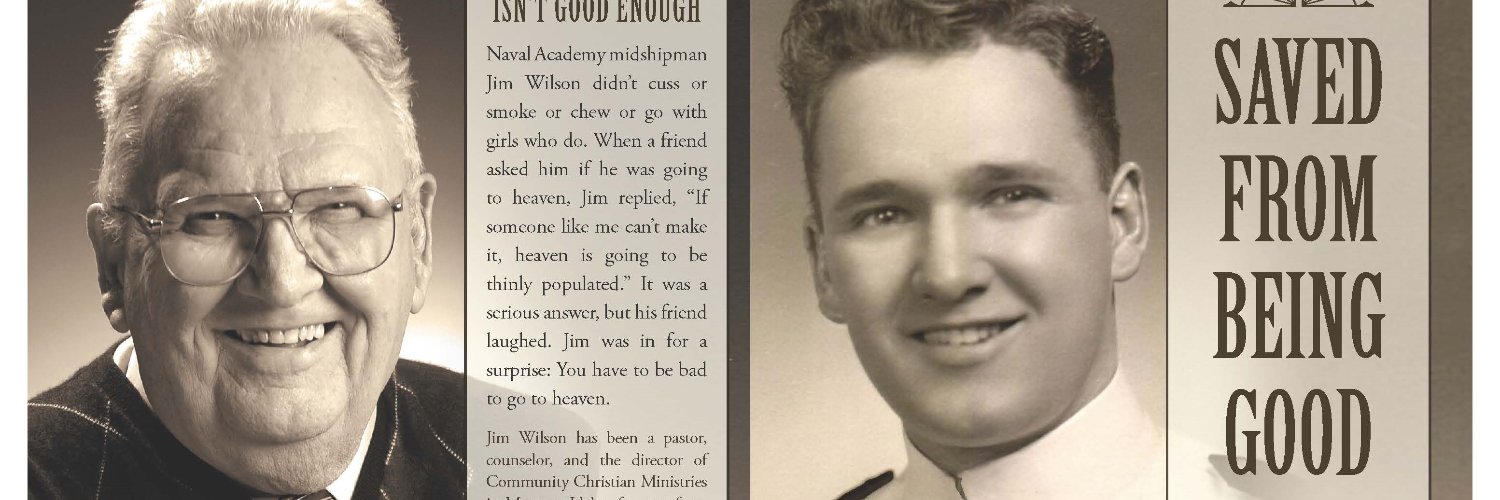


![James_Wilson_'s tweet photo. *If your parents are still alive, it’s not too late to repair your relationship with them.*
Restoring Relationships with Your Parents, Part 3
As much as possible, follow up on the letters by spending time with your parents. Show them with your attention that they are valuable to you. When you go home, express affection to your parents physically. Don’t do the polite hug. Get into it. Really give them a squeeze. Maybe even a kiss! Just rock the old man. Surprise your mom.
You may receive a favorable response to your letters. If you do not receive a response, do not think that you did something wrong. Be patient and keep on giving. Some cultures (e.g. those of Northern Europe) are not expressive with their emotions, except for lost tempers. This kind of expression from you may be embarrassing for your parents. But they still want and need to receive this expressed love, even if they do not know how to return it.
If your parents are still alive, it’s not too late to do this. One man I know who is in his late fifties wrote this kind of letter to his father. His mother replied, “I have been married to your father for sixty years. When he read your letter, that was the first time in our marriage I saw tears in his eyes.”
Some years ago, my wife Bessie and I held a summer school of practical Christianity at the Delta House of the University of Idaho. Respect for parents was one of the subjects. About forty students attended. Because the class was big, I did not get to know everyone well and did not know the effect of the teaching.
The following fall, at a noon Bible study at nearby Washington State University, I was teaching the same subject again, and one of the students spoke up. “I heard this at the Delta House last summer, and I took action,” he said. “When I was sixteen, my father kicked me out of the house and told me he would never see me again. Later, I became a Christian and married a Christian woman, and now I am a graduate student in economics. I had never seen my father since he kicked me out of the house. This summer, I wrote two letters, one to my father, and one to my mother. I didn’t know it, but my parents were on the brink of divorce, living in separate bedrooms at home in North Dakota.
“It took me several days to write each letter, so I sent them a few days apart—but for some reason, the letters arrived on the same day, and both my parents were home when the mail came. Seeing that the letters were addressed separately, my mother took her letter to her room, and my father took his letter to his room. After reading them, they came out and traded letters, and went back to their rooms to read the other letter. When they came out the second time, my father had tears in his eyes. He told my mother, ‘I’m flying out to Pullman to see my son.’”
He had seen his father between the summer school and the fall Bible study. It saved his parents’ marriage.
Another student who had recently graduated told me of the awful relationship he had with his father, and I made this suggestion of writing letters. Some months later, when I was speaking to another group on this subject, he spoke up. “Jim told me to do this several months ago, but I wasn’t going to. I hated my father. In fact, one day I was going to write to tell him what I really thought of him and what a lousy father he had been. I had the entire letter in my head. But when I sat down to write, instead of that letter, I wrote the kind that Jim told me. My father got the letter, and he came down from Spokane immediately to see me. He’s dying now, and I read the Scripture to him by his bedside.” It reestablished the relationship.
If you already have a good relationship with your parents, go ahead and write these letters anyway. It won’t hurt. One young man I know did this, and a few weeks later, he told me he had gotten a letter back from his dad. I asked him what it said. “My father said that he wrote a letter like this to his father when he was my age, and, boy, was it good to get one from me!” That is your thousand generations, when you do it right.
What do you do with disappointment? Another student wrote two letters to her mom, the first about the love and respect, and a second one later asking for advice. The mother’s response to the first letter was, “Why are you being so soupy?” and the second reply was in anger: “Why do you need this information?”
You can expect questions like this the first time around—so send more than one letter. Likewise, if you come from a family that never hugs, the first time you hug your father, he’ll stand there like a fencepost. It will be awkward. Keep doing it. Hug him when you get home, but also, when you’re at home, hug him every time he walks by.[1]
This might make him ask, “What’s your angle?” or “What is this going to cost me?”
Say, “Dad, do you really want to know? If you buy me lunch, I’ll tell you.” Get together with him. Rather than being disappointed at his response, consider those questions an opportunity to do more.
Tell him, “Dad, here is why I’m doing this. I know you love me very much, but I have had to take it by faith. You have not been the best expresser of your love. So, growing up I did not think you loved me. You fed me and clothed me and housed me and sent me off to school. I know that is love, but there’s more to love than that, and I have needed more. You wondered why I got in trouble in high school and college. It’s because I needed more affection than you were giving me. I was boy crazy because I was looking for the male affection I was missing at home. I don’t think you would want me to get it somewhere else now. I still need my father, and you need me, so I thought I’d come home and prime the pump.”
Here is a very important caveat: if you tell your parents that you are giving them affection because you did not get enough growing up, be careful not to say it in an accusative fashion. What makes the difference is your attitude, your heart, and your manner of speech. Don’t say, “Dad, you never loved me.” Say, “I know you love me. And I love you. But I didn’t always know that, and now I want to cause more love.” Say it in a helpful way. Some people will still take it accusatively, but if you keep giving affection, they will know better.
You do not need to become a constant hugger if that is not your nature, but you should go to the limits of your normal means of expression, which is probably far more than your parents have been getting, and they do need it. If you keep on giving affection after the questions you get back, you will soften your parents. In a matter of weeks, months, or years (the timeline varies with different people), you will see a real turnaround. Be patient, and keep on showing love.
There are two problems to take care of in your relationship with your parents—the heart problem and the action problem. The heart problem is first. Only a true heart repentance will 1) stop the curse, 2) cause long life, and 3) turn the three or four generations of bad news around to a thousand generations of good news. Your own unlove, your disrespect, and your ungratefulness towards your parents have to be taken care of in repentance toward God. To write these letters without being forgiven by God only ensures that your letters will be insincere and hypocritical. You may have a long wait if you wait for your father to turn to you first. You cannot afford the wait, so get right with God now. After you are clean, write the letters. Then continue writing, calling, texting, and visiting your parents, expressing respect, love, and thankfulness.
Doing these things will change you. You will become a better husband, son, and father, or a better wife, daughter, and mother. Your love and obedience will bring love for a thousand generations.
Jim Wilson
[1] How can a child show physical affection to a father who has abused him/her? Suppose you were molested by your father, and you are not up to hugging him because he does not respond like a father. In this case, I do not suggest that you hug him. Express your love some other way that is not physical. Do you not love him? Again, take care of that. Confess it and choose to love your father. Then find a different form of expression for his benefit and your benefit. A few decades ago, a young woman with this background attended our School of Practical Christianity. It was so clear that she needed a father. Her father was from another country, and he lived overseas. I suggested that she write to him and say, “Dad, I need a father. I need to be hugged; I need to hug you. Dad, will you be my father?” He wrote back a repentant, broken-down letter saying, “Yes, I’ll be your father.” She needed a father, and he needed to be one. Their reconciliation was based upon her giving him respect. I cannot guarantee that a reconciliation will happen in every instance; nevertheless, it is very important that you respect and love and be grateful to your parents, however they might respond.](https://pbs.twimg.com/media/HJRTsUObwAAB2xh.jpg)


![James_Wilson_'s tweet photo. Are you estranged from your parents and don’t want to be? Here are some suggestions for how to reestablish relationships with them.
First, write two letters home. Do not write, “Dear Mom and Dad.” If you write that, who answers the letter? Mom. Dads are illiterate when it comes to answering letters. In many cases, the father thinks that any communication is between mom and the kids. He doesn’t think he ever gets a letter, even if it is addressed to both Mom and Dad. So, write a letter to your father and a separate one to your mother. Make them very clearly separate. Put on the outside “Dad Only,” “Mom Only.” (Yes, I am suggesting sending actual letters in the mail. It will mean more than an email.)
When you write to your father, include at least five things.[1] I recommend covering one element per paragraph as follows:
1. Tell your father how much you respect him. If you do not respect him, do not write the letter until you do respect him. You must not be hypocritical. But not respecting your father is not one of your options. How can you do it?
First, confess this disrespect for your father to God. Your father is to be honored because he is your father. God has commanded you to honor him. It is not optional. If you do not honor him, then you have sinned. The same is true with your mother. Sin is forgivable, and repentance is required.
Now with freedom and sincerity, write to your father how much you respect him. If he is not respectable, make sure you are not being dishonest. It would be a lie if you said, “I respect you for divorcing Mom, for being a drunk, for…” No. Don’t respect him for anything other than being your father. “I respect you as my father.”
2. Tell him how much you love him. If you do not love him, that has to be corrected first. You might object that you would have loved him if he had loved you first, but he didn’t. I’m sure that is true, and he should have loved you first. As a father, he should have loved you so that your natural response would have been a loving one. But we cannot go back to childhood and start over. Even if we could, that does not guarantee that your father would do it any different the second time. We address the problem from where we are, not from where we should be.
One of the reasons your father didn’t love you may be because he had never been loved. You are turning that around.
If you had to answer for your father, would he say that his father loved him? I have asked many college students this over the years. The answer I usually get is, “No, his dad didn’t love him. He’s told me all the fights they had.”
Next, would he say that his wife loves him? No, mom doesn’t love him. Would he say that his children love him? No, he doesn’t think his kids love him. Would he say that God loves him? He doesn’t know God; he’s not a Christian.
Do you meant to tell me that your father doesn’t think God loves him, his father loved him, his wife loves him, or his children love him? And you wonder why he drinks too much! He sees that everyone who should be close to him does not love him.
“His perception is wrong. We do love him, and God loves him.”
That’s not what I asked. Does he think that you all love him? No.[2]
So here we have a person who couldn’t love you first because he has never been loved. He doesn’t know how to love.
I used to ask this question when speaking to a crowd: “How many of you know that your parents love you?” Ninety-five percent would raise their hand.
Then I would ask, “How many of you think they expressed it to you adequately?” Only half of those hands would stay up.
“Of those who think it was expressed adequately, how many could have used more love?” Everybody’s hands stayed up. Nobody gets enough love at home, even when love is there.
You are now an adult, and as a Christian you have unlimited access to love and forgiveness—a love that your family does not have if they are not Christians. If you are waiting for them to love you first, you’ve got it all backwards. You are now the source of love for your family. You are the vehicle to love your parents. Straighten out your unlove for them with God. As a Christian, confess this lack of love to Him. Is it sin? Yes, it is sin. It is disobedience to the command of God. We have been commanded to love our neighbors, love the brothers, and love our enemies. Your father fits into one of those categories. Confess this lack of love and forsake it. After you have confessed and have been forgiven, choose to love your father.[3] This love requires expression, so tell him in this paragraph.
3. Tell your father how grateful you are to him. You may be grateful for a lot of things. Enumerate them. Or you might have to go back to preschool days to think of something. Think of it and thank him. Go back to some nostalgia; tell him how much you appreciated sitting on his lap when you were three, or the fishing trip you had that one time. If you are not grateful, then as with respect and love, it is your problem, not his. The procedure is the same. Confess your unthankfulness to God. When you are forgiven, express your thankfulness to your father.
After I had been teaching this for years, I wrote a letter to my mother. (My father had already passed away.) Most of it was just news, but I put one last sentence in of gratefulness and praise to her, and she called on the telephone to talk to me about it. Nobody gets enough! Start expressing respect, love, and thankfulness.
These elements are necessary and required. The next two are suggestions for further ways to convey respect.
4. Ask your father for his autobiography. He probably won’t write one, but he will be glad that you want to know about him. If you live near your parents, you can ask your dad for this in person. One young woman told me she couldn’t write home because her parents lived in the same town. I told her to just ask him. So she asked her father for his autobiography, and this man who is normally extremely quiet talked for four hours. She asked, and he was so glad to be asked.
5. Ask your father for advice, in general and on specific matters. This is part of honor. Has he given you advice before, and you didn’t like it? Unsolicited advice is generally much rougher than requested advice. It is rougher on you because you didn’t want it, and it is given rougher because you didn’t want it. But when you request advice, the person is usually much more considerate, much more thoughtful, and the advice will be better.
Ask for counsel, and be open to it. You might be really surprised at the advice you get. There are very few parents who are not concerned about the direction their children go and what they do. When you ask, you might find that they were just waiting to be asked, and they will be considerate.
If you are still single, this is especially true regarding anyone you are dating. Ask your father what he thinks of this guy/girl. You may hear things you don’t want to hear. When you do, you had better listen. Even if your father is not a Christian, he’s been around a while. His answers may be sheer prejudice, but likely they are not. He knows you, and he knows people, so pay attention. If he dislikes the person you are going with, go slow. Even if this man or woman is absolutely right for you and you both know it, it is not right until your parents also know it. It is wise to go slow even if you are right and they are wrong.
Some parents will say it doesn’t make any difference to them what you do, and you should just do what you want. Don’t believe them! They think that is the proper thing to say because you are an adult. Ask them, “If you were going to give me advice, what would you want me to do?” If they still don’t give you advice, but you know your parents well enough to figure out what they think, pay attention to that, even if they are not willing to tell you outright.
Your father may not answer the letter you have written him, but he will almost certainly read it more than once, and he will not throw it away. If you have Christian siblings, tell them what you are doing and encourage them to do the same thing.
Next, write the same kind of letter to your mother, but with one change. The first paragraph should express your love to her, and the second paragraph should communicate your respect. Both sexes of the human race need love and respect from both sexes. But of the two, women need love more than they need respect, and men need respect more than they need love. Tell your mother how much you love her; then tell her how much you respect her. The rest of the letter can follow the same pattern as the letter to your father.
(To be continued… Don't want to wait? Get Restoring Relationships with Your Parents at Amazon or https://t.co/FNj8RwQSQ9.)
Jim Wilson
[1] If you have previously been rebellious towards your parents, there is one more element you should add at the beginning of your letters. First, you must confess to God your rebellion to your father or mother, and now also confess it to your earthly father in this letter, with no excuses or accusations.
[2] Of course, sometimes the people I speak with acknowledge that they don’t love their father and that their mother hates him.
[3] The confession must be done first—you cannot obey on top of accumulated disobedience. Once you are clean, you can choose to obey this command, with God’s help.
#relationships #parents #mom #dad #brokenfamily #Christian #Christianfamily #JimWilson #CCMMedia #CCMBooks](https://pbs.twimg.com/media/HIs4-UvaoAAyxlW.jpg)
![James_Wilson_'s tweet photo. *If I come from a broken family, how can I turn my life around?*
“Honor your father and your mother, so that you may live long in the land the Lord your God is giving you” (Exod. 20:12).
Our country is full of broken families. Whether you are a Christian or not, from a broken family or a whole one, God calls you to honor your parents. The apostle Paul tells us this “is the first commandment with a promise—‘so that it may go well with you and that you may enjoy long life on the earth’” (Gal. 6:2-3).
Your relationship with your parents affects your relationships with your spouse and children. If you are not yet married, a good way to prepare for those future relationships is to reestablish a good relationship with your parents.
The Ten Commandments give us two statements that relate to this. The first is the Exodus quote above. Here is the second:
“You shall not make for yourself an idol in the form of anything in heaven above or on the earth beneath or in the waters below. You shall not bow down to them or worship them; for I, the Lord your God, am a jealous God, punishing the children for the sin of the fathers to the third and fourth generation of those who hate me, but showing love to thousands who love me and keep my commandments” (Deut. 5:8–10).
God says that He will punish children for the sins of the fathers to the third and fourth generation. This has stumbled and troubled people for a long time. How can a just God punish you for someone else’s sin? The answer is that He does not.
“Yet you ask, ‘Why does the son not share the guilt of his father?’ Since the son has done what is just and right and has been careful to keep all my decrees, he will surely live. The soul who sins is the one who will die. The son will not share the guilt of the father, nor will the father share the guilt of the son. The righteousness of the righteous man will be credited to him, and the wickedness of the wicked will be charged against him” (Ezek. 18:19–20).
God does not hold great-grandchildren responsible for what great-grandfather did. Ezekiel says very clearly, “The soul that sins shall die” (v. 20). The person who is in sin is the one who will be held accountable.
What the Deuteronomy passage is saying is that sin flows downhill—and it does so for three and four generations. Look at your parents and grandparents. Can you see how you are affected by the things your parents did, and how they were affected by your grandparents? The sinful influence of our ancestors affects us. This is generational bad news.
However, the sentence in Deuteronomy does not end with verse 9—it continues with something more wonderful. “But showing love to thousands who love me and keep my commandments” (Deut. 5:10). God punishes the children for three and four generations, but He shows love to thousands—not just thousands of people, but thousands of generations. “Know therefore that the Lord your God is God; he is the faithful God, keeping his covenant of love to a thousand generations of those who love him and keep his commandments” (Deut. 7:9). Sin and hatred of God cause downward movement to three or four generations, and obedience and love of God cause upward movement to a thousand generations.
How do we turn our lives from three and four generations going downhill to a thousand generations going uphill? If you are part of a broken family, the solution seems obvious: get converted, leave home, and marry a Christian. That should turn it around, because you are not going to do life the way your parents did, right? You are going to love God and keep His commandments.
Certainly, a major part of the solution is to become a Christian, keep God’s commandments, and marry a Christian who also keeps His commandments. You must do those things. Without them, you can expect more bad generations.
However, although these actions are a very important part of the generational turnaround, they alone bring no automatic guarantee of halting the curse. We still have the descending promise of three and four generations, and leaving to establish a new home does not change that. Even if you have no contact with your parents, you carry those relationships and the effects of them with you into your marriage. I have heard this many times: “I decided I was not going to be the kind of father (or mother) who raised me. I would become a Christian, marry a Christian, and do it right. I became a Christian, married a Christian, and I am doing it wrong, just like my parents.”
Leaving your parents is not the answer. What you need to do is to reestablish relationships with your parents. When you get married, you will have children, and those children are going to need grandparents. If you are estranged from your parents, your children will be deprived of a very important part of their growth. They need grandparents; they need aunts and uncles; they need cousins. The entire family is important. In fact, the family is more important than the church. God created the family first. Of course, the best family is a Christian family, but your own extended family is what God speaks of and gives examples of in the Scripture.
My family holds regular reunions. The year my mother was eighty-four, her six sons, their wives, their children, and their grandchildren all met for a reunion in Moscow, Idaho. To see how all the children and grandchildren got along with each other was great. It was a wonderful time, and it was very important. Every family needs this.
If you are in the second or third bad-news generation, you do not have to wait through more bad generations. Tt is possible to turn the descent around now. But unless you change your relationship with your parents and grandparents, you will have to wait two more generations. (And preaching the gospel to your parents does not change the relationship. It needs to be repaired first.)
About 400 years before Christ, the prophet Malachi gave a negative conditional prophecy: “See, I will send you the prophet Elijah before the great and dreadful day of the Lord comes. He will turn the hearts of the fathers to their children, and the hearts of the children to their fathers; or else I will come and strike the land with a curse” (Mal. 4:5-6).
The angel Gabriel alludes to this prophecy in Luke 1:17: “And he [John] will go on before the Lord, in the spirit and power of Elijah, to turn the hearts of the fathers to their children and the disobedient to the wisdom of the righteous, to make ready a people prepared for the Lord.”
Notice that to stop the curse from happening, hearts must be turned both ways.[1] Unless you do this, you are asking for another generation of bad news. You cannot expect to be a good husband or a good father, a good wife or a good mother, if you have not turned your heart to your own father and mother.
Because we have not obeyed God’s command to honor our parents, we may be in the third- and fourth-generation promise, and we will not live long on the earth (cf. Eph. 6:1). The land is in danger of being smitten with a curse. The Malachi text is a call to repentance, a turnaround of the heart.
We can turn our family around by obeying what the Ten Commandments tell us: Honor your father and your mother (Exod. 20:12). We are promised that a thousand generations of blessing come from keeping God’s commandments, and this is one of them. If you want to turn the flow around, this is primary.
How do you honor parents who are not honorable? You may have parents who are divorced. You may have a father who left home before you were born, and you don’t even know him. You try to get in touch with him, and he does not want to know you. How do you honor someone you don’t know? How do you honor someone who is an alcoholic, mistreats his wife, or mistreats his children?
The Scripture says to honor your father and mother because they are your father and mother, not because they are honorable. When God tells us to love our enemies, does He mean that our enemy is lovely? Does he have to deserve love? No. Love is based upon the person who does the loving. Likewise, honor has to do with the person doing the honoring, not the person being honored.
Do you know any children who have been mistreated at home? How do they act in school? Poorly. On the other hand, if children are treated with respect at home, how do they act in school? Generally, they do well. If you want to make someone unrespectable, treat them with no respect. The opposite is true as well. Just as love makes people lovely, respect causes them to be respectable. As Christians, we do not honor, love, and respect people because they deserve it; we do it because they need it. Fathers and mothers need it. “No, they’ve got to earn my respect first.” No, they don’t. If you want to turn your family around, then you obey God’s command: honor your father and your mother. If you have not honored them, confess that as sin first and then choose to honor them.
(To be continued… Don't want to wait? Get Restoring Relationships with Your Parents at https://t.co/FNj8RwQSQ9.)
Jim Wilson
[1] Although most of my illustrations in this context are speaking to children, this is even more important for parents. If you are a Christian parent reading this, turn your heart toward your own parents, and turn your heart toward your children.
#relationships #parents #mom #dad #brokenfamily #Christian #Christianfamily #JimWilson #CCMMedia #CCMBooks](https://pbs.twimg.com/media/HIoSmeKbwAAGO3N.jpg)



![James_Wilson_'s tweet photo. If you came to Christ after your marriage, there is hope for your spouse. There is a lot of hope. I have seen unbelieving spouses come to the Lord time and time again through living with a believer. When a woman comes to Christ after she is married, and she has a non-Christian husband, normally it isn’t long before she’s able to win him, because the change in her is so attractive.
Quite a few years ago, following the cultural revolution in China, Chinese graduate students began to come to the U.S. to study. Jim and I got to know quite a few of them, and we held English classes for them in our home. After a while, they knew enough English that they didn’t come around anymore.
A year or so later, one of these young men called Jim. He said, “My wife is just arrived from Shanghai. I’d like you to teach her English, but I want you to teach her English from the Bible.” We had not done this with the others.
“Why from the Bible?” Jim asked him.
“She’s a Christian,” he said.
Jim went to their house, and he found out that this wife had become a Christian in China after her husband came to the States to study. When she arrived here, he found out that he had a new wife. The woman that he was married to now was wonderful, and the one he had been married to in Shanghai had been awful!
Jim taught her English from the Bible, but the husband had to help out with the interpretation, and so he listened to the gospel and became a Christian. The main reason for his conversion was that he saw the great change Jesus Christ had wrought in his wife.
If one spouse becomes a Christian after marriage, we can expect that the other one will also. On the other hand, when a Christian in disobedience marries a non-Christian, it does not work the same way. Either one spouse pushes on the other, or the Christian decides not to push and just live like a non-Christian. It does not often turn out well. Even if the woman lives out the 1 Peter 3 life (winning your spouse without a word), it is a long, hard road, and the unbelieving spouse may never come to faith in Christ.
Don’t marry a non-Christian thinking you can convert him or her after you are married. Sometimes, when a woman is in love with a man she knows is not a Christian, she thinks she’ll be able to lead him to Christ in the marriage. It won’t happen. She begins to talk to him about the gospel later on, and he says, “You loved me the way I was when we got married; don’t try to change me now.”
I have one friend in this situation who comes to town periodically, and we have lunch together. I always ask her how the marriage is going. Last time, she told me, “We think he may have come to Christ, but there still isn’t that fellowship.” This has been going on for years and years. The same woman told me, years ago, “Another girl turned my husband down for marriage because she was a Christian and he wasn’t.” That girl gave him his walking ticket. “He met me, and I was a Christian, but not close to the Lord, so I married him.”
Single women, hear this: it isn’t enough to say, “Because I met him at church or in a Bible study, he’s automatically in.” He isn’t. I have a dear English friend in Monterey, CA. She was serving in India in the Canadian Air Force, and she met a man in the Officers’ Christian Fellowship Bible studies there. He was in the Indian army and later became a Canadian citizen. He was always at the Bible studies, and he participated in them, so she assumed that he was a Christian. They were married, and then he said, “Now, this has to stop. I’ve never been a Christian; I have no intention of becoming one.”
What was she to do? Did she have a right to say, “Now that we are married, you should change for me”? No.
But he deceived her!
Yes, he did. Did she check it out with the Lord? God is faithful. If she had said, “Lord, this man is in a Bible study, and he seems to be a Christian. Is he?” God would have shown her. God will show you, but you have to check. Look for how much fruit there is in his life. Find out whether he is a true Christian or not.
Being unequally yoked is hard to bear when it is done in disobedience, but there is forgiveness. If you recognize that you married in disobedience, and you are suffering for it, the first thing to do is confess that marriage as sin.[1] When you are cleansed of the sin, then you will be able to face “what do I do now with it.” Confess the disobedience, then trust God to redeem the situation.
So many women won’t take the step of saying, “I was wrong.” You cannot build a faithful life on unconfessed sin. If you were wrong to get married, the thing to do is say, “Lord, forgive me.” Even a marriage to a Christian can be wrong if you had your priorities screwed up when you married.
Once you are free of that sin, then you can approach the Scripture and ask, “Now how do I win this man to Christ?” 1 Peter 3 says that you can win him without a word by your meek and quiet spirit.[2] Before you go on, thank God for the cleansing. We sometimes live in a muddle because we haven’t confessed sin, and then we haven’t thanked God for cleansing us from that sin. Thank God, then ask Him to help you put your spiritual house in order. Ask Him to give you the kind of a Christian life that your husband won’t be able to resist.
(To be continued…)
Bessie Wilson
[1] Confessing that marrying was sin does not mean you should leave the marriage. Whether you were wrong to get married or not, you are still married for real now. When you confess that it was wrong to get married to this person, that puts you in a place of forgiveness from which you can begin to walk faithfully with God in this marriage.
[2] I used to think that quiet spirit was a silent one. I’m indebted to my husband for pointing out to me the difference between silence and quiet. Often, we think, “I’m just going to not say anything.” A quiet spirit is a restful one that is trusting God. The meek and silent spirit is not found in the Scripture.
#marriage #unequallyyoked #unhappymarriage #marriagecounseling #Christianmarriage #Christian #divorce #BessieWilson #CCMMedia #CCMBooks](https://pbs.twimg.com/media/HHgdgdfbgAAssRf.jpg)


