💼 Financial Planner for high earners (25–45) | 🎯 No BS advice | 🏠 Married young | ⚡ Helping you turn income into freedom
Tweets are not financial advice
I was mid meeting with a great prospect family who thought they were killing it, but one question made the color drain from their face:
So, how much do you want to budget for the weddings?
They had three daughters, one was 24 and in a serious relationship and they had never thought about planning for the wedding.
They were killling it everywhere:
- high income
- retirement savings
- 6 month emergency fund
- paid off house and cars
They still didn't see a $40,000-100,000+ cost hiding right in front of them.
So how are we preparing for it?
- Shifted retirement savings from IRA into a brokerage account
- Shifted some money from emergency fund to a wedding fund
Those two changes will get them $50,000 in just 3 years, and we will keep saving with a goal of funding all three daughter's weddings.
This is something a lot of parents don't think about until it's right in front of them. They thought they had it all figured out, but a huge expense had been slipping through the cracks.
Do we think I'm going to get an invite to the wedding if they hit their goals? 😁
Is this one of the craziest times in finance ever?
Forget crypto and NFTs and everything else
Elon Musk through X just launched X Money
6% APY on cash with no minimums
Insurance up to 10 million dollars
3% back on everything
A metal card with your X handle on it, not names
No foreign transaction fee
All from a social media company
Is X money the future or a gimmick?
I read an opinion piece on bitcoin this week from 2018 when bitcoin was $15,000
Would you use X Money?
I had a conversation with a prospect the other day
He was really passionate about crypto
Maybe I am missing something but I just don't get it, and I am trying to.
I am not doing my job if I simply say I don't get the hype and move on, even though I really don't get the hype.
So I am on a deep dive into Bitcoin and XRP playing devil's advocate against myself to find anything I can to make the hype make sense.
What am I missing?
Is FIRE burning out?
I have never been a big fan of the FIRE movement because retiring at 40 isn't something that interests me.
I understand the appeal, but to get there you have to choose one of a couple paths, so let's talk about one today who "made it":
Working 3 jobs, making 250k and saving 150k per year for 5 years, and turned that into 2 million at 40
Guess what? He didn't want to quit. He said his goal was 2 million by 40 and he got there but now he doesn't know how to do anything except work so he is afraid to quit.
The truth is the FIRE is always growing, you think you've reached the top and suddenly the FIRE got bigger.
- You think instead of quitting I could buy a bigger house, nicer car, or send the kids to private school
- You could be like the example and realize the only thing you know how to do is work 100 hours per week, and golf is not a retirement plan.
- You realize 2 million isn't going to be enough for the lifestyle you want to live.
FIRE is an illusion for most, it's possible, but with a lot of sacrifices and when you make it to the end, you have to be able to make yourself quit.
If I won the lottery tomorrow I wouldn't stop working. I might be less stressed, take a few more vacations, but I couldn't stop working at 25 and live the rest of my life doing nothing.
Sometime in the last few months it seems every male has become a watch person.
Microbrands are where the value is at but no your Christopher Ward is not nicer than a Rolex, sorry.
The most useful subscription that I have charges you more based on where you sign up
Did you know that YouTube Premium charges you more if you sign up through Apple and not on the web?
This has nothing to do with financial planning but as someone that watches everything on YouTube, I can save $5 a month and that will turn into 1.3 billion dollars if invested over 10 years.
It won't. But who doesn't want to save a little bit of money?
“Husband and I make $185k combined, three kids, and one unexpected $500 expense would still wreck us. Why does it feel like this?”
That’s a real quote from a real person.
And honestly, it’s more common than most people think.
$185,000 a year is objectively a strong income. But income and financial stability are not the same thing.
What’s usually going on here isn’t a lack of effort. It’s a lack of structure:
No clear budget that actually matches real life spending
No emergency fund to absorb normal surprises
No system that turns income into stability
So everything feels tight, even when the numbers say it shouldn’t.
Before I started working in this space, I assumed this was rare.
It’s not.
I’ve seen people with six-figure incomes who feel just as financially stressed as people living paycheck to paycheck. The difference usually isn’t how much they make. It’s whether they’ve built a plan that tells their money where to go.
And the hardest part is this:
A lot of these situations come from income growth that happened faster than financial habits could catch up.
You don’t feel “broke” because you’re actually broke.
You feel broke because there’s no buffer between life and your money.
The good news is that’s fixable. But it starts with structure, not income.
I haven't been a very good financial advisor recently.
Most of the time when I meet with new or expecting parents one of the most important things to talk about is what's going to happen if you pass away?
It's hard to talk about I'm 25, try to eat good, workout everyday and try to stay generally healthy, I don't think about my death too often.
But I need to.
For the past 10 weeks I have been a new dad with virtually no plan for what would happen if something happened to me or my wife.
So I am doing something about it
- Term life insurance for both me and my wife for 30 years is actually really affordable while we're young and gives us both peace of mind if anything were to happen
- Updating beneficiaries on all of our accounts so the money goes to the right place
- Making sure our baby is taken care of if something were to happen to both of us
This kind of stuff is hard to think about, but it's necessary so that if something tragic does happen it doesn't get worse I don't want my family to worry about losing the house while planning a funeral
DIY makes a lot of sense for a lot of people.
I used to DIY my lawn.
Perfect green grass. No weeds. Best yard on the block.
Then my wife and I welcomed our baby boy.
Now?
I mow once a week if I can.
I forgot to put down fertilizer.
Forgot weed killer.
Aerating? Not happening.
Suddenly, hiring someone to take care of my lawn sounds pretty appealing because I just do not have the time or desire to handle it myself anymore.
That is exactly what I see happen with financial planning.
A lot of people do great with a DIY approach for years.
Then life changes.
They get married.
They get promoted.
They want to leave their job and start a business.
They have kids.
They want more free time and less stress.
DIY is not bad.
Not everyone needs a financial advisor.
But sometimes the value is not just about whether you can do it yourself.
It is about whether you still want to.
I did not need someone to take care of my lawn either...
Until I did.
This is absolutely insane:
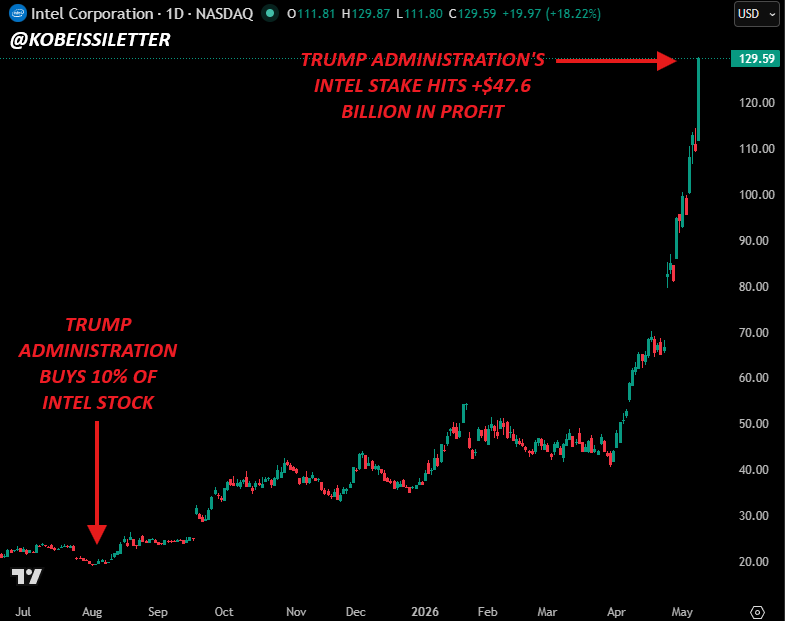
President Trump's purchase of 10% of Intel, $INTC, was worth $8.9 billion in August 2025.
Today, Apple announced a deal with Intel and this position is worth $56.5 billion.
That's a gain of +$47.6 BILLION in less than 8 months.
Truly unprecedented.
Hot take: A lot of the FIRE movement looks more like financial restriction than financial freedom.
If your path to freedom requires hating your life for 20 years, is it really freedom?
"Retire at 45! Be financially independent! Escape the rat race!"
Cool. Here's why that's a hard pass from me:
Reason 1: I actually like working.
Shocking, I know. But I don't fantasize about sitting at home all day with nothing to do. I like the challenge. I like helping clients. I like building something. The idea of 40+ years of permanent vacation sounds like torture, not freedom.
Reason 2: You'll be retired... alone.
Congratulations, you skipped your friend's wedding to save $800. You said no to the birthday trip with the boys because it wasn't "FIRE-friendly." You meal-prepped through your 30s while everyone else made memories.
Now you're 45, financially free, and ready to golf at 11 AM on a Tuesday.
Except all your friends are still working. Your family has responsibilities you opted out of years ago.
You optimized for financial independence and accidentally optimized yourself out of the relationships that make life worth living.
Look, if extreme frugality and early retirement make you happy, go for it. But stop acting like everyone who chooses to work past 45 is financially illiterate.
Some of us would rather work longer and actually enjoy the journey instead of white-knuckling through decades of rice and beans for the privilege of being bored and lonely.
Financial independence? Great goal. Social independence? That's just called isolation.
"Why isn't my income translating to wealth?"
This is a hard question, because you probably know the answer.
Usually it comes down to three things:
1. No clear budget or savings strategy
2. Lifestyle quietly expanding every year
3. No plan for investing
None of these are obvious in the moment
But over 5-10 years, they add up in a big way.
The people who build wealth aren't just earning more...
They're intentional about where every dollar goes next.
"How much should I have saved by 30?"
Everyone knows the "1x your salary" rule.
It's just not that helpful.
Here's what I actually see:
Most high earners don't fall behind because they don't hit a number...
They fall behind because they wait too long to get serious.
If you're 30 and:
You're saving 20% of your income
You're investing consistently
You're increasing your savings every time your income goes up
You've probably got a good start
Even if you don't have 1x your salary yet.
But if you're 30 making 200k+ and:
You've got 20k sitting in cash
You're maxing nothing
Your spending is creeping up with your income
That's where the problems start
Not the number. The behavior.
A 30 year old saving aggressively can pass someone with double their net worth in less than a decade.
The gap closes fast when the habits are right.
Stop obsessing over where you should be.
Start paying attention to what you're actually doing.
Do I actually need a financial advisor at $150k+ income?
Here's the honest answer:
It's usually not about income...
It's about complexity.
I work with are 25-45 making 150k+
And they come to me when things start stacking up:
* Multiple retirement accounts
* Hitting a big bonus
* Tax bills that get bigger every year
* No clear system for investing
That's the tipping point
Not when you can afford an advisor...
But when not having a plan starts costing you money.
If your finances are simple, you probably don't need an advisor
If you're good at making money but feel like it just disappears...
that's usually when it makes sense to talk
The most common phrase I hear as a financial advisor:
I want to own rental properties!
This one came from a doctor working sixty hours per week.
He wanted multiple streams of income because...? I am not sure he didn't really give a reason he just said it would be cool.
Sometimes I feel like I am the only one in the world under 50 that doesn't want to own rental properties.
I know that real estate can be a great investment and you can BRRRRRRRRRRRRRRRRRRRRRRRRRRRRRRRRR forever and life will be great but...
Springfield, MO got golf ball sized hail last night
Golf ball size hail x 45 rental properties + 60 hour weeks = one very unhappy Caleb
DEFCON 1
I'm sure I'm missing out on the wonders of real estate but I promise you I was not worried about my stock portfolio last night.
I am a financial advisor
I'm also 25... and figuring things out just like a lot of you.
And I get it, sometimes that makes it harder to trust someone like me.
Because the assumption is:
"How could he know more than me? He's so young, he hasn't done ______"
But here's the truth most people don't see:
I have the same financial tensions you do.
I'm a new dad.
That alone changed a lot for me.
Now it's not just:
"What do I want?"
It's:
"What happens if I'm not here tomorrow?"
So I bought life insurance.
That's not a sales pitch, it's real life.
At the same time...
I still want things.
I've been driving the same car since I was 18.
I want a new truck. Bad.
I want a golf membership.
I want to play whenever I want.
And if I'm being honest, there are days where I think:
I make good money... why can't I just do it?"
But that’s the tension no one talks about:
Just because you can buy something… doesn’t mean it fits your plan.
So I delay.
I prioritize.
I remind myself that the life I'm building is bigger than the things I want right now.
And yeah, it sucks sometimes.
But that's the difference between looking successful and being successful.
I'm not perfect with money.
But I have a plan and I stick to it, even when it's hard.
And that's why being young could benefit you.
I deal with that tension every single day.
I bought my first house when it seems impossible for so many.
I know what it feels like when your income is rising, your responsibilities are increasing, and your lifestyle is trying to keep up.
And I know how easy it is to get it wrong.
You don't need someone who's only looking back on 30 years of experience.
Sometimes you need someone who's in it with you.
Thinking through the same decisions you are.
I am not perfect with money.
But I am intentional
For someone that's in their 20s or 30s
that's exactly the kind of guidance you need.
I'm convinced if you invest in real estate over stocks it's because you want something to talk about at a barbecue with your friends.
Your friends ask you about your rental properties, you get to see your houses when you drive down the road.
The rent check is the number everyone talks about but it's not the REAL number.
Real estate makes you feel good while draining you with repairs, vacancies, insurance, and other things.
But I'm curious:
How would the mindset shift if I put my brokerage account on a billboard?
If I could pull out my phone and show you my account and talk about it at the same barbecue?
People could see it, ask me about it, and really see how much money I am making in real time.
Stocks go up and down whether you take a nap at 1 PM, take a vacation to Hawaii or sit in your office. Stocks won't call you about their broken pipe and flooded house at 3 AM.
Is this the shift we need? Would it make 20-35 year old's think stocks are the flashy choice again? Would it make you want to invest in stocks more?
I had a 30 year old prospect making 200k
Here are the things that made him feel behind:
He still lives in his "starter home"
He hasn't taken a vacation out of the country
He wears a Casio not a Rolex
Financial planning isn't always these huge disasters that we have to try and manage. For him, the process started because he saw all his friends and peers on social media and he felt behind.
So here's what we decided to do:
We dove into the numbers, where is his retirement at? Does he really want a new house and a Rolex or does he like his Casio?
Guess what? He was over-funding his retirement, and he and his wife had always wanted to see Paris.
So we made a plan:
- He kept the Casio
- He realized he doesn't actually want a new house
- They are taking a $15,000 trip to Paris so they could sit under the Eiffel Tower with their daughter and make memories together.
This won't affect his retirement date, it won't change the fact that his friend still has a Rolex and he doesn't, but it will change how he views his life and remind him that those things he sees on social media aren't what he actually values.
Real estate was sold to me all through high school and college as this magical "passive income pill."
Buy a property, collect rent, watch the money roll in while you chill on the beach, right?
Then I started working closely with someone who owns 50+ rental properties.
Reality check: it’s not passive at all. It’s a second (or third) full-time job—tenants, repairs, vacancies, regulations, evictions, and constant headaches.
Stocks? Those actually make money while you sleep. Set it and forget it. Everything else is usually just trading time for money in disguise.
What “passive” investment myth did they sell you that turned out to be anything but?