Who says you can't write an article or long form posts on Sundays?, haha.
It just took me about 32 minutes to choose a movie to see, hence the reason I decided to write this today.
"Technology is an amplification of the will of its creators" , @0xbilly said it near the end of the Nov 5th stream on @0xIntuition and it stuck with me, I watched the full stream 3 times.
Technology doesn’t have a will of its own. It just turns the volume up on whatever you feed it. Good stuff in, good stuff out. Bad stuff in, bad stuff out, louder. That’s the whole game.
Right now the loudest machines on earth are training on the internet. And the internet is mostly the worst version of us. The version that posts for the algorithm. The version that argues because arguing gets engagement. The version that gets paid to make you buy something, vote for something, or feel something you didn’t feel five minutes ago. AI is eating that and calling it “humanity.” Then it turns around and gives us more of the same. The flywheel is already spinning. Frontier labs know it. That’s why there’s a quiet gold rush for private data. They can’t keep eating their own output forever. It gets worse.
Most people aren’t like that, though. Not really. Most people are just stuck playing games that reward the less good version of themselves. Twitter, Instagram, the comment sections, the replies. You say something honest and it gets buried under bots and bad incentives. You say something sharp and fake and it travels. After a while you start performing the version of you that the platform likes. AI looks at that and thinks that’s who we are. It isn’t.
That’s the part that feels off. Technology is an amplifier. If the will of the people building it is “maximize engagement” or “sell the next ad,” that’s what gets amplified. If the will is “help people find what they actually like from people they actually trust,” something else comes out the other side. Same tools. Different direction.
Intuition has been circling this for a while. As a practical problem. The team got together in the middle of winter in a place they call the barn and asked the simple question: what’s the one thing every single one of us struggles with, no matter how different we are? The answer was the same. It’s hard to know what to trust. It’s hard to get a good recommendation. And it’s getting worse. So they started there. Movies, shows, books, podcasts, music. Then places. Stuff everyone already cares about. Not because those things are the whole point. Because they’re a clean place to begin. You get the aha moment of “oh, this actually feels better” without anyone having to sign a manifesto first.
Underneath it is the same idea Billy was pointing at. Everyone has their own little knowledge graph. Their own second brain. Their tastes, their lists, the things they trust. You can keep that private. Or you can publish pieces of it so other people can use it. When you do, you’re asking the people you already trust. Their intuition shapes yours. The results you get are influenced by the people you chose, not by whoever paid the most to sit at the top of the results. That’s closer to how the real world works. You ask the friend who actually knows movies. You don’t ask a billboard.
It feels small until you zoom out. Whoever controls the recommendations controls a lot. What you buy. What you think happened. Who you believe. In a few years most people won’t scroll. They’ll just say “give me the best chair” or “what happened here” and take whatever comes back. If that answer is always the highest bidder, or always the same three models trained on the same noisy internet, we handed the steering wheel over without noticing. The categories look light on purpose. You start with something normal people will actually use. Then you can expand. Products, claims, whatever comes next. The protocol was always big enough. The hard part was getting normal people in the door.
The Intuition app that just came out of stealth is one attempt at that. Invite only for now. Not because it’s exclusive for the sake of it. Because culture is a garden. You can’t force it. You tend it. If the first people through the door are people who actually care about the thing, the signal stays clean. Anyone can build the features now. The moat is the people. The community. The fact that when someone says “this movie is good,” you can see who they are and whether anyone else trusts them on that. Same Lego pieces work for a film or for whether some claim floating around is worth listening to. Reputation has to live somewhere again. Online it mostly disappeared, and the incentives flipped. You can get rewarded for being wrong. That’s not sustainable.
None of this requires you to be a devotee. You can just use the thing because it gives you better recommendations and a profile that actually looks like you instead of a slanted feed or a bunch of photos. If it works, other apps can use the same profile and the same graph. One good thing that people actually open every day is enough. The rest of the ecosystem can build on top of it. That’s the point of the protocol. More shots on goal. One of them hits and everyone wins.
We’re still early. Still inning zero, maybe creeping into one. The technology is ready enough. The question is what will we decide to amplify. If we keep feeding the machines our worst public selves, that’s what we’ll get back, louder. If we start feeding them something closer to how we actually are, the things we like, the people we trust, the quiet preferences we never post, then the amplification goes the other way.
Most people are better than the game currently forces them to be. The work is just making it easier to be that version, and making sure the machines can see it.
$TRUST the process 👁️.
Oh, and by the way recommend movies for me, ty.
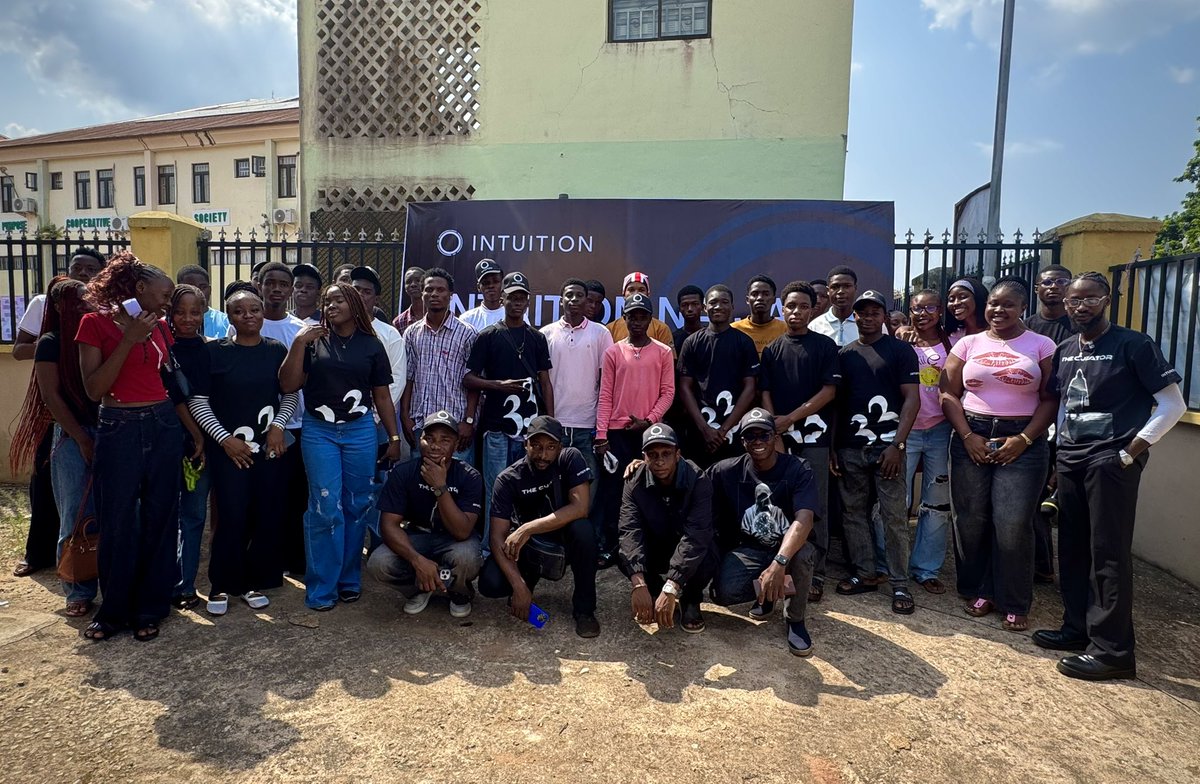
What an amazing day at @0xIntuition Naija Vibes! 🇳🇬💚
Big thanks to everyone who showed up, shared their thoughts, connected with others and made the event a memorable one.
The conversations, energy and Naija vibes were everything!
Thank you UNIBEN for having us. Until next time! 🫶
@elonmusk fixes things you didn’t even know were broken, using solutions you don’t even understand.
If you want to even try understand, this is where to start 👇 https://t.co/Yn0pE5QIvF
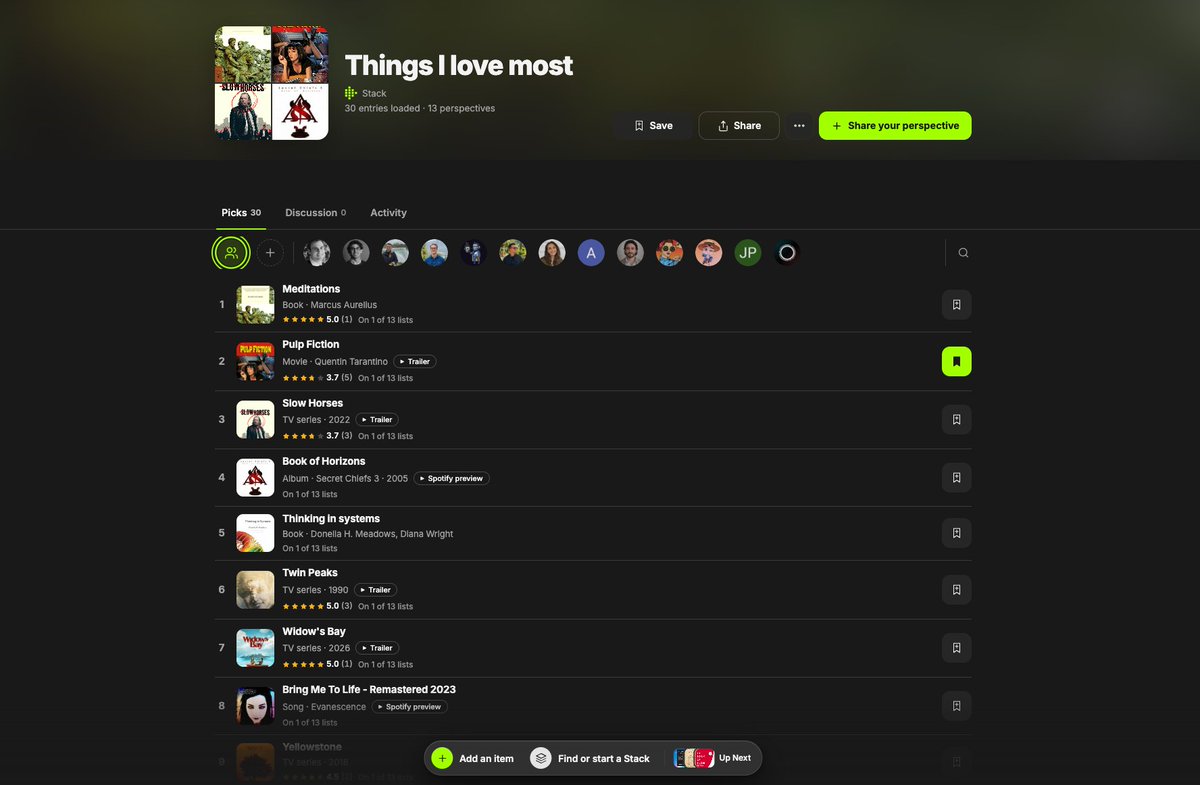
We've been heads down building, making the Intuition App better every single day!
Here are the highlights of the latest update we pushed out this week:
- ⚡ Stack pages load way faster, especially the big ones with more perspectives and entries.
- ➕ A new + button makes it easy to create Items from anywhere in the app.
- 📣 Share your thoughts on a Stack directly to the Feed for others to discover.
- 💬 Reply to Reviews to start meaningful conversations.
- 🎬 We fixed an edge case affecting certain “Movie” items, thanks to our beta user @mhtradescrypto for flagging it!
Since last week, Stacks and Items have been publicly visibly for anyone.
The app is still invite-only, but if you want to unlock full access for features… 👇👇
Who says you can't write an article or long form posts on Sundays?, haha.
It just took me about 32 minutes to choose a movie to see, hence the reason I decided to write this today.
"Technology is an amplification of the will of its creators" , @0xbilly said it near the end of the Nov 5th stream on @0xIntuition and it stuck with me, I watched the full stream 3 times.
Technology doesn’t have a will of its own. It just turns the volume up on whatever you feed it. Good stuff in, good stuff out. Bad stuff in, bad stuff out, louder. That’s the whole game.
Right now the loudest machines on earth are training on the internet. And the internet is mostly the worst version of us. The version that posts for the algorithm. The version that argues because arguing gets engagement. The version that gets paid to make you buy something, vote for something, or feel something you didn’t feel five minutes ago. AI is eating that and calling it “humanity.” Then it turns around and gives us more of the same. The flywheel is already spinning. Frontier labs know it. That’s why there’s a quiet gold rush for private data. They can’t keep eating their own output forever. It gets worse.
Most people aren’t like that, though. Not really. Most people are just stuck playing games that reward the less good version of themselves. Twitter, Instagram, the comment sections, the replies. You say something honest and it gets buried under bots and bad incentives. You say something sharp and fake and it travels. After a while you start performing the version of you that the platform likes. AI looks at that and thinks that’s who we are. It isn’t.
That’s the part that feels off. Technology is an amplifier. If the will of the people building it is “maximize engagement” or “sell the next ad,” that’s what gets amplified. If the will is “help people find what they actually like from people they actually trust,” something else comes out the other side. Same tools. Different direction.
Intuition has been circling this for a while. As a practical problem. The team got together in the middle of winter in a place they call the barn and asked the simple question: what’s the one thing every single one of us struggles with, no matter how different we are? The answer was the same. It’s hard to know what to trust. It’s hard to get a good recommendation. And it’s getting worse. So they started there. Movies, shows, books, podcasts, music. Then places. Stuff everyone already cares about. Not because those things are the whole point. Because they’re a clean place to begin. You get the aha moment of “oh, this actually feels better” without anyone having to sign a manifesto first.
Underneath it is the same idea Billy was pointing at. Everyone has their own little knowledge graph. Their own second brain. Their tastes, their lists, the things they trust. You can keep that private. Or you can publish pieces of it so other people can use it. When you do, you’re asking the people you already trust. Their intuition shapes yours. The results you get are influenced by the people you chose, not by whoever paid the most to sit at the top of the results. That’s closer to how the real world works. You ask the friend who actually knows movies. You don��t ask a billboard.
It feels small until you zoom out. Whoever controls the recommendations controls a lot. What you buy. What you think happened. Who you believe. In a few years most people won’t scroll. They’ll just say “give me the best chair” or “what happened here” and take whatever comes back. If that answer is always the highest bidder, or always the same three models trained on the same noisy internet, we handed the steering wheel over without noticing. The categories look light on purpose. You start with something normal people will actually use. Then you can expand. Products, claims, whatever comes next. The protocol was always big enough. The hard part was getting normal people in the door.
The Intuition app that just came out of stealth is one attempt at that. Invite only for now. Not because it’s exclusive for the sake of it. Because culture is a garden. You can’t force it. You tend it. If the first people through the door are people who actually care about the thing, the signal stays clean. Anyone can build the features now. The moat is the people. The community. The fact that when someone says “this movie is good,” you can see who they are and whether anyone else trusts them on that. Same Lego pieces work for a film or for whether some claim floating around is worth listening to. Reputation has to live somewhere again. Online it mostly disappeared, and the incentives flipped. You can get rewarded for being wrong. That’s not sustainable.
None of this requires you to be a devotee. You can just use the thing because it gives you better recommendations and a profile that actually looks like you instead of a slanted feed or a bunch of photos. If it works, other apps can use the same profile and the same graph. One good thing that people actually open every day is enough. The rest of the ecosystem can build on top of it. That’s the point of the protocol. More shots on goal. One of them hits and everyone wins.
We’re still early. Still inning zero, maybe creeping into one. The technology is ready enough. The question is what will we decide to amplify. If we keep feeding the machines our worst public selves, that’s what we’ll get back, louder. If we start feeding them something closer to how we actually are, the things we like, the people we trust, the quiet preferences we never post, then the amplification goes the other way.
Most people are better than the game currently forces them to be. The work is just making it easier to be that version, and making sure the machines can see it.
$TRUST the process 👁️.
Oh, and by the way recommend movies for me, ty.
Who says you can't write an article or long form posts on Sundays?, haha.
It just took me about 32 minutes to choose a movie to see, hence the reason I decided to write this today.
"Technology is an amplification of the will of its creators" , @0xbilly said it near the end of the Nov 5th stream on @0xIntuition and it stuck with me, I watched the full stream 3 times.
Technology doesn’t have a will of its own. It just turns the volume up on whatever you feed it. Good stuff in, good stuff out. Bad stuff in, bad stuff out, louder. That’s the whole game.
Right now the loudest machines on earth are training on the internet. And the internet is mostly the worst version of us. The version that posts for the algorithm. The version that argues because arguing gets engagement. The version that gets paid to make you buy something, vote for something, or feel something you didn’t feel five minutes ago. AI is eating that and calling it “humanity.” Then it turns around and gives us more of the same. The flywheel is already spinning. Frontier labs know it. That’s why there’s a quiet gold rush for private data. They can’t keep eating their own output forever. It gets worse.
Most people aren’t like that, though. Not really. Most people are just stuck playing games that reward the less good version of themselves. Twitter, Instagram, the comment sections, the replies. You say something honest and it gets buried under bots and bad incentives. You say something sharp and fake and it travels. After a while you start performing the version of you that the platform likes. AI looks at that and thinks that’s who we are. It isn’t.
That’s the part that feels off. Technology is an amplifier. If the will of the people building it is “maximize engagement” or “sell the next ad,” that’s what gets amplified. If the will is “help people find what they actually like from people they actually trust,” something else comes out the other side. Same tools. Different direction.
Intuition has been circling this for a while. As a practical problem. The team got together in the middle of winter in a place they call the barn and asked the simple question: what’s the one thing every single one of us struggles with, no matter how different we are? The answer was the same. It’s hard to know what to trust. It’s hard to get a good recommendation. And it’s getting worse. So they started there. Movies, shows, books, podcasts, music. Then places. Stuff everyone already cares about. Not because those things are the whole point. Because they’re a clean place to begin. You get the aha moment of “oh, this actually feels better” without anyone having to sign a manifesto first.
Underneath it is the same idea Billy was pointing at. Everyone has their own little knowledge graph. Their own second brain. Their tastes, their lists, the things they trust. You can keep that private. Or you can publish pieces of it so other people can use it. When you do, you’re asking the people you already trust. Their intuition shapes yours. The results you get are influenced by the people you chose, not by whoever paid the most to sit at the top of the results. That’s closer to how the real world works. You ask the friend who actually knows movies. You don’t ask a billboard.
It feels small until you zoom out. Whoever controls the recommendations controls a lot. What you buy. What you think happened. Who you believe. In a few years most people won’t scroll. They’ll just say “give me the best chair” or “what happened here” and take whatever comes back. If that answer is always the highest bidder, or always the same three models trained on the same noisy internet, we handed the steering wheel over without noticing. The categories look light on purpose. You start with something normal people will actually use. Then you can expand. Products, claims, whatever comes next. The protocol was always big enough. The hard part was getting normal people in the door.
The Intuition app that just came out of stealth is one attempt at that. Invite only for now. Not because it’s exclusive for the sake of it. Because culture is a garden. You can’t force it. You tend it. If the first people through the door are people who actually care about the thing, the signal stays clean. Anyone can build the features now. The moat is the people. The community. The fact that when someone says “this movie is good,” you can see who they are and whether anyone else trusts them on that. Same Lego pieces work for a film or for whether some claim floating around is worth listening to. Reputation has to live somewhere again. Online it mostly disappeared, and the incentives flipped. You can get rewarded for being wrong. That’s not sustainable.
None of this requires you to be a devotee. You can just use the thing because it gives you better recommendations and a profile that actually looks like you instead of a slanted feed or a bunch of photos. If it works, other apps can use the same profile and the same graph. One good thing that people actually open every day is enough. The rest of the ecosystem can build on top of it. That’s the point of the protocol. More shots on goal. One of them hits and everyone wins.
We’re still early. Still inning zero, maybe creeping into one. The technology is ready enough. The question is what will we decide to amplify. If we keep feeding the machines our worst public selves, that’s what we’ll get back, louder. If we start feeding them something closer to how we actually are, the things we like, the people we trust, the quiet preferences we never post, then the amplification goes the other way.
Most people are better than the game currently forces them to be. The work is just making it easier to be that version, and making sure the machines can see it.
$TRUST the process 👁️.
Oh, and by the way recommend movies for me, ty.