Meanwhile, onchain solutions enable near-instant cross-border settlements with fees <$1. No more waiting days for settlement—just fast, efficient, global payments. The global economy is moving onchain!
Most fintechs don't fail at the idea. They fail at the infrastructure.
One market works. Then the next one needs different rails, different compliance, different everything.
THREAD 🧵
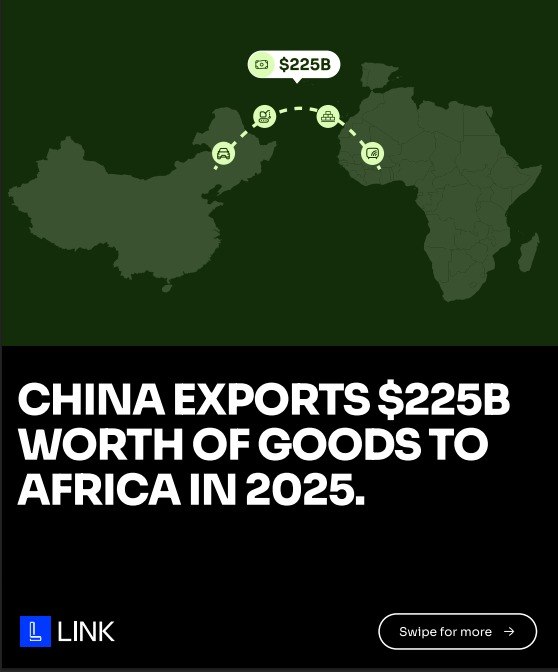
Africa imported $225B worth of goods from China in 2025.
On paper, that’s growth.
More trade. More opportunity.
But that’s only half the story 👇
Most global payment platforms support multiple currencies.
Very few support multiple methods.
M-Pesa. Vodafone Cash. Bank transfer. Stablecoin. Your users across Africa, LatAm, and Asia Pacific don't all move money the same way.
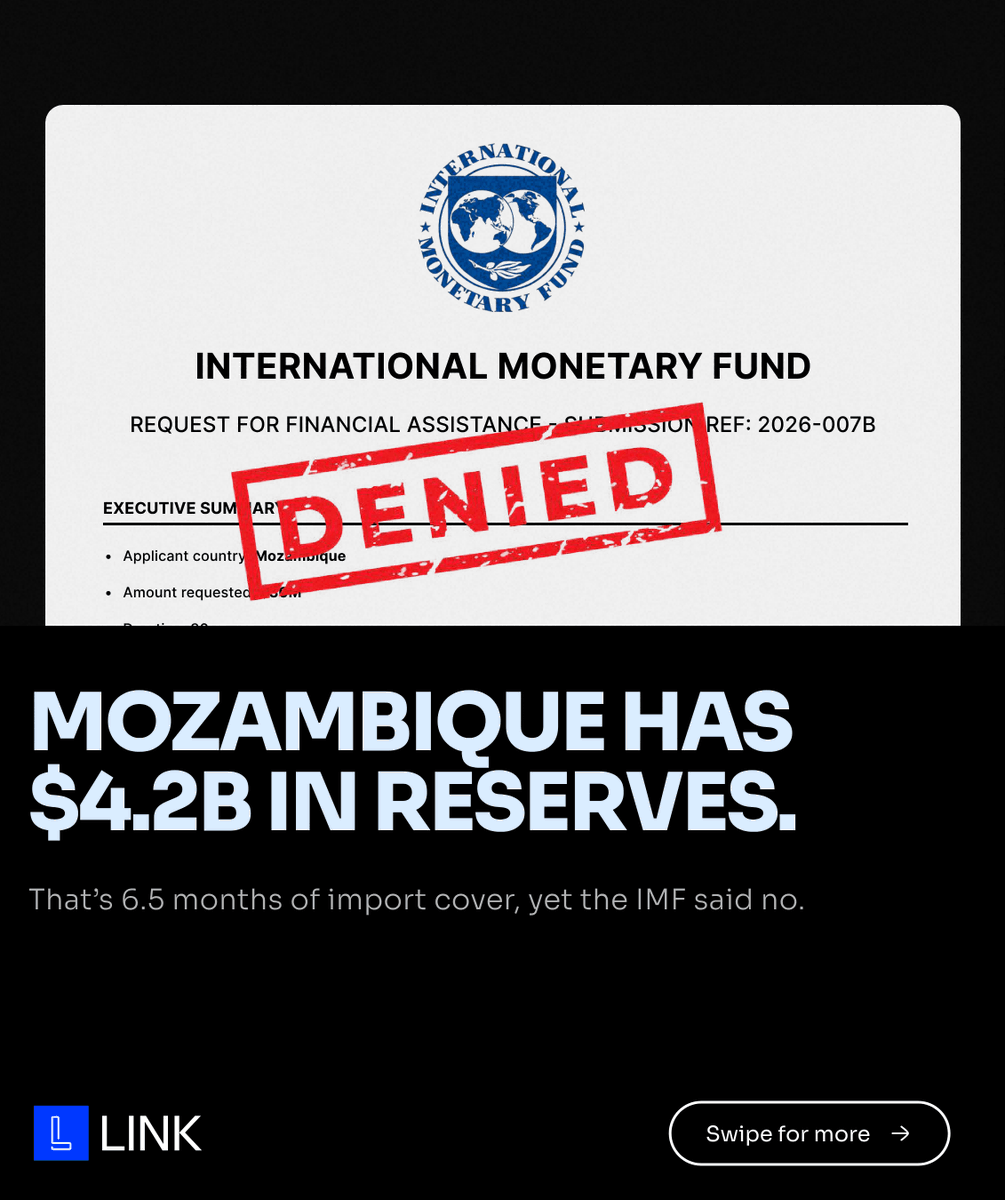
Mozambique has $4.2B in reserves—6.5 months of import cover.
The IMF still denied their financial assistance request.
Here's why payments can't leave Mozambique, and what it means for anyone doing business there 🧵
#Mozambique
My Ship with AI mentorship launches today for people with or without coding experience. It focuses on shipping real products using Claude, Cursor, and Codex. The cohort is limited to 50 people. Entry is paid and based on a successful application.
To apply, you must have a project you want to build: a plugin/extension (Figma, Chrome, WordPress), portfolio website, web app, or mobile app.
Note: It is a 4-week hands-on mentorship. At the end, you will either have a built project or I will return your prorated payment midway.
Cross-border payments within Africa remain unnecessarily complex.
Today, we’re expanding LINK’s API with a Pan-African update designed for retail businesses and fintech applications where transaction reliability and FX efficiency matter.
I noticed that each time I add a URL to my contact info for faster access on InstantFind. It doesn't seem to publish with the rest of my edits @leyeConnect
A, it’s popular for a reason. You’re always on safe ground when you go with what people already find familiar, especially when money is involved.
Crazy design especially in finance related app will help you win awards but not the market.
Clean designs all round 👋
A, it’s popular for a reason. You’re always on safe ground when you go with what people already find familiar, especially when money is involved.
Crazy design especially in finance related app will help you win awards but not the market.
Clean designs all round 👋
There are many UX laws out there, but two that have stuck with me are the Aesthetic-Usability Effect and Jakob’s Law.
Let’s start with the Aesthetic-Usability Effect.
People naturally believe that beautiful designs work better.
Even if two products do the same thing, users are often more forgiving of the one that looks good.
That doesn’t mean you should focus on beauty over function, but it shows how much good visual design can influence how people feel about your product.
Then there’s Jakob’s Law.
This one simply says that users spend most of their time on other sites or apps not yours.
So when they come to your product, they already have expectations based on what they’ve seen elsewhere.
If you try to reinvent everything, you might end up confusing them instead of impressing them.
Familiarity is comfort.
When you combine both laws, you realize something powerful:
Your product should look good enough to build trust and work familiar enough to feel natural.
Which UX law has had the biggest impact on your design process? Share your thoughts, I’d love to hear your experiences.
@thedennisobaro1 A mixture of both. Sometimes I like listening to music and in the process I decide to pause it and work in silence when I need to think 😅