My new video on Laravel Daily.
I Received a New Invoice for Laravel Cloud. Wow.
https://t.co/ipicFZMhvT
A few weeks ago, I demonstrated the new "scale to zero" on Cloud, but now I have actual NUMBERS to show how much I'm REALLY paying.
It’s launch day baby! Thanks to everyone in the community who gave us feedback and talked with us about how to make Laravel Cloud better. Predictable pricing and more bang for your buck when running small apps was the #1 thing requested and I’m proud to say it’s now here 💪🚀
The team really cooked on this one! Any dev who has had to manage queued jobs at scale before will appreciate how powerful and time saving this is. No more flying blind on things like how many workers you can fit on a server or wondering if you need to scale up. It just works.
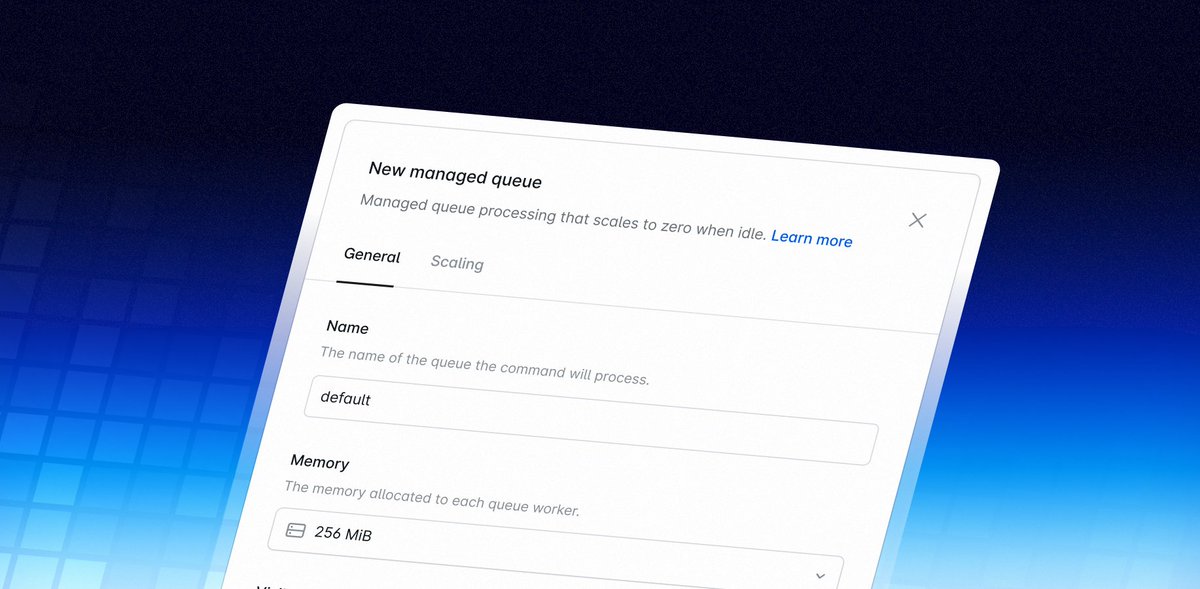
Managed queues are now on Laravel Cloud. Workers run in isolation from your app cluster and scale on queue depth or to zero when idle. You only pay for what ran.
Here's what you get:
◆ Autoscaling based on queue depth
◆ Workers scale to zero when idle
◆ Queue dashboard with failed job visibility and one-click retry
◆ Per-queue configuration: compute size, max workers, and polling interval
◆ Pause and purge controls
Learn more about how the team built and designed this feature → https://t.co/W67OMLU5Gx
It's been such a pleasure working on these improvements alongside Laravel's top-tier engineers, designers, marketers, and PMs. I can't wait to get these updates out and see what you all ship next!
I've been waiting to share this. Huge updates coming soon to Laravel Cloud over the next few weeks... ☁️
• A new $5/month plan. We want Cloud to be accessible to every Laravel developer. Simple as that.
• Spend caps. Set a spend cap on your account and we'll either alert you or shut off compute when you hit it. No surprise bills.
• True scale-to-zero compute. Hibernation has been around for a while, but we've made wake-up over 10x faster. App, database, and cache wake-up is now measured in milliseconds. Your users won't even notice.
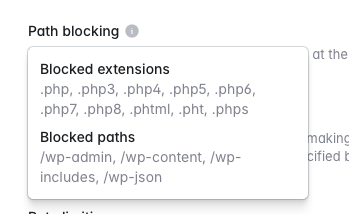
• New bot protection rules keep scale-to-zero apps scaled to zero more of the time, cutting your compute spend even further.
• Fully managed, auto-scaling queues with observability. We've rebuilt "queue clusters" into a new product: "managed queues". Set a max worker count and we handle the rest. Scales on queue depth, scales to zero when idle, so you're never over-provisioned.
Huge thanks to everyone building on Laravel Cloud. Your feedback shaped most of what's above - keep it coming. ❤️
If you use Laravel Cloud (or have been thinking about it), the product team wants to hear from you. We're working on some major improvements to Cloud that open up new pricing options, and your perspective matters before we finalize anything. 2-5 min survey
https://t.co/3h1iCwsXxR
The economics on hosting side projects and small production apps are about to get dramatically better. What are you building? What does your setup look like? What pricing model actually helps you ship? That's what we're trying to learn.
Wish you could figure out where all your cloud compute costs were going?
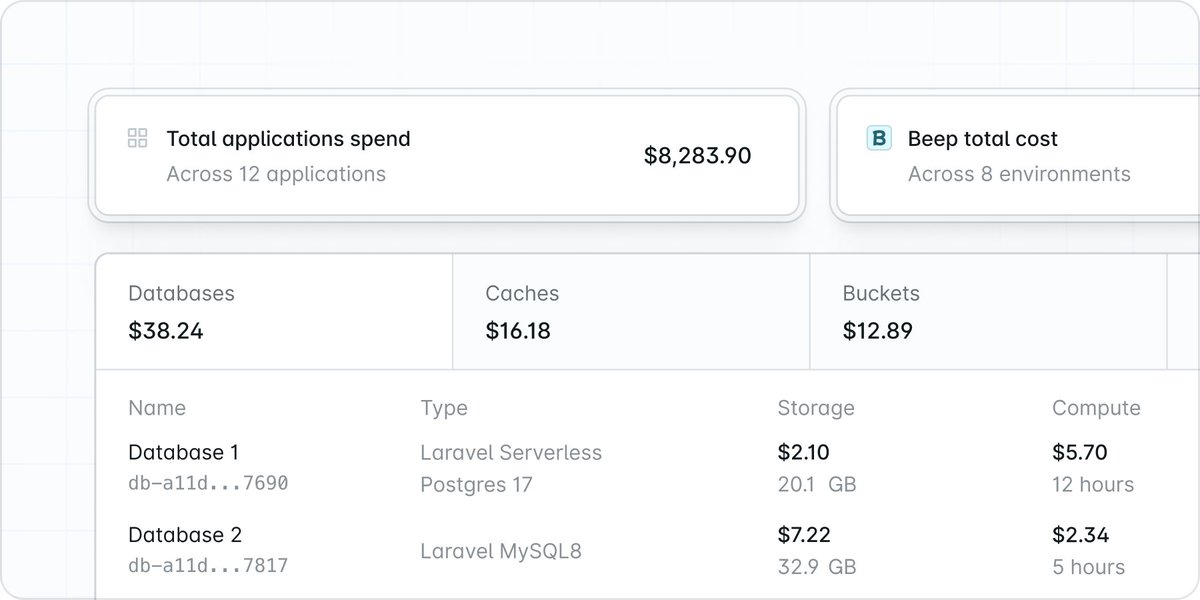
We’re granting that wish for all Laravel Cloud customers with a redesigned usage page. Drill down from org-level spend all the way to individual resource costs so you can easily understand what your organization is spending and where that spend is coming from.
See the docs → https://t.co/TGZDoATsx2
☁️ We've been cooking on the Laravel Cloud UI lately, but I haven't shared much so here are some updates:
While at Laracon EU, we built a lightweight file explorer for buckets. View what's in your buckets, upload and delete files all without leaving Cloud.
If you are running PHP applications on Heroku, we would love to find them a new home on Laravel Cloud. We can run Laravel, Symfony, and other frameworks.
Auto-scaling, MySQL, Postgres, Redis, and more built-in, as well as Laravel Private Cloud for the strictest requirements.
DMs open or email me at taylor at https://t.co/OYOvK1NARs.
https://t.co/622l4aP8hl
@hicsfh If you’d like, you can DM me your environment details (org/app/env name, or just the url to the env on cloud) and I can take a look at it in our internal dashboards to give a better recommendation.
@hicsfh That said, we are also working to dial in those 90% RAM alerts. I think we are sending those on any spike, but we probably need to tune that to reduce false alarms. My apps trigger them occasionally but always go down right away and never OOM.
@hicsfh The 256MiB option is for pretty lean apps and/or dev environments. I’d recommend 512MiB and up for anything real world. Reason being, a baseline instance running PHP is around 100MiB, then every request worker is another 30MiB, then whatever your app needs on top of that.