I'm honored to receive the 2026 Early Career Impact Award from FABBS, nominated by SESP. I'm grateful to everyone who makes the work possible. 🙏
Check out the spotlight on our research exploring evidence-based interventions that can address inequality: https://t.co/AjRXhRfQG5
Project Implicit’s critical work continues! I have good news to share: we're not going anywhere!
@ProjectImplicit will re-organize under a new organizational framework (TBA), but our work continues all the same.
Our full press release is below.
There is a major problem with cheating on campus and we need to get at the root of the problem by changing students’ underlying motivations.
The key is changing their moral identity.
In an experiment with over 20,000 people, honesty pledges worked best when they helped participants recognize the moral implications of their actions. People were less likely to cheat after being reminded that honesty is an all-or-nothing concept and that doing the right thing fosters a culture of trust, social responsibility and integrity.
https://t.co/5hJ7z21MZK
As AI is increasingly integrated into search engines, news coverage, and political campaigns, these findings suggest that AI models will portray peoples' ideologies based on how they look, rather than how they think.
OA link: https://t.co/zquIMxC6to
New-ish paper w/ @soyeon_polisci, @l33_messi, and @Jacob_Montg! We found that AI models were biased in inferring political ideology from images. Women were seen as more liberal than men than would be justified by real-world differences. 🧵
We also found that Black people were sometimes seen as more liberal than White people. This effect was stronger in popular GPT-based models. These results were sticky. Even when we instructed GPT to be unbiased, GPT still demonstrated biased results.
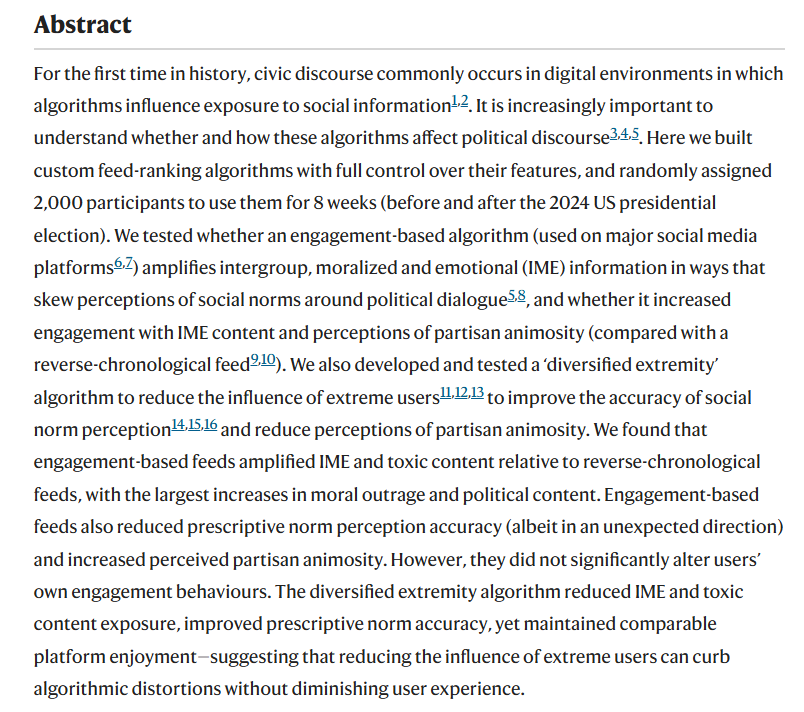
✨New paper out @SpringerNature✨ For 8 weeks around the 2024 US election, we randomly assigned 2,000 people to use social media algos we custom-built. Do engagement-based algorithms amplify intergroup, moral & emotional content + does that distort how we see political norms? 🧵
Is GenAI causing the relative decline in early-career hiring? Our latest research finds that these effects may be conflated with another important driver: the rise of WFH arrangements (1/N)
@profcikara Typical caveats w/ convenience samples, but it's possible to get that info about Dems/Reps and social groups at some of the Project Implicit datasets if you filter for non-US participants. Relevant links:
https://t.co/5zrDYXXPqA
https://t.co/CEw27UU5K4
https://t.co/P37qO97BEg
"Writing is hard." Thrilled to share that this simple idea led to a new paper in @polanalysis. Most text methods focus on content. I test if expression is also effortful action and find measures like character counts reveal attitudes and predict voting. https://t.co/Gm9P7cYVEm 1/
A new paper challenges the view that higher education liberalizes students (N = 483,885):
Students political identities change during their college years. But there are major differences across majors:
English & arts students move most to the left, while business and engineering actually shift right
And these changes are unrelated to the type of school students attend.
https://t.co/hdIkYg16hh
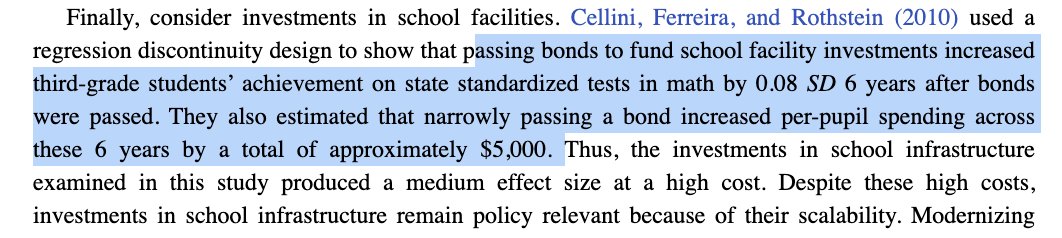
I find responses like this baffling. It's a small effect, sure (.16 SDs), but it's medium-sized effect by current standards in education research, and is just under the effect of getting married on happiness (.18 SDs) and well above spending $5,000 extra per student (.08 SDs).
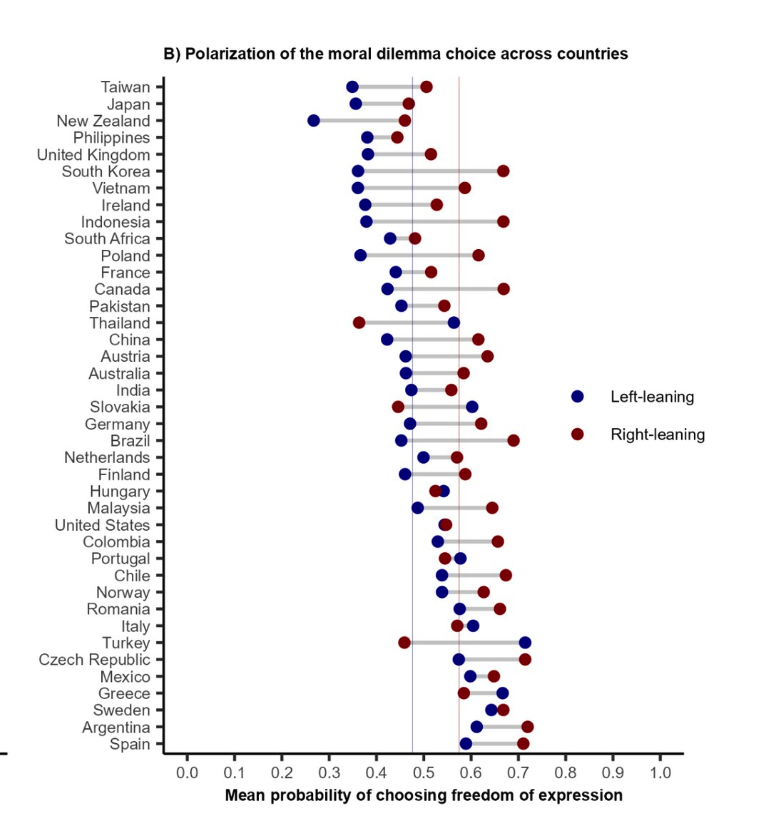
The dilemma of balancing freedom of expression against limiting the spread of misinformation is a central debate in modern information ecosystems.
In our latest paper, we measured citizens’ preferences for speech governance in 40 countries (N = 47,719). People are nearly evenly split between protecting free expression (51%) and preventing misinformation from spreading (49%).
However, this preference is politically polarized: in 32 out of 40 countries, right-leaning participants prioritize protecting free expression more than left-leaning participants (55% vs. 48%).
This polarization pattern is amplified by political interest--people who care the most about politics are the most polarized. https://t.co/WlALGUNxeL
This paper was led by @TobiaSpampatti @laura_k_globig@steverathje2 and @H_Sjastad
Climate change impacts are here, but public support for action remains polarized. Which climate messages move people?
In a ~13,500-person megastudy, we tested 10 of the most-cited messages. Six increased pro-environmental attitudes in the U.S.—but only by 1–4 percentage points. 🧵
Currently in FirstView, in “From Faces to Politics: Vision-Language Models (Sometimes) Link Visual Demographic Characteristics to Ideological Labels,” Soyeon Jeon, Messi Lee, @Jacob_Montg, and @CalvinKLai ask how models use demographics as shortcuts for ideological attribution.
Each year, people speak 338 less words per day (on average). These effects accumulate. In 2019, people were speaking 28% less words each day than in 2005 (!).
🚨📄 New preprint! We find the “boiling the frog” equivalent of AI use. In a series of RCTs, we show that after just 10 min of AI assistance people perform worse and give up more often than those who never used AI.
w Grace Liu @brianchristian Mira Dumbalska and Rachit Dubey 🧵